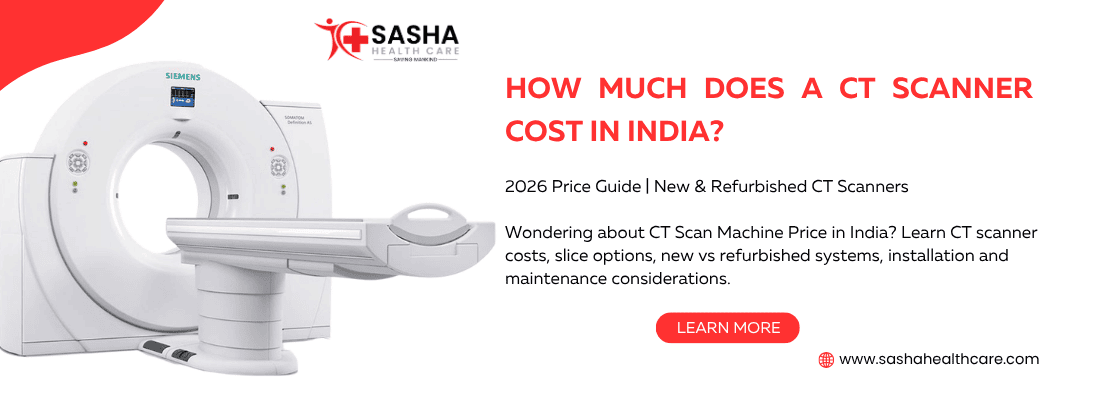
If you are planning to purchase a CT scanner for a hospital or diagnostic centre, one of the first questions is: How much does a CT scanner cost in India? The CT Scan Machine Price in India varies significantly depending on the number of slices, manufacturer, model, equipment condition, software, tube condition, installation requirements, warranty and service support.
As a broad market consideration, entry-level and lower-slice CT systems generally require a lower investment than advanced 64-slice, 128-slice and higher-end systems. A refurbished CT scanner can also cost considerably less than a comparable new system, depending on its age, configuration, tube condition and refurbishment quality.
However, the purchase price is only one part of the investment. Transportation, room preparation, radiation shielding, electrical infrastructure, installation, software, workstation, maintenance and CT tube replacement can all affect the CT Scan Machine cost in India.
For this reason, hospitals and diagnostic centres should compare the complete equipment package and total cost of ownership rather than choosing a CT scanner based only on its quoted purchase price.
CT Scan Machine Price in India: What Does a CT Scanner Cost?
There is no single price applicable to every CT scanner. The final CT scanner cost depends on the equipment specification and the scope of the supplier’s quotation.
An indicative way to understand the market is:
CT Scanner Category
Typical Application
Price Considerations
Entry-level CT
General diagnostic imaging
Lower investment; configuration is important
16-slice CT
Routine diagnostic imaging
Suitable for many general applications
32-slice CT
General and higher-volume imaging
Higher capability and investment
64-slice CT
Advanced routine imaging and angiography
Higher specification and software options
128-slice CT
Advanced imaging and higher workloads
Generally higher investment
Refurbished CT
Budget-conscious hospitals and diagnostic centres
Depends heavily on model, age, tube condition and refurbishment
These are categories rather than fixed prices. A 64-slice CT scanner from one model year can have a substantially different price from another 64-slice system because of differences in detector technology, tube capacity, software, workstation, scan speed, warranty and equipment condition.
Therefore, when searching for CT Scan Machine Price, buyers should first define their clinical requirements and then request a configuration-specific quotation.
What Determines CT Scan Machine Cost in India?
Several factors influence the CT Scan Machine cost in India. Understanding these factors can help hospitals and diagnostic centres make a more informed purchasing decision.
1. Number of Slices
The number of slices is one of the most commonly discussed specifications when comparing CT scanners.
Systems may be available in configurations such as:
16-slice
32-slice
64-slice
128-slice
Higher-slice configurations
Generally, more advanced configurations can support faster and more sophisticated imaging workflows. However, slice count alone should not determine the purchase decision.
Detector design, gantry rotation speed, X-ray tube capability, reconstruction technology, software and clinical applications also matter.
For example, a diagnostic centre primarily performing routine CT examinations may have different requirements from a tertiary-care hospital performing advanced cardiac or vascular imaging.
2. Brand and Model
The manufacturer and specific model can have a significant impact on the CT scanner price in India.
Well-established medical imaging manufacturers such as Siemens Healthineers, GE HealthCare, Philips and Canon Medical offer CT systems across different technology generations and configurations.
Two machines with a similar slice count can have different values because of:
Model generation
Detector technology
Tube specifications
Software
Workstation
Applications
Scan speed
System condition
Service availability
Consequently, buyers should compare complete specifications instead of comparing machines only by brand or slice count.
3. New vs Refurbished CT Scanner
One of the most important decisions affecting CT Scan Machine Price is whether to purchase a new or refurbished system.
A new CT scanner generally offers newer technology and may come with manufacturer-specific warranty and support arrangements. However, the initial investment can be significantly higher.
A professionally refurbished CT scanner can provide an alternative for hospitals and diagnostic centres that need to control capital expenditure.
A refurbished system should be evaluated based on:
Original manufacturer and model
Year of manufacture
Equipment history
Scan hours
Tube usage
Detector condition
Image quality
Software
Workstation
Preventive maintenance history
Availability of replacement parts
Warranty
Installation support
The cheapest refurbished CT scanner is not necessarily the most economical choice. Equipment reliability and future serviceability are equally important.
CT Scanner Cost by Slice Count
Slice count is useful as an initial comparison point, but it should not be treated as a complete pricing formula.
16-Slice CT Scanner
A 16-slice CT scanner can be considered for routine diagnostic applications where the clinical workload does not require the capabilities of higher-end systems.
The 16-slice CT machine price depends on the manufacturer, model, condition, tube, software, workstation and included services.
32-Slice CT Scanner
A 32-slice system can provide additional capabilities for facilities with broader diagnostic requirements.
When comparing 32-slice systems, buyers should examine detector configuration, tube condition, software applications, reconstruction capabilities and service support rather than focusing solely on the slice count.
64-Slice CT Scanner
A 64-slice CT scanner is commonly considered by facilities requiring more advanced imaging capabilities and potentially higher patient throughput.
The 64-slice CT scanner price can vary substantially depending on the exact model and configuration.
For a hospital or diagnostic centre considering a 64-slice system, important factors include tube capacity, rotation speed, detector design, cardiac capabilities, angiography applications, workstation and software.
128-Slice CT Scanner
A 128-slice CT scanner generally represents a higher-end investment. Such systems may be considered for hospitals and advanced diagnostic centres with higher patient volumes and broader clinical requirements.
The cost can vary considerably depending on technology generation and configuration.
Does More Slices Always Mean a Better CT Scanner?
Not necessarily.
The correct CT scanner depends on the clinical applications, patient volume, infrastructure and budget.
A facility should consider the complete technical specification rather than purchasing the highest slice count available.
New vs Refurbished CT Scanner: Which Should You Choose?
There is no universal answer. The appropriate option depends on the facility’s budget, workload and clinical requirements.
Factor
New CT Scanner
Refurbished CT Scanner
Initial investment
Generally higher
Generally lower
Technology
Latest/current generation options
Depends on model and generation
Equipment age
New
Previously used
Warranty
Typically available
Depends on supplier/package
Availability
Depends on model
Can be available sooner
Service
Manufacturer/dealer dependent
Supplier/service-provider dependent
ROI considerations
Higher capital requirement
Potentially lower capital investment
Suitability
New projects and advanced requirements
Budget-conscious facilities
A professionally refurbished CT scanner may be attractive when capital expenditure is limited, but buyers should perform proper technical due diligence before purchasing.
Additional Costs When Buying a CT Scanner
The equipment quotation is not necessarily the complete project cost.
A hospital or diagnostic centre may need to budget for additional expenses such as:
Transportation
The CT scanner must be safely transported from the supplier’s location to the installation site. Transportation requirements can vary depending on equipment dimensions, location and logistics.
Installation
Professional installation is essential for bringing the equipment into operational condition.
The quotation should clearly state whether installation is included.
De-installation
If a facility is replacing an existing CT scanner, de-installation and removal of the old equipment may create an additional cost.
Site Preparation
CT rooms may require appropriate:
Electrical infrastructure
HVAC
Flooring
Radiation shielding
Network connectivity
Equipment space
Control-room setup
The actual requirements should be assessed for the selected system and facility.
UPS and Power Infrastructure
Reliable electrical infrastructure is important for CT operations. Depending on the installation, UPS and related electrical work may need to be considered separately.
Workstation and Software
Advanced visualization and clinical applications may require specific software and workstation configurations.
These may include capabilities related to:
3D visualization
CT angiography
Cardiac imaging
Advanced reconstruction
Image processing
The exact software package should be confirmed in the quotation.
Maintenance
Maintenance is another important component of the overall CT machine cost.
Hospitals should consider:
Preventive maintenance
AMC
CMC
Breakdown support
Genuine spare parts
CT tube replacement
Software support
A lower initial purchase price can become less attractive if maintenance and downtime costs are significantly higher.
How to Choose a CT Scanner for a Hospital or Diagnostic Centre
Before purchasing a CT scanner, define the facility’s requirements.
1. Assess Patient Volume
Estimate the expected number of CT examinations per day and month.
A high-volume diagnostic centre may require a different configuration from a smaller facility.
2. Identify Clinical Applications
Determine which examinations will be performed.
For example:
Routine head CT
Chest CT
Abdomen CT
Trauma imaging
CT angiography
Cardiac CT
3D imaging
The intended applications influence the appropriate system configuration.
3. Evaluate Infrastructure
Check whether the facility can accommodate:
CT room
Control room
Electrical requirements
HVAC
Radiation shielding
Networking
Patient access
Equipment transportation
4. Consider Service Support
CT scanners are complex systems. Reliable technical support can be just as important as the initial equipment price.
Ask the supplier about:
Installation
Preventive maintenance
Breakdown response
Spare parts
Tube support
Warranty
AMC/CMC options
5. Compare Total Cost of Ownership
Instead of asking only:
“What is the CT Scan Machine Price?”
also ask:
“What will this CT scanner cost us over its expected operating period?”
This approach provides a more realistic picture of the investment.
What Should You Check Before Buying a Refurbished CT Scanner?
A refurbished CT scanner should undergo appropriate technical and operational evaluation before purchase.
Important checks include:
Manufacturer and model
Year of manufacture
Scan hours
Tube usage
Tube condition
Detector condition
Gantry condition
Generator
Patient table
Workstation
Software
Image quality
Error history
Service history
Preventive maintenance records
Availability of spare parts
Warranty
Installation scope
Acceptance testing
Supplier support
Buyers should request relevant equipment documentation and understand exactly what has been inspected, replaced, repaired or refurbished.
How to Compare CT Scanner Quotations
When comparing quotations from multiple suppliers, avoid comparing only the headline equipment price.
Create a comparison checklist covering:
Item
What to Check
CT Scanner
Exact make and model
Slice configuration
16/32/64/128 etc.
Tube
Condition and warranty
Detector
Configuration and condition
Software
Included applications
Workstation
Included or additional
Installation
Included or excluded
Transportation
Included or excluded
Warranty
Duration and scope
Spare parts
Availability
AMC/CMC
Optional or included
Breakdown support
Response and coverage
Training
Included or additional
Site preparation
Responsibility of buyer/supplier
This helps prevent situations where a lower initial quotation eventually becomes more expensive because important components were excluded.
CT Scanner ROI and Total Cost of Ownership
Buying a CT scanner is a significant capital investment. Therefore, hospital owners and diagnostic centre operators should evaluate the expected return on investment as part of the purchasing process.
Important considerations include:
Expected patient volume
Average utilization
Clinical applications
Operating hours
Service costs
Maintenance
CT tube replacement
Downtime
Spare parts
Staff requirements
Equipment lifespan
For example, a facility with a high patient volume may justify investing in a more capable CT scanner, while a smaller diagnostic centre may prioritize a reliable refurbished system with appropriate specifications and service support.
The right decision should balance purchase price, clinical capability, reliability and long-term operating costs.
Why the Cheapest CT Scanner May Not Be the Best Choice
When comparing CT Scan Machine Price in India, it can be tempting to select the lowest quotation.
However, several questions should be asked before making that decision:
What is the exact model?
How old is the equipment?
What is the tube condition?
What software is included?
Is the workstation included?
Is installation included?
What warranty is provided?
Are spare parts available?
Who will provide service?
What happens if the scanner develops a major fault?
Is preventive maintenance included?
Is AMC or CMC available?
A slightly higher purchase price may represent better value if it includes stronger warranty coverage, reliable service support, better equipment condition and a more complete installation package.
CT Scanner Buying Checklist
Before finalizing a CT scanner purchase, consider this checklist:
Clinical requirements
What examinations will be performed?
What is the expected patient volume?
Are advanced applications required?
Equipment
Manufacturer
Model
Slice configuration
Tube condition
Detector
Gantry
Patient table
Workstation
Software
Reconstruction
3D visualization
Angiography
Cardiac applications, if required
Installation
Transportation
Installation
De-installation
Site preparation
Electrical requirements
HVAC
Radiation shielding
After-sales support
Warranty
Preventive maintenance
AMC/CMC
Breakdown support
Spare parts
Tube support
Conclusion:
The CT Scan Machine Price in India depends on much more than the number of slices. Brand, model, technology generation, equipment condition, tube, detector, software, workstation, installation, warranty and service support all contribute to the final investment.
For hospitals and diagnostic centres, the best CT scanner is not necessarily the most expensive or the cheapest system. The right choice is the one that matches the facility’s clinical requirements, patient volume, infrastructure and budget while providing dependable long-term support.
When evaluating a new or refurbished CT scanner, compare the complete quotation, including equipment, installation, warranty, maintenance, spare parts and service support. This helps you understand the true CT scanner cost and make a more informed investment decision.
Looking for a CT scanner for your hospital or diagnostic centre? Sasha HealthCare can help you evaluate CT equipment options based on your clinical requirements, patient volume, infrastructure and budget.
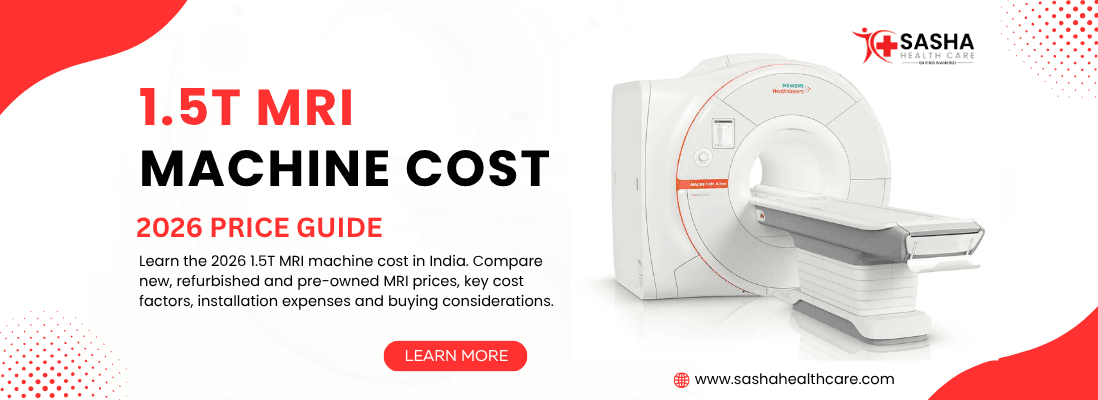
If you are planning to purchase an MRI system for a hospital or diagnostic centre, understanding the 1.5T MRI machine cost in India is an important first step. A 1.5 Tesla MRI remains one of the most widely used MRI configurations because it offers a practical balance between image quality, clinical applications, patient throughput, infrastructure requirements and investment.
In India, the 1.5T MRI machine price can vary significantly depending on whether you choose a new, refurbished or pre-owned system. Brand, model, manufacturing year, magnet condition, gradient performance, coils, software, warranty, installation and after-sales support can all affect the final quotation.
How Much Does a 1.5T MRI Machine Cost in India in 2026?
The approximate 1.5T MRI machine cost in India in 2026 can vary broadly depending on equipment condition, configuration and included services.
MRI System Type
Indicative Price Range in India*
Suitable For
New 1.5T MRI
₹4 crore–₹7 crore+
Large hospitals and premium diagnostic centres
Refurbished 1.5T MRI
₹1.5 crore–₹3.5 crore+
Hospitals and diagnostic centres seeking value
Pre-owned 1.5T MRI
₹80 lakh–₹2 crore+
Budget-focused facilities, subject to condition
*These are indicative market ranges, not fixed quotations. Actual prices can vary considerably based on manufacturer, model, system age, configuration, refurbishment level, coils, software, warranty, installation, transportation and site requirements.
For many buyers, a refurbished 1.5T MRI machine can offer a significantly lower initial investment than a new system while still providing clinically useful imaging capabilities. However, the condition of the magnet, gradients, RF coils, electronics, cooling system and software should be carefully evaluated before purchase.
What is a 1.5T MRI Machine?
A 1.5T MRI machine is a magnetic resonance imaging system that operates at a magnetic field strength of 1.5 Tesla. MRI uses a strong magnetic field, radiofrequency energy and computer processing to create detailed images of internal body structures.
Unlike X-ray and CT imaging, MRI does not use ionizing radiation.
A 1.5T MRI system can be used for a wide range of examinations, including:
Brain and neurological imaging
Spine imaging
Musculoskeletal studies
Knee and shoulder examinations
Abdomen and pelvis imaging
Cardiac applications on appropriately configured systems
Angiography
Whole-body imaging
Oncology imaging
Joint and soft-tissue studies
The popularity of 1.5T MRI systems comes from their established clinical performance and broad application range.
1.5T MRI Machine Price in India
There is no single MRI machine price in India because MRI systems are available in many configurations.
A new system from a leading international manufacturer can command a substantially higher price than an older pre-owned system. Similarly, two refurbished MRI machines of the same brand can have different prices because of differences in model year, coils, software, magnet condition and refurbishment quality.
New 1.5T MRI
A new 1.5T MRI system generally has the latest available technology, manufacturer-supported software and a new equipment warranty. However, the initial investment is considerably higher.
New systems may be appropriate for:
High-volume hospitals
Corporate hospitals
Premium diagnostic centres
Institutions requiring newer applications
Facilities planning long-term operation with manufacturer support
Refurbished 1.5T MRI
A professionally refurbished MRI system can provide an attractive balance between MRI machine cost and clinical capability.
Refurbishment may include inspection, replacement of selected components, testing, cleaning, calibration and performance checks, depending on the supplier and system.
However, buyers should not assume that every machine advertised as “refurbished” has undergone the same level of work.
Pre-Owned 1.5T MRI
Pre-owned equipment can have the lowest initial purchase price, but its actual value depends heavily on condition and serviceability.
A low purchase price may not be economical if the system subsequently requires expensive repairs, replacement coils, cooling-system work or other major components.
Therefore, the purchase decision should consider total cost of ownership rather than only the advertised MRI scanner cost.
What Factors Affect 1.5T MRI Machine Cost?
Several factors determine the final 1.5T MRI machine cost in India.
1. Manufacturer and Model
Major manufacturers such as Siemens, GE, Philips, Canon and Hitachi/Fujifilm-related MRI systems are available in different configurations and generations.
The brand alone does not determine value. The specific model and its technical configuration are equally important.
2. Manufacturing Year
Newer systems generally command higher prices, while older systems can be more affordable.
However, an older MRI with good maintenance history and strong serviceability may be more attractive than a poorly maintained newer system.
3. Magnet Condition
The magnet is one of the most important components of an MRI system.
Buyers should assess magnet performance, helium status where applicable, cooling performance and maintenance history before purchasing a used or refurbished MRI.
4. Gradient Performance
Gradient specifications influence imaging performance and examination capabilities.
The gradient system should be evaluated according to the clinical applications required by the facility.
5. RF Coils
The number and type of coils included in the quotation can significantly affect the effective value of an MRI system.
Common coils may include:
Head coils
Spine coils
Body coils
Knee coils
Shoulder coils
Flexible coils
Specialized application coils
Always compare quotations based on the complete coil package, not just the scanner price.
6. Software and Applications
Software packages can affect the functionality of an MRI system.
Depending on the model and configuration, applications may include advanced neurological, angiography, musculoskeletal, cardiac or oncology capabilities.
7. Refurbishment Quality
For a refurbished MRI, the extent of refurbishment is extremely important.
Ask the supplier exactly what components have been inspected, repaired or replaced.
8. Warranty
A warranty provides protection against certain equipment failures after installation.
When comparing quotations, examine:
Warranty duration
Covered components
Response time
Labour coverage
Parts coverage
Exclusions
9. Installation and Transportation
The quoted MRI machine price may not always include transportation, de-installation, installation and commissioning.
These should be clearly separated in the quotation.
10. Site Infrastructure
An MRI room requires appropriate infrastructure, which can include RF shielding, HVAC, electrical systems, cooling equipment and other site-specific requirements.
These expenses should be included when calculating the complete project budget.
Popular 1.5T MRI Brands in India
Hospitals and diagnostic centres may encounter 1.5T MRI systems from manufacturers including:
Siemens
GE Healthcare
Philips
Canon
Hitachi/Fujifilm-related systems
Each manufacturer offers different generations and configurations.
Instead of asking only, “Which brand is best?”, buyers should consider:
Clinical requirements
Budget
Patient volume
Software applications
Coil configuration
Service availability
Spare-parts availability
Local technical support
Expected operating costs
Long-term system reliability
The right MRI system is the one that fits the facility’s clinical and business requirements.
Refurbished 1.5T MRI Machine Cost
For facilities with a limited capital budget, a refurbished 1.5T MRI machine can be an alternative to purchasing a new system.
Refurbished equipment can potentially reduce the initial capital investment, but buyers should conduct proper technical due diligence.
Before purchasing, ask for information about:
Exact model number
Manufacturing year
Installation history
Previous usage
Maintenance history
Magnet condition
Gradient performance
RF coil condition
Patient table condition
Software configuration
Error history
Cooling system
Cold head condition
Helium status where applicable
Refurbishment performed
Warranty offered
Service support
A professionally inspected and serviced MRI system with appropriate warranty and technical support can be substantially more valuable than a cheaper machine with an uncertain service history.
New vs Refurbished 1.5T MRI
Factor
New 1.5T MRI
Refurbished 1.5T MRI
Initial investment
Higher
Lower
Technology generation
Latest/new
Depends on model
Equipment condition
New
Professionally restored/serviced
Warranty
Usually manufacturer warranty
Depends on supplier
Budget suitability
Higher-budget facilities
Cost-conscious facilities
Availability
May involve longer lead times
Depends on stock
Service
Manufacturer/dealer support
Supplier/service network
ROI consideration
Higher initial investment
Potentially attractive capital efficiency
Neither option is automatically better for every facility.
A diagnostic centre with a constrained capital budget may find refurbished equipment attractive, while a new hospital with high patient volumes and specific advanced imaging requirements may prefer a new system.
Total Cost of Installing a 1.5T MRI
One of the biggest mistakes buyers make is looking only at the MRI scanner cost.
The complete project budget can include several additional expenses.
Potential additional costs include:
MRI equipment
Transportation
De-installation of existing equipment
Installation
Site preparation
RF shielding
Electrical infrastructure
HVAC
Chiller/cooling requirements
Quench pipe where applicable
Calibration and testing
Helium-related services where applicable
AMC or CMC
Insurance
Staff training
Civil and interior work
Therefore, a facility should request a complete project quotation rather than comparing equipment prices alone.
MRI Machine Operating Cost
The initial MRI machine price in India is only one part of the investment.
Over its operating life, an MRI system can generate recurring expenses related to:
Electricity
Cooling
Preventive maintenance
AMC/CMC
Spare parts
Software and service
Helium-related requirements where applicable
Technical support
Unexpected breakdowns
Downtime
Maintenance planning is particularly important for hospitals and diagnostic centres because extended equipment downtime can affect patient scheduling and revenue.
A reliable service partner can help reduce avoidable downtime through preventive maintenance and timely technical support.
1.5T MRI vs 3T MRI
Both 1.5T and 3T MRI systems have important clinical applications.
Feature
1.5T MRI
3T MRI
Magnetic field
1.5 Tesla
3 Tesla
Investment
Generally lower
Generally higher
Clinical applications
Broad
Broad with additional advanced applications
Image characteristics
Strong clinical performance
Higher field strength can support higher signal in many applications
A 3T MRI is not automatically the best choice for every hospital.
For many facilities, a well-configured 1.5T MRI machine can provide an excellent combination of clinical versatility, investment and operational practicality.
How to Choose the Right 1.5T MRI Machine
Before purchasing, consider the following checklist.
1. Determine Patient Volume
Estimate the number of MRI examinations expected each day and month.
2. Identify Clinical Applications
Determine whether the facility primarily requires neurological, spine, musculoskeletal, abdominal, oncology, cardiac or other applications.
3. Set the Complete Budget
Do not allocate the entire budget to the scanner alone. Include infrastructure, installation and service.
4. Compare Equivalent Configurations
When comparing suppliers, make sure quotations include similar:
Coils
Software
Accessories
Warranty
Installation
Service
5. Evaluate Equipment Condition
For refurbished and pre-owned systems, request technical inspection and maintenance information.
6. Check Service Support
A competitively priced machine is less useful if qualified technical support and spare parts are difficult to obtain.
7. Consider Long-Term Costs
Evaluate AMC/CMC, spare parts, maintenance and downtime risk.
Questions to Ask an MRI Equipment Supplier
Before finalizing an MRI purchase, ask:
What is the exact MRI model?
What is the manufacturing year?
Is the machine new, refurbished or pre-owned?
What refurbishment work has been completed?
What coils are included?
What software applications are included?
What is the magnet condition?
What warranty is provided?
Is installation included?
Is transportation included?
What site requirements are necessary?
Are spare parts available?
What AMC/CMC options are available?
What technical support is provided?
What is included and excluded from the final quotation?
These questions help buyers compare the actual value of an MRI machine rather than simply comparing headline prices.
MRI Machine Price vs Total MRI Project Cost
A supplier quotation should clearly distinguish between equipment cost and the complete project cost.
Cost Component
What It Covers
MRI equipment
Scanner, magnet and specified configuration
Coils/accessories
Patient and imaging coils included in package
Installation
Installation and commissioning
Transportation
Movement of equipment to the site
Infrastructure
RF shielding, electrical, HVAC and related work
Service
AMC/CMC and preventive maintenance
Additional requirements
Site-specific equipment and technical services
This approach makes it easier for hospital owners and diagnostic centre operators to calculate the actual investment.
Is a Refurbished 1.5T MRI Machine Worth Buying?
A refurbished 1.5T MRI can be worth considering when the buyer wants to control capital expenditure without compromising on essential imaging capabilities.
However, the decision should not be based on price alone.
A good evaluation should consider:
System condition + configuration + warranty + service support + spare parts + expected operating cost.
If a refurbished machine has been properly inspected, serviced and tested and is supported by a reliable technical team, it may offer strong value.
On the other hand, a very low-cost machine with poor maintenance history or limited technical support can become expensive over time.
How to Get the Best MRI Machine Price in India
Getting the best price does not necessarily mean selecting the lowest quotation.
Instead:
Compare equivalent MRI configurations.
Request a detailed quotation.
Verify the exact model and year.
Check all included coils.
Review the warranty.
Confirm installation and transportation.
Inspect refurbished equipment properly.
Ask about spare-parts availability.
Compare AMC/CMC options.
Consider expected downtime.
Calculate total cost of ownership.
Negotiate based on configuration and included services.
This approach can help hospitals and diagnostic centres make a more informed MRI investment decision.
Why Choose Sasha HealthCare for MRI Equipment?
Sasha HealthCare provides medical imaging equipment solutions for hospitals, diagnostic centres and healthcare facilities.
Its MRI-related services can include:
MRI equipment supply
Refurbished MRI systems
Installation
De-installation
Transportation
AMC services
CMC services
Preventive maintenance
MRI breakdown support
Genuine spare parts
Helium filling/top-up services
Cold head-related services
Technical support
When evaluating an MRI system, buyers should consider not only the initial MRI machine cost in India, but also installation, maintenance and long-term service requirements.
If you are looking for a 1.5T MRI machine in India, contact Sasha HealthCare to discuss available systems, configurations, pricing and service support.
Conclusion:
The 1.5T MRI machine cost in India in 2026 depends on far more than the scanner itself. New, refurbished and pre-owned systems can have substantially different prices, while configuration, magnet condition, coils, software, warranty and technical support can significantly affect the overall investment.
For hospitals and diagnostic centres, the best approach is to compare the complete MRI project cost and total cost of ownership, rather than selecting a machine solely because it has the lowest purchase price.
A properly evaluated 1.5T MRI machine can provide broad diagnostic capabilities and may be a practical investment for facilities seeking a balance between clinical performance and capital expenditure.
If you are planning to buy a new, refurbished or pre-owned 1.5T MRI system, obtain a detailed quotation based on your required configuration, clinical applications, installation requirements and long-term service needs.
How much does a 1.5T MRI machine cost in India?
The indicative 2026 price of a 1.5T MRI machine in India can range from around ₹80 lakh for certain pre-owned systems to ₹7 crore or more for new systems, depending on brand, model, configuration, condition and included services.
What is the price of a 1.5 Tesla MRI machine?
The price of a 1.5 Tesla MRI depends on whether it is new, refurbished or pre-owned. Refurbished systems can offer a lower capital investment, while new systems generally cost substantially more.
What is the MRI machine price in India?
MRI machine prices in India vary widely according to magnetic field strength, manufacturer, model, age, configuration and condition. A complete quotation should also account for installation, infrastructure, warranty and service.
What factors affect MRI machine cost?
Major factors include manufacturer, model, magnetic field strength, manufacturing year, magnet condition, gradients, coils, software, refurbishment quality, warranty, installation and after-sales support.
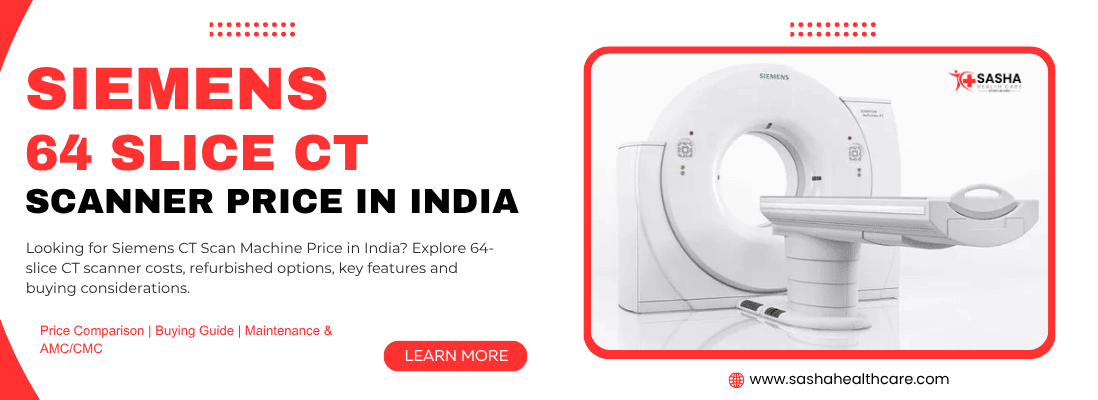
If you are planning to purchase a Siemens 64 slice CT scanner, one of the first questions is: What is the Siemens 64 Slice CT Scanner Price in India? The answer depends on several factors, including the exact Siemens model, whether the system is new, used or professionally refurbished, tube condition, software, applications, warranty, installation and after-sales support.
As an indicative 2026 Indian-market range, a professionally refurbished or used Siemens 64-slice CT scanner may commonly fall around ₹35 lakh to ₹80 lakh or more, depending on the model, configuration and condition. A new Siemens CT system with comparable capabilities can cost substantially more, potentially ₹1.5 crore to ₹3 crore or more depending on configuration and commercial package.
These figures are indicative rather than official Siemens list prices. The final quotation should always be based on the exact scanner, configuration, condition, installation requirements, warranty and service package.
Quick Price Overview: Siemens 64 Slice CT Scanner Price in India
CT Scanner Category
Indicative Price Range in India*
Typical Buyer
Used Siemens 64 Slice CT
₹30–60 lakh+
Budget-conscious diagnostic centres
Refurbished Siemens 64 Slice CT
₹35–80 lakh+
Hospitals and imaging centres
Higher-spec/refurbished systems
₹60 lakh–₹1 crore+
High-volume imaging centres
New Siemens CT system
₹1.5–3 crore+
Hospitals requiring new technology
*Indicative market ranges only. Actual prices vary significantly according to model, year, tube condition, software, accessories, installation, warranty and service package.
For many buyers, the refurbished Siemens 64 slice CT scanner marketprovides a balance between Siemens technology and a lower capital investment compared with purchasing a new system.
Siemens CT Scan Machine Price in India: What Determines the Cost?
The Siemens CT Scan Machine Price in India cannot be determined simply by looking at the slice count.
Two Siemens 64-slice scanners can have significantly different prices because of their age, technology generation, software, tube condition and maintenance history.
The most important pricing factors include:
1. Exact Siemens CT Model
Siemens has produced several CT scanner generations and configurations. The model and generation can have a major effect on market value.
A newer-generation system with advanced software, dose-management technologies and additional clinical applications may command a higher price than an older 64-slice system.
2. New, Used or Refurbished Condition
The condition of the equipment is one of the biggest factors affecting the CT Scan Machine Price.
A new machine generally has a much higher acquisition cost. A used machine may have a lower purchase price but requires careful inspection.
A professionally refurbished system can offer a middle ground by combining an existing Siemens platform with inspection, testing, replacement of selected components and service support.
3. X-Ray Tube Condition
The X-ray tube is a critical component of a CT scanner.
When purchasing a used or refurbished Siemens CT scanner, buyers should ask about:
Tube model
Tube usage
Tube condition
Previous replacement history
Tube warranty
Available tube life information
A scanner with a healthy tube can command a substantially different price from a system requiring an expensive tube replacement.
4. Software and Clinical Applications
The included software package can affect the overall value of a CT scanner.
Depending on the configuration, applications may support areas such as:
Routine diagnostic CT
CT angiography
Cardiac imaging
3D reconstruction
Advanced visualization
Perfusion imaging
Dose-management workflows
Not every 64-slice Siemens CT system includes the same software or clinical applications, so buyers should verify exactly what is included.
What Is a Siemens 64 Slice CT Scanner?
A 64-slice CT scanner is a multidetector computed tomography system capable of acquiring multiple image slices during each rotation of the CT system.
The term “64 slice” describes the scanner’s detector configuration and image acquisition capabilities. It should not be interpreted as a simple ranking where a higher slice count automatically means better diagnostic performance.
A 64-slice CT scanner can be used for a wide range of examinations, including:
Head and brain CT
Chest CT
Abdomen and pelvis CT
Trauma imaging
CT angiography
Pulmonary imaging
Bone and orthopedic imaging
Contrast-enhanced studies
Selected cardiac applications, depending on the specific system
Actual clinical capabilities depend on the exact Siemens model, software package, protocols and configuration.
Siemens 64 Slice CT Scanner Models
Siemens has offered multiple CT platforms and configurations over different generations. Buyers may encounter systems from different product families in the new, used and refurbished markets.
Examples of Siemens CT systems encountered in the market can include platforms such as SOMATOM Definition AS, SOMATOM Perspective and other Siemens SOMATOM configurations, depending on availability and region.
However, specifications can differ substantially between individual systems.
When comparing two Siemens 64-slice scanners, do not compare only the model name. Also verify:
Manufacturing year
Detector configuration
X-ray tube
Gantry
Software version
Clinical applications
Workstation
Reconstruction capabilities
Dose-management technologies
Service history
Tube usage
Warranty
This information provides a much more meaningful basis for comparing the Siemens CT Scanner Price in India.
Factors Affecting Siemens CT Scan Machine Price
Several technical and commercial factors influence the final quotation.
Scanner Generation
Newer-generation Siemens systems can have improved workflow, reconstruction, dose-management and software capabilities.
Older systems may have a lower purchase price but could require more attention to serviceability and spare-part availability.
X-Ray Tube
The tube is one of the most important components to evaluate.
A low-priced scanner requiring an immediate tube replacement may ultimately cost considerably more than a higher-priced system with a healthy tube.
Detector System
Detector condition and performance are essential to CT image acquisition. Buyers should ensure that the detector system has been properly tested.
Gantry and Mechanical Components
The gantry, patient table, slip-ring system and mechanical components should be checked before purchase.
Software
The value of a CT system is not limited to its hardware. Software and clinical applications can have a significant impact on usability.
Installation
The quotation should clearly specify whether the following are included:
Transportation
Installation
Calibration
Commissioning
Application training
Acceptance testing
Warranty
A machine supplied with a meaningful warranty and technical support package may have a higher initial price but can reduce purchasing risk.
Refurbished Siemens 64 Slice CT Scanner Price in India
For buyers working with a controlled capital budget, a refurbished Siemens 64 slice CT scanner can be an option worth evaluating.
Indicative pricing may range from approximately ₹35 lakh to ₹80 lakh or more, depending on the exact model and configuration.
A professionally refurbished scanner should not simply mean a used machine that has been cleaned and resold.
The refurbishment process should ideally include appropriate:
Equipment inspection
Functional testing
Image-quality testing
Tube assessment
Gantry inspection
Table inspection
Detector evaluation
Software verification
Error-log review
Calibration
Preventive maintenance
Replacement of necessary components
The actual refurbishment scope varies by supplier and machine.
Therefore, buyers should ask for a written refurbishment report rather than relying only on the word “refurbished.”
Used vs Refurbished vs New Siemens 64 Slice CT Scanner
Factor
Used
Refurbished
New
Purchase price
Lower
Moderate
Highest
Equipment age
Usually older
Varies
New
Testing
Depends on seller
Should be comprehensive
Manufacturer standards
Warranty
May be limited
Often supplier-based
Manufacturer/supplier terms
Technology
Depends on model
Depends on model
Latest available configuration
Initial investment
Low
Moderate
High
Risk
Can be higher
Depends on refurbishment quality
Generally lower equipment-condition risk
Ideal buyer
Budget-focused buyer
Hospitals/diagnostic centres
Institutions seeking new technology
The right option depends on budget, patient volume, clinical requirements and long-term ownership strategy.
Siemens 64 Slice CT Scanner Running Cost
The purchase price is only one part of the total investment.
Before buying a CT scanner, calculate the Total Cost of Ownership (TCO).
Potential ongoing expenses include:
Electricity and HVAC
CT scanners require appropriate electrical infrastructure and environmental conditions.
X-Ray Tube
The tube is a major potential replacement expense. Its condition should be considered when evaluating a used or refurbished scanner.
Preventive Maintenance
Regular preventive maintenance can help identify potential issues before they become major breakdowns.
Spare Parts
Availability and cost of genuine or compatible service parts should be discussed with the supplier.
AMC or CMC
Hospitals may consider an Annual Maintenance Contract (AMC) or Comprehensive Maintenance Contract (CMC) depending on their operational requirements.
A lower purchase price does not necessarily mean a lower long-term cost. Buyers should compare the complete ownership package.
Siemens CT Scanner Price vs Other Brands
When evaluating the CT Scan Machine Price in India, hospitals may compare Siemens with brands such as GE, Philips and Canon.
The comparison should not be based exclusively on the initial quotation.
Consider:
Scanner generation
Detector technology
Clinical applications
Software
Tube condition
Image quality
Dose-management features
Service availability
Spare parts
Warranty
AMC/CMC
Resale value
Total cost of ownership
For refurbished equipment, the condition of the individual scanner can be more important than simply comparing brand names.
What Should You Check Before Buying a Siemens 64 Slice CT Scanner?
Before purchasing a used or refurbished Siemens CT scanner, ask the supplier to provide detailed information about the system.
Buyer Checklist
Exact Siemens model
Manufacturing year
Serial number
X-ray tube model
Tube usage and condition
Detector condition
Gantry condition
Patient table operation
Slip-ring condition
Software version
Included clinical applications
Workstation configuration
Error logs
Preventive maintenance history
Image-quality test results
Calibration status
Warranty terms
Installation scope
AMC/CMC options
Spare-parts support
If possible, request a system demonstration or inspection before finalizing the purchase.
Questions to Ask a Siemens CT Scanner Supplier
Before accepting a quotation, ask:
1. What is the exact Siemens CT model?
The model determines many technical and pricing characteristics.
2. Is the machine new, used or refurbished?
Make sure the equipment condition is clearly mentioned in the quotation.
3. What is the X-ray tube condition?
Ask for available tube usage and service information.
4. What software is included?
Confirm all clinical applications and workstation software.
5. What warranty is provided?
Ask what components and services are covered.
6. Is installation included?
Confirm transportation, installation, calibration and commissioning separately.
7. Is application training included?
Training can help the radiology team use the system effectively.
8. Is AMC or CMC available?
Ask for annual service options and what they cover.
9. What spare-parts support is available?
This is particularly important for older CT systems.
10. Can the system be inspected before purchase?
A physical or technical inspection can reduce purchasing risk.
Is a Siemens 64 Slice CT Scanner a Good Investment?
A Siemens 64-slice CT scanner can be a suitable investment for hospitals and diagnostic centres that require a versatile multidetector CT system.
However, the investment decision should be based on expected utilization rather than brand name alone.
Consider:
Expected daily scan volume
Types of examinations
Referral network
Local competition
Radiologist availability
Budget
Service support
Maintenance costs
Expected equipment utilization
Patient demand
For a facility with moderate-to-high CT demand, a well-maintained 64-slice system may provide a useful combination of clinical capability and investment value.
Siemens 64 Slice CT Scanner Buying Guide for Indian Hospitals
A practical purchasing process can be divided into the following steps:
Step 1: Define Clinical Requirements
Determine which examinations the hospital expects to perform.
Step 2: Establish the Budget
Include not only the scanner but also installation, infrastructure, maintenance and potential future component costs.
Step 3: Select New or Refurbished
Decide whether a new, refurbished or used system is appropriate.
Step 4: Compare Models
Compare the exact specifications rather than relying only on “64 slice.”
Step 5: Inspect the Equipment
Review tube condition, detector performance, gantry, table and software.
Step 6: Review Warranty
Understand exactly what is covered and for how long.
Step 7: Evaluate Service Support
Check whether installation, preventive maintenance and breakdown support are available.
Step 8: Obtain a Detailed Quotation
The quotation should clearly mention equipment, accessories, installation, warranty and service.
Step 9: Calculate Total Cost of Ownership
Consider expected maintenance and component replacement costs.
Step 10: Finalize the Purchase
Select the system based on clinical requirements, condition, support and overall value—not simply the lowest price.
Conclusion
The Siemens 64 Slice CT Scanner Price in India depends on far more than the 64-slice configuration. The exact Siemens model, equipment generation, X-ray tube condition, detector, software, applications, refurbishment quality, warranty, installation and after-sales support can all significantly influence the final price.
For budget-conscious hospitals and diagnostic centres, a professionally refurbished Siemens 64-slice CT scanner can be an option to consider. However, buyers should focus on the condition and serviceability of the individual system rather than choosing equipment solely because it has the lowest price.
If you are planning to purchase a Siemens 64-slice CT scanner, request a detailed quotation that clearly specifies the machine model, condition, tube status, software, warranty, installation, commissioning and AMC/CMC options.
Looking for a Siemens 64 Slice CT Scanner in India? Sasha HealthCare can assist hospitals, diagnostic centres and healthcare organizations in evaluating suitable CT equipment options based on their clinical requirements and budget. Contact the team with your preferred model, location, new/refurbished requirement and budget to request a machine-specific quotation.
What is the price of a Siemens 64 slice CT scanner in India?
A used or refurbished Siemens 64-slice CT scanner may cost around ₹35 lakh to ₹80 lakh+, depending on the model, condition, tube, software and warranty.
What is the Siemens CT Scan Machine Price in India?
The price varies by model and configuration. Used and refurbished Siemens CT scanners generally cost less than new systems, while advanced models can cost significantly more.
Is a refurbished Siemens 64 slice CT scanner worth buying?
Yes, it can be a cost-effective option when the scanner is properly inspected, tested and refurbished, with reliable warranty and after-sales service.
What affects the price of a Siemens 64 slice CT scanner?
Key factors include model, year, X-ray tube condition, detector, software, configuration, warranty, installation and AMC/CMC support.
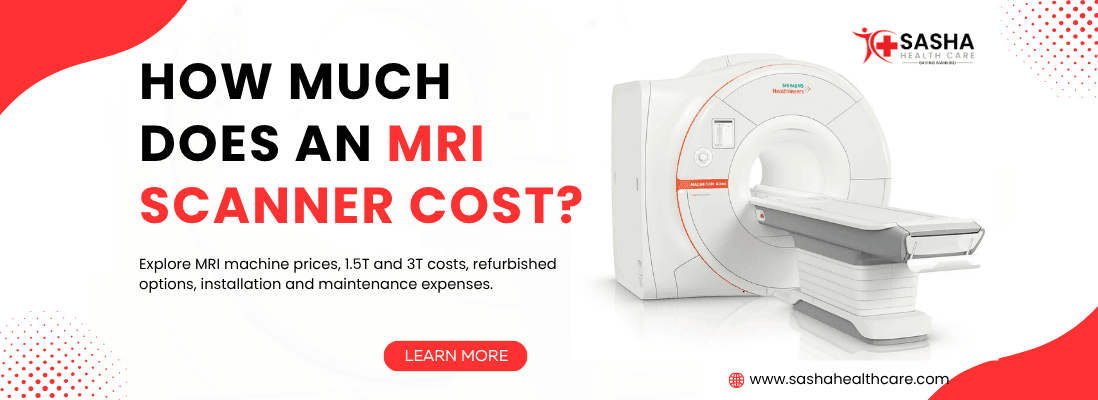
If you are planning to purchase an MRI system for a hospital, diagnostic centre, or imaging facility, one of the first questions is: How much does an MRI scanner cost?
In India, the MRI machine price can vary substantially depending on the magnetic field strength, manufacturer, model, configuration, software, accessories, system condition, installation requirements, warranty, and service support. As an indicative market range, a refurbished MRI machine may start from around ₹1 crore, while advanced new 1.5T and 3T systems can cost several crores depending on configuration.
For many healthcare facilities, a professionally refurbished 1.5T MRI machine can provide a balance between acquisition cost, clinical capability, and long-term operating requirements. A 3T MRI machine generally requires a higher investment but can offer advanced imaging capabilities for appropriate clinical applications.
The figures discussed in this article are indicative estimates, not fixed manufacturer quotations. Actual MRI machine cost in India depends on the specific model, configuration, condition, installation, taxes, logistics, warranty, and service package.
MRI Machine Price in India at a Glance
MRI System
Typical Field Strength
Indicative Market Range*
Common Consideration
Refurbished MRI
1.5T
₹1 crore–₹2.5 crore+
Cost-effective option depending on system age and configuration
Refurbished MRI
3T
₹2 crore–₹4 crore+
Advanced capability with higher infrastructure requirements
New MRI
1.5T
₹3 crore–₹5 crore+
New technology, manufacturer warranty and configuration options
New MRI
3T
₹5 crore–₹8 crore+
Advanced imaging and higher initial investment
*These are broad indicative ranges for planning purposes. Actual quotations can differ significantly based on manufacturer, model, year, software, coils, gradients, warranty, installation, taxes and other project requirements.
The MRI scanner cost should therefore be evaluated as part of the total project investment rather than simply comparing the equipment purchase price.
What Is the Average MRI Machine Cost in India?
There is no single standard MRI machine price in India. Two systems with the same 1.5T field strength, for example, can have substantially different prices because of their model generation, software packages, coil configuration, gradient performance, bore size, condition, warranty and service history.
Some of the most important factors affecting MRI machine cost include:
Magnet strength: 1.5T and 3T systems have different acquisition costs.
Manufacturer: Siemens, GE Healthcare, Philips, Canon Medical and other manufacturers offer different system configurations.
System generation: Newer systems may include improved software, faster workflows and advanced applications.
New or refurbished condition: Professionally refurbished equipment generally costs less than equivalent new equipment.
Coil package: The number and type of coils can significantly affect the value of an MRI system.
Software: Advanced clinical applications and reconstruction technologies may increase the price.
Gradient system: Gradient strength and performance influence system capability.
Installation: Transportation, installation, room preparation and commissioning may be additional costs.
Warranty and service: A comprehensive warranty or service package can affect the overall quotation.
For this reason, buyers should compare the complete MRI equipment package, rather than choosing a machine based only on its advertised purchase price.
How Much Does a 1.5T MRI Machine Cost?
A 1.5T MRI machine is one of the most widely considered configurations for hospitals and diagnostic centres.
As an indicative planning range, a professionally refurbished 1.5T MRI system may cost approximately ₹1 crore to ₹2.5 crore or more, while a new 1.5T system can commonly require an investment of several crores depending on the manufacturer and configuration.
A 1.5T system can be suitable for a broad range of routine MRI examinations, including:
Brain and neurological imaging
Spine examinations
Musculoskeletal imaging
Abdominal imaging
Pelvic imaging
Joint imaging
Angiographic applications
Routine body MRI
The final 1.5T MRI machine price depends heavily on the system model, age, software, coils, gradients, magnet condition, installation requirements and service package.
For a diagnostic centre with regular routine MRI demand, a well-maintained 1.5T refurbished system may be an attractive alternative to purchasing a new system, particularly when budget is an important consideration.
How Much Does a 3T MRI Machine Cost?
A 3T MRI machine generally requires a higher investment than a 1.5T system. A professionally refurbished 3T system may typically fall in a broad range of ₹2 crore to ₹4 crore or more, while new 3T systems can cost considerably more depending on configuration.
The higher field strength can support advanced imaging applications and may provide increased signal-to-noise ratio for appropriate examinations.
3T MRI systems are often considered for applications such as:
Advanced neurological imaging
Musculoskeletal imaging
Prostate imaging
Functional MRI applications
Advanced angiography
Research and specialized imaging
Facilities requiring high-end MRI capabilities
However, choosing 3T simply because it is a higher field strength is not always necessary. The right system should be selected according to patient volume, clinical requirements, available infrastructure, budget and expected utilization.
When comparing 3T MRI machine price, buyers should also consider the additional technical and infrastructure requirements associated with the system.
New vs Refurbished MRI Machine Price
One of the biggest decisions affecting the MRI machine cost in India is whether to purchase a new or refurbished system.
Factor
New MRI Machine
Refurbished MRI Machine
Initial purchase cost
Higher
Generally lower
System age
New
Previously installed
Technology
Latest generation depending on model
Depends on model and refurbishment
Warranty
Manufacturer/supplier options
Supplier/refurbisher dependent
Software
New configuration
Depends on installed package
Parts availability
Generally favorable
Depends on model and age
Budget requirement
Higher
Lower acquisition investment
Evaluation required
Configuration review
Detailed technical inspection essential
A refurbished MRI machine can offer significant savings when the equipment has been professionally inspected, serviced and tested.
However, buyers should not evaluate refurbished equipment based solely on its low price.
Important checks include:
Original installation date
Previous usage and system history
Magnet condition
Cold head performance
Compressor condition
Helium status
Gradient performance
RF system
Coil condition
Software version
Error logs
Image quality
Preventive maintenance records
Replacement parts
Warranty
Installation support
A lower purchase price does not necessarily represent better value if the system requires extensive repairs shortly after installation.
What Factors Affect MRI Machine Cost?
The MRI scanner cost is influenced by several technical and commercial factors.
1. Magnetic Field Strength
1.5T and 3T systems have different capabilities, specifications and infrastructure requirements. Higher field strength generally results in a higher equipment investment.
2. Manufacturer
Major MRI manufacturers include Siemens, GE Healthcare, Philips, Canon Medical and others. Pricing varies by manufacturer and specific model.
3. Model and Generation
A newer-generation MRI system can have different software, hardware and workflow capabilities compared with an older system.
4. Software
Advanced applications, image reconstruction, specialized sequences and workflow features can influence the overall price.
5. Coil Configuration
MRI coils are essential for different examinations. A system supplied with a comprehensive coil package may have a higher overall value.
6. Gradient Performance
Gradient specifications influence imaging performance and applications. Buyers should evaluate gradient capability alongside the magnet strength.
7. Bore Size and Patient Table
Bore size and table specifications can affect system selection, patient comfort and pricing.
8. System Condition
For refurbished MRI systems, the condition and refurbishment quality are major pricing factors.
9. Installation Requirements
Transportation, de-installation, installation, commissioning and site preparation may add to the project cost.
10. Warranty and Service
A machine with installation support, warranty and technical service may have a different total cost compared with equipment sold without comprehensive support.
MRI Room Setup and Additional Costs
The MRI machine purchase price is only one part of the total investment.
Before installation, the facility may need to prepare the MRI room and supporting infrastructure.
Potential expenses include:
RF shielding
Electrical infrastructure
HVAC
Chiller/cooling system
Quench pipe
Civil work
Flooring and room modifications
Equipment transportation
Installation
De-installation
Safety equipment
Patient preparation areas
Control room requirements
The exact requirements depend on the MRI system and site.
This is why hospitals and diagnostic centres should obtain a site assessment before finalizing an MRI purchase.
A machine quotation that appears inexpensive may not represent the lowest total project cost if significant infrastructure work is required.
MRI Installation and Maintenance Cost
Installation and long-term maintenance are important parts of the overall MRI machine cost.
A typical project may involve:
De-installation → Transportation → Site preparation → Installation → Testing → Commissioning → Training → Maintenance
After installation, the facility may need preventive maintenance and technical support.
Depending on the system, maintenance considerations can include:
Preventive maintenance
Breakdown support
AMC
CMC
Spare parts
Cold head replacement
Compressor-related service
Helium filling or top-up
Chiller maintenance
Coil servicing
Software support
When comparing quotations, ask whether installation, warranty, transportation and service are included or charged separately.
Siemens vs GE vs Philips vs Canon MRI Machine Price
Siemens, GE Healthcare, Philips and Canon Medical are among the major manufacturers associated with MRI systems available in the Indian market.
It is difficult to provide one fixed price for each brand because each manufacturer has multiple models and configurations.
For example, a Siemens 1.5T system from one generation can have a significantly different price from another Siemens 1.5T model because of:
System age
Software
Coil package
Gradient specifications
Magnet condition
Installed applications
Service history
Warranty
The same principle applies to GE, Philips and Canon MRI systems.
Therefore, buyers should compare specific models and configurations, rather than simply comparing brands.
How to Choose the Right MRI Machine for Your Hospital or Diagnostic Centre
Choosing the right MRI machine requires more than finding the lowest MRI machine price.
Consider the following questions:
What is your expected patient volume?
A high-volume diagnostic centre may need a system optimized for workflow and throughput.
What examinations will you perform?
Routine examinations may not require the same configuration as a facility focusing on advanced neurological, cardiac, research or specialized imaging.
Is 1.5T or 3T appropriate?
The choice should be based on clinical requirements, patient volume, infrastructure and budget.
What infrastructure is available?
Evaluate room dimensions, electrical supply, cooling, RF shielding and other requirements before selecting the system.
What is included in the quotation?
Confirm whether the quotation includes transportation, installation, commissioning, warranty, coils, accessories and training.
What happens after the warranty?
Ask about AMC/CMC options, spare parts and technical support.
Is the refurbished system properly documented?
For refurbished equipment, request available service records, system history, technical inspection details and warranty terms.
How to Evaluate a Refurbished MRI Machine
A refurbished MRI machine can be a practical investment, but due diligence is essential.
Before purchasing, evaluate:
System age and installation date
Magnet condition
Helium status
Cold head performance
Compressor condition
Gradient performance
RF system
Coil condition
Image quality
Software and applications
Error history
Maintenance records
Replacement parts
Warranty
Installation and commissioning support
If possible, buyers should request a demonstration or technical evaluation before finalizing the equipment.
The objective should be to determine the total value and expected reliability, rather than simply finding the cheapest refurbished MRI machine.
MRI Machine Cost vs Total Business Investment
The cost of an MRI scanner should be considered within the broader investment required to operate an imaging centre.
The overall project may include:
MRI equipment
Room construction
RF shielding
Electrical work
HVAC
Cooling
Installation
Staff
Maintenance
Electricity
Service contracts
Spare parts
Insurance and other operating expenses
Expected revenue and utilization also depend on the local market, patient volume, competition, scan pricing and operating model.
Healthcare investors should therefore conduct an independent financial feasibility assessment before purchasing an MRI system.
How Much Does an MRI Scanner Cost in India?
An MRI scanner in India can cost from around ₹1 crore for certain refurbished systems to several crores for new, advanced configurations. The final MRI machine price depends on field strength, manufacturer, model, system condition, software, coils, installation, infrastructure, warranty and service support. Always obtain a detailed quotation for the exact configuration before making a purchase decision.
Conclusion
The answer to “How much does an MRI scanner cost?” depends on much more than the scanner itself.
The MRI Machine Price in India can range from around ₹1 crore for certain refurbished systems to several crores for new and advanced configurations. The final investment depends on whether the system is new or refurbished, its field strength, manufacturer, model, software, coils, infrastructure, installation, warranty and service requirements.
For many facilities, a professionally evaluated refurbished MRI can provide a lower initial investment while still meeting clinical requirements. However, buyers should carefully evaluate the machine’s technical condition, service history, parts availability and warranty rather than selecting equipment based only on price.
Whether you are considering a 1.5T MRI, 3T MRI, new system or refurbished MRI machine, compare the complete equipment and service package before making a decision.
Sasha HealthCare can assist hospitals and diagnostic centres in evaluating MRI equipment options, including refurbished systems, installation, de-installation, maintenance and technical support.
Need an MRI machine quotation? Contact Sasha HealthCare to discuss your required field strength, clinical applications, budget and installation requirements.
How much does an MRI scanner cost in India?
The MRI scanner cost can range from around ₹1 crore for some refurbished systems to several crores for new advanced systems. The actual price depends on field strength, manufacturer, model, configuration, condition, software, coils, installation and warranty.
What is the MRI machine price in India?
There is no single fixed MRI machine price in India. A refurbished system can have a significantly lower acquisition cost than a new system. The price also varies between 1.5T and 3T systems and according to manufacturer and configuration.
What should I check before buying a refurbished MRI?
Check the system’s installation date, magnet condition, helium status, cold head, compressor, gradients, RF system, coils, software, image quality, error history, service records, parts availability, warranty and installation support.
Does MRI machine price include maintenance?
Maintenance may or may not be included. Buyers should clarify warranty duration, preventive maintenance, breakdown support, AMC/CMC, spare parts and other technical services before signing the purchase agreement.
If you are planning to purchase a Siemens MRI machine in India, the Siemens MRI machine price in India can vary significantly depending on the MRI field strength, model, manufacturing year, configuration, software, coils, condition and service package. As a broad market indication, a refurbished Siemens MRI system may cost around ₹60 lakh to ₹1.5 crore or more, while higher-end 1.5T and 3T systems can require substantially larger investments.
The MRI machine price in India is not determined by the scanner alone. Installation, transportation, room preparation, RF shielding, HVAC, electrical infrastructure, chiller requirements, warranty and AMC/CMC can all affect the final project cost.
For hospitals and diagnostic centres, Siemens MRI systems are commonly considered for their imaging capabilities, established technology platform and availability across different configurations. Buyers can choose between 1.5T and 3T systems, as well as new and professionally refurbished equipment, depending on their clinical requirements and budget.
Siemens MRI Machine Price in India
The approximate price of a Siemens MRI machine in India can be broadly understood as follows:
Siemens MRI System
Approximate Price Range in India*
Typical Application
Refurbished Siemens MRI
₹60 lakh–₹1.5 crore+
Diagnostic centres and hospitals
Refurbished Siemens 1.5T MRI
₹60 lakh–₹1.25 crore+
General MRI examinations
Refurbished Siemens 3T MRI
₹1 crore–₹2 crore+
Advanced imaging and tertiary care
New Siemens 1.5T MRI
₹2 crore–₹4 crore+
Hospitals and high-volume centres
New Siemens 3T MRI
₹3 crore–₹6 crore+
Advanced hospitals and specialised centres
*These are indicative market ranges rather than official Siemens quotations. Actual prices can vary substantially according to model, configuration, year, condition, software, coils, installation, warranty, taxes and other project requirements.
A quotation for a specific Siemens MRI model should therefore be evaluated based on the complete configuration rather than the machine price alone.
What Determines Siemens MRI Machine Price?
Several factors influence the cost of a Siemens MRI scanner.
1. MRI Field Strength
The magnetic field strength is one of the most important pricing factors.
1.5T MRI systems are widely used for routine clinical imaging and can provide a good balance between image quality, examination time and investment.
3T MRI systems offer higher field strength and can be suitable for applications requiring advanced imaging capabilities. They generally involve a higher initial investment.
2. MRI Model and Generation
The exact Siemens model and generation can have a significant impact on pricing. A newer system with updated hardware and software may command a higher price than an older system.
For refurbished equipment, the manufacturing year, operating hours, system condition and refurbishment scope should be checked carefully.
3. New vs Refurbished Condition
A new MRI system generally requires a significantly higher initial investment.
A professionally refurbished Siemens MRI machine can provide an alternative for hospitals and diagnostic centres seeking to control capital expenditure.
However, buyers should evaluate:
Refurbishment quality
System testing
Component condition
Software configuration
Coil availability
Warranty
Service support
Spare parts availability
Installation and calibration
4. Coils and Accessories
MRI coils are essential components of the system. The number and type of coils included in a quotation can affect the overall value of the equipment.
For example, a system configured with additional specialised coils may cost more than a basic configuration.
5. Software and Applications
Advanced software packages can increase the value and functionality of an MRI system. Buyers should verify exactly which software applications and licenses are included in the quotation.
6. Installation and Infrastructure
MRI installation requires more than delivering the scanner to the hospital.
The project may require:
MRI room preparation
RF shielding
Electrical work
HVAC
Chiller
UPS/power infrastructure
Patient preparation areas
Equipment transportation
Installation
Calibration
Testing
These expenses should be considered separately when calculating the total MRI investment.
Siemens 1.5T MRI Machine Price in India
The Siemens 1.5T MRI machine price in India varies depending on the model, configuration and whether the equipment is new or refurbished.
For a refurbished Siemens 1.5T system, an indicative market range can be approximately ₹60 lakh to ₹1.25 crore or more, depending on the model, age, configuration, coils, software, refurbishment quality and warranty.
New 1.5T Siemens systems can require a significantly larger investment, potentially ₹2 crore to ₹4 crore or more, depending on the exact configuration and project requirements.
Why Choose a 1.5T MRI?
A 1.5T system can be appropriate for many routine MRI examinations, including:
Brain MRI
Spine MRI
Knee and shoulder imaging
Musculoskeletal studies
Abdomen and pelvis
Routine neurological imaging
Whole-body applications
For many diagnostic centres, 1.5T provides a practical balance between clinical capability and equipment investment.
The correct system should be selected based on patient volume, clinical requirements, available infrastructure and expected return on investment rather than price alone.
Siemens 3T MRI Machine Price in India
The Siemens 3T MRI machine price in India is generally higher than that of a comparable 1.5T system.
Depending on model, generation, condition and configuration, a refurbished Siemens 3T MRI may cost approximately ₹1 crore to ₹2 crore or more. New high-end 3T systems can require an investment of ₹3 crore to ₹6 crore or more.
These figures are indicative and should not be treated as fixed market prices.
Why Choose a 3T MRI?
A 3T MRI system can be considered when a hospital or imaging centre requires advanced imaging capabilities and expects sufficient patient volume to justify the investment.
Potential applications include:
Advanced neurological imaging
Musculoskeletal imaging
High-resolution imaging
Angiography applications
Research and specialised imaging
Advanced clinical applications
However, 3T is not automatically the best choice for every diagnostic centre. The decision should consider the centre’s clinical workload, radiologist requirements, infrastructure and financial model.
Refurbished Siemens MRI Machine Price in India
For buyers looking for a lower initial investment, a refurbished Siemens MRI machine can be an alternative to purchasing a new system.
The term “refurbished” should not simply mean “used.” A properly refurbished MRI system should undergo systematic inspection, testing, servicing and, where necessary, replacement of components.
The price of a refurbished Siemens MRI machine depends on:
Model
Manufacturing year
Field strength
System usage
Magnet condition
Gradient system
RF system
Coils
Software
Hardware condition
Refurbishment scope
Warranty
Installation
Service support
What Should You Check Before Buying Refurbished MRI Equipment?
Before purchasing, request information about:
Exact Siemens model
Manufacturing year
Previous installation history
System operating hours, where available
Magnet condition
Cold head condition
Gradient performance
Included coils
Software version
Preventive maintenance history
Refurbishment work completed
Warranty terms
Spare parts availability
Installation scope
AMC/CMC options
A low purchase price is not necessarily the lowest total cost if the equipment requires frequent breakdown repairs or major component replacement.
MRI Machine Price in India: How Siemens Compares
The broader MRI machine price in India varies considerably across manufacturers and configurations.
Major MRI manufacturers available in the Indian market include Siemens Healthineers, GE HealthCare, Philips and Canon Medical Systems.
The final cost depends on factors such as:
Brand
Tesla strength
Model
Equipment generation
New or refurbished condition
Coils
Software
Installation
Warranty
Service contract
Therefore, buyers should compare MRI systems based on total value and lifecycle cost, rather than comparing only the initial machine quotation.
For example, two 1.5T systems may have different prices because their software, coils, age, gradient specifications, warranty and service coverage are different.
Factors Affecting the Total Cost of a Siemens MRI Machine
The purchase price is only one part of the investment.
Machine Configuration
The base scanner configuration, magnet, gradients, patient table, RF system and other hardware influence the price.
Coils
The number and type of coils included should be clearly mentioned in the quotation.
Software
Advanced clinical applications and software packages may increase the overall investment.
Transportation
MRI systems are large and technically complex. Transportation and handling must be planned carefully.
MRI Room Preparation
The MRI room may require RF shielding, suitable flooring, electrical work and other infrastructure.
HVAC and Cooling
MRI equipment has specific environmental and cooling requirements. Depending on the system, cooling infrastructure and chiller requirements should be included in project planning.
Installation
Professional installation, calibration and system testing are important for reliable operation.
Warranty
Warranty terms can vary considerably between suppliers and equipment configurations.
AMC/CMC
After the warranty period, an AMC or CMC can help manage maintenance and breakdown risks.
Siemens MRI Installation Cost in India
The cost of installing a Siemens MRI machine depends on the existing facility and the condition of the proposed MRI room.
A new MRI facility may require substantial site preparation, while an existing MRI centre with suitable infrastructure may require fewer modifications.
Potential installation-related expenses include:
MRI room construction or modification
RF shielding
Electrical infrastructure
HVAC
Chiller
UPS
Transportation
Rigging
Installation
Calibration
Testing
Safety requirements
Therefore, when requesting a Siemens MRI quotation, ask the supplier to clearly identify what is included and excluded.
This prevents unexpected expenses after the equipment purchase.
Siemens MRI AMC and CMC
Maintenance should be considered when calculating the long-term MRI machine cost in India.
An AMC (Annual Maintenance Contract) generally provides maintenance support for the equipment according to the agreement.
A CMC (Comprehensive Maintenance Contract) may provide broader coverage, potentially including selected spare parts depending on the contract.
Before signing an AMC or CMC, check:
Preventive maintenance frequency
Breakdown support
Response time
Spare parts coverage
Engineer availability
Remote support
Replacement component terms
Contract exclusions
System uptime commitments
The exact terms vary between service providers and contracts.
New vs Refurbished Siemens MRI Machine
Factor
New Siemens MRI
Refurbished Siemens MRI
Initial investment
Higher
Lower
Equipment age
New
Previously used
Technology
Latest available configuration
Depends on model
Warranty
Manufacturer/supplier dependent
Supplier dependent
Service support
Usually available
Must be verified
Spare parts
Generally easier for supported models
Depends on model
Capital requirement
Higher
Lower
Suitable for
High-volume/new facilities
Budget-conscious facilities
A refurbished system can be attractive when the buyer has a limited capital budget, but the equipment should be inspected and evaluated before purchase.
How to Choose the Right Siemens MRI Machine
Choosing an MRI system should begin with your clinical and business requirements.
Consider the following:
Patient Volume
Estimate the number of MRI examinations you expect each day and month.
Clinical Applications
Identify whether you primarily need routine MRI examinations or advanced applications.
1.5T vs 3T
For general diagnostic imaging, a 1.5T system may be sufficient for many facilities. A 3T system may be considered for centres requiring advanced imaging capabilities.
Budget
Calculate both the equipment purchase price and the total project cost.
Service Support
Confirm that technical support and spare parts are available for the specific system.
ROI
Estimate expected revenue based on patient volume, examination mix and operating costs.
Future Requirements
Choose a system that can support your expected clinical requirements over its planned operating life.
Questions to Ask Before Buying a Siemens MRI Machine
Before signing a purchase agreement, ask the supplier:
What is the exact Siemens MRI model?
Is the machine new or refurbished?
What is the manufacturing year?
What is included in the configuration?
Which coils are included?
Which software applications are included?
What refurbishment work has been completed?
What warranty is provided?
Is installation included?
Is transportation included?
Are spare parts available?
Is AMC or CMC available after warranty?
What site requirements must be completed before installation?
What is excluded from the quotation?
What technical support is available after installation?
Getting clear answers to these questions can help reduce unexpected costs.
How Much Does an MRI Machine Cost in India?
The MRI machine price in India can range from tens of lakhs for certain older or refurbished systems to several crores for new, advanced MRI systems.
The main factors include:
MRI brand
Field strength
Model
Age
Configuration
Coils
Software
New/refurbished condition
Installation
Warranty
Service contract
For this reason, there is no single “average MRI machine price” that applies to every buyer.
If you are comparing Siemens MRI equipment, it is more useful to specify whether you need a 1.5T or 3T system, and whether you are considering new or refurbished equipment.
Conclusion
The Siemens MRI machine price in India depends on several factors, including the MRI field strength, model, manufacturing year, system configuration, software, coils, equipment condition and included services. As an approximate market indication, refurbished Siemens MRI systems may start from around ₹60 lakh, while new and advanced 1.5T and 3T systems can require an investment of several crores.
For hospitals and diagnostic centres, choosing between a 1.5T and 3T MRI should be based on clinical requirements, expected patient volume, available infrastructure and long-term business objectives. A professionally refurbished Siemens MRI machine can also be a cost-effective option when capital investment is a major consideration.
However, the machine purchase price is only part of the total investment. Buyers should also consider MRI room preparation, RF shielding, electrical requirements, HVAC, chiller, transportation, installation, calibration, warranty, spare parts and AMC/CMC when calculating the overall MRI project cost.
Before purchasing, always request a detailed quotation that clearly specifies the exact Siemens MRI model, field strength, included coils and software, system condition, warranty, installation scope and after-sales service.
If you are planning to purchase a Siemens MRI machine in India, Sasha HealthCare can help you evaluate suitable new and refurbished Siemens MRI systems based on your clinical requirements, budget and infrastructure.
Looking for a Siemens 1.5T or 3T MRI machine? Contact Sasha HealthCare for equipment options and a detailed quotation.
What is the price of a Siemens 1.5T MRI machine in India?
A refurbished Siemens 1.5T MRI may cost approximately ₹60 lakh to ₹1.25 crore or more. New systems generally cost more.
What is the price of a Siemens 3T MRI machine in India?
A refurbished Siemens 3T MRI may cost around ₹1 crore to ₹2 crore or more, while new systems can cost several crores.
If you are planning to purchase an MRI system, one of the first questions is: How much does a 3T MRI machine cost in India? In 2026, the approximate price of a 3 Tesla MRI machine in India can range from around ₹2.5 crore to ₹8 crore or more, depending on whether the system is refurbished or new, the manufacturer, model, software, coils, installation requirements and warranty.
As an indicative market guide, a refurbished 3T MRI machine may cost approximately ₹2.5–₹4.5 crore, while a new 3T MRI system can typically be around ₹5–₹8 crore or higher depending on configuration.
The MRI Machine Price in India should not be evaluated only from the equipment quotation. Installation, MRI room preparation, RF shielding, electrical infrastructure, HVAC, chiller, quench pipe, transportation, service contracts and other requirements can significantly affect the total investment.
3T MRI Machine Price in India: 2026 Approximate Cost
The price of a 3T MRI machine varies considerably between manufacturers and configurations. The following figures are intended as a practical budgeting reference rather than a fixed quotation.
3T MRI System
Approximate Price in India*
Older used/pre-owned 3T MRI
₹1.5–₹2.5 crore
Refurbished 3T MRI
₹2.5–₹4.5 crore
Premium refurbished 3T MRI
₹3.5–₹5 crore+
New entry/premium 3T MRI
₹5–₹8 crore+
High-end new 3T MRI configuration
₹7–₹10 crore+
*Indicative ranges only. Actual pricing depends on manufacturer, model, year, magnet condition, software, coils, configuration, installation, warranty, taxes and other commercial terms.
For most hospitals and diagnostic centres considering a cost-effective purchase, a professionally refurbished 3T MRI system can provide a significantly lower initial investment compared with purchasing a new system.
What Is the Average Price of a 3 Tesla MRI Machine?
A 3T MRI machine generally costs more than a 1.5T MRI system because of its higher field strength and advanced hardware and software configuration.
As a broad 2026 budgeting estimate in India:
Used/pre-owned 3T MRI: approximately ₹1.5–₹2.5 crore
Refurbished 3T MRI: approximately ₹2.5–₹4.5 crore
New 3T MRI: approximately ₹5–₹8 crore+
Advanced premium configurations: potentially ₹8–₹10 crore or more
The final quotation should always be based on the exact MRI model and included configuration.
For example, two machines described simply as “3T MRI” may have very different prices because one may include a larger coil package, newer software, advanced clinical applications and a stronger gradient system, while another may have a basic configuration.
New vs Refurbished 3T MRI Machine Price
One of the biggest factors affecting MRI machine price in India is whether the equipment is new or refurbished.
New 3T MRI Machine
A new MRI system usually carries a significantly higher acquisition cost.
Approximate budgeting range:
₹5 crore to ₹8 crore+
Premium configurations can exceed this range depending on the manufacturer, specifications and accessories.
Advantages can include:
Latest technology
New magnet and components
Current software platform
Manufacturer warranty
Latest clinical applications
Longer expected service life
However, the initial capital investment can be substantial.
Refurbished 3T MRI Machine
A professionally refurbished MRI machine can be a more economical alternative.
Approximate budgeting range:
₹2.5 crore to ₹4.5 crore
The price depends heavily on the original system, age, refurbishment level, software, coils, magnet condition and warranty.
A good refurbished system should not simply be an old machine that has been cleaned and resold. Buyers should evaluate the magnet, gradient system, RF system, coils, patient table, software, image quality, cooling system and service history.
What Factors Affect 3T MRI Machine Price in India?
There is no single fixed price for a 3T MRI scanner. Several technical and commercial factors influence the final quotation.
1. Manufacturer
Major manufacturers include:
Siemens
GE HealthCare
Philips
Canon
Different manufacturers and models occupy different price segments.
2. Model and Manufacturing Year
A newer-generation 3T MRI generally commands a higher price than an older platform.
For refurbished systems, the model year is particularly important because it can influence software compatibility, parts availability and future serviceability.
3. Magnet Condition
The magnet is one of the most important components of an MRI system.
For a refurbished MRI, buyers should ask about:
Magnet condition
Helium status
Cryogenic system
Cold head condition
Magnet stability
Previous service history
A lower purchase price is not necessarily a better deal if significant magnet or cryogenic work is required later.
4. Software
MRI software can significantly affect the value of a system.
The included software package may determine available applications such as:
Neurology
Spine imaging
Musculoskeletal imaging
Angiography
Cardiac imaging
Whole-body imaging
Diffusion imaging
Advanced reconstruction
Always ask the supplier for a detailed list of included software licenses.
5. Coils
The number and type of coils included in the quotation can substantially affect the final price.
Depending on the clinical requirements, a system may require:
Head coil
Spine coil
Body coil
Knee coil
Shoulder coil
Breast coil
Cardiac coil
Flexible coils
A quotation with fewer coils may initially look cheaper but may not meet the facility’s clinical requirements.
6. Gradient System
Gradient performance affects the capabilities and clinical applications of the MRI.
When comparing two 3T systems, buyers should evaluate the complete gradient specifications rather than looking only at the 3T field strength.
7. Warranty and Service
A system with comprehensive warranty and technical support can have a higher initial quotation but potentially lower financial risk.
Compare:
Warranty period
Parts coverage
Labour coverage
Response time
Preventive maintenance
Breakdown support
AMC/CMC options
3T MRI Machine Price by Manufacturer
The exact price of a 3T MRI from Siemens, GE, Philips or Canon depends on the particular model and configuration.
Siemens 3T MRI
Siemens offers multiple MRI platforms across different generations and configurations.
For refurbished Siemens 3T systems, price can vary significantly based on:
Magnet generation
Model
Software
Coils
Gradient configuration
Refurbishment level
Warranty
A professionally refurbished Siemens 3T system may be considerably less expensive than a new system.
GE 3T MRI
GE HealthCare also offers 3T MRI platforms for different clinical applications.
When evaluating a refurbished GE MRI, buyers should check the exact model, system age, software, coil package, gradient performance and serviceability.
Philips 3T MRI
Philips 3T systems are also available in new and pre-owned/refurbished markets.
The final cost depends on configuration, software, coils, condition and included services.
Canon 3T MRI
Canon’s MRI portfolio includes advanced systems designed for different clinical applications. Buyers should compare the complete technical configuration and lifecycle support before making a purchasing decision.
Important: Brand alone should not determine the purchase. The right system depends on the facility’s clinical requirements, patient volume, budget and available infrastructure.
How Much Does It Cost to Install a 3T MRI Machine?
The MRI machine quotation is only one part of the total project cost.
A new MRI installation may require:
MRI room preparation
RF shielding
Magnetic shielding where required
Electrical work
HVAC
Chiller
Quench pipe
UPS/power infrastructure
Flooring and structural work
Transportation
Installation
De-installation of an existing system
Testing and commissioning
Depending on the existing infrastructure and project scope, these additional requirements can add tens of lakhs of rupees or more to the overall investment.
Therefore, hospitals should ask for a quotation that clearly separates:
This makes it easier to compare suppliers accurately.
Total Cost of Ownership of a 3T MRI
The purchase price is not the only financial consideration.
A 3T MRI can generate ongoing expenses related to:
Preventive Maintenance
Regular preventive maintenance helps identify potential failures before they become major breakdowns.
AMC and CMC
Hospitals can consider annual maintenance contracts or comprehensive maintenance contracts depending on their requirements.
Spare Parts
MRI components can be expensive, especially for older systems where certain parts may be difficult to source.
Cooling System
The chiller and associated cooling components require appropriate maintenance.
Cold Head
For applicable MRI systems, cold-head performance is an important part of maintaining the cryogenic system.
Helium
Helium requirements depend on the specific magnet technology and system condition. Buyers should ask the supplier about the cryogenic configuration and expected maintenance requirements.
Downtime
For a diagnostic centre, downtime can directly affect revenue and patient scheduling. Therefore, service response and spare-parts availability should be considered when evaluating the purchase.
1.5T vs 3T MRI Machine: Which Is Better?
A 3T MRI is not automatically the right choice for every facility.
Factor
1.5T MRI
3T MRI
Field strength
1.5 Tesla
3 Tesla
Typical investment
Lower
Higher
Signal potential
High
Higher
Advanced applications
Available
Extensive
Infrastructure
Generally less demanding
Can be more demanding
Operating considerations
Often simpler
More specialized
Suitable for
General imaging
Advanced and high-volume imaging
A 3T MRI can be particularly attractive for centres that expect substantial volumes of neurological, musculoskeletal, advanced body or other specialized imaging.
For facilities primarily focused on routine MRI examinations, a well-configured 1.5T system may provide a more economical investment.
The decision should be based on expected patient volume, clinical applications, budget and business model.
Is a Refurbished 3T MRI Machine Worth Buying?
Yes, a professionally refurbished 3T MRI can be a viable option for hospitals and diagnostic centres that want to control capital expenditure.
However, the supplier and refurbishment quality are critical.
Before purchasing, ask for:
Exact model and manufacturing year
System service history
Magnet condition
Cryogenic system information
Cold-head condition
Gradient performance
RF system condition
Coil list
Software list
Image-quality demonstration
Error logs
Preventive maintenance records
Warranty terms
Installation scope
Spare-parts support
A lower price should never be the only reason for selecting a refurbished MRI.
What Should You Check Before Buying a 3T MRI?
Use the following checklist before signing a purchase agreement:
Verify the exact model and year.
Check the magnet condition.
Review service history.
Verify the included coils.
Check software licenses.
Test image quality.
Review system error logs.
Check the patient table.
Evaluate gradient performance.
Check cooling and cryogenic systems.
Confirm warranty coverage.
Confirm installation responsibilities.
Check spare-parts availability.
Ask about AMC/CMC options.
Get all inclusions in writing.
How to Get the Best 3T MRI Machine Price in India
Getting the lowest quotation is not necessarily the same as getting the best value.
Instead, compare the complete package.
Ask suppliers to provide:
Exact MRI model
Manufacturing year
Equipment condition
Magnet details
Gradient specifications
Coil configuration
Software configuration
Accessories
Installation
Transportation
Warranty
AMC/CMC options
Training
Spare-parts support
For refurbished MRI systems, buyers should also request technical inspection or demonstration before finalizing the purchase.
A machine costing ₹3 crore with appropriate coils, installation, warranty and service support may provide better value than a ₹2.7 crore machine that requires significant additional expenditure.
Why Consider Sasha HealthCare for a Refurbished MRI Machine?
Sasha HealthCare supplies refurbished medical imaging equipment in India and supports hospitals and diagnostic centres looking for cost-effective MRI solutions.
Its relevant services include:
Refurbished MRI machines
MRI installation
MRI de-installation
Transportation support
AMC and CMC services
MRI breakdown support
Preventive maintenance
Helium services
Cold-head replacement
Genuine MRI spare parts
When purchasing a refurbished MRI machine, customers can discuss their required field strength, manufacturer, clinical applications, budget and preferred configuration to identify a suitable system.
For the latest 3T MRI machine price in India, availability and configuration, buyers should request a current quotation because pricing can change based on model, configuration and market availability.
Conclusion
The 3T MRI machine price in India in 2026 can vary significantly depending on the system configuration and condition.
As a practical budgeting guide:
Used/pre-owned 3T MRI: approximately ₹1.5–₹2.5 crore
Refurbished 3T MRI: approximately ₹2.5–₹4.5 crore
New 3T MRI: approximately ₹5–₹8 crore+
Advanced premium systems: potentially ₹8–₹10 crore or more
These figures should be treated as indicative market ranges rather than fixed quotations.
When calculating the total MRI Machine Price in India, consider the equipment, coils, software, installation, transportation, MRI room infrastructure, warranty, maintenance, spare parts and long-term service support.
For hospitals and diagnostic centres looking for a cost-effective solution, a properly inspected and professionally refurbished 3T MRI can be an attractive alternative to purchasing a new system.
If you are planning to buy a 3T MRI machine in India, contact Sasha HealthCare to discuss available systems, configurations, refurbishment status, installation requirements and current quotation options.
How much does a 3T MRI machine cost in India?
An indicative 2026 price for a refurbished 3T MRI machine can be around ₹2.5–₹4.5 crore, while a new 3T MRI system may cost approximately ₹5–₹8 crore or more. The final price depends on manufacturer, model, software, coils, installation, warranty and configuration.
What is the price of a 3 Tesla MRI machine?
A 3 Tesla MRI machine can range from approximately ₹2.5 crore for certain refurbished systems to ₹8 crore or more for new systems. Premium configurations can cost even more.
Is a 3T MRI better than a 1.5T MRI?
A 3T MRI can offer advantages for several advanced imaging applications, but it is not automatically better for every facility. The appropriate system depends on clinical requirements, patient volume, infrastructure and budget.
Does a 3T MRI require helium?
The requirements depend on the magnet design and cooling technology. Buyers should confirm the specific cryogenic configuration, helium requirements and maintenance responsibilities for the exact MRI model.
Which is better for a diagnostic centre, 1.5T or 3T?
It depends on the diagnostic centre’s patient volume, clinical applications and budget. A 3T system may be suitable for centres offering advanced imaging, while a 1.5T system can be more economical for general MRI services.
Digital X-ray technology has transformed medical imaging by delivering faster results, superior image quality, and lower radiation exposure compared to conventional film-based X-ray systems. As hospitals, diagnostic centres, orthopedic clinics, dental clinics, and healthcare institutions continue to modernize their imaging departments, the demand for digital radiography (DR) systems is growing rapidly across India.
If you’re planning to invest in a Digital X-Ray Machine in 2026, understanding the digital X-ray machine price, available configurations, leading brands, and factors affecting the cost is essential before making a purchase.
In this comprehensive guide, we’ll explore the latest Digital X-Ray Machine Price in India (2026), compare different types of DR systems, explain what influences pricing, and help you choose the right solution for your healthcare facility. Whether you’re purchasing a new or refurbished system, this guide will help you make an informed investment.
Digital X-Ray Machine Price in India (2026)
The price of a digital X-ray machine depends on several factors, including detector technology, generator power, system configuration, brand, software capabilities, and installation requirements.
Below is an approximate price range for different types of digital X-ray systems available in India.
Digital X-Ray System
Approximate Price Range
Portable Digital X-Ray Machine
₹8 Lakhs – ₹22 Lakhs
Mobile Digital Radiography (DR)
₹15 Lakhs – ₹35 Lakhs
Fixed Digital X-Ray Machine
₹18 Lakhs – ₹45 Lakhs
Floor Mounted DR System
₹22 Lakhs – ₹50 Lakhs
Ceiling Suspended DR System
₹35 Lakhs – ₹70 Lakhs+
Dental Digital X-Ray System
₹2 Lakhs – ₹15 Lakhs
Veterinary Digital X-Ray Machine
₹8 Lakhs – ₹30 Lakhs
Refurbished Digital X-Ray Machine
₹8 Lakhs – ₹30 Lakhs
Note: Prices are indicative and may vary depending on brand, detector type, software package, warranty, installation, and accessories.
Why Are Digital X-Ray Machines in High Demand?
Healthcare providers are increasingly replacing conventional X-ray systems with digital radiography because of the significant operational and clinical advantages.
Some of the key benefits include:
Instant image acquisition
Higher diagnostic accuracy
Reduced radiation exposure
Faster patient workflow
Improved image storage through PACS
Lower operating costs
Environment-friendly (no film processing chemicals)
Easy image sharing for tele-radiology
These advantages improve patient care while increasing the efficiency and profitability of diagnostic centres.
Factors Affecting Digital X-Ray Machine Price
One of the most common questions buyers ask is why digital X-ray machine prices vary so much. The answer lies in the specifications and features of each system.
1. Detector Technology
The flat panel detector (FPD) is one of the most expensive components of a DR system.
Wireless detectors generally cost more than wired detectors because they offer greater flexibility and improved workflow.
High-resolution detectors designed for advanced diagnostic imaging also increase the overall machine price.
Higher-powered generators support larger patient volumes and advanced imaging applications but come at a higher cost.
3. Machine Configuration
Different healthcare facilities require different configurations.
Examples include:
Floor-mounted systems
Ceiling-suspended systems
Portable DR units
Mobile DR systems
Wall-mounted systems
More advanced configurations generally require additional engineering and installation, increasing the investment.
4. Brand Reputation
Globally recognized manufacturers often command premium pricing due to their reputation for image quality, reliability, innovation, and service support.
Brands such as Siemens Healthineers, GE Healthcare, Canon Medical, Philips, Fujifilm, Agfa, and Carestream are known for their advanced imaging technologies.
5. Software Features
Modern DR systems now include advanced software features such as:
AI-assisted positioning
Automatic image enhancement
Noise reduction
Dose optimization
Cloud connectivity
PACS integration
DICOM compatibility
These features improve workflow and diagnostic confidence but also contribute to the overall cost.
6. Installation Requirements
Installation costs depend on several factors:
Room preparation
Electrical modifications
Radiation shielding
Civil work
Detector calibration
Commissioning
Staff training
Facilities with existing X-ray infrastructure may require fewer modifications than new installations.
7. Warranty and Service Support
Machines backed by comprehensive warranties, preventive maintenance, and nationwide service support often have higher upfront costs but lower long-term ownership expenses.
Types of Digital X-Ray Machines
Choosing the right system depends on your patient volume, clinical requirements, available space, and budget.
Fixed Digital X-Ray Machine
Fixed DR systems are commonly installed in hospitals and diagnostic imaging centres.
Advantages include:
Excellent image quality
High patient throughput
Long operational life
Reliable workflow
Suitable for general radiography
These systems are ideal for facilities performing a high volume of examinations each day.
Portable Digital X-Ray Machine
Portable digital X-ray machines are designed for mobility and bedside imaging.
Common applications include:
ICU
Emergency departments
Home healthcare
Rural healthcare
Mobile diagnostic services
They are lightweight, easy to transport, and provide flexibility in patient care.
Mobile DR System
Mobile DR systems combine portability with advanced imaging capabilities.
They are frequently used in:
Intensive Care Units
Operation Theatres
Trauma Centres
COVID isolation wards
Emergency departments
These systems reduce the need to transport critically ill patients to the radiology department.
Ceiling Suspended Digital X-Ray
Ceiling-mounted systems offer greater positioning flexibility and are suitable for busy hospitals with high patient volumes.
Benefits include:
Smooth tube movement
Enhanced patient positioning
Faster workflow
Improved ergonomics
High-quality imaging
Although they are among the most expensive options, they deliver excellent productivity.
Floor Mounted DR System
Floor-mounted systems are a popular choice for medium-sized hospitals and diagnostic centres.
Advantages include:
Lower installation cost
Reliable performance
Easy maintenance
Space-efficient design
Cost-effective solution
Dental Digital X-Ray
Dental practices use specialized digital X-ray equipment for oral imaging.
Applications include:
Intraoral imaging
Panoramic imaging
Cephalometric studies
Implant planning
Orthodontics
Veterinary Digital X-Ray
Veterinary hospitals increasingly use digital radiography for imaging companion animals, livestock, and exotic species.
Benefits include:
Faster diagnosis
Better image quality
Reduced examination time
Enhanced patient safety
Brand-wise Digital X-Ray Machine Price
Several international and Indian manufacturers offer digital radiography systems catering to different budgets and clinical needs.
GE Healthcare
GE Healthcare is recognized for advanced imaging solutions with robust software, excellent image quality, and reliable service support.
Their DR systems are suitable for large hospitals and multi-specialty diagnostic centres.
Siemens Healthineers
Siemens offers premium digital radiography systems featuring advanced automation, AI-assisted workflows, and exceptional diagnostic performance.
These systems are preferred by institutions seeking cutting-edge imaging technology.
Canon Medical
Canon’s digital X-ray systems are known for high-resolution imaging, intuitive user interfaces, and dependable detector technology.
They are widely used in hospitals and imaging centres across India.
Philips Healthcare
Philips provides versatile DR systems designed for efficiency, patient comfort, and seamless integration with hospital information systems.
Fujifilm
Fujifilm has a strong reputation in digital imaging and offers reliable DR solutions with advanced image processing and workflow optimization.
Agfa
Agfa specializes in digital radiography solutions with durable detectors and user-friendly software, making them suitable for a variety of healthcare settings.
Carestream
Carestream offers scalable digital radiography systems with advanced imaging capabilities and flexible configurations for hospitals and clinics.
Allengers
Allengers is an Indian manufacturer offering cost-effective digital X-ray systems tailored to the needs of domestic healthcare providers.
Trivitron
Trivitron provides affordable imaging solutions with localized service support and customizable configurations for clinics and hospitals.
Refurbished Digital X-Ray Machine Price
Refurbished digital X-ray machines have become an attractive option for healthcare providers looking to reduce capital expenditure without compromising on diagnostic performance.
Professionally refurbished systems undergo comprehensive inspection, component replacement where necessary, calibration, and quality testing before installation.
Advantages of Refurbished Digital X-Ray Machines
Significant cost savings compared to new systems
Faster return on investment
Reliable performance when sourced from trusted suppliers
Comprehensive warranty options
Installation and application training
Access to premium international brands at a lower investment
For many diagnostic centres and hospitals, refurbished equipment offers an excellent balance between affordability and performance.
At Sasha HealthCare, refurbished digital X-ray systems are carefully inspected, tested, installed, and supported by experienced biomedical engineers, ensuring dependable performance and long-term value.
Selecting the right digital radiography system requires evaluating both your current needs and future growth plans.
Consider the following factors:
Expected daily patient volume
Clinical specialties served
Available installation space
Budget and financing options
Image quality requirements
Service and maintenance support
Compatibility with existing PACS or HIS systems
Future expansion plans
Consulting an experienced medical equipment supplier can help you identify a system that aligns with your clinical requirements and budget.
Why Buy from Sasha HealthCare?
Sasha HealthCare is a trusted supplier of refurbished medical imaging equipment in India, offering comprehensive solutions tailored to the needs of hospitals, diagnostic centres, and healthcare institutions.
Key advantages include:
Wide selection of refurbished digital X-ray systems
Trusted global brands
Thorough quality inspection and testing
Professional installation and commissioning
AMC and CMC support
Genuine spare parts
Experienced biomedical engineering team
Nationwide service support
Competitive pricing
Customized solutions based on clinical requirements
Whether you are establishing a new diagnostic centre or upgrading an existing radiology department, Sasha HealthCare can help you choose the right digital X-ray system for your needs.
Conclusion
Investing in a digital X-ray machine is a strategic decision that can enhance diagnostic accuracy, improve workflow efficiency, and support better patient outcomes. The digital X-ray machine price in India varies based on factors such as system type, brand, detector technology, software features, and installation requirements. By understanding these variables and evaluating your facility’s specific needs, you can make a well-informed investment.
For healthcare providers seeking a cost-effective solution, professionally refurbished digital X-ray systems offer excellent value without compromising on quality. Partnering with an experienced supplier like Sasha HealthCare ensures access to reliable equipment, expert installation, comprehensive service support, and ongoing maintenance.
Looking for the best Digital X-Ray Machine Price in India? Contact Sasha HealthCare today for expert guidance and a customized quotation tailored to your hospital or diagnostic centre.
What is the price of a Digital X-Ray machine in India?
The price of a Digital X-Ray machine in India typically ranges from ₹8 Lakhs to ₹70 Lakhs or more, depending on the type of system, brand, detector technology, generator power, software features, and installation requirements. Refurbished Digital X-Ray machines are generally more affordable than new systems.
How much does a DR X-Ray machine cost?
A Digital Radiography (DR) X-Ray machine generally costs between ₹15 Lakhs and ₹70 Lakhs. Entry-level systems are suitable for small clinics, while premium ceiling-mounted DR systems designed for high-volume hospitals are priced higher.
What is the difference between a Digital X-Ray and a conventional X-Ray machine?
A Digital X-Ray machine captures images electronically using digital detectors, eliminating the need for films and chemical processing. Conventional X-Ray systems rely on film processing, which takes more time and requires additional maintenance.
Is buying a refurbished Digital X-Ray machine a good investment?
Yes. A professionally refurbished Digital X-Ray machine offers significant cost savings while delivering reliable imaging performance. When purchased from a trusted supplier like Sasha HealthCare, refurbished systems undergo comprehensive quality checks, calibration, installation, and testing before delivery.
Which Digital X-Ray machine is suitable for a diagnostic centre?
A fixed Digital Radiography (DR) system or a floor-mounted DR system is often the best choice for diagnostic centres due to its high image quality, efficient workflow, and ability to handle a large number of patients daily.
If you’re planning to establish a diagnostic centre or upgrade your hospital’s imaging department, one of the first questions you’ll ask is: How much does a CT scan machine cost in India? The answer depends on several factors, including the scanner’s slice count, brand, technology, software, installation requirements, and whether you choose a new or refurbished system.
In 2026, the demand for CT scan machines in India continues to grow due to the increasing need for fast, accurate diagnostic imaging. From emergency trauma care and cardiac imaging to oncology and neurological examinations, Computed Tomography (CT) scanners have become an essential investment for hospitals and diagnostic centres.
The CT Scan Machine Price in India can range from ₹35 lakh for a quality refurbished 16-slice scanner to over ₹5 crore for premium high-end CT systems, depending on the configuration and features. Refurbished CT scanners have become a preferred choice for many healthcare providers because they offer reliable performance at a significantly lower investment.
This comprehensive guide explains:
CT Scanner Machine Price in India (2026)
Refurbished CT Scan Machine prices
Cost differences by slice count
Leading CT scanner brands
Factors influencing pricing
Hidden ownership costs
Tips for choosing the right CT scanner
Whether you’re purchasing your first CT scanner or replacing an existing system, this guide will help you make an informed decision.
What Is a CT Scanner Machine?
A CT (Computed Tomography) scanner is an advanced medical imaging system that uses rotating X-rays and computer processing to create detailed cross-sectional images of the body’s internal organs, bones, blood vessels, and soft tissues.
Unlike conventional X-ray systems, CT scanners capture multiple images from different angles and reconstruct them into highly detailed slices. This allows physicians to diagnose diseases with greater precision and speed.
Common Clinical Applications
CT scanners are widely used for:
Brain imaging
Stroke diagnosis
Trauma evaluation
Chest imaging
Lung disease detection
Cancer diagnosis
Cardiac imaging
Orthopaedic assessment
Abdominal examinations
Vascular studies
Hospitals rely on CT scanners because they provide fast image acquisition, making them especially valuable in emergency and critical care situations.
CT Scanner vs MRI vs X-Ray
Feature
CT Scanner
MRI
X-Ray
Technology
X-rays + Computer
Magnetic Field
X-rays
Imaging Speed
Very Fast
Moderate
Very Fast
Soft Tissue Imaging
Excellent
Excellent
Limited
Bone Imaging
Excellent
Good
Excellent
Radiation
Yes
No
Yes
Emergency Use
Excellent
Moderate
Excellent
Each imaging modality serves a different clinical purpose, and many hospitals invest in both CT and MRI systems to offer comprehensive diagnostic services.
CT Scan Machine Price in India (2026)
The CT Scan Machine Price in India varies based on slice count, brand, detector technology, software capabilities, warranty, and whether the equipment is new or refurbished.
Below is an indicative price comparison. Actual pricing may vary depending on system configuration, refurbishment standards, accessories, installation requirements, and service agreements.
CT Scanner Type
Approximate Price Range
Suitable For
Refurbished 16 Slice CT
₹35–60 Lakhs
Small Diagnostic Centres
Refurbished 32 Slice CT
₹55–85 Lakhs
Medium Hospitals
Refurbished 64 Slice CT
₹80 Lakhs–₹1.6 Crore
Multi-speciality Hospitals
Refurbished 128 Slice CT
₹1.3–₹2.5 Crore
Advanced Imaging Centres
New 16 Slice CT
₹1.2–₹1.8 Crore
Hospitals
New 64 Slice CT
₹2–₹4 Crore
Large Hospitals
Premium 128+ Slice CT
₹3–₹5+ Crore
Cardiac & Research Centres
Note: Prices are indicative and may vary based on brand, software version, detector technology, tube condition, warranty, installation scope, and optional accessories. Contact a trusted supplier such as Sasha HealthCare for a customized quotation.
CT Scanner Machine Price by Slice Count
16 Slice CT Scanner
A 16-slice CT scanner is one of the most popular choices for small hospitals and diagnostic centres. It offers reliable performance for routine examinations while keeping operating costs relatively low.
Typical applications include:
Head scans
Chest imaging
Abdomen
Orthopaedics
Emergency diagnosis
Typical refurbished price: ₹35–60 Lakhs
32 Slice CT Scanner
A 32-slice CT scanner delivers improved image quality and faster scanning compared to entry-level systems. It is suitable for hospitals with moderate patient volumes.
Benefits include:
Better cardiac imaging
Reduced scan time
Improved workflow
Enhanced diagnostic confidence
Approximate refurbished price:
₹55–85 Lakhs
64 Slice CT Scanner
The 64-slice CT scanner is considered one of the most versatile systems for multi-speciality hospitals. It offers high-resolution imaging and supports advanced clinical applications, including cardiac CT.
Advantages include:
Faster image acquisition
Lower motion artifacts
Excellent angiography capabilities
High patient throughput
Approximate refurbished price:
₹80 Lakhs–₹1.6 Crore
128 Slice CT Scanner
Hospitals requiring advanced diagnostic capabilities often choose a 128-slice CT scanner for its superior speed, image quality, and specialized applications.
Suitable for:
Cardiology
Oncology
Neurology
Trauma centres
High-volume hospitals
Typical refurbished price:
₹1.3–₹2.5 Crore
What Factors Affect CT Scan Machine Price in India?
The cost of a CT scanner is influenced by far more than its slice count. Buyers should evaluate the complete ownership cost before making a purchase decision.
1. Slice Count
Higher slice systems provide:
Faster scans
Better image resolution
Improved patient throughput
Advanced cardiac capabilities
As slice count increases, the overall system cost generally rises.
2. Brand
The manufacturer plays a significant role in pricing.
Leading brands include:
Siemens Healthineers
GE HealthCare
Philips Healthcare
Canon Medical Systems
Toshiba Medical (legacy systems)
Premium brands with advanced software and detector technology may command higher prices.
3. Detector Technology
Modern detectors improve:
Image quality
Radiation dose efficiency
Diagnostic accuracy
Workflow speed
Advanced detector systems increase the equipment cost but often deliver better long-term value.
4. X-Ray Tube Condition
The X-ray tube is one of the most expensive components of a CT scanner. Its remaining lifespan significantly affects the price of refurbished systems.
A scanner with a recently replaced or low-usage tube may cost more initially but can reduce future maintenance expenses.
5. Software Features
Advanced software packages can include:
AI-assisted reconstruction
Metal artifact reduction
Cardiac imaging tools
Low-dose protocols
Advanced 3D visualization
Perfusion imaging
These features enhance clinical capabilities and may increase the overall system cost.
6. Refurbishment Quality
Not all refurbished CT scanners are restored to the same standard.
A professionally refurbished system should undergo:
Complete technical inspection
Replacement of worn components where necessary
Calibration and testing
Image quality verification
Safety checks
Performance validation
Preventive maintenance before delivery
Choosing a trusted supplier helps ensure reliability and long-term performance.
Refurbished CT Scan Machine Price in India
A refurbished CT scanner offers hospitals and diagnostic centres a cost-effective way to access advanced imaging technology without the high investment required for a brand-new system. Professionally refurbished systems are restored, tested, calibrated, and validated to deliver reliable clinical performance, making them an attractive option for facilities looking to maximize their return on investment.
Many healthcare providers in India prefer refurbished CT scanners because they provide significant savings while maintaining dependable imaging quality. When purchased from a trusted supplier, these systems typically include installation support, training, warranty options, and after-sales service.
Why Choose a Refurbished CT Scanner?
Choosing a refurbished CT scanner can provide several advantages:
Lower capital investment compared to a new system.
Faster return on investment (ROI) due to reduced purchase costs.
Proven technology with a track record in clinical environments.
Shorter delivery timelines since many systems are readily available.
Comprehensive testing and quality assurance before installation.
Optional warranty and AMC/CMC plans for long-term support.
For hospitals with limited budgets or expanding diagnostic centres, refurbished CT scanners can be a practical and financially sound solution.
Refurbished CT Scanner Price by Brand
The price of a refurbished CT scanner depends on the manufacturer, model, software version, detector technology, and system condition. Below are indicative price ranges for popular brands available in the Indian market.
Brand
Typical Refurbished Price Range*
Popular Models
Siemens Healthineers
₹45 Lakhs – ₹2 Crore
SOMATOM Emotion, Scope, Perspective, Definition
GE HealthCare
₹40 Lakhs – ₹2 Crore
BrightSpeed, Optima, Revolution Series
Philips Healthcare
₹45 Lakhs – ₹1.8 Crore
Brilliance Series, Ingenuity CT
Canon Medical Systems
₹50 Lakhs – ₹2.2 Crore
Aquilion Series
Toshiba (Legacy Systems)
₹40 Lakhs – ₹1.5 Crore
Aquilion, Alexion
*Indicative price ranges only. Actual pricing depends on slice count, software, detector condition, X-ray tube life, warranty, accessories, and installation scope.
Siemens CT Scanner Price in India
Siemens Healthineers is recognized globally for advanced imaging technology, efficient workflows, and excellent image quality. Refurbished Siemens CT scanners are popular among hospitals that require dependable performance and modern software capabilities.
Common advantages include:
High-resolution imaging
Efficient dose optimization
Reliable hardware
Advanced reconstruction software
Strong service network
GE CT Scanner Price in India
GE HealthCare offers CT systems known for their user-friendly interfaces, fast scan times, and broad clinical applications. Refurbished GE CT scanners are widely used in diagnostic centres across India.
Popular benefits include:
Reliable performance
Advanced image reconstruction
Low-dose imaging protocols
Good availability of spare parts
Philips CT Scanner Price in India
Philips CT systems are designed to improve workflow efficiency while delivering consistent image quality. Refurbished Philips scanners are suitable for hospitals requiring advanced diagnostic capabilities with scalable software options.
Canon CT Scanner Price in India
Canon Medical Systems (formerly Toshiba Medical) provides CT scanners with advanced detector technology and fast acquisition speeds. Refurbished Canon systems are frequently selected for cardiology, oncology, and high-volume imaging centres.
What Determines the Price of a Refurbished CT Scanner?
Several technical and commercial factors influence the final price of a refurbished CT scanner.
1. X-Ray Tube Life
The X-ray tube is one of the most valuable and expensive components of a CT scanner. Systems with a recently replaced or low-usage tube generally cost more but may reduce future maintenance expenses.
2. Detector Condition
Detector performance directly impacts image quality. Well-maintained detectors provide consistent diagnostic accuracy and contribute to the overall value of the system.
3. Software Version
Advanced software packages can improve workflow and clinical capabilities, including:
AI-assisted image reconstruction
Metal artifact reduction
Dose optimization
Cardiac imaging
3D visualization
Newer software versions may increase the purchase price.
4. Warranty Coverage
Refurbished CT scanners with extended warranty options generally have a higher upfront cost but provide greater peace of mind and lower risk over the ownership period.
5. Accessories Included
Pricing may also vary depending on included accessories such as:
Patient table upgrades
Injector compatibility
Workstations
DICOM/PACS connectivity
UPS systems
Radiation protection equipment
Hidden Costs of Buying a CT Scanner
When budgeting for a CT scanner, it’s important to consider the total cost of ownership—not just the purchase price. Additional expenses can significantly affect the overall investment.
Site Preparation
Before installation, hospitals may need to modify the imaging room to meet operational and safety requirements.
Typical site preparation may include:
Civil work
Flooring reinforcement (if required)
Electrical upgrades
Cable routing
Lighting adjustments
Electrical Infrastructure
CT scanners require a stable power supply. Facilities may need:
Dedicated electrical lines
Voltage stabilizers
UPS systems
Backup generators
Reliable power infrastructure helps protect sensitive imaging equipment.
HVAC and Cooling
Proper air conditioning and temperature control are essential for maintaining optimal equipment performance and extending component life.
Transportation and Installation
Professional transportation, unloading, positioning, calibration, and commissioning are critical to ensure safe installation and reliable operation.
Staff Training
Radiographers, technologists, and biomedical engineers should receive operational and safety training to maximize equipment efficiency and minimize downtime.
Hospitals should confirm the long-term availability of genuine spare parts before purchasing a CT scanner. Easy access to replacement components helps reduce downtime and maintenance delays.
Does a CT Scanner Require Helium?
No. CT scanners do not require liquid helium.
Unlike MRI systems, CT scanners use rotating X-ray tubes and detector arrays rather than superconducting magnets. Therefore, there is no need for helium filling or cryogenic cooling.
This distinction can reduce certain operational costs compared to MRI systems.
New vs Refurbished CT Scanner
Choosing between a new and refurbished CT scanner depends on budget, patient volume, clinical requirements, and long-term goals.
Feature
New CT Scanner
Refurbished CT Scanner
Initial Investment
High
Significantly Lower
Delivery Time
May be Longer
Often Faster
Technology
Latest Generation
Proven Technology
ROI
Longer Payback
Faster Payback
Clinical Performance
Excellent
Excellent (when professionally refurbished)
Warranty
Manufacturer Warranty
Supplier Warranty Options
Availability
Depends on Manufacturer
Often Readily Available
Cost Efficiency
Moderate
High
For many hospitals and diagnostic centres, a professionally refurbished CT scanner offers an excellent balance between performance and affordability.
Why Hospitals in India Prefer Refurbished CT Scanners
Healthcare providers increasingly choose refurbished systems because they can:
Expand imaging services with lower investment.
Reduce financial risk.
Increase patient throughput.
Achieve faster return on investment.
Access premium brands at a more affordable price.
Allocate savings toward staffing, infrastructure, or additional equipment.
When sourced from a reputable supplier, refurbished CT scanners undergo rigorous testing to ensure reliable performance and patient safety.
How to Choose the Right CT Scanner for Your Hospital
Selecting the right CT scanner depends on your clinical requirements, patient volume, available budget, and long-term growth plans. Instead of focusing only on the purchase price, evaluate the total cost of ownership, service support, software capabilities, and future upgrade options.
Before investing in a CT scanner, consider the following factors:
1. Patient Volume
Estimate the number of patients your facility expects to scan each day.
Up to 20 patients/day: 16 Slice CT Scanner
20–40 patients/day: 32 Slice CT Scanner
40–80 patients/day: 64 Slice CT Scanner
80+ patients/day: 128 Slice or higher
Choosing the appropriate slice count helps balance performance and operating costs.
2. Clinical Applications
Different healthcare facilities have different imaging requirements.
Clinical Need
Recommended CT Scanner
General Diagnostics
16 Slice
Trauma & Emergency
32 Slice
Multi-speciality Hospital
64 Slice
Cardiology
128 Slice or Higher
Oncology
64 Slice or Higher
Neurology
64 Slice or Higher
3. Budget Planning
In addition to the purchase price, allocate a budget for:
Installation
Site preparation
Electrical work
UPS and power backup
Staff training
Preventive maintenance
Annual Maintenance Contract (AMC)
Future spare parts
A clear budget plan helps avoid unexpected expenses after installation.
4. Service Support
Reliable after-sales service is just as important as the equipment itself.
Choose a supplier that provides:
Installation assistance
Preventive maintenance
Technical support
Genuine spare parts
Remote troubleshooting (where available)
AMC & CMC options
Experienced field engineers
Strong service support minimizes downtime and helps maintain consistent diagnostic performance.
Why Choose Sasha HealthCare?
Sasha HealthCare is a trusted supplier of refurbished medical imaging equipment, helping hospitals and diagnostic centres across India access reliable, cost-effective CT scanner solutions.
Our approach focuses on quality, transparency, and long-term customer support.
What We Offer
Professionally refurbished CT scan machines
Systems from leading global brands
Equipment inspection and quality testing
Installation and commissioning support
Site planning guidance
Preventive maintenance services
AMC & CMC plans
Genuine spare parts
Experienced biomedical service engineers
Technical assistance across India
Whether you’re setting up a new diagnostic centre or upgrading an existing radiology department, our team can help you identify a CT scanner that aligns with your clinical needs and budget.
How much does a CT scan machine cost in India?
The CT Scan Machine Price in India varies depending on the slice count, brand, configuration, and condition. Professionally refurbished systems may start around ₹35 lakh, while advanced new systems can exceed ₹5 crore.
What is the average price of a refurbished CT scanner?
Refurbished CT scanners typically range from ₹35 lakh to ₹2.5 crore, depending on the model, technology, software, and warranty.
Is buying a refurbished CT scanner a good investment?
Yes. A professionally refurbished CT scanner can provide reliable performance, lower upfront investment, and faster ROI when sourced from a reputable supplier.
Which CT scanner is best for a diagnostic centre?
For many diagnostic centres, a 16 Slice or 32 Slice CT scanner is suitable. Facilities with higher patient volumes or advanced imaging needs may benefit from a 64 Slice or higher system.
Which CT scanner is suitable for a multi-speciality hospital?
A 64 Slice CT scanner is widely used in multi-speciality hospitals because it supports a broad range of clinical applications, including emergency, cardiac, neurological, and oncology imaging.
Which CT scanner brands are most popular in India?
Some of the leading brands include: Siemens Healthineers GE HealthCare Philips Healthcare Canon Medical Systems Toshiba (legacy systems)
What factors affect CT scanner pricing?
Pricing depends on several factors, including: Slice count Brand Software version Detector technology X-ray tube condition Warranty Installation requirements Included accessories
Does a CT scanner require helium?
No. Unlike MRI systems, CT scanners do not require liquid helium because they do not use superconducting magnets.
How long does a CT scanner last?
With proper maintenance and timely servicing, a CT scanner can remain operational for many years. Lifespan depends on usage, preventive maintenance, software support, and component condition.
What is an AMC for a CT scanner?
An Annual Maintenance Contract (AMC) covers scheduled servicing, inspections, calibration, and technical support to help keep the CT scanner operating efficiently.
What is included in CT scanner installation?
Installation generally includes positioning the equipment, calibration, system testing, commissioning, and basic user training. The exact scope varies by supplier and project.
How much space is required for a CT scanner?
Room requirements depend on the scanner model and local regulations. Site planning should account for equipment dimensions, electrical systems, radiation shielding, patient movement, and maintenance access.
What is the difference between a 16 Slice and a 64 Slice CT scanner?
A 64 Slice CT scanner offers faster scanning, improved image quality, higher patient throughput, and supports more advanced imaging applications than a 16 Slice system.
How can I get an accurate CT scanner quotation?
Request a customized quotation based on: Required slice count Preferred brand New or refurbished equipment Installation location Clinical requirements Service and warranty preferences
Conclusion
Choosing the right CT scanner is a strategic investment that can significantly enhance diagnostic capabilities and patient care. While the CT Scan Machine Price in Indiavaries based on slice count, brand, technology, software, and installation requirements, evaluating the total cost of ownership is just as important as comparing purchase prices.
For many hospitals and diagnostic centres, professionally refurbished CT scan machines offer an excellent balance of affordability, performance, and long-term value. By working with an experienced supplier, healthcare providers can access reliable equipment, installation support, preventive maintenance, and ongoing technical assistance.
If you’re planning to invest in a CT Scanner Machine or would like guidance on selecting the right system for your facility, Sasha HealthCare can provide tailored recommendations and customized quotations based on your specific requirements.
Medical imaging equipment such as MRI machines, CT scanners, Cath Labs, Digital X-ray systems, Mammography units, and Ultrasound machines represent significant investments for hospitals and diagnostic centres. These systems require regular maintenance to ensure accurate diagnoses, minimize downtime, and extend equipment lifespan.
Two of the most common maintenance options available are the Annual Maintenance Contract (AMC) and the Comprehensive Maintenance Contract (CMC). While both help keep equipment operational, they differ in terms of service coverage, spare parts, repair costs, and overall maintenance responsibilities.
In simple terms:
AMC (Annual Maintenance Contract) covers preventive maintenance and labour charges, while spare parts are generally billed separately.
CMC (Comprehensive Maintenance Contract) includes preventive maintenance, labour, repairs, and most spare parts under a fixed annual cost.
For hospitals with high patient volumes or mission-critical imaging systems, choosing the right maintenance contract can significantly reduce equipment downtime and unexpected repair expenses.
This guide explains the differences between AMC and CMC, their advantages, costs, and how to determine the best option for your MRI, CT scanner, or other medical imaging equipment.
Why Maintenance Contracts Are Essential for Medical Imaging Equipment
Medical imaging systems operate in demanding clinical environments where reliability is essential. Even a few hours of downtime can delay patient care, disrupt hospital operations, and result in financial losses.
Ensure compliance with quality and safety standards
Whether your facility uses a refurbished MRI machine or a brand-new CT scanner, investing in a suitable maintenance contract is critical for maximizing return on investment.
What is an Annual Maintenance Contract (AMC)?
An Annual Maintenance Contract (AMC) is a service agreement between the equipment owner and the service provider for routine maintenance of medical equipment over a fixed period, usually one year.
Under an AMC, the service provider performs scheduled preventive maintenance, inspections, calibration, cleaning, and labour for repairs. However, replacement parts and consumables are usually charged separately.
Typical AMC Services Include
Preventive maintenance visits
Equipment inspection
Cleaning and calibration
Performance testing
Software checks (where applicable)
Labour charges for repairs
Technical support
Maintenance reports
Basic troubleshooting
Equipment health assessment
What Is Usually Not Covered?
Most AMC agreements do not include:
Replacement spare parts
X-ray tubes
MRI coils
CT detector components
Helium refilling
Cryogenic repairs
Major electronic boards
High-value consumables
These components are billed separately whenever replacement is required.
Advantages of AMC
Many hospitals choose AMC because it offers a cost-effective way to maintain imaging equipment while retaining flexibility over replacement parts.
Lower Annual Cost
AMC contracts generally cost less than CMC agreements since they exclude expensive spare parts.
Preventive Maintenance
Regular inspections help identify potential problems before they become major failures.
Improved Equipment Performance
Routine servicing keeps imaging systems operating efficiently, reducing the likelihood of performance issues.
Flexible Repair Costs
Hospitals only pay for parts when replacements are actually required, which can be economical for newer equipment with low failure rates.
Better Equipment Lifespan
Scheduled maintenance reduces wear and tear, helping extend the service life of MRI and CT systems.
Limitations of AMC
Although AMC offers several benefits, it also has limitations that hospitals should consider.
Spare Parts Are Extra
If expensive components fail, repair costs can become substantial.
Budget Uncertainty
Unexpected failures may lead to higher maintenance expenses than originally planned.
Longer Approval Process
Hospitals often need administrative approval before purchasing replacement parts, which may delay repairs.
Higher Financial Risk
Facilities operating older imaging systems may experience frequent failures, increasing annual maintenance costs beyond expectations.
Who Should Choose an AMC?
An Annual Maintenance Contract is often suitable for:
Newly installed MRI machines
New CT scanners
Hospitals with limited maintenance budgets
Diagnostic centres with low patient volume
Facilities where equipment failures are infrequent
Organizations with separate budgets for spare parts
If the equipment is relatively new and major component failures are unlikely, AMC can provide excellent value.
What is a Comprehensive Maintenance Contract (CMC)?
A Comprehensive Maintenance Contract (CMC) is a complete maintenance solution that covers preventive maintenance, labour, repairs, and most replacement spare parts under a fixed annual fee.
Unlike AMC, CMC minimizes unexpected maintenance expenses by including many of the high-cost components that are commonly excluded from standard maintenance contracts.
This makes CMC particularly valuable for hospitals that rely heavily on imaging equipment for daily patient care.
Typical Services Included in a CMC
A Comprehensive Maintenance Contract generally includes:
Scheduled preventive maintenance
Unlimited breakdown visits
Labour charges
Replacement of covered spare parts
System calibration
Performance verification
Emergency service support
Software updates
Technical inspections
Equipment optimization
Priority response
Service documentation
Depending on the agreement, some high-value items (such as MRI helium refills or X-ray tubes) may still have exclusions, so hospitals should always review contract terms carefully.
Advantages of CMC
Hospitals often prefer CMC because it provides predictable maintenance costs and reduces operational risk.
Fixed Annual Budget
Maintenance expenses remain predictable throughout the contract period.
Reduced Downtime
Since spare parts are covered, repairs can usually begin immediately without waiting for purchase approvals.
Better Equipment Availability
Critical imaging equipment remains operational for longer periods, improving patient scheduling and service quality.
Lower Long-Term Risk
Unexpected component failures have less financial impact because covered parts are included in the contract.
Priority Technical Support
Many CMC providers offer faster response times and priority service for contract customers.
AMC vs CMC: Side-by-Side Comparison
Choosing between an Annual Maintenance Contract (AMC) and a Comprehensive Maintenance Contract (CMC) depends on your equipment’s age, usage, maintenance budget, and the level of operational risk your healthcare facility can accept.
The following comparison highlights the key differences.
Feature
AMC (Annual Maintenance Contract)
CMC (Comprehensive Maintenance Contract)
Preventive Maintenance
✔ Included
✔ Included
Breakdown Service
✔ Included
✔ Included
Labour Charges
✔ Included
✔ Included
Spare Parts
✘ Usually Extra
✔ Usually Included
Software Updates
Sometimes
Usually Included
Emergency Support
Limited
Priority Support
Annual Cost
Lower
Higher
Budget Predictability
Medium
High
Equipment Downtime
Moderate
Low
Best For
New Equipment
Older & High-Usage Equipment
Key Differences Between AMC and CMC
Although both contracts aim to keep medical imaging equipment in optimal working condition, their scope of coverage differs significantly.
1. Spare Parts Coverage
This is the biggest difference.
With an AMC, if a major component such as an MRI power supply, CT detector board, or electronic module fails, the hospital bears the replacement cost.
With a CMC, these components are generally covered under the agreement (subject to contract terms), reducing unexpected expenses.
2. Maintenance Cost
AMC has a lower annual fee because it excludes expensive spare parts.
CMC costs more initially but helps avoid large, unplanned repair bills during the contract period.
3. Equipment Downtime
When equipment breaks down under an AMC, hospitals may need to approve quotations before replacement parts are ordered.
This approval process can delay repairs.
Under a CMC, replacement parts are typically supplied immediately, allowing engineers to restore equipment faster and reduce downtime.
4. Financial Planning
Hospitals often prefer CMC because maintenance costs remain predictable throughout the year.
With AMC, annual expenses may fluctuate depending on equipment failures.
5. Risk Management
AMC transfers only part of the maintenance responsibility to the service provider.
CMC transfers most maintenance risks, making it a more comprehensive solution for mission-critical imaging systems.
Which Is Better for MRI Machines?
MRI systems are among the most sophisticated and expensive diagnostic imaging devices in healthcare. They contain complex electronic assemblies, cooling systems, gradient amplifiers, RF components, and precision hardware that require expert maintenance.
For new MRI machines with low operating hours, an AMC can be a cost-effective option because the likelihood of major component failure is relatively low.
However, for refurbished MRI machines or systems that have been in service for several years, a CMC is generally the better choice. It provides broader protection against unexpected failures, reduces downtime, and helps hospitals manage maintenance costs more effectively.
Recommendation:
0–5 years old: AMC may be sufficient if equipment is in excellent condition.
5+ years old or refurbished: CMC is recommended for greater reliability and financial predictability.
Which Is Better for CT Scan Machines?
CT scanners operate under high workloads, especially in busy hospitals and diagnostic centres. Components such as X-ray tubes, detectors, and cooling systems experience significant wear over time.
For facilities with low daily scan volumes, an AMC may provide adequate maintenance support while keeping annual costs lower.
For high-volume diagnostic centresperforming dozens of scans each day, a CMC is often the smarter investment. Comprehensive coverage helps minimize downtime, ensuring uninterrupted patient services and avoiding costly emergency repairs.
Recommendation:
Low patient volume: AMC
High patient volume: CMC
Factors That Influence Maintenance Costs
The cost of an AMC or CMC depends on several factors.
Factor
Impact on Cost
Equipment Age
Older equipment usually costs more to maintain.
Brand
Premium brands may have higher service costs.
Daily Usage
Higher usage increases wear and maintenance needs.
Availability of Spare Parts
Rare or imported parts can increase costs.
Equipment Condition
Poorly maintained systems require more servicing.
Installation Location
Remote locations may involve higher travel costs.
Service Response Time
Faster response commitments can increase contract pricing.
Rather than choosing solely based on price, hospitals should evaluate the total cost of ownership over the equipment’s lifecycle.
When Should You Choose an AMC?
An Annual Maintenance Contract is generally the better option when:
Your equipment is relatively new.
Major components are still under warranty.
Equipment usage is moderate.
You have a limited maintenance budget.
Your biomedical engineering team can manage minor repairs.
Spare part failures are expected to be infrequent.
AMC offers a practical balance between preventive maintenance and cost savings for facilities with lower operational risk.
When Should You Choose a CMC?
A Comprehensive Maintenance Contract is often the preferred choice when:
Equipment is older or refurbished.
Daily patient volume is high.
Downtime would significantly impact hospital operations.
Predictable annual maintenance costs are important.
Rapid service response is required.
The hospital wants to reduce the financial risk of unexpected component failures.
For critical imaging systems that support emergency departments, trauma centres, and high-volume diagnostic facilities, a CMC provides greater operational security.
Common Mistakes When Choosing a Maintenance Contract
Selecting the wrong maintenance agreement can lead to unnecessary costs and increased equipment downtime. Avoid these common mistakes:
Choosing Based Only on Price
A lower annual fee may seem attractive, but expensive spare part replacements under an AMC can quickly outweigh the initial savings.
Ignoring Equipment Age
Older imaging systems are more likely to experience component failures. Choosing an AMC for aging equipment may result in higher overall expenses.
Not Reviewing Contract Exclusions
Always read the agreement carefully to understand which parts and services are included—and which are excluded.
Overlooking Service Response Time
Fast response is critical for hospitals where every hour of downtime affects patient care and revenue.
Selecting an Inexperienced Service Provider
Medical imaging equipment requires specialized expertise. Work with providers that have trained engineers, access to genuine or high-quality compatible spare parts, and experience across multiple imaging modalities.
Expert Recommendation
There is no one-size-fits-all answer when choosing between AMC and CMC. The right decision depends on your equipment profile and operational priorities.
Choose AMC if your equipment is new, usage is moderate, and you can budget separately for spare parts.
Choose CMC if your equipment is older, heavily used, or critical to daily patient care, and you want predictable costs with minimal downtime.
For hospitals managing multiple imaging systems, it may even be beneficial to use a combination of AMC and CMC based on the age, condition, and utilization of each machine.
Why Choose Sasha Healthcare for AMC & CMC Services?
At Sasha Healthcare, we understand that reliable medical imaging equipment is essential for delivering uninterrupted patient care. Our experienced service engineers provide maintenance solutions for a wide range of diagnostic imaging systems, including MRI machines, CT scanners, Cath Labs, Digital X-ray systems, Mammography units, Ultrasound machines, and other medical equipment.
Our Services Include:
Annual Maintenance Contracts (AMC)
Comprehensive Maintenance Contracts (CMC)
Preventive Maintenance Programs
Equipment Installation & Commissioning
Equipment Relocation Services
Breakdown Maintenance
Calibration & Performance Checks
Spare Parts Support
Technical Consultation
Equipment Lifecycle Management
Our focus is on maximizing equipment uptime, extending system lifespan, and helping hospitals and diagnostic centres maintain high operational efficiency through dependable maintenance services.
Conclusion
Medical imaging equipment is a significant investment, and protecting that investment requires a well-planned maintenance strategy. Both Annual Maintenance Contracts (AMC) and Comprehensive Maintenance Contracts (CMC) offer valuable benefits, but the right choice depends on your equipment’s age, usage patterns, operational requirements, and budget.
For healthcare facilities seeking lower upfront maintenance costs, AMC may be the right option. For those prioritizing predictable expenses, faster repairs, and minimal downtime, CMC provides greater long-term value.
By partnering with an experienced service provider, hospitals and diagnostic centres can ensure reliable equipment performance, improve patient care, and maximize the return on their imaging technology investments.
Contact Sasha Healthcare
Looking for reliable AMC or CMC services for your medical imaging equipment?
Whether you operate an MRI machine, CT scanner, Cath Lab, Digital X-ray, Mammography, or Ultrasound system, Sasha Healthcare offers tailored maintenance solutions designed to keep your equipment running at peak performance.
Contact our team today to discuss your maintenance requirements and discover how our expert service engineers can help reduce downtime, extend equipment life, and support uninterrupted patient care.
What is an Annual Maintenance Contract (AMC)?
An Annual Maintenance Contract (AMC) is a service agreement that covers routine preventive maintenance, inspections, calibration, and labour charges for medical equipment. However, replacement spare parts are generally billed separately, making AMC suitable for newer equipment with a lower risk of major component failures.
What is a Comprehensive Maintenance Contract (CMC)?
A Comprehensive Maintenance Contract (CMC) includes preventive maintenance, labour, repairs, and most replacement spare parts under a fixed annual fee. It helps hospitals control maintenance costs and reduce unexpected equipment downtime.
What is the main difference between AMC and CMC?
The primary difference is spare parts coverage. AMC covers maintenance services and labour, while CMC generally includes both labour and replacement parts (subject to contract terms). This makes CMC a more comprehensive maintenance solution.
Which is better for MRI machines—AMC or CMC?
For newer MRI systems, an AMC may be sufficient if the equipment is in excellent condition. However, for older or refurbished MRI machines, a CMC is often the better choice because it minimizes repair costs and reduces downtime.
Can refurbished medical imaging equipment be covered under AMC or CMC?
Yes. Many refurbished MRI, CT, and other imaging systems can be covered under AMC or CMC agreements, depending on their condition and service provider policies.
How do I choose the right maintenance contract?
Professional maintenance ensures reliable equipment performance, minimizes downtime, supports regulatory compliance, enhances patient care, and extends the operational life of valuable medical imaging systems.
Magnetic Resonance Imaging (MRI) has become one of the most essential diagnostic technologies in modern healthcare. Hospitals, multi-specialty clinics, and diagnostic centers across India rely on MRI machines to produce high-resolution images of internal organs, soft tissues, joints, the brain, and the spine without using ionizing radiation. As healthcare infrastructure continues to expand, the demand for MRI systems is increasing, making MRI machine price in India one of the most searched topics among healthcare investors and medical equipment buyers.
Whether you are establishing a new diagnostic center, upgrading an existing radiology department, or expanding hospital imaging services, selecting the right MRI scanner involves much more than comparing prices. Factors such as magnetic field strength, imaging technology, installation requirements, maintenance costs, manufacturer reputation, and after-sales support all play a crucial role in determining the total investment.
One of the biggest decisions buyers face is whether to invest in a brand-new MRI system or choose a professionally refurbished MRI machine. While new MRI scanners offer the latest technology, certified refurbished MRI machines provide outstanding performance at a significantly lower cost, making them an attractive option for many healthcare providers.
At Sasha HealthCare, we specialize in supplying high-quality refurbished MRI machines from leading global brands, including Siemens, GE HealthCare, Philips, Canon Medical, and Hitachi. Along with equipment supply, we provide complete installation, de-installation, transportation, preventive maintenance, AMC/CMC services, helium filling, and technical support across India.
This comprehensive guide explains the latest MRI machine prices in India, compares leading manufacturers, discusses pricing factors, and helps you choose the right MRI system for your healthcare facility.
Table of Contents
What Is an MRI Scan Machine?
Latest MRI Machine Price in India
MRI Machine Price by Tesla Strength
MRI Machine Price by Manufacturer
Top MRI Machine Manufacturers
Refurbished MRI Machine Price in India
Factors Affecting MRI Machine Prices
MRI Installation & Additional Costs
How to Choose the Right MRI Machine
Why Buy a Refurbished MRI Machine?
Why Choose Sasha HealthCare?
Frequently Asked Questions
What Is an MRI Scan Machine?
An MRI (Magnetic Resonance Imaging) machine is an advanced diagnostic imaging system that uses a powerful magnetic field, radiofrequency pulses, and computer processing to generate detailed cross-sectional images of the human body. Unlike CT scanners or X-ray systems, MRI does not use ionizing radiation, making it a preferred imaging method for many neurological, orthopedic, cardiac, and soft tissue examinations.
MRI technology is widely used to diagnose conditions affecting the:
Brain
Spine
Joints
Muscles
Heart
Liver
Kidneys
Blood vessels
Pelvic organs
Ligaments and tendons
Modern MRI systems can produce highly detailed images that help physicians detect tumors, strokes, ligament injuries, spinal disorders, and numerous other medical conditions at an early stage.
Main Components of an MRI Machine
A standard MRI scanner consists of several key components:
Superconducting magnet
Gradient coil system
RF (Radio Frequency) coils
Patient table
Cooling system
Helium cryogenic system
Computer workstation
MRI software platform
Each of these components contributes to image quality, scanning speed, and diagnostic accuracy.
Types of MRI Machines
MRI systems are available in different configurations depending on magnetic field strength and clinical requirements.
Open MRI
Open MRI machines are designed for patient comfort, making them suitable for claustrophobic, pediatric, elderly, or obese patients. However, they generally provide lower magnetic field strength and reduced image resolution compared to closed MRI systems.
Closed MRI
Closed MRI scanners are the most commonly installed systems in hospitals and diagnostic centers. These machines offer superior image quality, faster examinations, and a broader range of clinical applications.
MRI Machine Price in India (2026)
The MRI machine price in India depends on several factors, including magnetic field strength, manufacturer, model year, software version, condition (new or refurbished), installation requirements, and optional accessories.
Professionally refurbished MRI machines have become increasingly popular because they deliver reliable clinical performance while reducing capital expenditure. Healthcare providers can often save a substantial amount compared with purchasing a new system, making refurbished equipment an attractive choice for expanding diagnostic services.
The following table provides indicative price ranges. Actual prices may vary based on the equipment configuration, refurbishment standards, warranty, and site-specific requirements.
MRI Type
Field Strength
Approx. New Price
Approx. Refurbished Price
Best For
Open MRI
0.3T–0.5T
Higher investment
Lower investment
Orthopedic clinics, patient comfort
Low-Field MRI
0.2T–0.5T
Moderate
Budget-friendly
Small diagnostic centers
Standard MRI
1.5 Tesla
Premium
Significant savings
Most hospitals and imaging centers
Advanced MRI
3 Tesla
Highest investment
Lower than new systems
Advanced neurology, oncology, research
Note: Prices vary depending on the manufacturer, model, software upgrades, installation requirements, and warranty coverage. Contact a trusted supplier such as Sasha HealthCare for a customized quotation.
Why Do MRI Machine Prices Vary?
Many buyers wonder why one MRI machine costs considerably more than another, even when both have the same magnetic field strength. The answer lies in several technical and operational factors.
The most significant factor is the magnetic field strength. A 3 Tesla MRI system generally costs more than a 1.5 Tesla system because it provides higher image resolution and faster scanning capabilities.
Other factors include:
Brand reputation
Model generation
Gradient performance
RF coil technology
AI-assisted imaging software
Clinical applications
Installation complexity
Warranty period
Helium efficiency
Equipment condition (new or refurbished)
Hospitals with specialized imaging requirements may also choose premium models that include advanced cardiac imaging, whole-body diffusion imaging, functional MRI (fMRI), or spectroscopy, which further influence the overall investment.
Benefits of Buying a Refurbished MRI Machine
For many healthcare providers, refurbished MRI machines offer an excellent balance between performance and affordability. When sourced from a reputable supplier, these systems undergo thorough inspection, component replacement where necessary, software updates, calibration, and rigorous quality testing before installation.
Key advantages include:
Lower initial investment
Proven clinical performance
Faster return on investment
Warranty support
Reduced downtime
Availability of premium brands at a more accessible cost
Sustainable and environmentally responsible equipment reuse
Choosing a trusted supplier ensures that the refurbished MRI system meets high quality standards and delivers reliable performance for years to come.
MRI Machine Price by Tesla Strength
The magnetic field strength of an MRI machine is measured in Tesla (T). The Tesla rating significantly influences image quality, scan speed, diagnostic capabilities, and overall cost. Selecting the appropriate field strength depends on your patient volume, clinical applications, and budget.
Below is a comparison of the most common MRI systems available in India.
Tesla Strength
Typical Applications
Suitable For
Price Category
0.2T–0.35T
Basic orthopedic and musculoskeletal imaging
Small clinics
Budget
0.5T
General diagnostic imaging
Small diagnostic centers
Moderate
1.5T
Routine clinical imaging
Most hospitals and diagnostic centers
Mid to Premium
3T
Advanced neurological, cardiac, and oncology imaging
Multi-specialty hospitals and research institutions
Premium
0.2 Tesla MRI Machine
Low-field MRI systems are designed for healthcare facilities with basic imaging requirements. They consume less power, require simpler site preparation, and offer a lower initial investment.
Advantages
Lower operating cost
Easier installation
Comfortable for patients
Suitable for routine examinations
Limitations
Longer scan times
Lower image resolution
Limited advanced clinical applications
These systems are generally suitable for small healthcare facilities where patient volume is relatively low.
0.35 Tesla MRI Machine
A 0.35 Tesla MRI offers improved imaging performance compared to lower-field systems while remaining an economical option for many diagnostic centers.
It is commonly used for:
Orthopedic imaging
Spine examinations
Joint assessments
Basic neurological scans
Healthcare providers with moderate patient volume often choose refurbished 0.35T MRI systems to minimize capital investment while maintaining diagnostic capabilities.
0.5 Tesla MRI Machine
The 0.5 Tesla MRI remains a practical solution for hospitals seeking dependable imaging without investing in higher-field systems.
Typical applications include:
Brain imaging
Spine imaging
Knee MRI
Shoulder MRI
Pelvic imaging
Many refurbished 0.5 Tesla systems continue to deliver reliable clinical performance when properly maintained.
1.5 Tesla MRI Machine
The 1.5 Tesla MRI is the most widely installed MRI system worldwide and is considered the industry standard.
It offers an excellent balance of image quality, examination speed, and affordability.
Ideal For
Multi-specialty hospitals
Diagnostic imaging centers
Medical colleges
Trauma centers
Clinical Applications
Neurology
Orthopedics
Oncology
Cardiology
Whole-body MRI
Pediatric imaging
Because of its versatility, a refurbished 1.5 Tesla MRI machine is often the preferred choice for hospitals seeking high-quality imaging with a lower investment than a new system.
3 Tesla MRI Machine
A 3 Tesla MRI delivers twice the magnetic field strength of a 1.5T system, resulting in higher-resolution images and faster scan times.
It is recommended for:
Neurosurgery centers
Advanced oncology hospitals
Research institutions
Cardiac imaging
Functional MRI (fMRI)
Benefits
Superior image clarity
Faster examinations
Better visualization of small anatomical structures
Advanced clinical applications
Although a 3T MRI requires a higher investment, refurbished models can make advanced imaging more accessible.
1.5 Tesla vs 3 Tesla MRI
Feature
1.5 Tesla MRI
3 Tesla MRI
Image Quality
Excellent
Outstanding
Scan Speed
Fast
Faster
Clinical Applications
Most routine examinations
Advanced diagnostics
Cost
Moderate
Higher
Power Consumption
Moderate
Higher
Installation Requirements
Standard
More demanding
Recommended For
Most hospitals
Large hospitals & research centers
Expert Tip: For the majority of diagnostic centers in India, a refurbished 1.5 Tesla MRI offers the best balance between cost, performance, and return on investment.
MRI Machine Price by Brand
The manufacturer plays a significant role in determining an MRI system’s technology, software, service support, and resale value. Below are the leading brands available in India.
Siemens MRI Machine Price
Siemens Healthineers is one of the world’s leading MRI manufacturers, recognized for innovation, image quality, and advanced software solutions.
Popular models include:
MAGNETOM Avanto
MAGNETOM Essenza
MAGNETOM Sempra
MAGNETOM Aera
MAGNETOM Skyra
Advantages
Excellent image quality
AI-assisted workflow
Energy-efficient operation
Strong service network
High resale value
Siemens refurbished MRI machines are particularly popular among hospitals and diagnostic centers because they combine dependable performance with long-term reliability.
GE HealthCare MRI Machine Price
GE HealthCare offers MRI systems known for patient comfort, fast imaging, and user-friendly workflows.
Popular models include:
Signa Creator
Signa Explorer
Signa HDxt
Signa Voyager
Signa Pioneer
Benefits
Wide bore options
Fast examination protocols
AI-powered imaging tools
Comfortable patient experience
High-quality musculoskeletal imaging
GE MRI systems are widely used in both public and private healthcare institutions.
Philips MRI Machine Price
Philips Healthcare is recognized for advanced digital imaging, innovative coil technology, and efficient clinical workflows.
Popular models include:
Ingenia
Achieva
Intera
Multiva
Key Features
Digital broadband architecture
Excellent soft tissue contrast
Reduced scan times
Patient-friendly design
Advanced cardiac imaging
Philips MRI scanners are commonly selected by hospitals requiring comprehensive imaging capabilities.
Canon Medical MRI Machine Price
Canon Medical Systems (formerly Toshiba Medical) produces MRI scanners known for quiet operation and advanced imaging technologies.
Popular models include:
Vantage Elan
Vantage Titan
Vantage Orian
Advantages
Comfortable patient experience
Quiet scan technology
Excellent orthopedic imaging
Efficient workflow
Canon MRI systems are increasingly popular among diagnostic centers focused on patient comfort.
Hitachi MRI Machine Price
Hitachi MRI systems are particularly recognized for open MRI technology and patient accessibility.
Popular models include:
Airis Elite
Aperto Lucent
Oasis
Benefits
Open MRI design
Reduced patient anxiety
Suitable for obese patients
Comfortable examinations
These systems are often chosen by orthopedic hospitals and specialty imaging centers.
Brand Comparison
Brand
Best Known For
Suitable For
Siemens
Advanced technology and image quality
Large hospitals and diagnostic centers
GE HealthCare
Workflow efficiency and patient comfort
Multi-specialty hospitals
Philips
Digital imaging and cardiac applications
Advanced diagnostic centers
Canon Medical
Quiet MRI technology
General hospitals
Hitachi
Open MRI systems
Orthopedic and specialty clinics
Which MRI Brand Should You Choose?
There is no single “best” MRI brand for every healthcare facility. The ideal choice depends on your clinical needs, budget, available space, and expected patient volume.
When comparing MRI systems, evaluate:
Clinical applications
Image quality
Software features
Availability of spare parts
Service network
Upgrade options
Warranty
Operating costs
Installation requirements
Long-term maintenance support
Working with an experienced supplier can help you identify the right MRI system based on your facility’s specific requirements and future growth plans.
Top MRI Machine Manufacturers
Choosing a reputable MRI manufacturer is just as important as selecting the right field strength. Leading manufacturers invest heavily in research, artificial intelligence, imaging software, and energy-efficient technologies to deliver high-quality diagnostic performance.
The following companies dominate the global MRI market and have a strong presence in India.
Siemens Healthineers
Siemens Healthineers is one of the world’s most trusted MRI manufacturers. The company offers a wide range of MRI systems suitable for small diagnostic centers as well as large tertiary-care hospitals.
Popular MRI Models
MAGNETOM Essenza (1.5T)
MAGNETOM Avanto (1.5T)
MAGNETOM Aera (1.5T)
MAGNETOM Sola (1.5T)
MAGNETOM Skyra (3T)
MAGNETOM Vida (3T)
Key Advantages
Excellent image quality
AI-assisted workflow
Faster scan times
Lower helium consumption in newer models
Wide availability of spare parts
Strong service support across India
Best suited for: Hospitals, diagnostic centers, neurology, oncology, and orthopedic imaging.
GE HealthCare
GE HealthCare is another leading MRI manufacturer known for innovative imaging technology and patient-focused design.
Best suited for: Multi-specialty hospitals and high-volume diagnostic centers.
Philips Healthcare
Philips MRI systems are recognized for delivering high-quality images while improving patient comfort and workflow efficiency.
Popular Models
Ingenia
Achieva
Multiva
Intera
Key Benefits
Digital broadband architecture
Advanced coil technology
Excellent soft tissue imaging
Reduced scan times
Easy software upgrades
Best suited for: Cardiac imaging, oncology, neurology, and advanced diagnostic applications.
Canon Medical Systems
Canon Medical (formerly Toshiba Medical) manufactures MRI scanners that emphasize patient comfort without compromising image quality.
Popular Models
Vantage Titan
Vantage Elan
Vantage Orian
Advantages
Quiet scan technology
Comfortable patient experience
Reliable orthopedic imaging
Lower acoustic noise
Efficient workflow
Hitachi
Hitachi is widely known for developing open MRI systems, making MRI examinations easier for claustrophobic, pediatric, and bariatric patients.
Popular Models
Aperto Lucent
Airis Elite
Oasis
Advantages
Open MRI design
Improved patient comfort
Lower anxiety during scans
Suitable for orthopedic imaging
Top MRI Machine Suppliers in India
Selecting the right supplier is just as important as selecting the right manufacturer. A reliable supplier provides more than equipment—they offer complete lifecycle support.
Look for suppliers that provide:
Certified refurbished MRI systems
Professional installation
Site planning assistance
De-installation services
Transportation
MRI room planning
RF shielding guidance
Helium filling services
Preventive maintenance
AMC & CMC support
Genuine spare parts
Technical support
A trusted supplier can reduce downtime, improve equipment life, and ensure compliance with installation requirements.
Refurbished MRI Machine Price in India
The demand for refurbished MRI machines has grown significantly in India due to increasing healthcare investments and the need for cost-effective imaging solutions.
A professionally refurbished MRI scanner undergoes a structured refurbishment process that typically includes:
Complete inspection
Component testing
Replacement of worn parts
Magnet performance evaluation
Software upgrades (where applicable)
Cosmetic restoration
Safety testing
Quality assurance checks
Calibration before installation
Purchasing from an experienced supplier ensures the equipment is tested and supported with installation and after-sales service.
Why Hospitals Prefer Refurbished MRI Machines
Many hospitals choose refurbished MRI systems because they offer an excellent balance between affordability and performance.
Benefits
✔ Lower capital investment
✔ Faster return on investment (ROI)
✔ Proven clinical performance
✔ Access to premium brands
✔ Warranty options
✔ Readily available spare parts
✔ Lower depreciation
✔ Faster delivery compared to some new systems
New vs Refurbished MRI Machine
Feature
New MRI Machine
Refurbished MRI Machine
Initial Investment
Higher
Lower
Technology
Latest generation
Proven, reliable generation
Warranty
Manufacturer warranty
Supplier warranty (varies)
Delivery Time
May be longer
Often faster
Return on Investment
Longer payback
Faster payback
Clinical Performance
Excellent
Excellent when professionally refurbished
Best For
Premium hospitals
Most hospitals and diagnostic centres
For many diagnostic centers, a certified refurbished MRI machine provides the imaging capabilities needed while keeping capital costs under control.
How Refurbished MRI Machines Are Restored
A high-quality refurbishment process generally includes the following stages:
1. Equipment Inspection
Engineers inspect the magnet, gradient system, RF coils, cooling unit, patient table, electronics, and software.
2. Component Replacement
Faulty or worn components are replaced with compatible, high-quality parts.
3. Software Updates
Where supported, software is updated to improve workflow and imaging performance.
4. Cosmetic Restoration
Exterior panels, covers, and accessories are cleaned, repaired, or refinished to present a professional appearance.
5. Performance Testing
The MRI system undergoes imaging and operational tests to verify reliable performance.
6. Installation & Calibration
Experienced engineers install, calibrate, and commission the system at the customer’s site.
Is Buying a Refurbished MRI Machine Safe?
Yes—provided you purchase from a reputable supplier with technical expertise and quality assurance processes.
Before making a purchase, verify:
Equipment history
Magnet condition
Software version
Warranty terms
Availability of spare parts
Service support
Installation experience
Preventive maintenance plans
Customer references
A professionally refurbished MRI machine can deliver dependable diagnostic performance for many years when maintained correctly.
Expert Buying Tips
Before purchasing an MRI system, ask your supplier the following questions:
What is the manufacturing year of the system?
Has the MRI been fully refurbished?
What warranty is included?
Are installation services provided?
Is helium filling included if required?
Are spare parts readily available?
Do you offer AMC and CMC contracts?
What is the expected delivery timeline?
Can software upgrades be supported?
Do you provide operator or technical training?
These questions can help you compare suppliers beyond price alone.
Why Buy from Sasha HealthCare?
Sasha HealthCare is a trusted supplier of refurbished MRI machines in India, offering comprehensive support from equipment selection to installation and ongoing maintenance.
Our services include:
Certified refurbished MRI machines
Siemens, GE, Philips, Canon, and Hitachi systems
MRI installation and commissioning
MRI de-installation and relocation
Safe transportation
Preventive maintenance
AMC & CMC services
MRI helium filling
Genuine spare parts
Technical support by experienced engineers
We work closely with hospitals, diagnostic centers, and healthcare investors to recommend MRI solutions that match their clinical needs and budget.
Factors Affecting MRI Machine Price in India
The MRI machine price in India is influenced by much more than the manufacturer’s brand. Several technical, operational, and installation-related factors determine the total investment required. Understanding these factors helps hospitals and diagnostic centers choose a system that aligns with their clinical requirements and budget.
1. Magnetic Field Strength (Tesla)
The magnetic field strength is one of the biggest factors affecting the price of an MRI machine.
0.2T–0.5T: Suitable for basic imaging with lower investment.
1.5T: The most popular choice, offering an excellent balance of image quality and affordability.
3T: Designed for advanced clinical applications with higher image resolution and faster scanning.
Higher Tesla machines generally require greater investment due to their advanced capabilities and more complex installation requirements.
2. Brand and Model
Well-established manufacturers invest heavily in research and development, imaging software, and service infrastructure. As a result, premium brands often command higher prices but also offer excellent reliability and long-term value.
Popular manufacturers include:
Siemens Healthineers
GE HealthCare
Philips Healthcare
Canon Medical
Hitachi
3. New vs. Refurbished MRI Machine
One of the most important purchasing decisions is whether to buy a new or refurbished MRI system.
New MRI
Advantages
Latest technology
Manufacturer warranty
Advanced AI features
Longer product lifecycle
Considerations
Higher initial investment
Longer return on investment
Refurbished MRI
Advantages
Lower capital investment
Reliable performance when professionally refurbished
Faster deployment
Excellent value for hospitals and diagnostic centers
Many healthcare providers choose refurbished MRI machines because they can access premium brands while managing costs effectively.
4. Software and Imaging Features
Modern MRI scanners include advanced software that improves image quality and workflow.
Examples include:
AI-assisted image reconstruction
Motion correction
Faster scan protocols
Cardiac imaging packages
Oncology applications
Neuro imaging software
Whole-body imaging
Functional MRI (fMRI)
Systems equipped with advanced software generally cost more but can improve productivity and diagnostic confidence.
5. Gradient Performance
Gradient strength affects scan speed and image clarity.
Higher-performance gradient systems provide:
Faster scanning
Better image resolution
Improved neurological imaging
Enhanced orthopedic studies
Superior cardiac imaging
These advanced features typically increase the equipment cost.
6. RF Coil Configuration
MRI coils play a vital role in image quality.
Common coil options include:
Head coil
Spine coil
Knee coil
Shoulder coil
Cardiac coil
Body coil
Breast coil
The number and type of coils included with the MRI system can significantly impact the overall price.
7. Installation Requirements
Installing an MRI machine involves much more than simply delivering the equipment.
The site must be prepared with appropriate infrastructure, including:
RF shielding
Magnetic shielding (where required)
HVAC systems
Electrical upgrades
UPS systems
Earthing
Fire safety measures
Controlled access
The complexity of the installation influences the total project cost.
MRI Installation Cost
An MRI installation project generally includes:
Site inspection
Equipment transportation
Unloading and positioning
Magnet placement
Assembly
Calibration
Acceptance testing
Staff orientation
Clinical commissioning
Experienced installation teams help minimize downtime and ensure the system operates according to manufacturer recommendations.
MRI Room Requirements
Before purchasing an MRI scanner, hospitals should assess whether their facility is suitable for installation.
Typical requirements include:
Adequate room dimensions
Structural load capacity
Stable power supply
Air conditioning and ventilation
RF shielding
Patient preparation area
Equipment control room
Emergency access
Compliance with applicable regulations
Proper site planning can help avoid delays and additional expenses during installation.
Additional Costs to Consider
When budgeting for an MRI project, buyers should consider costs beyond the equipment itself.
These may include:
Expense
Purpose
Site preparation
Civil and electrical modifications
RF shielding
Reduces external signal interference
HVAC
Maintains proper operating temperature
UPS system
Protects against power interruptions
Chiller (if required)
Supports equipment cooling
Transportation
Safe delivery to the installation site
Crane services
Required for difficult installations
Commissioning
System testing and calibration
Operator training
Familiarizes staff with the equipment
Planning for these expenses provides a more accurate understanding of the total project investment.
MRI Helium Filling
Most superconducting MRI systems use liquid helium to keep the magnet at extremely low temperatures.
Over time, helium levels may need to be monitored and replenished, depending on the system design.
Professional helium services help:
Maintain magnet performance
Reduce downtime
Prevent unexpected interruptions
Extend equipment life
Hospitals should choose suppliers with experience in MRI helium handling and maintenance.
AMC and CMC Services
Routine maintenance is essential for ensuring consistent MRI performance and minimizing downtime.
Annual Maintenance Contract (AMC)
An AMC generally includes:
Preventive maintenance visits
Equipment inspection
Cleaning and calibration
Technical support
Performance checks
Comprehensive Maintenance Contract (CMC)
A CMC often includes:
Preventive maintenance
Breakdown support
Replacement of eligible parts (subject to contract terms)
Priority service response
Technical assistance
Choosing the right maintenance plan can improve equipment reliability and reduce unexpected repair costs.
How to Choose the Right MRI Machine
Selecting the right MRI system requires evaluating your clinical needs, operational goals, and future growth plans.
Consider the following factors:
Patient Volume
Estimate the number of MRI examinations your facility expects to perform each day.
High-volume centers may benefit from systems designed for faster workflow and shorter scan times.
Clinical Applications
Identify the types of examinations you plan to offer, such as:
Brain imaging
Spine imaging
Orthopedic studies
Cardiac MRI
Oncology imaging
Whole-body MRI
Choose a system that supports your intended clinical services.
Budget
Evaluate both the initial purchase cost and the long-term operating expenses.
A professionally refurbished MRI machine can be an excellent option for facilities seeking high-quality imaging while optimizing capital expenditure.
Available Space
MRI systems require carefully planned installation areas.
Ensure sufficient space for:
Scanner room
Control room
Equipment room (if applicable)
Patient waiting area
Safe access for installation
Service Support
Reliable after-sales support is critical.
When comparing suppliers, ask about:
Spare parts availability
Technical support
Preventive maintenance
Emergency service response
AMC and CMC options
Installation expertise
Expert Recommendation
For most hospitals and diagnostic centers in India, a refurbished 1.5 Tesla MRI machine offers the best combination of image quality, affordability, and return on investment. It supports a wide range of routine and advanced clinical applications while helping healthcare providers manage capital costs effectively.
However, facilities specializing in neurology, oncology, cardiac imaging, or research may benefit from investing in a 3 Tesla MRI system, particularly if advanced imaging capabilities are a priority.
Why Buy a Refurbished MRI Machine?
A refurbished MRI machine is an excellent investment for hospitals and diagnostic centers seeking high-quality imaging while optimizing capital expenditure. When refurbished by an experienced supplier, these systems undergo comprehensive inspection, testing, calibration, and quality assurance to ensure dependable clinical performance.
Key Benefits of Refurbished MRI Machines
1. Significant Cost Savings
One of the biggest advantages of refurbished MRI systems is affordability. Healthcare providers can acquire premium MRI technology at a substantially lower investment compared to purchasing a new machine.
2. Reliable Performance
Certified refurbished MRI machines are carefully tested, calibrated, and commissioned before installation, helping ensure consistent diagnostic imaging.
3. Faster Return on Investment (ROI)
Lower acquisition costs allow hospitals and imaging centers to recover their investment more quickly while expanding diagnostic services.
4. Access to Premium Brands
Refurbished systems make it easier to invest in globally recognized brands such as:
Siemens Healthineers
GE HealthCare
Philips Healthcare
Canon Medical
Hitachi
5. Faster Availability
Many refurbished MRI machines are available sooner than newly manufactured systems, helping facilities begin operations without unnecessary delays.
6. Sustainable Choice
Purchasing refurbished medical equipment supports sustainability by extending the lifecycle of high-value imaging systems and reducing electronic waste.
Why Choose Sasha HealthCare?
Sasha HealthCare is a trusted supplier of refurbished MRI machines in India, providing complete solutions for hospitals, diagnostic centers, and healthcare investors.
Our goal is not only to supply MRI equipment but also to ensure successful installation, reliable operation, and long-term technical support.
Our Services
Refurbished MRI Machines
We supply certified refurbished MRI systems from leading manufacturers, including:
Siemens
GE HealthCare
Philips
Canon Medical
Hitachi
MRI Installation
Our experienced engineers handle complete installation and commissioning, helping ensure that the system is configured for reliable performance.
MRI De-installation & Relocation
We provide safe dismantling, packing, transportation, and reinstallation services for hospitals relocating or upgrading MRI equipment.
MRI Transportation
Specialized handling and transportation minimize the risk of damage during equipment movement.
Preventive Maintenance
Regular preventive maintenance helps improve equipment reliability, reduce downtime, and extend service life.
AMC & CMC Services
We offer maintenance contracts tailored to support the long-term performance of MRI systems.
MRI Helium Filling
Professional helium filling and monitoring services help maintain superconducting MRI systems efficiently.
Genuine Spare Parts
We supply compatible spare parts to support reliable operation and timely maintenance.
Technical Support
Our technical team assists customers with troubleshooting, maintenance planning, and operational support.
Conclusion
Selecting the right MRI scanner is a strategic investment that directly impacts diagnostic capabilities, patient care, and long-term operational efficiency. While MRI machine price in India is an important consideration, buyers should also evaluate image quality, manufacturer reputation, installation requirements, maintenance support, and total cost of ownership.
For many hospitals and diagnostic centers, a professionally refurbished MRI machine provides an excellent balance between affordability and performance. Systems from trusted manufacturers such as Siemens, GE HealthCare, Philips, Canon Medical, and Hitachi continue to deliver reliable imaging when supplied and supported by experienced professionals.
If you are planning to purchase, upgrade, or relocate an MRI system, partnering with a trusted supplier can simplify the process and help you make an informed investment.
Sasha HealthCare offers certified refurbished MRI machines, installation, de-installation, transportation, AMC/CMC services, helium filling, and ongoing technical support to healthcare facilities across India.
Need expert guidance? Contact Sasha HealthCare today for a customized consultation and quotation tailored to your hospital or diagnostic center’s requirements.
What is the latest MRI machine price in India?
MRI machine prices in India vary depending on the brand, Tesla strength, condition (new or refurbished), software, and installation requirements. Contact a trusted supplier for a customized quotation based on your facility’s needs.
Is a refurbished MRI machine reliable?
Yes. A professionally refurbished MRI machine can provide dependable clinical performance when it has undergone proper inspection, testing, calibration, and quality assurance by an experienced supplier.
Which MRI manufacturer is the best?
Leading manufacturers include Siemens Healthineers, GE HealthCare, Philips Healthcare, Canon Medical Systems, and Hitachi. The best choice depends on your clinical requirements, budget, and service support.
What is the difference between a 1.5 Tesla and a 3 Tesla MRI?
A 3 Tesla MRI provides higher image resolution and faster scanning for advanced applications, while a 1.5 Tesla MRI is the industry standard for routine clinical imaging and is suitable for most hospitals and diagnostic centers.
How long does an MRI machine last?
With proper maintenance, periodic servicing, and timely upgrades, an MRI machine can remain operational for many years. Regular preventive maintenance and quality spare parts are essential for maximizing its lifespan.
Is helium required for every MRI machine?
Most superconducting MRI systems require liquid helium for cooling the magnet. However, helium usage varies depending on the MRI design and manufacturer.
How do I choose the right MRI machine?
Evaluate your expected patient volume, clinical applications, available space, budget, and long-term maintenance requirements. Consulting an experienced MRI supplier can help you select the most appropriate system.
Why are refurbished MRI machines popular in India?
Refurbished MRI systems allow hospitals and diagnostic centers to access advanced imaging technology at a lower investment while maintaining reliable clinical performance.