MRI Machine Price Archives - SashaHealthCare
Search for:
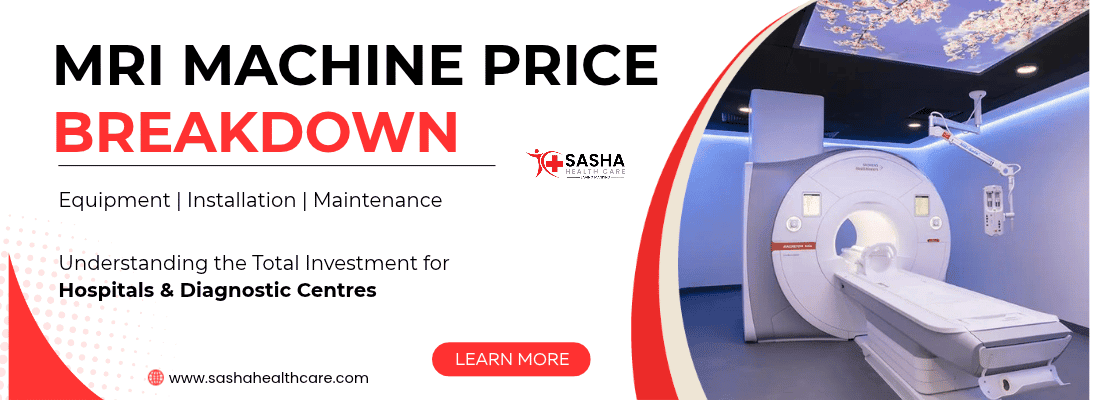
MRI Machine Price Breakdown – MRI Equipment, Installation and Maintenance for Hospitals and Diagnostic Centres
MRI Machine Price Breakdown: Equipment, Installation and Maintenance

Investing in an MRI machine is one of the most important financial decisions for a hospital or diagnostic centre. While understanding the MRI Machine Price is essential, the actual investment involves much more than purchasing the scanner. Infrastructure preparation, installation, electrical requirements, cooling systems, staffing and ongoing maintenance all contribute to the total MRI Machine Cost.

Whether you are planning to establish a new diagnostic centre, expand an existing hospital or upgrade your imaging department, understanding these expenses can help you make a better investment decision.

In this guide, we will break down the major costs associated with purchasing an MRI machine in India, including new and Refurbished MRI machine options, installation requirements and long-term maintenance.

Understanding MRI Machine Price in India

The MRI Machine Price in India varies depending on several factors, including the manufacturer, magnet strength, equipment generation, software capabilities, gradient performance and overall system condition.

MRI machines are available in different configurations, including 1.5 Tesla (1.5T) and 3 Tesla (3T) systems. Each configuration serves different clinical requirements and patient volumes.

For example, a diagnostic centre primarily handling routine neurological and musculoskeletal examinations may find a 1.5T MRI system suitable. On the other hand, a tertiary care hospital offering advanced neurological, cardiac and specialised imaging services may consider a 3T MRI system.

The important thing to remember is that the purchase price is only one part of the investment.

Before finalising a machine, hospitals should evaluate:

  • Equipment purchase price.
  • Magnet and gradient specifications.
  • Available imaging software and applications.
  • Installation and commissioning expenses.
  • Infrastructure preparation.
  • Warranty and technical support.
  • Annual maintenance expenses.

Understanding these elements helps hospitals estimate their actual investment rather than focusing only on the equipment quotation.

Factors That Influence MRI Machine Cost

Why can two MRI machines with the same Tesla strength have significantly different prices?

The answer lies in their technology, configuration and condition.

Manufacturer and Brand

Established manufacturers such as Siemens Healthineers, GE HealthCare and Philips offer MRI systems with different technologies, software platforms and configurations.

The manufacturer’s reputation, system generation, availability of spare parts and technical support can influence the overall MRI Machine Cost.

Tesla Strength

Magnet strength is another important factor.

A 3T MRI system generally offers higher magnetic field strength than a 1.5T system. However, the right choice depends on clinical applications, patient requirements and the hospital’s investment capacity.

Software and Applications

Advanced imaging applications can increase the equipment’s value.

Depending on the configuration, hospitals may require applications for:

  • Neurological imaging.
  • Musculoskeletal imaging.
  • Cardiac MRI.
  • Breast MRI.
  • Whole-body imaging.
  • Angiography.
  • Diffusion and perfusion imaging.

Equipment Generation and Condition

For refurbished systems, manufacturing year, installation history, operating hours, system condition and component availability are important considerations.

A well-maintained refurbished MRI scanner with suitable specifications may provide excellent value compared with purchasing a new system.

New vs Refurbished MRI Machine: Which Is Better?

One of the biggest decisions hospitals face is whether to purchase a new MRI machine or invest in a Refurbished MRI machine.

Both options have advantages, and the right decision depends on the hospital’s clinical requirements and available budget.

New MRI Machines

New MRI systems offer the latest available technologies, manufacturer-backed warranty arrangements and access to newer software configurations.

However, their initial investment is generally higher.

They may be suitable for large hospitals, newly established premium diagnostic centres and institutions requiring specific advanced imaging applications.

Refurbished MRI Machines

A Refurbished MRI machine is a previously installed system that has undergone inspection, servicing, necessary component replacement and refurbishment according to its configuration and condition.

These machines can offer a more economical investment option for hospitals and diagnostic centres.

Potential advantages include:

  • Lower initial equipment investment.
  • Access to established MRI technologies.
  • Multiple manufacturer and model options.
  • Reduced capital expenditure compared with comparable new systems.
  • Opportunities to expand diagnostic services within a controlled budget.

However, buyers should carefully evaluate equipment condition, refurbishment quality, software licensing, magnet performance, warranty coverage and service support.

Which Option Should You Choose?

Consider your expected patient volume, available investment, clinical applications and long-term operational requirements.

The best investment is not necessarily the cheapest machine. It is the system that delivers reliable performance and meets your diagnostic requirements over its expected operating life.

MRI Machine Price Based on Tesla Strength

Tesla strength is one of the most commonly used factors when comparing MRI systems.

1.5 Tesla MRI Machine

A 1.5T MRI scanner is widely used in hospitals and diagnostic centres.

It supports several routine and advanced imaging applications, depending on the system configuration.

Common applications include:

  • Brain and spine imaging.
  • Orthopaedic examinations.
  • Abdominal imaging.
  • Pelvic imaging.
  • Musculoskeletal studies.

For many diagnostic centres, a 1.5T system offers a practical balance between clinical capabilities and investment requirements.

3 Tesla MRI Machine

A 3T MRI system offers higher magnetic field strength and can support advanced imaging protocols.

It is commonly considered by hospitals that require specialised neurological, cardiac, research and advanced imaging capabilities.

However, the investment, infrastructure and operational requirements should be evaluated carefully.

Important: There is no universal MRI Machine Price for each Tesla category. The final quotation depends on the manufacturer, model, configuration, software, equipment condition and included services.

Hospitals should request a detailed quotation based on their specific requirements rather than comparing Tesla strength alone.

Major Equipment Components and Their Costs

An MRI scanner is not simply one machine. It consists of several interconnected components that work together to produce diagnostic images.

Understanding these components helps buyers evaluate equipment quotations.

Main Magnet

The magnet is the central component of an MRI system. It creates the magnetic field required for imaging.

The magnet’s condition, stability, specifications and helium-related requirements are important considerations when purchasing an MRI machine.

Gradient System

Gradient coils control the position and direction of MRI signals to produce clear, detailed images. Their performance plays an important role in image quality, scanning speed and overall system efficiency.

RF System and Coils

The radiofrequency system transmits and receives signals during MRI examinations.

Different RF coils are used for different anatomical regions, including the head, spine, body, knee and other applications.

The number and type of coils included in the equipment configuration can influence the overall purchase price.

Patient Table

The patient table supports positioning and movement during examinations.

Its weight capacity, movement mechanism and compatibility with the scanner should be checked before purchase.

Computer and Software

The operating console, reconstruction computers and imaging software are essential for acquiring, processing and reviewing MRI images.

Hospitals should verify the available software versions, licences, applications and compatibility before finalising the deal.

MRI Machine Installation and Infrastructure Costs

Purchasing an MRI scanner is only the beginning. Proper infrastructure preparation is essential before installation.

MRI machines require specialised rooms and supporting systems to ensure safe and efficient operation.

MRI Room Preparation

The MRI installation area generally requires:

  • Dedicated scanner room.
  • RF shielding.
  • Magnetic shielding, where required by site design.
  • Patient preparation area.
  • Operator and control room.
  • Appropriate access and safety arrangements.

The room layout should be designed according to the selected MRI system’s specifications.

RF Shielding

Radiofrequency shielding prevents external electromagnetic interference from affecting MRI image quality.

The shielding design and installation must be suitable for the equipment and site conditions.

Civil and Structural Work

Hospitals may need to modify existing rooms or construct new facilities.

This can involve flooring, wall modifications, ceiling preparation, access arrangements and structural considerations.

Equipment Transportation and Installation

MRI systems contain large and sensitive components.

Transportation, unloading, positioning, assembly and installation require experienced technical teams and appropriate equipment.

Depending on the model and project scope, these activities can contribute significantly to the total installation budget.

Electrical and Cooling Requirements

MRI equipment requires reliable electrical power and appropriate environmental conditions.

These supporting systems should be included in the initial project budget.

Electrical Infrastructure

Hospitals may need dedicated electrical arrangements, including:

  • Suitable power distribution.
  • Electrical panels.
  • Earthing systems.
  • Voltage stabilisation, where specified.
  • UPS arrangements for designated systems.
  • Backup power planning.

The exact requirements depend on the MRI manufacturer’s specifications and site conditions.

Cooling System

MRI scanners generate heat during operation and require appropriate cooling arrangements.

Cooling systems help maintain suitable operating conditions for equipment components.

The cooling solution may involve chillers, heat exchangers, dedicated HVAC arrangements or other manufacturer-specified systems.

Liquid Helium Requirements

Many superconducting MRI systems use liquid helium to maintain the magnet at extremely low temperatures.

Hospitals should understand the magnet’s helium requirements, monitoring arrangements, servicing needs and any applicable helium-related costs.

For refurbished MRI systems, it is particularly important to check magnet condition and helium management history.

MRI Machine Maintenance Cost

Maintenance is an important part of the total MRI Machine Cost.

Even a high-quality MRI scanner requires regular servicing, inspections and technical support to maintain consistent performance.

Maintenance requirements depend on the manufacturer, system generation, operating hours, equipment condition and availability of technical support.

Preventive Maintenance

Preventive maintenance involves scheduled inspections and servicing to identify potential problems before they affect equipment operation.

Typical activities include:

  • Equipment performance checks.
  • System inspections.
  • Cooling system monitoring.
  • Electrical checks.
  • Review of system error logs.
  • Inspection of selected components.
  • Software and operational checks.

Regular preventive maintenance can help reduce unexpected breakdowns.

Corrective Maintenance

Corrective maintenance is performed when equipment develops a fault or stops functioning correctly.

Depending on the issue, it may involve component repair, replacement, troubleshooting or software-related support.

The cost depends on the nature of the problem and the parts or technical resources required.

Spare Parts and Component Replacement

Certain components may require replacement during the equipment’s operating life.

Hospitals should understand the availability, pricing and expected delivery timelines of essential spare parts.

Downtime Management

Equipment downtime can affect patient appointments, hospital revenue and diagnostic workflows.

Therefore, maintenance planning should consider not only repair expenses but also the financial impact of interrupted operations.

AMC and CMC: Understanding Service Contracts

Hospitals purchasing MRI equipment should understand the difference between Annual Maintenance Contracts (AMC) and Comprehensive Maintenance Contracts (CMC).

Both arrangements can help manage servicing requirements, depending on the coverage agreed upon.

Annual Maintenance Contract (AMC)

An AMC generally covers agreed preventive maintenance and technical support services.

However, spare parts and major component replacements may be excluded unless specifically mentioned in the agreement.

Comprehensive Maintenance Contract (CMC)

A CMC generally provides broader maintenance coverage and may include specified spare parts and component replacement.

The exact coverage varies between service providers and contract terms.

Before signing an AMC or CMC, hospitals should verify:

  • Preventive maintenance frequency.
  • Breakdown response time.
  • Availability of qualified engineers.
  • Spare parts coverage.
  • Exclusions and limitations.
  • Emergency technical support.
  • Contract duration.
  • Service-level commitments.

A properly structured maintenance contract can make operational expenses more predictable and support equipment availability.

Hidden Costs Hospitals Should Consider

Some expenses are easily overlooked when calculating the MRI Machine Price.

However, these costs can significantly influence the final investment.

Staffing Expenses

Hospitals need qualified MRI technologists, radiologists, nurses and supporting personnel depending on their operational model.

Staff training and recruitment should be included in the project budget.

Regulatory and Safety Requirements

Hospitals must assess applicable regulatory, radiation-safety and MRI safety requirements.

Although MRI does not use ionising radiation, proper magnetic-field safety arrangements are essential.

Software Upgrades

Additional imaging applications, software upgrades and licensing arrangements may involve separate costs.

Buyers should clarify which applications are included in the quotation.

Patient Comfort and Facility Management

Patient monitoring arrangements, emergency equipment, air conditioning, facility maintenance and patient preparation areas also contribute to operational expenses.

Insurance and Operational Expenses

Equipment insurance, electricity consumption, cooling, helium management and other recurring expenses should be considered when calculating long-term ownership costs.

How to Calculate the Total Cost of Ownership

A common mistake is comparing MRI machines only by their initial purchase prices.

A better approach is to calculate the Total Cost of Ownership (TCO).

Think of an MRI machine like a vehicle. The purchase price is only the beginning; fuel, servicing, insurance and repairs determine how much it actually costs to operate.

The same principle applies to MRI equipment.

A hospital can use the following calculation:

Total MRI Investment =

  • Equipment purchase price.
  • Transportation and installation.
  • Civil and infrastructure preparation.
  • Electrical and cooling arrangements.
  • Initial helium-related requirements, where applicable.
  • Software and application costs.
  • Initial training and commissioning.
  • Annual maintenance expenses.
  • Other recurring operational expenses.

For example, consider two MRI systems:

System A has a lower purchase price but requires substantial infrastructure modifications and additional servicing.

System B has a higher purchase price but includes installation support, suitable accessories and a more comprehensive service arrangement.

Which is the better investment?

The answer depends on the total expected expenditure, equipment reliability, clinical requirements and long-term operating costs.

Hospitals should compare quotations using the same scope of work and ownership period.

Tips to Reduce MRI Machine Investment

A hospital does not always need to purchase the most expensive MRI system to provide quality diagnostic services.

With proper planning, it is possible to optimise the MRI Machine Cost without compromising essential clinical requirements.

Choose the Right Tesla Strength

Select 1.5T or 3T based on expected patient volume, clinical applications and available investment.

Consider Refurbished MRI Machines

A Refurbished MRI machine can be an attractive option for hospitals seeking to manage capital expenditure.

Evaluate the equipment’s technical condition, refurbishment history, software configuration and warranty before purchasing.

Compare Multiple Equipment Configurations

Do not compare machines based only on their brand names.

Compare model generation, available coils, software applications, gradient specifications and included accessories.

Plan Infrastructure Before Purchase

Consult experienced installation professionals before selecting the equipment.

This can help identify room modifications, electrical requirements and cooling arrangements early in the project.

Discuss Maintenance Before Finalising the Purchase

Request AMC and CMC quotations along with the equipment quotation.

This gives hospital management a clearer understanding of the future maintenance budget.

Choosing the Right MRI Equipment Supplier

Selecting the right supplier is just as important as selecting the right MRI scanner.

A reliable supplier should understand equipment specifications, installation requirements and the technical support needed after commissioning.

Before choosing an MRI equipment supplier, consider the following:

  • Experience in MRI equipment sourcing and refurbishment.
  • Availability of different manufacturers and models.
  • Transparency in equipment specifications.
  • Technical inspection and refurbishment processes.
  • Installation and commissioning support.
  • Availability of MRI engineers.
  • AMC and CMC service capabilities.
  • Spare parts and technical assistance.
  • Warranty terms and after-sales support.

Ask for a detailed equipment quotation and clarify exactly what is included.

Hospitals should also request relevant technical documentation and verify the machine’s condition before making a financial commitment.

How Sasha Healthcare Supports Medical Imaging Requirements

Sasha Healthcare is involved in sourcing, remarketing, refurbishing and reassembling pre-owned superconducting MRI machines and CT scanners in India.

The company supports hospitals and diagnostic centres looking for medical imaging equipment solutions, including refurbished MRI and CT systems.

Its offerings include equipment sourcing, installation-related support and MRI and CT service solutions, including AMC and CMC arrangements.

For hospitals evaluating their next MRI investment, understanding equipment specifications, infrastructure requirements and long-term service support is essential to making an informed purchasing decision.

Conclusion

Understanding the MRI Machine Price requires looking beyond the equipment quotation. Installation, infrastructure, electrical systems, cooling, software, maintenance and service contracts all contribute to the overall investment.

Whether you choose a new MRI system or a Refurbished MRI machine, focus on clinical requirements, equipment condition, technical support and total cost of ownership.

A well-planned investment can help hospitals improve diagnostic capabilities, manage capital expenditure and build sustainable imaging services.
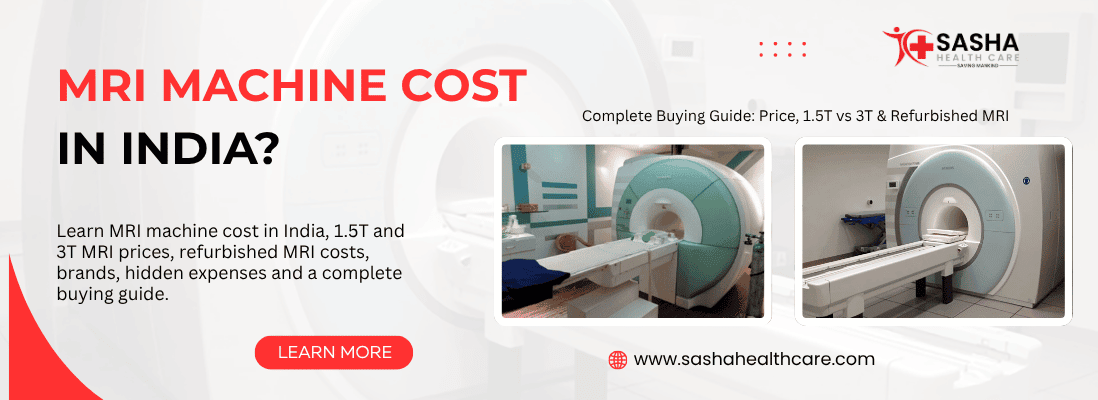
MRI machine cost in India and refurbished MRI machine buying guide
MRI Machine Cost in India | Complete Buying Guide

If you are planning to buy an MRI machine in India, the MRI machine cost can vary significantly depending on the field strength, brand, model, condition, configuration, software, coils, installation requirements and after-sales support. As a broad market indication, refurbished MRI machines can cost considerably less than new systems, while 3T systems generally require a higher investment than 1.5T systems.

For hospitals and diagnostic centres, the right MRI machine should be selected based not only on the purchase price but also on clinical requirements, patient volume, infrastructure, maintenance and long-term operating costs.

MRI Machine Cost in India at a Glance

The following table provides an indicative comparison. Actual prices can vary substantially based on the specific system, model, year, configuration, refurbishment level, warranty and installation scope.

MRI Machine TypeIndicative Price Range in India*Suitable For
Refurbished 1.5T MRI₹60 lakh–₹1.5 crore+Diagnostic centres, hospitals
New 1.5T MRI₹1.5–₹3 crore+Hospitals, high-volume centres
Refurbished 3T MRI₹1.2–₹2.5 crore+Advanced diagnostic centres, hospitals
New 3T MRI₹2.5–₹5 crore+Advanced hospitals and imaging centres

*These are broad indicative ranges, not fixed quotations. The actual MRI machine price in India depends on brand, model, configuration, machine condition, coils, software, installation, warranty and service requirements.

For an accurate quotation, buyers should compare complete machine specifications and total project costs rather than comparing the equipment price alone.

MRI Machine Price vs MRI Machine Cost

The terms MRI machine price and MRI machine cost are often used interchangeably, but they can represent different things.

The purchase price is the amount paid for the MRI system itself. The total project cost can include:

  • MRI machine purchase price
  • Transportation
  • Loading and lifting
  • Installation
  • Site preparation
  • RF shielding
  • Electrical work
  • HVAC requirements
  • UPS or power infrastructure
  • Accessories and coils
  • Cryogen requirements where applicable
  • Warranty
  • Preventive maintenance
  • AMC or CMC
  • Spare parts
  • Software and application packages

Therefore, a machine with a lower purchase price does not necessarily have the lowest total cost of ownership.

What Determines MRI Machine Cost in India?

Several factors influence the final MRI machine price.

1.5T vs 3T MRI

1.5T MRI systems are widely used for routine diagnostic imaging and are suitable for many hospitals and diagnostic centres. They can provide a strong balance between image quality, clinical capability and investment.

3T MRI systems provide higher magnetic field strength and can offer advantages for selected neurological, musculoskeletal, vascular and advanced imaging applications. However, they generally require a higher investment and may have additional infrastructure and operational considerations.

The right choice depends on patient volume, clinical applications, budget and available infrastructure rather than simply choosing the highest Tesla strength.

Brand and Model

Major MRI manufacturers include:

  • Siemens
  • GE
  • Philips
  • Canon
  • Hitachi/Fujifilm

The price can vary significantly between models from the same manufacturer. Newer generations, advanced gradients, additional coils, software applications and higher specifications can increase the overall investment.

New vs Refurbished MRI Machine

One of the biggest factors affecting MRI machine cost in India is whether the system is new or refurbished.

A new MRI machine generally provides the latest available platform, newer components and manufacturer-specific support options. However, the initial investment can be significantly higher.

A refurbished MRI machine can provide an alternative for hospitals and diagnostic centres that want to control capital expenditure.

A professionally refurbished MRI system should be evaluated for:

  • Magnet condition
  • System history
  • Coil condition
  • Image quality
  • Gradient performance
  • Software
  • Hardware condition
  • Cryogen system
  • Preventive maintenance
  • Replacement components
  • Warranty
  • Installation
  • Technical support

A refurbished machine should not be evaluated only by its low price. The refurbishment process, technical inspection and supplier support are equally important.

Refurbished MRI Machine Cost in India

The refurbished MRI machine price depends on the manufacturer, model, field strength, age, configuration, condition and refurbishment scope.

Refurbished systems can be particularly attractive to:

  • New diagnostic centres
  • Hospitals with limited capital budgets
  • Centres replacing older MRI systems
  • Healthcare investors
  • Facilities expanding imaging capacity

Before purchasing a refurbished MRI machine, ask the supplier for the complete machine specification, manufacturing year, model information, refurbishment details, included coils, software configuration, warranty and service terms.

A reliable supplier should also be able to explain the transportation, installation and after-sales support process.

1.5T MRI Machine Cost in India

A 1.5T MRI machine is one of the most commonly considered MRI configurations for hospitals and diagnostic centres.

Its popularity comes from its broad clinical usability and balance between investment and capability.

A refurbished 1.5T MRI can be a cost-effective option when the system has been properly inspected and refurbished.

When comparing 1.5T systems, evaluate:

  • Manufacturer
  • Exact model
  • Manufacturing year
  • Magnet condition
  • Gradient specifications
  • Number and type of coils
  • Software packages
  • Patient table specifications
  • Image quality
  • Warranty
  • Installation
  • Service support

The cheapest 1.5T MRI is not necessarily the best investment. A machine with stronger technical support and a comprehensive warranty may provide better long-term value.

3T MRI Machine Cost in India

A 3T MRI machine generally requires a higher investment than a 1.5T system.

3T systems can be considered by hospitals and diagnostic centres that require advanced imaging capabilities and have sufficient patient volume and infrastructure.

Before purchasing a 3T MRI, evaluate:

  • Clinical applications
  • Expected patient volume
  • Available infrastructure
  • Electrical requirements
  • Cooling requirements
  • MRI room specifications
  • RF shielding
  • Quench arrangements
  • Coils and accessories
  • Software applications
  • Service availability

A 3T MRI is not automatically the right choice for every facility. A properly selected 1.5T system may be a better investment for a centre whose clinical workload does not require 3T capabilities.

MRI Machine Price Comparison by Brand

Brand pricing varies by model and configuration, so buyers should compare specific systems rather than assuming that one manufacturer always costs more.

BrandCommon MRI OptionsTypical Field StrengthKey Considerations
SiemensMAGNETOM systems1.5T, 3TStrong range of clinical applications
GESIGNA systems1.5T, 3TWide range of configurations
PhilipsIngenia and other systems1.5T, 3TAdvanced imaging technologies
CanonVantage systems1.5T, 3TPatient comfort and imaging features
Hitachi/FujifilmVarious systems1.5T and othersModel availability and service support

For refurbished MRI equipment, availability can depend on the specific model and market.

New MRI vs Refurbished MRI: Which Should You Buy?
FactorNew MRIRefurbished MRI
Initial investmentHigherLower
TechnologyLatest available platformDepends on model
Budget suitabilityHigher capital requirementMore budget-friendly
WarrantyUsually manufacturer/supplier basedSupplier/refurbisher based
DepreciationHigher initial depreciationGenerally lower acquisition cost
AvailabilityDepends on manufacturerDepends on available inventory
MaintenanceManufacturer/service networkSupplier/service network
Best suited forNew high-end installationsCost-conscious facilities

A refurbished MRI machine can be a practical option when the equipment has been properly evaluated, professionally refurbished and supported by a reliable technical team.

Hidden Costs When Buying an MRI Machine

The machine price is only one part of the investment.

Potential additional costs include:

Site Preparation

The MRI room may require RF shielding, electrical work, HVAC, structural modifications and other infrastructure.

Transportation and Lifting

MRI equipment is heavy and requires specialized transportation, handling and lifting arrangements.

Installation

Installation should be performed by qualified technical personnel and may include system assembly, calibration, testing and commissioning.

Maintenance

Long-term costs can include preventive maintenance, breakdown support, genuine spare parts, AMC and CMC.

Cryogen and Cooling

Depending on the MRI system, cryogen-related requirements and components such as the cold head may need attention during the machine’s lifecycle.

Understanding these costs before purchase helps hospitals and diagnostic centres prepare a realistic investment budget.

How to Calculate the Total MRI Investment

A simple approach is:

Total MRI Investment = Machine Price + Transportation + Lifting + Site Preparation + Installation + Accessories + Warranty/Service + Other Applicable Costs

For a better financial assessment, buyers should also calculate the Total Cost of Ownership (TCO).

TCO considers not only the initial purchase but also maintenance, downtime, spare parts, service, energy requirements and other expenses throughout the machine’s useful life.

MRI Machine Buying Guide for Hospitals and Diagnostic Centres

Before buying an MRI machine, follow these steps:

  1. Estimate expected patient volume.
  2. Identify required clinical applications.
  3. Decide between 1.5T and 3T.
  4. Compare Siemens, GE, Philips and other suitable brands.
  5. Compare new and refurbished systems.
  6. Check the exact model and manufacturing year.
  7. Review magnet and coil condition.
  8. Check software and applications.
  9. Confirm infrastructure requirements.
  10. Evaluate warranty coverage.
  11. Ask about AMC/CMC options.
  12. Confirm spare parts availability.
  13. Compare installation and transportation services.
  14. Review supplier technical support.
  15. Request a detailed quotation.
  16. Conduct technical due diligence before finalizing the purchase.
Questions to Ask an MRI Machine Supplier

Before purchasing, ask:

  • What is the exact MRI model?
  • What is the field strength?
  • Is the machine new or refurbished?
  • What is the manufacturing year?
  • What is the refurbishment scope?
  • Which coils are included?
  • Which software applications are included?
  • What is the magnet condition?
  • What warranty is provided?
  • Is transportation included?
  • Is installation included?
  • Is lifting included?
  • What site requirements are necessary?
  • Are AMC or CMC services available?
  • What technical support is provided?
  • Are genuine spare parts available?

These questions help buyers compare quotations on a like-for-like basis.

Is a Refurbished MRI Machine Worth Buying?

A refurbished MRI machine can be worth considering when budget, availability and clinical requirements are important factors.

However, buyers should focus on the overall condition and support package rather than purchasing solely based on the lowest price.

A professionally refurbished system with proper inspection, suitable coils, verified image quality, warranty and technical support can be a practical option for many hospitals and diagnostic centres.

For a high-end facility requiring the latest technology and manufacturer-specific features, a new MRI may be more appropriate.

How to Choose the Right MRI Machine Supplier in India

The supplier is an important part of the MRI investment.

Before choosing a supplier, evaluate:

  • Medical equipment experience
  • Technical expertise
  • Refurbishment process
  • Machine inspection
  • Installation capability
  • Transportation and lifting support
  • Warranty
  • Spare parts availability
  • AMC/CMC support
  • Technical assistance
  • Transparent quotation
  • After-sales service

Sasha HealthCare supplies medical imaging equipment and supports customers with MRI transportation, installation, de-installation, technical support, preventive maintenance, AMC/CMC and related services.

If you are planning to purchase an MRI machine, you can contact Sasha HealthCare to discuss available systems, specifications and your project requirements.

MRI Machine Cost Comparison: Quick Reference
MRI SystemRelative InvestmentSuitable ForMain Consideration
Refurbished 1.5TLowerDiagnostic centres and hospitalsCondition and service support
New 1.5TMedium–HighHospitals and imaging centresHigher initial investment
Refurbished 3TMedium–HighAdvanced imaging centresInfrastructure and refurbishment
New 3THighAdvanced hospitalsCapital and infrastructure requirements

The final MRI machine cost in India should always be confirmed through a detailed quotation for the exact machine configuration.

Conclusion:

The right MRI machine is not necessarily the cheapest machine or the most expensive machine. The best choice depends on the balance between clinical requirements, patient volume, machine condition, technology, infrastructure, service support and total cost of ownership.

Whether you are considering a 1.5T MRI, 3T MRI, new MRI or refurbished MRI machine, compare the complete package before making your investment decision.

What is the cost of an MRI machine in India?

The cost varies depending on field strength, brand, model, condition and configuration. Refurbished MRI systems can be significantly less expensive than new systems. A detailed quotation is required to determine the actual investment.

Which is better, 1.5T or 3T MRI?

Neither is universally better. A 1.5T MRI may suit routine clinical requirements and many diagnostic centres, while 3T can be appropriate for facilities requiring advanced imaging applications. The choice depends on clinical needs and budget.

What should I check before buying a refurbished MRI?

Check the exact model, manufacturing year, system history, magnet condition, coils, software, image quality, refurbishment scope, warranty, installation and technical support.

What affects MRI machine cost?

Major factors include Tesla strength, brand, model, age, condition, coils, software, installation, transportation, warranty and service requirements.

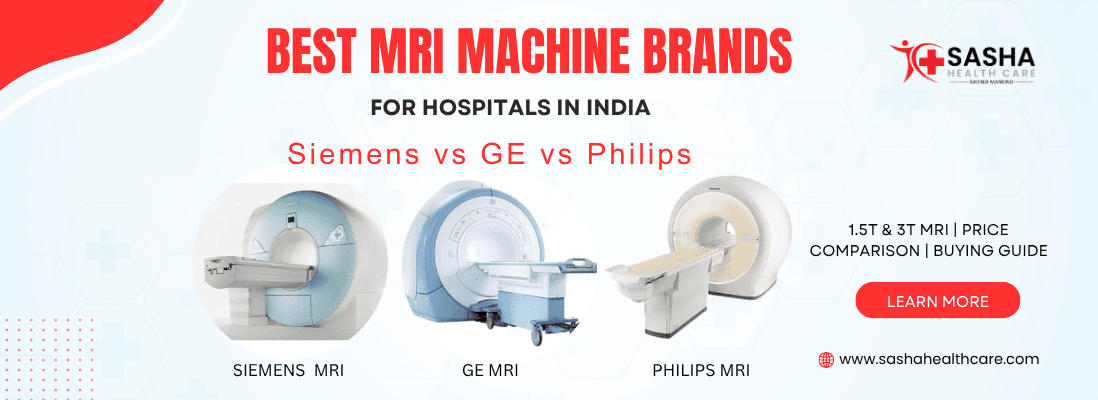
Best MRI machine brands for hospitals in India – Siemens vs GE vs Philips
Best MRI Machine Brands for Hospitals in India: Siemens vs GE vs Philips

Choosing the right MRI machine is an important decision for hospitals and diagnostic centres in India. The MRI system affects diagnostic capabilities, patient throughput, operating costs, service requirements, and long-term return on investment.

Among the major MRI manufacturers, Siemens Healthineers, GE HealthCare, and Philips are widely considered by healthcare providers. Each brand offers different MRI platforms, configurations, software, coils, and clinical applications.

So, which is the best MRI machine brand for hospitals in India?

There is no single answer for every hospital. The right choice depends on clinical requirements, patient volume, budget, infrastructure, field strength, service support, and total cost of ownership.

Siemens vs GE vs Philips MRI: Quick Comparison
FactorSiemensGE HealthCarePhilips
Brand positioningPremium MRI technologyStrong clinical & workflow solutionsAdvanced imaging & patient-focused solutions
Common hospital choice1.5T & 3T1.5T & 3T1.5T & 3T
Suitable forHospitals & diagnostic centresHospitals & diagnostic centresHospitals & diagnostic centres
Image qualityHigh, configuration dependentHigh, configuration dependentHigh, configuration dependent
Clinical applicationsBroadBroadBroad
Refurbished availabilityAvailableAvailableAvailable
Key considerationModel, configuration & serviceModel, configuration & serviceModel, configuration & service

Siemens MRI Machines

Siemens Healthineers is one of the leading names in medical imaging and offers MRI systems across different field strengths and clinical requirements.

Siemens MRI systems are available in configurations suitable for routine imaging as well as more advanced applications. Hospitals considering Siemens should evaluate the exact model, magnet condition, software, coils, gradients, installation requirements, and available technical support.

For hospitals looking for a 1.5T MRI machine, Siemens has several established systems that can be considered depending on the hospital’s requirements and budget.

Refurbished Siemens MRI machines can also be an option for hospitals seeking to reduce the initial equipment investment.


GE MRI Machines

GE HealthCare is another major MRI manufacturer with systems used across hospitals and diagnostic centres.

GE MRI systems are available in both 1.5T and 3T configurations, depending on the model and application requirements.

When comparing a GE MRI machine, hospitals should look beyond the brand name and evaluate the specific system configuration, available coils, software, gradient performance, installation requirements, service history, and warranty.

For hospitals with budget considerations, a properly refurbished GE MRI machine can provide an alternative to purchasing a new system.


Philips MRI Machines

Philips is also an established MRI manufacturer offering systems for different clinical applications.

Philips MRI systems focus on imaging capabilities, workflow, patient experience, and clinical applications. As with Siemens and GE, the actual capabilities depend on the specific MRI model and configuration.

Hospitals evaluating Philips MRI should compare the complete package, including coils, software, installation, warranty, service support, and long-term maintenance requirements.


Siemens vs GE vs Philips: MRI Price Comparison in India

MRI machine prices in India vary significantly. There is no single price for a particular brand because the final quotation depends on whether the machine is new or refurbished, its field strength, model, software, coils, installation, transportation, warranty, and service package.

The following ranges are indicative planning ranges, not fixed market quotations.

MRI CategoryIndicative Price Range in India
Refurbished 1.5T MRI₹1.0 crore – ₹2.5 crore*
Refurbished 3T MRI₹2.0 crore – ₹4.0 crore*
New 1.5T MRI₹3.0 crore – ₹6.0+ crore*
New 3T MRI₹5.0 crore – ₹10.0+ crore*

*Indicative ranges only. Actual pricing can vary substantially based on manufacturer, model, configuration, year, coils, software, installation, warranty, taxes, logistics, and site requirements.

For a specific Siemens vs GE vs Philips price comparison, hospitals should compare equivalent systems—for example, a 1.5T system against another 1.5T system with similar coils, software, accessories, warranty, and service coverage.

A lower initial quotation does not necessarily mean lower overall cost. Total cost of ownership should also be considered.


1.5T vs 3T MRI for Hospitals

One of the most important decisions is whether the hospital needs a 1.5T or 3T MRI machine.

1.5T MRI

A 1.5T MRI can be suitable for many routine hospital and diagnostic applications. It can offer a practical balance between clinical capability, infrastructure requirements, patient throughput, and investment.

It may be particularly suitable for hospitals performing a broad range of routine MRI examinations.

3T MRI

A 3T MRI can provide advantages for certain advanced imaging applications and may be attractive to hospitals with higher patient volumes or specialized clinical requirements.

However, 3T is not automatically the best choice for every hospital. Infrastructure, budget, clinical workload, applications, and technical support should all be considered.


How Should Hospitals Choose the Best MRI Brand?

Before purchasing an MRI machine, hospitals should evaluate:

  • Patient volume
  • Clinical applications
  • 1.5T or 3T requirements
  • MRI machine price
  • Available budget
  • Room and infrastructure requirements
  • RF shielding
  • Electrical requirements
  • HVAC requirements
  • MRI coils
  • Software
  • Patient comfort
  • Scan workflow
  • Installation
  • Transportation and lifting
  • Warranty
  • AMC/CMC
  • Spare parts availability
  • Technical support

For refurbished MRI equipment, also check the system’s service history, magnet condition, software, coils, error history, refurbishment process, warranty, and installation support.


New vs Refurbished MRI Machines

A new MRI machine provides access to current manufacturer offerings and typically comes with manufacturer warranty and support options. However, the initial investment can be significant.

A refurbished MRI machine can offer a lower acquisition cost and may be suitable for hospitals and diagnostic centres with budget constraints.

However, buyers should purchase refurbished equipment only after evaluating the system’s technical condition, refurbishment quality, warranty, installation, spare parts availability, and after-sales support.

Sasha HealthCare supplies refurbished MRI systems from leading manufacturers, including Siemens, GE, and Philips, subject to model and availability.


Which Is the Best MRI Machine Brand for Hospitals in India?

Siemens, GE, and Philips can all be suitable MRI brands for hospitals in India. The best choice depends on the hospital’s clinical requirements, patient volume, budget, infrastructure, preferred applications, and service support.

Rather than choosing a brand solely based on reputation, hospitals should compare specific MRI models and complete configurations.

For example, a hospital looking for a cost-effective routine imaging solution may evaluate refurbished 1.5T systems, while a high-volume or specialized centre may consider a 3T system.

The right MRI machine is therefore the one that provides the required clinical capability, reliability, workflow, service support, and total cost of ownership for that particular facility.

Conclusion:

When comparing Siemens vs GE vs Philips MRI machines, hospitals should focus on the complete equipment package rather than the brand alone.

Evaluate the MRI model, 1.5T/3T field strength, clinical applications, coils, software, infrastructure, price, warranty, installation, maintenance, and technical support before making a purchasing decision.

Looking for a Siemens, GE, or Philips MRI machine for your hospital or diagnostic centre? Sasha HealthCare can help you evaluate suitable new or refurbished MRI systems based on your requirements and budget.

Which is the best MRI machine brand for hospitals in India?

Siemens, GE HealthCare, and Philips are major MRI brands that hospitals can consider. The best choice depends on the hospital’s clinical applications, field strength requirements, budget, infrastructure, and service support.

Is Siemens MRI better than GE MRI?

Neither can be universally considered better. The comparison should be made between specific Siemens and GE models with similar field strength, coils, software, applications, and configurations.

Is 1.5T or 3T MRI better for hospitals?

Both have important applications. A 1.5T MRI can be suitable for many routine hospital applications, while 3T can be valuable for certain advanced imaging requirements. The appropriate choice depends on the hospital’s workload and clinical needs.

How much does an MRI machine cost in India?

MRI machine prices vary widely. Refurbished systems can cost considerably less than new systems, while 3T systems generally require a higher investment than comparable 1.5T systems. The exact quotation depends on the model and configuration.

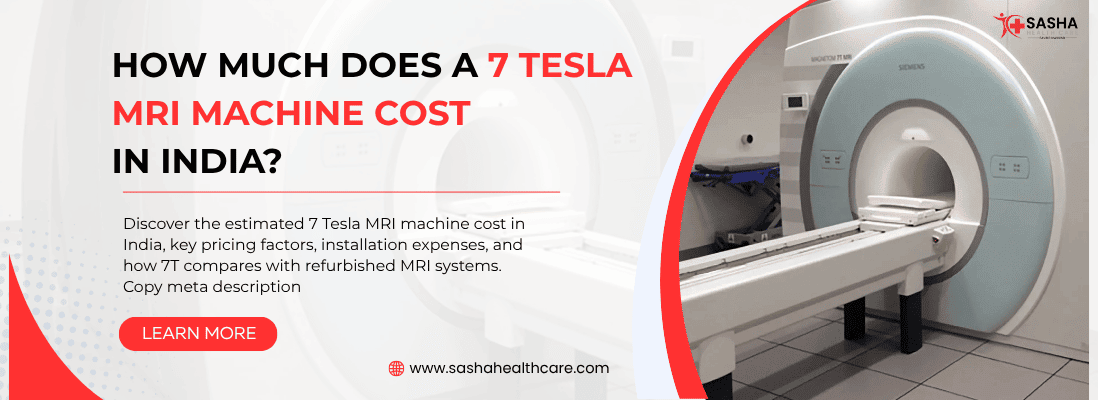
7 Tesla MRI scanner in a modern medical research imaging facility
How Much Does a 7 Tesla MRI Machine Cost in India? Price Guide

The 7 Tesla MRI machine cost in India can vary significantly depending on the scanner configuration, installation requirements, research applications, import expenses, and supporting infrastructure. Unlike conventional 1.5 Tesla and 3 Tesla MRI systems used in many hospitals, a 7 Tesla MRI scanner is an ultra-high-field imaging system primarily associated with advanced medical research and specialized clinical applications.

As a preliminary budgeting reference, a 7T MRI project may require an investment of several tens of crores of rupees. An indicative planning range of ₹40 crore to ₹85 crore or more may be considered for initial discussions, but this is not a verified Indian market quotation. Buyers should obtain current manufacturer or authorized supplier quotations to establish the actual equipment and project cost.

For hospitals and diagnostic centres evaluating their options, it is also important to compare 7T systems with new and refurbished 1.5T and 3T MRI machines. These alternatives may be more practical for routine diagnostic imaging, depending on patient volume, clinical requirements, available infrastructure, and budget.

In this guide, Sasha HealthCare explains the factors influencing MRI machine prices in India, the differences between 7T, 3T, and 1.5T systems, refurbished MRI purchasing considerations, and the additional costs involved in establishing an MRI facility.

Quick Answer: What Is the Price of a 7 Tesla MRI Machine in India?

The cost of a 7 Tesla MRI machine depends on the manufacturer, configuration, research or clinical applications, site requirements, and installation scope.

Pricing considerationDetails
Preliminary 7T budget estimate₹40–85 crore or more; unverified planning range
Actual equipment quotationDepends on the selected system and supplier
Installation and infrastructureMay involve substantial additional expenditure
Annual maintenanceDepends on the service agreement and system configuration
Refurbished alternatives1.5T and 3T MRI systems may offer more practical purchasing options for routine diagnostic services

Important: The range above is an indicative budgeting assumption, not a confirmed selling price, official market average, or guaranteed installed cost. A complete project budget should be based on a current written quotation that clearly identifies equipment, taxes, installation, infrastructure, warranty, and service coverage.

What Is a 7 Tesla MRI Machine?

A 7 Tesla MRI machine is a magnetic resonance imaging system that operates at a magnetic field strength of 7 Tesla. The Tesla unit measures magnetic flux density, which describes the strength of the scanner’s magnetic field.

For comparison, many conventional hospital MRI systems operate at 1.5T or 3T. A 7T system produces a substantially stronger magnetic field and can provide increased signal-to-noise ratio for selected imaging applications. This can support high-resolution anatomical imaging and advanced research into brain structure, neurological conditions, functional imaging, and other specialized applications.

However, a higher magnetic field does not automatically make a scanner the best option for every patient or clinical requirement. Image quality also depends on the imaging protocol, coils, sequence design, artifacts, patient characteristics, and the expertise of the imaging team.

Common applications of 7T MRI

Depending on the system, regulatory authorization, and clinical or research setting, 7T MRI may be used for:

  • Advanced neurological and neuroscience research
  • High-resolution brain imaging
  • Studies of small anatomical structures
  • Functional MRI research
  • Research into neurological disorders
  • Specialized musculoskeletal imaging
  • Academic and translational medical research

A 7T system is not simply a more powerful version of a standard diagnostic scanner. It requires specialized protocols, safety procedures, infrastructure, trained personnel, and careful evaluation of clinical indications.

Why Is a 7 Tesla MRI Machine So Expensive?

The cost of a 7T MRI scanner reflects more than the magnet itself. The system requires specialized engineering, radiofrequency technology, imaging hardware, installation planning, and ongoing technical support.

1. Ultra-high-field magnet technology

The magnet is a central component of an MRI system. Ultra-high-field equipment requires precise engineering, stringent field-uniformity requirements, and specialized system integration.

The magnet design, cryogenic or cooling arrangements, operating requirements, and overall scanner configuration can significantly affect the purchase price.

2. Specialized imaging technology

A 7T scanner may require specialized radiofrequency coils, receiver channels, software, pulse sequences, and reconstruction capabilities.

The final configuration depends on whether the system is intended for neuroscience research, advanced anatomical imaging, or other approved applications.

3. Dedicated site infrastructure

A facility planning to install a 7T MRI system must evaluate the room layout, structural requirements, electromagnetic environment, electrical supply, cooling, access routes, and magnetic-field safety arrangements.

The infrastructure budget depends on the building, scanner specifications, site preparation, and manufacturer’s installation requirements.

4. Transportation and installation

Transporting and installing a specialized MRI scanner can require detailed logistics planning, suitable lifting equipment, access-route assessment, specialist engineers, and commissioning.

The cost depends on the origin of the equipment, transport arrangements, site accessibility, and installation scope.

5. Service and maintenance

MRI equipment requires planned maintenance, technical support, software support, and access to suitable spare parts.

For an ultra-high-field system, buyers should clarify the manufacturer’s service coverage, engineer availability, response times, replacement-part arrangements, and the cost of the service contract before making a purchasing decision.

Factors Affecting the 7 Tesla MRI Machine Cost in India

There is no single price that applies to every 7T MRI system. The following factors influence the overall investment.

Manufacturer and scanner configuration

The selected manufacturer, model, magnet design, software options, imaging coils, and included accessories affect the quotation. Research-focused configurations may differ from systems intended for specific clinical applications.

New or previously installed equipment

A new system and a previously installed system may have different purchase prices. However, a lower purchase price does not necessarily mean a lower total project cost.

The buyer must consider equipment condition, remaining service life, component availability, software support, installation feasibility, and any refurbishment or recommissioning work.

Import expenses and taxes

Where equipment is imported, the final cost may be affected by freight, insurance, applicable customs duties, taxes, exchange rates, and local delivery expenses. The treatment of these costs depends on the transaction and applicable regulations.

Site preparation

A building that already meets the necessary engineering requirements may need less modification than a facility requiring extensive structural or electrical work.

A site survey should be completed before the project budget is finalized.

Warranty and service agreement

Warranty duration, parts coverage, labour, preventive maintenance, software support, and emergency service arrangements can change the total cost of ownership.

Buyers should compare the complete scope of each quotation rather than considering only the scanner’s headline price.

7 Tesla vs 3 Tesla vs 1.5 Tesla MRI Machines

Choosing an MRI scanner requires balancing clinical requirements, image quality, patient volume, installation costs, operating expenses, and available expertise.

Feature1.5T MRI3T MRI7T MRI
Magnetic field strength1.5 Tesla3 Tesla7 Tesla
Typical roleRoutine diagnostic imaging and many specialist applicationsAdvanced diagnostic imaging and selected researchUltra-high-field clinical and research applications
Relative equipment costGenerally lowerGenerally higher than comparable 1.5T systemsSpecialized, high-investment category
InfrastructureStandard MRI-specific planningMRI-specific planning, with configuration-dependent requirementsSpecialized site assessment and safety planning
Patient suitabilityBroad range of routine applicationsBroad range, subject to clinical considerationsMore specialized indications and protocols
Refurbished purchasingEstablished option in many marketsAvailable, depending on model and conditionAvailability and support require specific verification

Actual costs depend on the manufacturer, model, included accessories, installation scope, and market conditions. This table describes broad differences rather than a guaranteed price ranking for every system configuration.

When should a hospital consider a 1.5T MRI?

A 1.5T MRI machine may be appropriate for hospitals and diagnostic centres that need a versatile scanner for routine clinical examinations.

It can be a practical option for facilities prioritizing patient throughput, broad clinical utility, budget management, and access to service support.

When should a hospital consider a 3T MRI?

A 3T MRI scanner may be appropriate for facilities requiring advanced imaging capabilities, subject to their clinical workload and available expertise.

It can be attractive for hospitals with specialist radiology services, neurological imaging requirements, and higher-end diagnostic applications.

When should an institution consider a 7T MRI?

A 7T MRI may be worth evaluating when an institution has a specific ultra-high-field research or specialized clinical requirement, suitable infrastructure, trained personnel, and a sustainable operating budget.

For many facilities focused on routine diagnostic services, a 7T system may not be necessary. A detailed clinical and financial feasibility study should precede any purchase decision.

Can You Buy a Refurbished 7 Tesla MRI Machine?

The availability of a refurbished 7 Tesla MRI machine must be confirmed for the specific manufacturer, model, equipment condition, and intended use.

The refurbished MRI market is more familiar to many hospitals for conventional 1.5T and 3T systems. However, a refurbished 7T system presents additional questions regarding technical support, research configuration, software licensing, site compatibility, spare parts, and the manufacturer’s willingness to support the equipment.

Before considering a used or refurbished ultra-high-field scanner, buyers should verify:

  • The exact manufacturer and model
  • Original installation and service history
  • Magnet condition and documented system performance
  • Availability of compatible coils and accessories
  • Software licences and upgrade options
  • Manufacturer or qualified service-provider support
  • Installation, commissioning, and safety requirements
  • Warranty scope and exclusions
  • Suitability for the intended clinical or research application

A refurbished scanner should not be purchased solely because its initial price appears lower. The cost of restoring, transporting, installing, and supporting the system may materially affect the overall investment.

For buyers considering refurbished MRI equipment, confirming the specific model and serviceability is essential before making a financial commitment.

Refurbished MRI Machine Price in India: What Buyers Should Know

Hospitals and diagnostic centres often evaluate refurbished MRI machines when they want to expand imaging capacity while managing capital expenditure.

The price of a refurbished MRI machine depends on its field strength, manufacturer, model, age, technical condition, software, coils, warranty, installation requirements, and availability of spare parts.

Because these variables differ substantially between machines, there is no single reliable price that applies to all refurbished MRI systems.

What affects refurbished MRI pricing?

Magnetic field strength: A 1.5T and a 3T scanner have different specifications and may serve different clinical requirements.

Manufacturer and model: Equipment from different manufacturers and product generations can differ in configuration, support arrangements, and component availability.

Technical condition: Buyers should review the service history, documented performance, fault history, and condition of key components.

Included accessories: Coils, patient tables, workstations, software, and other accessories may affect the final quotation.

Warranty and support: A clearly defined warranty and an achievable technical-support arrangement are important when evaluating refurbished equipment.

Installation and logistics: De-installation, packing, transportation, lifting, reinstallation, and commissioning may need to be included in the project budget.

Is refurbished MRI equipment a practical alternative to 7T?

For a hospital or diagnostic centre focused on routine clinical imaging, a refurbished 1.5T or 3T MRI system may be a more practical option than investing in a specialized 7T research platform.

The right choice depends on the facility’s clinical requirements, projected patient volume, budget, infrastructure, and support arrangements.

Sasha HealthCare supplies refurbished medical imaging equipment, including MRI systems. Buyers can discuss available models, specifications, equipment condition, installation requirements, and quotations with the team.

Additional Costs of Installing a 7 Tesla MRI Machine

When estimating the 7 Tesla MRI machine cost in India, it is important to distinguish the equipment purchase price from the total installed project cost.

The following expenses may need to be budgeted separately, depending on what the supplier includes in the quotation.

1. MRI room and RF shielding

MRI rooms require appropriate radiofrequency shielding and electromagnetic-environment planning. The design should be compatible with the scanner and the manufacturer’s specifications.

2. Structural work and site preparation

Floor loading, room dimensions, access corridors, door openings, ceiling clearances, and lifting access should be assessed before delivery.

Renovation costs can vary substantially between facilities.

3. Electrical and cooling systems

The facility must provide suitable electrical infrastructure and environmental controls according to the selected scanner’s specifications.

4. Magnetic-field safety and quench provisions

The project must address magnetic-field safety, controlled access, equipment placement, and emergency procedures. Quench-related engineering, including a quench pipe where required by the system design, must follow the manufacturer’s requirements and applicable safety standards.

5. Transportation, lifting, and installation

The quotation should clarify whether transportation, unloading, lifting, installation, commissioning, and acceptance testing are included.

6. Staff training and operating procedures

Personnel require appropriate training for MRI operations, patient screening, equipment safety, and the selected imaging applications.

7. Maintenance and service contracts

Annual maintenance costs depend on the equipment, contract scope, parts coverage, service response commitments, and the availability of qualified engineers.

Ask suppliers to itemize these costs rather than assuming that the scanner’s purchase price covers the entire project.

Is a 7 Tesla MRI Machine Suitable for Your Hospital or Diagnostic Centre?

The right MRI system depends on the institution’s clinical objectives rather than magnetic field strength alone.

Before choosing a 7T scanner, hospital owners and administrators should evaluate the following questions.

What examinations will the facility perform?

Identify the required clinical applications, expected case mix, specialist services, and any research objectives.

Is there sufficient patient demand?

Estimate the expected examination volume and determine whether the proposed scanner is appropriate for the facility’s service model.

Is the building suitable?

Obtain a technical site assessment covering structural, electrical, cooling, shielding, safety, and access requirements.

Is qualified staff available?

Consider radiologists, MRI technologists, biomedical engineering support, research personnel, and the training required for the chosen system.

Can the facility support long-term operating costs?

Assess service contracts, consumables where applicable, utilities, staffing, repairs, and equipment downtime.

Would a 1.5T or 3T system meet the requirements?

Compare the expected clinical benefits and total project cost before committing to an ultra-high-field platform.

A feasibility study should compare the proposed system with suitable alternatives and clearly explain the clinical and financial reasons for selecting it.

Questions to Ask Before Purchasing an MRI Machine

Whether you are evaluating a new or refurbished MRI scanner, ask the supplier:

  1. What is the exact manufacturer, model, field strength, and configuration?
  2. What is included in the equipment quotation?
  3. Are coils, workstations, software, and accessories included?
  4. Is the scanner new, used, or refurbished?
  5. What documentation is available for service history and technical condition?
  6. Is installation and commissioning included?
  7. What site-preparation work is required?
  8. What warranty is offered, and what exclusions apply?
  9. Are spare parts and qualified technical support available?
  10. What are the expected maintenance requirements?
  11. Are transportation, lifting, taxes, and insurance included in the final cost?
  12. What acceptance tests and handover documentation will be provided?

For a 7T MRI system, also confirm the intended application, system-specific safety requirements, software and coil compatibility, manufacturer support, and the suitability of the facility for installation.

How to Obtain an MRI Equipment Quotation in India

The most useful quotation is based on the equipment specification and the facility’s actual requirements.

When requesting a quotation, provide the supplier with:

  • Required magnetic field strength: 1.5T, 3T, or 7T
  • Preferred manufacturer and model, if known
  • Intended clinical or research applications
  • New or refurbished equipment preference
  • Required coils, accessories, and software
  • Facility location and installation requirements
  • Expected examination volume
  • Warranty and service expectations
  • Approximate project budget

Compare quotations on a like-for-like basis. A lower equipment price may not represent better value if essential accessories, installation, warranty, or technical support are excluded.

For refurbished systems, request details of the equipment’s condition, service history, configuration, included components, warranty, and installation scope.

Conclusion

The 7 Tesla MRI machine cost in India depends on the selected scanner, its configuration, the intended application, installation requirements, and ongoing support arrangements. A preliminary budget estimate of ₹40–85 crore or more should be treated only as an initial planning reference until confirmed through current supplier quotations.

For institutions conducting advanced neuroscience research or specialized imaging, a 7T system may offer valuable capabilities. For hospitals and diagnostic centres focused on routine clinical imaging, a new or refurbished 1.5T or 3T MRI machine may be a more appropriate investment.

Before purchasing any MRI system, evaluate the equipment specification, total installed cost, warranty, technical support, infrastructure, and long-term operating requirements.

Looking for refurbished MRI equipment for your hospital or diagnostic centre?

Sasha HealthCare can help you discuss available refurbished MRI systems, specifications, installation requirements, and quotations for suitable equipment.

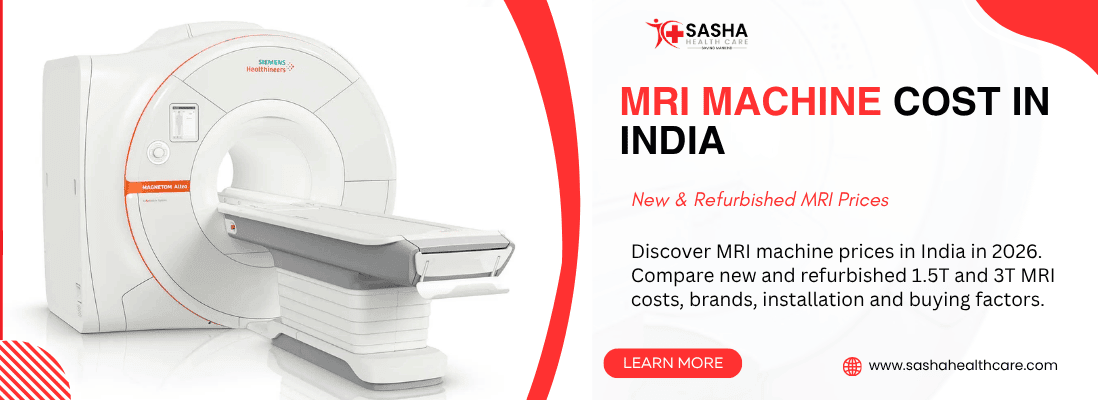
MRI machine cost in India 2026 for new and refurbished MRI machines
MRI Machine Prices in India: The Complete 2026 Guide to New & Refurbished MRI Costs

The MRI machine price in India can range from approximately ₹1 crore to more than ₹20 crore, depending on the magnetic field strength, manufacturer, model, software configuration, year of manufacture, clinical applications, accessories, installation requirements, and whether the system is new or refurbished.

For hospitals, diagnostic centres, imaging centres, and healthcare investors, choosing an MRI system is a major capital investment. The purchase price of the scanner is only one part of the total project cost. Site preparation, RF shielding, electrical infrastructure, HVAC, quench-pipe requirements, coils, software, installation, warranty, service contracts, and future maintenance can significantly affect the final investment.

In this 2026 MRI machine price guide, we compare the expected cost of new and refurbished MRI systems in India, explain the difference between 1.5 Tesla and 3 Tesla MRI machines, examine the major brands and models, and provide a practical checklist for buyers.

MRI Machine Price in India in 2026

There is no single fixed price for an MRI machine because configurations vary significantly. Current market references show substantial differences between new, used, and professionally refurbished systems.

MRI Machine TypeApproximate Price in India
Low-field / Open MRI₹80 lakh – ₹2.5 crore+
Refurbished 1.5T MRI₹1.2 crore – ₹4 crore+
Refurbished 3T MRI₹4 crore – ₹8 crore+
New 1.5T MRI₹5 crore – ₹10 crore+
New 3T MRI₹8 crore – ₹22 crore+

These figures should be treated as indicative planning ranges rather than fixed quotations. A particular MRI model may be priced substantially higher or lower depending on its configuration and what is included in the supplier’s quotation.

For example, current Indian market listings show refurbished 1.5T systems from different manufacturers at significantly different prices, while premium 3T systems can command substantially higher investments.

How Much Does a 1.5 Tesla MRI Machine Cost in India?

A 1.5 Tesla MRI machine remains one of the most practical choices for hospitals and diagnostic centres because it provides a broad range of clinical applications without the investment level of many 3T systems.

A refurbished 1.5T MRI can typically fall in the range of approximately ₹1.2 crore to ₹4 crore or more, depending on the manufacturer, model, age, software, coils, gradient performance, refurbishment quality, and warranty.

New 1.5T systems can cost approximately ₹5 crore to ₹10 crore or more depending on the configuration and manufacturer.

Popular 1.5T MRI systems in the Indian market include models from:

  • GE HealthCare
  • Siemens Healthineers
  • Philips
  • Canon Medical Systems
  • Hitachi / Fujifilm Healthcare

Some commonly encountered refurbished systems include GE SIGNA HDxt, Siemens MAGNETOM Avanto, Siemens MAGNETOM Essenza, Philips Achieva and other comparable 1.5T platforms.

For routine brain, spine, musculoskeletal, abdomen, pelvis and many other examinations, a properly configured 1.5T system can provide a strong balance between clinical capability, acquisition cost and operating economics.

How Much Does a 3 Tesla MRI Machine Cost in India?

A 3 Tesla MRI machine offers a higher magnetic field strength than a 1.5T system and is generally positioned as a premium imaging solution.

Refurbished 3T MRI machines can commonly range from approximately ₹4 crore to ₹8 crore or more, while new premium 3T systems can reach ₹12 crore, ₹15 crore, ₹20 crore or more, depending on configuration and clinical requirements. Current market references demonstrate the wide range of pricing available for 3T systems.

A 3T MRI may be particularly attractive for facilities handling significant volumes of:

  • Advanced neurological imaging
  • Musculoskeletal imaging
  • High-resolution vascular studies
  • Advanced cardiac imaging
  • Prostate imaging
  • Functional MRI
  • Diffusion and perfusion studies
  • Research and specialist applications

However, higher Tesla does not automatically mean that a 3T system is the right investment for every diagnostic centre. Patient volume, referral patterns, radiologist requirements, local competition, available infrastructure and expected return on investment should all be evaluated.

Refurbished MRI Machine Price in India

For hospitals and diagnostic centres working with a controlled capital budget, a refurbished MRI machine can provide a significantly lower entry cost than purchasing a new system.

Current Indian market references place many refurbished 1.5T systems around ₹1.2 crore–₹4 crore, while refurbished 3T systems can range from approximately ₹4 crore–₹8 crore or higher.

The term refurbished should not simply mean “used.”

A professionally refurbished MRI system should undergo an engineering evaluation covering critical components such as:

  • Magnet condition
  • Gradient system
  • RF system
  • Patient table
  • Cooling system
  • Computer and reconstruction hardware
  • RF coils
  • Software
  • Workstation
  • System calibration
  • Image quality
  • Safety systems
  • Preventive maintenance requirements

The exact refurbishment process differs between suppliers. Therefore, buyers should ask for a clear refurbishment report and equipment history rather than relying only on the word “refurbished.”

New vs Refurbished MRI Machine: Which Is Better?

The right choice depends on the business model and clinical requirements of the facility.

FactorNew MRIRefurbished MRI
Initial investmentHigherLower
TechnologyLatest generationDepends on model
Equipment ageNewPre-owned
WarrantyUsually comprehensiveDepends on supplier
SoftwareLatest available configurationDepends on system
Capital requirementHighMore manageable
ROI potentialDepends on utilizationOften attractive for budget-focused centres
AvailabilityUsually order-basedCan be faster depending on stock
Service requirementsOEM/service contractSupplier/OEM/service provider dependent

For a newly established diagnostic centre, a well-selected refurbished 1.5T MRI can sometimes provide a more practical starting point than investing in a premium new 3T system.

On the other hand, a high-volume tertiary-care hospital may prioritize the latest technology, advanced applications, higher throughput and comprehensive OEM support.

What Determines MRI Machine Price in India?

Several factors influence the final quotation.

1. Magnetic Field Strength

The Tesla rating is one of the most important factors.

A 0.2T or 0.3T system is generally positioned very differently from a 1.5T superconducting MRI, while a 3T system represents a higher-end configuration.

2. Brand and Model

Major manufacturers such as GE HealthCare, Siemens Healthineers, Philips and Canon Medical Systems have multiple product families.

Two 1.5T machines can therefore have very different prices because of their generation, software, gradients, coils, patient table, bore design and applications.

3. Manufacturing Year

For refurbished MRI machines, the manufacturing year and system generation can have a major impact on price.

A newer-generation system with modern software, stronger gradients and a better coil package will generally command a higher price than an older platform.

4. Software Configuration

MRI performance is not determined only by the magnet.

Clinical applications, reconstruction software, automation, motion correction, cardiac packages, diffusion techniques and other software options can substantially influence the value of a system.

5. MRI Coils

The coil package should always be evaluated carefully.

Depending on the intended applications, a facility may require:

  • Head coil
  • Spine coil
  • Body coil
  • Knee coil
  • Shoulder coil
  • Breast coil
  • Cardiac coil
  • Flexible coils
  • Other specialized coils

A low-priced MRI quotation may become significantly more expensive once the required coils and software are added.

6. Gradient Performance

Gradient amplitude and slew rate influence imaging performance, sequence capability and scan efficiency.

When comparing two MRI machines, buyers should evaluate the complete technical specification rather than comparing Tesla strength alone.

7. Bore Size and Patient Comfort

The bore design can affect patient experience.

For centres expecting a high volume of patients, particularly elderly, claustrophobic or larger-body patients, bore size and patient comfort should be considered alongside technical specifications.

8. Installation and Site Requirements

The MRI scanner itself is not the complete project.

Depending on the system, the site may require:

  • RF shielding
  • Magnetic shielding
  • HVAC
  • Electrical infrastructure
  • UPS
  • Chiller
  • Quench pipe
  • Control room
  • Equipment room
  • Patient preparation area
  • Safety systems
  • Civil modifications

Installation and infrastructure costs can therefore add a substantial amount to the overall project investment.

MRI Machine Installation Cost in India

One of the most common mistakes when calculating an MRI project budget is considering only the equipment purchase price.

The complete investment may include:

MRI scanner + coils + workstation + software + transportation + de-installation + installation + RF cage + electrical work + HVAC + commissioning + warranty/service support.

Depending on the building and site conditions, installation and infrastructure requirements can add tens of lakhs of rupees to the project cost. Current market estimates commonly place site-related installation work in the broad range of approximately ₹30 lakh–₹80 lakh, although actual requirements vary considerably.

A professional site survey should therefore be completed before finalizing the MRI machine.

Best MRI Machine Brands in India

The major MRI manufacturers commonly considered by Indian hospitals and diagnostic centres include:

GE HealthCare

GE MRI systems are widely used for routine and advanced diagnostic imaging. Refurbished GE systems can be attractive for facilities seeking established platforms at a lower capital cost.

Siemens Healthineers

Siemens MAGNETOM systems are widely used across different clinical environments. Models such as Avanto, Essenza, Aera and other MAGNETOM platforms can be found in the refurbished market.

Philips

Philips MRI systems are used across a wide range of clinical applications, with different platforms offering different workflow and imaging technologies.

Canon Medical Systems

Canon offers MRI systems focused on image quality, patient comfort and workflow efficiency.

Hitachi / Fujifilm Healthcare

Hitachi MRI systems, now associated with Fujifilm Healthcare, include both open and superconducting platforms used in different clinical settings.

The best MRI machine is not necessarily the most expensive machine. The appropriate choice depends on the clinical workload, budget, site, patient demographics, available service support and expected revenue.

How to Choose a Refurbished MRI Machine

Before purchasing a refurbished MRI scanner, we recommend checking the following:

Machine History

Ask for:

  • Manufacturing year
  • Previous installation location
  • De-installation history
  • Usage history where available
  • Service history
  • Major component replacement history
Magnet Condition

The magnet is one of the most important components of a superconducting MRI system.

Buyers should understand the magnet’s condition and history and determine whether there have been any significant incidents such as a quench.

Gradient System

Check gradient performance and service history.

Coils

Verify exactly which coils are included in the quotation and test their condition.

Software

Confirm the installed software version and the clinical applications included.

Image Quality

A demonstration scan or image-quality evaluation can help the buyer understand the actual performance of the system.

Warranty

Do not compare refurbished MRI quotations without comparing warranty coverage.

A lower machine price with minimal warranty may ultimately prove more expensive than a slightly higher-priced system with meaningful service support.

Service and AMC/CMC

Long-term service availability is critical because an MRI scanner represents a significant revenue-generating asset.

Ask about:

  • Preventive maintenance
  • Breakdown support
  • Spare parts
  • Response time
  • Engineer availability
  • AMC
  • CMC
  • Emergency support
How Much Does an MRI Machine Cost Including Installation?

A realistic project budget should not be based only on the equipment price.

For example, a diagnostic centre purchasing a ₹2 crore refurbished 1.5T MRI may have additional expenses for site modification, RF shielding, electrical infrastructure, HVAC, transportation, installation, accessories and commissioning.

Similarly, a ₹5 crore MRI machine does not necessarily mean that the total project investment will be ₹5 crore.

The final project cost should therefore be calculated as:

Total MRI Investment = Machine + Accessories + Installation + Infrastructure + Commissioning + Initial Service/Warranty + Other Project Costs

This approach gives hospitals and diagnostic centres a much more realistic financial picture.

Is Buying a Refurbished MRI Machine Worth It in 2026?

For many healthcare facilities, the answer can be yes—provided the machine is selected carefully.

A professionally refurbished MRI can reduce the initial capital requirement while giving a diagnostic centre access to established high-field imaging technology.

The important distinction is between a cheap used MRI and a properly refurbished MRI.

The cheapest quotation should not automatically be considered the best quotation.

Instead, compare:

Machine condition + technical specifications + coils + software + refurbishment quality + warranty + installation + service support + spare parts availability + total cost of ownership.

This approach can help prevent unexpected expenses after installation.

Final Thoughts: Choosing the Right MRI Machine in India

The MRI machine price in India in 2026 varies significantly because MRI systems are not commodities with one standard price.

A refurbished 1.5T system may be an attractive option for a new diagnostic centre looking to control capital expenditure, while a new 1.5T or 3T system may make more sense for a hospital seeking the latest technology, advanced applications and long-term OEM support.

Before making a purchase decision, we recommend evaluating the complete cost of ownership, not just the machine’s advertised price.

The right MRI investment should combine:

  • Appropriate Tesla strength
  • Reliable MRI platform
  • Suitable clinical applications
  • Required coils and software
  • Strong image quality
  • Professional installation
  • Comprehensive warranty
  • Reliable service support
  • Spare-parts availability
  • AMC/CMC options
  • A realistic return-on-investment plan

For hospitals and diagnostic centres comparing new and refurbished MRI machines in India, obtaining a detailed quotation based on the exact clinical and infrastructure requirements is the best way to determine the actual project cost.

Which MRI machine is best for a diagnostic centre?

For many diagnostic centres, a properly configured 1.5T MRI provides a practical balance of clinical applications and capital investment. However, high-volume or advanced imaging centres may benefit from a 3T system.

What is the price of a 3T MRI machine in India?

Refurbished 3T MRI systems can commonly fall around ₹4 crore–₹8 crore or higher, while new 3T systems may range from approximately ₹8 crore to ₹20 crore+, depending on the system and configuration.

What is the MRI machine price in India in 2026?

The price varies widely. A refurbished MRI can start at around ₹1 crore or more, while premium new 3T MRI systems can cost ₹20 crore or more, depending on configuration and project requirements.

What is the price of a 1.5T MRI machine in India?

A refurbished 1.5T MRI may typically cost around ₹1.2 crore–₹4 crore, while new 1.5T systems can range around ₹5 crore–₹10 crore or more depending on manufacturer and configuration.

0