
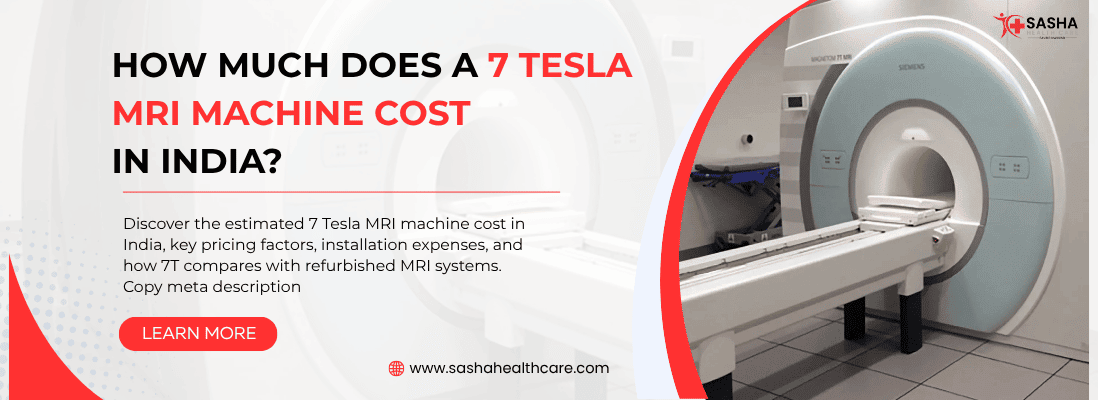
How Much Does a 7 Tesla MRI Machine Cost in India? Price Guide
The 7 Tesla MRI machine cost in India can vary significantly depending on the scanner configuration, installation requirements, research applications, import expenses, and supporting infrastructure. Unlike conventional 1.5 Tesla and 3 Tesla MRI systems used in many hospitals, a 7 Tesla MRI scanner is an ultra-high-field imaging system primarily associated with advanced medical research and specialized clinical applications.
As a preliminary budgeting reference, a 7T MRI project may require an investment of several tens of crores of rupees. An indicative planning range of ₹40 crore to ₹85 crore or more may be considered for initial discussions, but this is not a verified Indian market quotation. Buyers should obtain current manufacturer or authorized supplier quotations to establish the actual equipment and project cost.
For hospitals and diagnostic centres evaluating their options, it is also important to compare 7T systems with new and refurbished 1.5T and 3T MRI machines. These alternatives may be more practical for routine diagnostic imaging, depending on patient volume, clinical requirements, available infrastructure, and budget.
In this guide, Sasha HealthCare explains the factors influencing MRI machine prices in India, the differences between 7T, 3T, and 1.5T systems, refurbished MRI purchasing considerations, and the additional costs involved in establishing an MRI facility.
Quick Answer: What Is the Price of a 7 Tesla MRI Machine in India?
The cost of a 7 Tesla MRI machine depends on the manufacturer, configuration, research or clinical applications, site requirements, and installation scope.
| Pricing consideration | Details |
|---|---|
| Preliminary 7T budget estimate | ₹40–85 crore or more; unverified planning range |
| Actual equipment quotation | Depends on the selected system and supplier |
| Installation and infrastructure | May involve substantial additional expenditure |
| Annual maintenance | Depends on the service agreement and system configuration |
| Refurbished alternatives | 1.5T and 3T MRI systems may offer more practical purchasing options for routine diagnostic services |
Important: The range above is an indicative budgeting assumption, not a confirmed selling price, official market average, or guaranteed installed cost. A complete project budget should be based on a current written quotation that clearly identifies equipment, taxes, installation, infrastructure, warranty, and service coverage.
What Is a 7 Tesla MRI Machine?
A 7 Tesla MRI machine is a magnetic resonance imaging system that operates at a magnetic field strength of 7 Tesla. The Tesla unit measures magnetic flux density, which describes the strength of the scanner’s magnetic field.
For comparison, many conventional hospital MRI systems operate at 1.5T or 3T. A 7T system produces a substantially stronger magnetic field and can provide increased signal-to-noise ratio for selected imaging applications. This can support high-resolution anatomical imaging and advanced research into brain structure, neurological conditions, functional imaging, and other specialized applications.
However, a higher magnetic field does not automatically make a scanner the best option for every patient or clinical requirement. Image quality also depends on the imaging protocol, coils, sequence design, artifacts, patient characteristics, and the expertise of the imaging team.
Common applications of 7T MRI
Depending on the system, regulatory authorization, and clinical or research setting, 7T MRI may be used for:
- Advanced neurological and neuroscience research
- High-resolution brain imaging
- Studies of small anatomical structures
- Functional MRI research
- Research into neurological disorders
- Specialized musculoskeletal imaging
- Academic and translational medical research
A 7T system is not simply a more powerful version of a standard diagnostic scanner. It requires specialized protocols, safety procedures, infrastructure, trained personnel, and careful evaluation of clinical indications.
Why Is a 7 Tesla MRI Machine So Expensive?
The cost of a 7T MRI scanner reflects more than the magnet itself. The system requires specialized engineering, radiofrequency technology, imaging hardware, installation planning, and ongoing technical support.
1. Ultra-high-field magnet technology
The magnet is a central component of an MRI system. Ultra-high-field equipment requires precise engineering, stringent field-uniformity requirements, and specialized system integration.
The magnet design, cryogenic or cooling arrangements, operating requirements, and overall scanner configuration can significantly affect the purchase price.
2. Specialized imaging technology
A 7T scanner may require specialized radiofrequency coils, receiver channels, software, pulse sequences, and reconstruction capabilities.
The final configuration depends on whether the system is intended for neuroscience research, advanced anatomical imaging, or other approved applications.
3. Dedicated site infrastructure
A facility planning to install a 7T MRI system must evaluate the room layout, structural requirements, electromagnetic environment, electrical supply, cooling, access routes, and magnetic-field safety arrangements.
The infrastructure budget depends on the building, scanner specifications, site preparation, and manufacturer’s installation requirements.
4. Transportation and installation
Transporting and installing a specialized MRI scanner can require detailed logistics planning, suitable lifting equipment, access-route assessment, specialist engineers, and commissioning.
The cost depends on the origin of the equipment, transport arrangements, site accessibility, and installation scope.
5. Service and maintenance
MRI equipment requires planned maintenance, technical support, software support, and access to suitable spare parts.
For an ultra-high-field system, buyers should clarify the manufacturer’s service coverage, engineer availability, response times, replacement-part arrangements, and the cost of the service contract before making a purchasing decision.
Factors Affecting the 7 Tesla MRI Machine Cost in India
There is no single price that applies to every 7T MRI system. The following factors influence the overall investment.
Manufacturer and scanner configuration
The selected manufacturer, model, magnet design, software options, imaging coils, and included accessories affect the quotation. Research-focused configurations may differ from systems intended for specific clinical applications.
New or previously installed equipment
A new system and a previously installed system may have different purchase prices. However, a lower purchase price does not necessarily mean a lower total project cost.
The buyer must consider equipment condition, remaining service life, component availability, software support, installation feasibility, and any refurbishment or recommissioning work.
Import expenses and taxes
Where equipment is imported, the final cost may be affected by freight, insurance, applicable customs duties, taxes, exchange rates, and local delivery expenses. The treatment of these costs depends on the transaction and applicable regulations.
Site preparation
A building that already meets the necessary engineering requirements may need less modification than a facility requiring extensive structural or electrical work.
A site survey should be completed before the project budget is finalized.
Warranty and service agreement
Warranty duration, parts coverage, labour, preventive maintenance, software support, and emergency service arrangements can change the total cost of ownership.
Buyers should compare the complete scope of each quotation rather than considering only the scanner’s headline price.
7 Tesla vs 3 Tesla vs 1.5 Tesla MRI Machines
Choosing an MRI scanner requires balancing clinical requirements, image quality, patient volume, installation costs, operating expenses, and available expertise.
| Feature | 1.5T MRI | 3T MRI | 7T MRI |
|---|---|---|---|
| Magnetic field strength | 1.5 Tesla | 3 Tesla | 7 Tesla |
| Typical role | Routine diagnostic imaging and many specialist applications | Advanced diagnostic imaging and selected research | Ultra-high-field clinical and research applications |
| Relative equipment cost | Generally lower | Generally higher than comparable 1.5T systems | Specialized, high-investment category |
| Infrastructure | Standard MRI-specific planning | MRI-specific planning, with configuration-dependent requirements | Specialized site assessment and safety planning |
| Patient suitability | Broad range of routine applications | Broad range, subject to clinical considerations | More specialized indications and protocols |
| Refurbished purchasing | Established option in many markets | Available, depending on model and condition | Availability and support require specific verification |
Actual costs depend on the manufacturer, model, included accessories, installation scope, and market conditions. This table describes broad differences rather than a guaranteed price ranking for every system configuration.
When should a hospital consider a 1.5T MRI?
A 1.5T MRI machine may be appropriate for hospitals and diagnostic centres that need a versatile scanner for routine clinical examinations.
It can be a practical option for facilities prioritizing patient throughput, broad clinical utility, budget management, and access to service support.
When should a hospital consider a 3T MRI?
A 3T MRI scanner may be appropriate for facilities requiring advanced imaging capabilities, subject to their clinical workload and available expertise.
It can be attractive for hospitals with specialist radiology services, neurological imaging requirements, and higher-end diagnostic applications.
When should an institution consider a 7T MRI?
A 7T MRI may be worth evaluating when an institution has a specific ultra-high-field research or specialized clinical requirement, suitable infrastructure, trained personnel, and a sustainable operating budget.
For many facilities focused on routine diagnostic services, a 7T system may not be necessary. A detailed clinical and financial feasibility study should precede any purchase decision.
Can You Buy a Refurbished 7 Tesla MRI Machine?
The availability of a refurbished 7 Tesla MRI machine must be confirmed for the specific manufacturer, model, equipment condition, and intended use.
The refurbished MRI market is more familiar to many hospitals for conventional 1.5T and 3T systems. However, a refurbished 7T system presents additional questions regarding technical support, research configuration, software licensing, site compatibility, spare parts, and the manufacturer’s willingness to support the equipment.
Before considering a used or refurbished ultra-high-field scanner, buyers should verify:
- The exact manufacturer and model
- Original installation and service history
- Magnet condition and documented system performance
- Availability of compatible coils and accessories
- Software licences and upgrade options
- Manufacturer or qualified service-provider support
- Installation, commissioning, and safety requirements
- Warranty scope and exclusions
- Suitability for the intended clinical or research application
A refurbished scanner should not be purchased solely because its initial price appears lower. The cost of restoring, transporting, installing, and supporting the system may materially affect the overall investment.
For buyers considering refurbished MRI equipment, confirming the specific model and serviceability is essential before making a financial commitment.
Refurbished MRI Machine Price in India: What Buyers Should Know
Hospitals and diagnostic centres often evaluate refurbished MRI machines when they want to expand imaging capacity while managing capital expenditure.
The price of a refurbished MRI machine depends on its field strength, manufacturer, model, age, technical condition, software, coils, warranty, installation requirements, and availability of spare parts.
Because these variables differ substantially between machines, there is no single reliable price that applies to all refurbished MRI systems.
What affects refurbished MRI pricing?
Magnetic field strength: A 1.5T and a 3T scanner have different specifications and may serve different clinical requirements.
Manufacturer and model: Equipment from different manufacturers and product generations can differ in configuration, support arrangements, and component availability.
Technical condition: Buyers should review the service history, documented performance, fault history, and condition of key components.
Included accessories: Coils, patient tables, workstations, software, and other accessories may affect the final quotation.
Warranty and support: A clearly defined warranty and an achievable technical-support arrangement are important when evaluating refurbished equipment.
Installation and logistics: De-installation, packing, transportation, lifting, reinstallation, and commissioning may need to be included in the project budget.
Is refurbished MRI equipment a practical alternative to 7T?
For a hospital or diagnostic centre focused on routine clinical imaging, a refurbished 1.5T or 3T MRI system may be a more practical option than investing in a specialized 7T research platform.
The right choice depends on the facility’s clinical requirements, projected patient volume, budget, infrastructure, and support arrangements.
Sasha HealthCare supplies refurbished medical imaging equipment, including MRI systems. Buyers can discuss available models, specifications, equipment condition, installation requirements, and quotations with the team.
Additional Costs of Installing a 7 Tesla MRI Machine
When estimating the 7 Tesla MRI machine cost in India, it is important to distinguish the equipment purchase price from the total installed project cost.
The following expenses may need to be budgeted separately, depending on what the supplier includes in the quotation.
1. MRI room and RF shielding
MRI rooms require appropriate radiofrequency shielding and electromagnetic-environment planning. The design should be compatible with the scanner and the manufacturer’s specifications.
2. Structural work and site preparation
Floor loading, room dimensions, access corridors, door openings, ceiling clearances, and lifting access should be assessed before delivery.
Renovation costs can vary substantially between facilities.
3. Electrical and cooling systems
The facility must provide suitable electrical infrastructure and environmental controls according to the selected scanner’s specifications.
4. Magnetic-field safety and quench provisions
The project must address magnetic-field safety, controlled access, equipment placement, and emergency procedures. Quench-related engineering, including a quench pipe where required by the system design, must follow the manufacturer’s requirements and applicable safety standards.
5. Transportation, lifting, and installation
The quotation should clarify whether transportation, unloading, lifting, installation, commissioning, and acceptance testing are included.
6. Staff training and operating procedures
Personnel require appropriate training for MRI operations, patient screening, equipment safety, and the selected imaging applications.
7. Maintenance and service contracts
Annual maintenance costs depend on the equipment, contract scope, parts coverage, service response commitments, and the availability of qualified engineers.
Ask suppliers to itemize these costs rather than assuming that the scanner’s purchase price covers the entire project.
Is a 7 Tesla MRI Machine Suitable for Your Hospital or Diagnostic Centre?
The right MRI system depends on the institution’s clinical objectives rather than magnetic field strength alone.
Before choosing a 7T scanner, hospital owners and administrators should evaluate the following questions.
What examinations will the facility perform?
Identify the required clinical applications, expected case mix, specialist services, and any research objectives.
Is there sufficient patient demand?
Estimate the expected examination volume and determine whether the proposed scanner is appropriate for the facility’s service model.
Is the building suitable?
Obtain a technical site assessment covering structural, electrical, cooling, shielding, safety, and access requirements.
Is qualified staff available?
Consider radiologists, MRI technologists, biomedical engineering support, research personnel, and the training required for the chosen system.
Can the facility support long-term operating costs?
Assess service contracts, consumables where applicable, utilities, staffing, repairs, and equipment downtime.
Would a 1.5T or 3T system meet the requirements?
Compare the expected clinical benefits and total project cost before committing to an ultra-high-field platform.
A feasibility study should compare the proposed system with suitable alternatives and clearly explain the clinical and financial reasons for selecting it.
Questions to Ask Before Purchasing an MRI Machine
Whether you are evaluating a new or refurbished MRI scanner, ask the supplier:
- What is the exact manufacturer, model, field strength, and configuration?
- What is included in the equipment quotation?
- Are coils, workstations, software, and accessories included?
- Is the scanner new, used, or refurbished?
- What documentation is available for service history and technical condition?
- Is installation and commissioning included?
- What site-preparation work is required?
- What warranty is offered, and what exclusions apply?
- Are spare parts and qualified technical support available?
- What are the expected maintenance requirements?
- Are transportation, lifting, taxes, and insurance included in the final cost?
- What acceptance tests and handover documentation will be provided?
For a 7T MRI system, also confirm the intended application, system-specific safety requirements, software and coil compatibility, manufacturer support, and the suitability of the facility for installation.
How to Obtain an MRI Equipment Quotation in India
The most useful quotation is based on the equipment specification and the facility’s actual requirements.
When requesting a quotation, provide the supplier with:
- Required magnetic field strength: 1.5T, 3T, or 7T
- Preferred manufacturer and model, if known
- Intended clinical or research applications
- New or refurbished equipment preference
- Required coils, accessories, and software
- Facility location and installation requirements
- Expected examination volume
- Warranty and service expectations
- Approximate project budget
Compare quotations on a like-for-like basis. A lower equipment price may not represent better value if essential accessories, installation, warranty, or technical support are excluded.
For refurbished systems, request details of the equipment’s condition, service history, configuration, included components, warranty, and installation scope.
Conclusion
The 7 Tesla MRI machine cost in India depends on the selected scanner, its configuration, the intended application, installation requirements, and ongoing support arrangements. A preliminary budget estimate of ₹40–85 crore or more should be treated only as an initial planning reference until confirmed through current supplier quotations.
For institutions conducting advanced neuroscience research or specialized imaging, a 7T system may offer valuable capabilities. For hospitals and diagnostic centres focused on routine clinical imaging, a new or refurbished 1.5T or 3T MRI machine may be a more appropriate investment.
Before purchasing any MRI system, evaluate the equipment specification, total installed cost, warranty, technical support, infrastructure, and long-term operating requirements.
Looking for refurbished MRI equipment for your hospital or diagnostic centre?
Sasha HealthCare can help you discuss available refurbished MRI systems, specifications, installation requirements, and quotations for suitable equipment.