How Much Does a Siemens 1.5T MRI Cost in India? Complete Price Guide
A Siemens 1.5T MRI machine is a widely considered option for hospitals, diagnostic centres, and healthcare institutions looking to establish or upgrade their magnetic resonance imaging (MRI) services. Known for its advanced imaging capabilities, clinical versatility, and range of system configurations, a Siemens 1.5 Tesla MRI scanner can support routine diagnostic examinations as well as a variety of specialised imaging applications.
However, the cost of a Siemens 1.5T MRI machine in India depends on several factors, including the model, manufacturing year, system condition, software configuration, gradient performance, coil package, installation requirements, and after-sales service arrangements.
For healthcare providers planning an MRI installation, understanding the differences between new and refurbished systems is essential. A refurbished Siemens MRI machine may offer a more economical alternative to a new system while providing the imaging capabilities required for many clinical applications.
In this guide, we examine Siemens 1.5T MRI prices, the factors affecting equipment costs, popular system considerations, installation expenses, and the key points hospitals should evaluate before purchasing an MRI scanner.
What Is the Price of a Siemens 1.5T MRI Machine in India?
The price of a Siemens 1.5T MRI machine varies significantly depending on whether the equipment is new, refurbished, or previously installed and available for resale.
For budgeting purposes, healthcare providers should distinguish between the equipment purchase price and the total project cost, which may include site preparation, installation, electrical infrastructure, shielding, cooling systems, and service support.
The following figures are indicative budgeting ranges rather than verified current quotations. Actual prices should be confirmed with suppliers based on the specific model and configuration.
| Siemens 1.5T MRI category | Indicative price range |
|---|---|
| Older refurbished Siemens 1.5T MRI systems | ₹1.5 crore–₹3 crore |
| Mid-generation refurbished Siemens 1.5T MRI systems | ₹2.5 crore–₹4.5 crore |
| Newer-generation refurbished Siemens 1.5T MRI systems | ₹4 crore–₹7 crore or more |
| New Siemens 1.5T MRI systems | Supplier quotation required |
Note: These ranges are broad planning estimates, not confirmed Siemens India prices. Categories may overlap, and the final cost depends on the system’s age, configuration, condition, included services, taxes, and installation scope.
A lower-priced scanner may require additional investment in upgrades, replacement components, or site modifications. Conversely, a higher-priced system may include a more comprehensive coil package, advanced software applications, installation support, and service coverage.
We recommend obtaining an itemised quotation that clearly identifies the equipment supplied, included accessories, installation responsibilities, warranty terms, and exclusions.
Factors That Affect Siemens 1.5T MRI Machine Prices
Several technical and commercial factors determine the final purchase price of a Siemens 1.5T MRI scanner.
1. MRI Model and Technology Generation
Siemens offers MRI systems across different product generations and configurations. The specific model can influence image acquisition capabilities, workflow efficiency, software options, and long-term serviceability.
When comparing refurbished systems, buyers should examine the original manufacturing year, installation history, software version, hardware configuration, and availability of replacement components.
An older system may be suitable for a facility primarily performing routine examinations, while a newer platform may be more appropriate for a diagnostic centre requiring advanced imaging protocols and higher operational throughput.
Rather than comparing prices based only on the Siemens brand and 1.5T magnetic field strength, we recommend evaluating the complete technical specification.
2. System Condition and Refurbishment Quality
The condition of a refurbished MRI machine plays a major role in determining its value.
A professionally refurbished system should undergo a documented inspection and appropriate testing before delivery. Depending on the supplier and scope of refurbishment, this process may include:
- Inspection of the magnet and associated systems.
- Evaluation of gradient and radiofrequency subsystems.
- Assessment of the patient table and positioning mechanisms.
- Inspection of the cooling and cryogenic systems, where applicable.
- Verification of available imaging coils and accessories.
- Testing of image acquisition and reconstruction functions.
- Review of software functionality and system error logs.
- Confirmation of installation and operational readiness.
Healthcare providers should request a clear explanation of the refurbishment process rather than relying solely on a supplier’s description of the equipment as refurbished or reconditioned.
3. Imaging Coils and Software Applications
MRI coils are essential components that support imaging of different anatomical regions. The supplied coil package can influence the overall equipment cost and the examinations a facility can perform efficiently.
Depending on the configuration, a Siemens 1.5T MRI system may support applications involving:
- Brain and neurological imaging.
- Spine examinations.
- Musculoskeletal imaging.
- Abdominal and pelvic imaging.
- Cardiac MRI, where appropriately configured.
- Angiography and vascular imaging.
- Breast imaging, where suitable hardware and software are available.
Not every system includes all the required coils, licences, or advanced applications.
Before purchasing, we recommend preparing a list of the examinations the facility intends to perform and verifying that the proposed configuration supports those requirements.
4. Magnet and Cryogenic System Condition
The magnet is one of the most important components of an MRI scanner. Buyers should evaluate its operating history, stability, maintenance records, and applicable cryogenic requirements.
Some superconducting MRI systems require liquid helium or other specialised cryogenic management arrangements. The specific requirements depend on the magnet design and system generation.
A purchase quotation should clarify whether any cryogenic materials, servicing, monitoring equipment, or associated support are included.
These details are particularly important when evaluating older refurbished MRI systems, where the condition and service history of the magnet can have significant operational and financial implications.
5. Installation and Technical Support
An MRI machine cannot be evaluated independently of its installation requirements.
The installation scope may include equipment transportation, positioning, system integration, calibration, application testing, and coordination with the hospital’s technical team.
Depending on the facility, additional work may be required for the MRI room, radiofrequency shielding, electrical supply, air conditioning, cooling infrastructure, and quench pipe arrangements where applicable.
We recommend confirming whether installation, commissioning, application training, and post-installation support are included in the quoted price.
Popular Siemens 1.5T MRI Systems to Consider
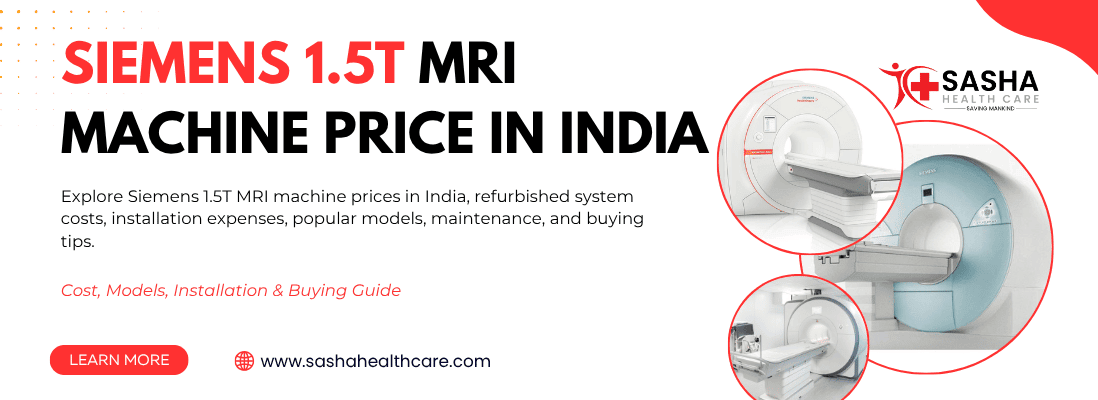
Siemens has developed several MRI platforms for different clinical and operational requirements. Availability in the refurbished market depends on equipment condition, configuration, and supplier inventory.
Siemens MAGNETOM Avanto
The MAGNETOM Avanto is an established 1.5T MRI platform used for a range of routine and specialised examinations. When considering a refurbished unit, buyers should review its configuration, coil availability, software options, and service history.
Siemens MAGNETOM Essenza
The MAGNETOM Essenza is another 1.5T platform that may be relevant to facilities evaluating MRI systems for routine diagnostic services. Its suitability depends on the available configuration, expected patient volume, and clinical requirements.
Siemens MAGNETOM Aera
The MAGNETOM Aera is a 1.5T MRI platform that buyers may consider when evaluating patient workflow, available applications, and system configuration. A refurbished unit should be assessed for hardware condition, software compatibility, and included accessories.
Siemens MAGNETOM Sempra
The MAGNETOM Sempra is a 1.5T system designed with routine clinical imaging workflows in mind. Buyers should verify the exact configuration, software package, installation requirements, and local service arrangements before comparing its cost with other models.
These platforms are examples for evaluation, not a confirmation of current stock or availability. System generations, configurations, and market availability vary.
New vs. Refurbished Siemens 1.5T MRI Machines
Choosing between a new and refurbished Siemens MRI machine requires an assessment of capital investment, operational needs, expected patient volume, and service availability.
| Comparison factor | New MRI machine | Refurbished MRI machine |
|---|---|---|
| Initial investment | Generally higher | Generally lower |
| Hardware generation | Newer, as specified | Depends on the selected model |
| Software configuration | Depends on the purchased package | Depends on the existing and licensed configuration |
| Warranty | As stated in the purchase agreement | Depends on the refurbishment supplier |
| Installation | Based on the supplier’s scope | Based on the supplier’s scope |
| Maintenance | Subject to the applicable service agreement | Requires careful review of coverage and exclusions |
| Best evaluation approach | Assess lifecycle value and configuration | Assess refurbishment quality and total ownership cost |
Advantages of Purchasing a Refurbished Siemens 1.5T MRI
For hospitals and diagnostic centres with limited capital budgets, refurbished MRI equipment may provide access to established imaging technology at a lower initial purchase price.
Potential advantages include:
- Lower initial capital expenditure: A refurbished scanner may reduce the upfront investment compared with a comparable new system.
- Established clinical applications: Certain older platforms may support the routine examinations required by a facility.
- Flexible configuration choices: Buyers may be able to select a system based on their intended clinical applications and budget.
- Potentially shorter procurement timelines: Available inventory may offer an alternative to ordering a newly manufactured system, although delivery and installation schedules must be confirmed.
- Capital allocation flexibility: Savings on the initial purchase may allow the facility to allocate funds to room preparation, staffing, patient services, or other equipment.
These benefits depend on the specific system, its condition, and the supplier’s ability to provide appropriate technical support.
What Should Buyers Check Before Purchasing Refurbished Equipment?
We recommend verifying the following before placing an order:
- Complete model identification and serial number.
- Manufacturing year and previous installation history.
- Magnet condition and available maintenance records.
- Gradient and radiofrequency system performance.
- Included coils, software licences, and accessories.
- Image quality and application testing.
- Parts availability and technical service arrangements.
- Warranty duration, exclusions, and response commitments.
- Installation, commissioning, and training scope.
- Regulatory compliance and applicable documentation.
A thorough evaluation helps buyers compare equipment on its actual capabilities and condition rather than purchase price alone.
Additional Costs of Installing a Siemens 1.5T MRI Machine
The MRI scanner itself is only one part of the overall investment. A complete MRI project may involve several additional expenses.
1. MRI Room Preparation
An MRI suite must meet the technical and safety requirements of the selected system. Depending on the existing facility, the project may require radiofrequency shielding, magnetic-field management, structural modifications, controlled access, and room-layout changes.
The cost varies according to the room’s existing condition and the installation specifications.
2. Electrical Infrastructure and Cooling
MRI systems require suitable electrical infrastructure and environmental control. Buyers should confirm the manufacturer’s requirements for electrical capacity, grounding, air conditioning, cooling, and uninterrupted power arrangements where specified.
Existing hospital infrastructure may reduce the amount of additional work required, but this should be established through a technical site assessment.
3. Transportation and Installation
Transportation, unloading, equipment positioning, installation, calibration, and commissioning may be charged separately or included in a supplier package.
The final cost depends on the equipment’s location, destination, building access, transportation arrangements, and the work included in the contract.
4. Annual Maintenance and Service Agreements
Maintenance is an important component of MRI ownership. Service arrangements may cover preventive maintenance, breakdown support, selected spare parts, or broader technical services.
Hospitals should compare the precise coverage of Annual Maintenance Contracts (AMC) and Comprehensive Maintenance Contracts (CMC) rather than comparing contract prices alone.
Before signing an agreement, check the exclusions, service response times, replacement-part responsibilities, and the availability of qualified engineers.
5. Staffing and Operating Expenses
Operating an MRI facility requires qualified personnel, including appropriately trained MRI technologists and radiologists. Additional operating expenses may include electricity, patient consumables, equipment maintenance, and administrative costs.
A complete financial plan should account for these recurring expenses when estimating the long-term cost of ownership.
How to Calculate the Total Cost of a Siemens 1.5T MRI Project
Healthcare providers should calculate the total project cost rather than making a decision based solely on the quoted equipment price.
A practical budgeting structure is:
Total MRI project investment = Equipment purchase price + Site preparation + Installation and commissioning + Infrastructure upgrades + Initial accessories and training + Applicable taxes and other charges.
For example, suppose a diagnostic centre receives a hypothetical quotation for a refurbished Siemens 1.5T MRI system priced at ₹2.5 crore.
Its additional costs could include:
| Expense category | Example budget |
|---|---|
| MRI equipment | ₹2.50 crore |
| Site preparation | ₹25 lakh |
| Installation and commissioning | ₹15 lakh |
| Electrical and cooling upgrades | ₹10 lakh |
| Additional accessories and training | ₹5 lakh |
| Illustrative total | ₹3.05 crore |
These figures are purely illustrative and are not a supplier quotation. Actual site preparation, installation, taxes, and equipment costs may differ substantially. The example excludes recurring operating expenses and any additional costs not listed.
This approach enables buyers to assess whether a proposed MRI installation fits their available capital and financial objectives.
How Much Revenue Can a Siemens 1.5T MRI Machine Generate?
The commercial viability of an MRI scanner depends on patient demand, examination pricing, utilisation, operating expenses, and the facility’s referral network.
A diagnostic centre should estimate revenue using realistic local market data rather than assuming that purchasing a particular MRI model will automatically generate a specific return.
A basic calculation is:
Monthly MRI revenue = Average examinations per day × Average revenue per examination × Operating days per month.
For example, a centre performing 10 examinations per day at an average realised revenue of ₹4,000 per examination over 26 operating days would generate illustrative monthly gross revenue of ₹10.4 lakh.
This is revenue before expenses, not profit. Staffing, rent, electricity, maintenance, financing, consumables, marketing, taxes, and downtime must be deducted to estimate operating profitability.
Before investing, healthcare providers should evaluate expected patient volumes, competing diagnostic facilities, referral arrangements, local examination prices, and the time needed to establish a sustainable patient base.
Why Choose a Reliable Supplier for a Refurbished Siemens MRI Machine?
The supplier’s technical expertise and service capabilities can significantly influence the ownership experience of refurbished medical imaging equipment.
A reliable supplier should be able to explain the system’s history, refurbishment process, configuration, installation requirements, warranty coverage, and post-installation support.
When evaluating suppliers, healthcare providers should look for:
- Clear and itemised commercial quotations.
- Accurate equipment specifications and documentation.
- Evidence of system testing and refurbishment.
- Appropriate installation and commissioning capabilities.
- Transparent warranty and maintenance terms.
- Access to qualified technical personnel.
- Clear communication regarding delivery schedules and exclusions.
For MRI equipment, a competitive purchase price should be considered alongside the supplier’s ability to help the facility maintain reliable operations.
How to Get the Best Price for a Siemens 1.5T MRI Machine in India
Obtaining comparable quotations is one of the most effective ways to assess whether an MRI machine is competitively priced.
We recommend following these steps when requesting quotations:
Step 1: Define your clinical requirements. Identify the examinations, expected patient volume, and applications the facility intends to support.
Step 2: Select suitable system configurations. Compare specific Siemens 1.5T models rather than treating every 1.5T scanner as equivalent.
Step 3: Request complete technical specifications. Ask for details of the magnet, gradients, software, coils, accessories, and system condition.
Step 4: Confirm the refurbishment scope. Request information about inspections, component replacements, performance testing, and documentation.
Step 5: Compare total project costs. Include installation, site preparation, infrastructure, taxes, warranty, and other applicable charges.
Step 6: Evaluate after-sales support. Confirm the maintenance options, service coverage, and responsibilities of the supplier.
Step 7: Review the commercial agreement. Ensure the final contract specifies equipment configuration, delivery conditions, payment terms, installation scope, warranty, and acceptance criteria.
These steps help hospitals and diagnostic centres make a more informed purchasing decision.
Conclusion:
The cost of a Siemens 1.5T MRI machine in India depends on the model, equipment condition, technology generation, software configuration, accessories, installation requirements, and service arrangements.
For hospitals and diagnostic centres considering refurbished MRI equipment, a careful evaluation of technical specifications, refurbishment quality, total project costs, and long-term maintenance requirements is essential.
Rather than choosing a scanner based on its purchase price alone, we recommend comparing complete equipment packages and confirming that the proposed system meets your clinical and operational requirements.
At Sasha Healthcare, we support healthcare providers exploring refurbished medical imaging equipment solutions, including MRI and CT systems. We encourage hospitals and diagnostic centres to assess their requirements and request detailed equipment specifications before making an investment decision.
Looking for a refurbished Siemens 1.5T MRI machine? Contact Sasha Healthcare to discuss your requirements, explore available MRI equipment options, and request a quotation based on your budget and clinical needs.
The price depends on the model, age, configuration, system condition, and included services. Refurbished systems can fall within broad ranges of approximately ₹1.5 crore to ₹7 crore or more, depending on their specifications. These are indicative planning figures, not verified live market prices. Buyers should obtain a current quotation for the exact system.
A refurbished Siemens 1.5T MRI machine may be a suitable option for a hospital or diagnostic centre seeking to reduce initial capital expenditure. Its suitability depends on the system’s condition, clinical capabilities, refurbishment quality, parts availability, warranty, and maintenance support.
There is no single best model for every diagnostic centre. Systems such as the MAGNETOM Avanto, Essenza, Aera, and Sempra may be worth evaluating, depending on availability and configuration. The final choice should reflect examination requirements, patient volume, budget, software capabilities, and service arrangements.