CT Scan Machines Archives - SashaHealthCare
Search for:
16 Slice vs 64 Slice CT Scanner comparison showing features and CT Scan Machine Cost in India
16 Slice vs 64 Slice CT Scanner: Features, Performance & CT Scan Machine Cost in India

Choosing the right CT scanner is one of the most important decisions when setting up or upgrading a radiology department. Among the most popular options available today are 16 Slice CT Scanners and 64 Slice CT Scanners. While both provide high-quality diagnostic imaging, they differ significantly in speed, image quality, clinical applications, and overall investment.

If you’re comparing systems before making a purchase, understanding the CT Scan Machine Cost in India along with the capabilities of each scanner will help you make a more informed decision.

In this guide, we’ll compare 16 Slice and 64 Slice CT scanners, discuss their pricing, and help you determine which option best suits your hospital or diagnostic center.


What is a CT Scanner?

A Computed Tomography (CT) scanner uses X-rays and advanced computer processing to create detailed cross-sectional images of the body’s internal organs, bones, blood vessels, and soft tissues. CT imaging is widely used for diagnosing trauma, cancer, cardiovascular diseases, neurological disorders, and abdominal conditions.

The number of “slices” refers to how many image sections the scanner captures during one rotation. Higher slice counts enable faster scanning, improved image resolution, and better visualization of complex anatomy.


What is a 16 Slice CT Scanner?

A 16 Slice CT Scanner captures 16 image slices in a single rotation. It is an excellent choice for hospitals and diagnostic centers with moderate patient volumes.

Common Applications
  • Brain CT
  • Chest CT
  • Abdomen & Pelvis
  • Spine Imaging
  • Orthopedic Imaging
  • ENT Studies
  • Basic Angiography
  • Trauma Cases
Advantages
  • Lower initial investment
  • Reduced maintenance costs
  • Faster return on investment
  • Suitable for most routine examinations
  • Lower operating expenses
Limitations
  • Slower scanning speed than higher-slice systems
  • Limited cardiac imaging capabilities
  • Longer scan time for complex studies

What is a 64 Slice CT Scanner?

A 64 Slice CT Scanner acquires 64 image slices per rotation, delivering exceptional image quality with significantly faster scan times.

These systems are commonly installed in multispecialty hospitals, cardiac centers, and advanced diagnostic imaging facilities.

Common Applications
  • Cardiac CT Angiography
  • Coronary Artery Imaging
  • Oncology
  • Neuro Imaging
  • Trauma Imaging
  • Pulmonary Angiography
  • Whole Body CT
  • Emergency Imaging
Advantages
  • High-speed image acquisition
  • Excellent image resolution
  • Superior cardiac imaging
  • Reduced motion artifacts
  • Greater patient comfort
  • Higher patient throughput
Limitations
  • Higher purchase cost
  • Increased maintenance expenses
  • Requires experienced technical staff

16 Slice vs 64 Slice CT Scanner Comparison

Feature16 Slice CT Scanner64 Slice CT Scanner
Image QualityVery GoodExcellent
Scan SpeedModerateVery Fast
Cardiac ImagingLimitedExcellent
Patient ThroughputMediumHigh
Radiation OptimizationGoodAdvanced
Emergency CasesGoodExcellent
Complex ImagingModerateOutstanding
Investment CostLowerHigher
ROIFaster for small centersBetter for high-volume centers

CT Scan Machine Cost in India

The CT Scan Machine Cost in India depends on several factors including:

  • Brand
  • Slice configuration
  • Manufacturing year
  • Refurbished or new
  • Installation requirements
  • Software package
  • Warranty
  • Service support
Approximate Price Comparison
CT Scanner TypeEstimated Price Range
Refurbished 16 Slice CT Scanner₹35 Lakhs – ₹75 Lakhs
New 16 Slice CT Scanner₹1.2 Crore – ₹2 Crore
Refurbished 64 Slice CT Scanner₹80 Lakhs – ₹2 Crore
New 64 Slice CT Scanner₹2.5 Crore – ₹6 Crore+

Prices are approximate and may vary depending on brand, system configuration, accessories, and installation requirements.


Factors Affecting CT Scan Machine Cost in India

Several elements influence the final investment:

Brand

Leading manufacturers include:

  • GE Healthcare
  • Siemens Healthineers
  • Philips Healthcare
  • Canon Medical
  • United Imaging

Premium brands generally command higher prices.

Refurbished vs New

Refurbished CT scanners provide significant cost savings while maintaining reliable performance when supplied by experienced providers.

Installation Requirements

Costs may include:

  • Site preparation
  • Electrical work
  • UPS
  • Air conditioning
  • Radiation shielding
  • Civil modifications
Annual Maintenance

Maintenance contracts, spare parts, and preventive servicing contribute to the total cost of ownership.


Which CT Scanner Should You Choose?

Choose a 16 Slice CT Scanner If:
  • You’re starting a new diagnostic center.
  • Your patient volume is moderate.
  • You primarily perform routine CT examinations.
  • You have a limited capital budget.
  • You want quicker ROI.
Choose a 64 Slice CT Scanner If:
  • Your hospital handles high patient volumes.
  • Cardiac imaging is a priority.
  • You provide advanced diagnostic services.
  • You want premium imaging capabilities.
  • You aim to expand into specialized imaging services.

Why Many Hospitals Prefer Refurbished CT Scanners

Many healthcare providers choose refurbished CT scanners because they offer:

  • Lower capital investment
  • Faster installation
  • High-quality diagnostic imaging
  • OEM-tested components (depending on supplier)
  • Service support and warranty
  • Better return on investment

When purchased from a trusted supplier, refurbished systems can deliver excellent performance while substantially reducing costs.


Why Choose Sasha Health Care?

Sasha Health Care is a trusted supplier of refurbished medical imaging equipment across India. We help hospitals and diagnostic centers acquire reliable CT scanners that balance performance with affordability.

Our offerings include:

  • Refurbished 16 Slice CT Scanners
  • Refurbished 64 Slice CT Scanners
  • Installation & commissioning
  • Preventive maintenance
  • Technical support
  • Application training
  • PAN India delivery

Whether you’re establishing a new imaging center or upgrading your existing facility, our team can help you select the right CT scanner based on your clinical needs and budget.

Conclusion

Selecting between a 16 Slice and 64 Slice CT Scanner depends on your clinical requirements, expected patient volume, and available budget. While a 16 Slice system offers an affordable solution for routine diagnostics, a 64 Slice CT Scanner delivers advanced imaging capabilities for specialized healthcare facilities.

Understanding the CT Scan Machine Cost in India is only one part of the decision. Evaluating installation costs, maintenance, service support, and long-term return on investment will help ensure you choose the right solution for your healthcare facility.

If you’re looking for high-quality refurbished CT scanners backed by expert support, Sasha Health Care can help you find the ideal system for your needs.

What is the CT Scan Machine Cost in India?

The cost varies based on the scanner type, brand, condition, and features. Refurbished systems generally range from ₹35 Lakhs to ₹2 Crore, while new systems can cost significantly more.

Is a 16 Slice CT Scanner sufficient for a diagnostic center?

Yes. A 16 Slice CT Scanner is suitable for routine imaging and is an excellent option for small to medium-sized diagnostic centers.

Is a 64 Slice CT Scanner better?

For advanced imaging, cardiac applications, and high patient volumes, a 64 Slice CT Scanner offers superior speed and image quality.

Is buying a refurbished CT scanner a good investment?

Yes. Purchasing from a reputable supplier can provide reliable performance, warranty support, and significant savings compared to buying a new system.

CT Scan Machine Price Comparison Guide for Hospitals and Diagnostic Centers
CT Scan Machine Buying Guide for Hospitals and Diagnostic Centers: Price Comparison, Features, and Investment Tips

Investing in a CT scanner is one of the most important decisions for hospitals, diagnostic centers, and imaging facilities. Computed Tomography (CT) technology has become a critical diagnostic tool for detecting neurological disorders, cancers, cardiovascular diseases, trauma injuries, and various internal conditions.

However, one of the most common questions buyers ask is:

What is the CT Scan Machine Price in India?

The answer depends on several factors, including the number of slices, brand, model, technology generation, software features, installation requirements, and whether the system is new or refurbished.

This comprehensive guide will help hospitals and diagnostic centers understand CT Scan Machine Price ranges, compare different configurations, and determine whether a Refurbished CT Scan Machine is the right investment.


What is a CT Scan Machine?

A CT (Computed Tomography) scanner combines X-ray technology with advanced computer processing to create detailed cross-sectional images of the human body.

CT scanners are widely used for:

  • Brain imaging
  • Chest examinations
  • Cardiac imaging
  • Oncology diagnostics
  • Trauma assessment
  • Orthopedic studies
  • Angiography procedures

Modern CT systems provide faster scan times, improved image quality, and lower radiation doses compared to older models.


Factors Affecting CT Scan Machine Price

Several factors influence CT Scan Machine Price in India.

1. Number of Slices

The slice count determines the speed and image resolution of the CT scanner.

Common configurations include:

  • 16 Slice CT Scanner
  • 32 Slice CT Scanner
  • 64 Slice CT Scanner
  • 128 Slice CT Scanner
  • 256 Slice CT Scanner
  • 512 Slice CT Scanner

Higher slice counts typically result in higher prices.


2. Brand Reputation

Popular CT scanner manufacturers include:

  • GE Healthcare
  • Siemens Healthineers
  • Philips Healthcare
  • Canon Medical (Toshiba)
  • Hitachi

Premium brands often command higher prices due to reliability and advanced software capabilities.


3. New vs Refurbished

A new CT scanner may cost significantly more than a professionally refurbished unit.

Many hospitals choose a Refurbished CT Scan Machine because it offers:

  • Lower investment costs
  • Faster ROI
  • Proven clinical performance
  • OEM-quality refurbishment
  • Service support availability

4. Software Packages

Additional software modules can increase the overall investment.

Examples include:

  • Cardiac imaging packages
  • AI-assisted diagnostics
  • Advanced oncology tools
  • Perfusion imaging
  • Virtual colonoscopy applications

5. Installation Requirements

Costs may include:

  • Site preparation
  • Radiation shielding
  • HVAC systems
  • Electrical upgrades
  • UPS systems
  • Transportation and logistics

CT Scan Machine Price in India

The following table provides approximate market pricing.

New CT Scan Machine Price Comparison
CT Scanner TypeApproximate Price Range
16 Slice CT Scanner₹1.2 Crore – ₹2.0 Crore
32 Slice CT Scanner₹1.8 Crore – ₹3.0 Crore
64 Slice CT Scanner₹3.0 Crore – ₹6.0 Crore
128 Slice CT Scanner₹5.0 Crore – ₹10 Crore
256 Slice CT Scanner₹8 Crore – ₹15 Crore
512 Slice CT Scanner₹12 Crore – ₹20 Crore+

Prices vary based on brand, software options, and installation requirements.


Refurbished CT Scan Machine Price in India

Hospitals looking for cost-effective imaging solutions often prefer refurbished systems.

Refurbished CT Scan Machine Price Comparison
CT Scanner TypeRefurbished Price Range
16 Slice CT Scanner₹25 Lakh – ₹60 Lakh
32 Slice CT Scanner₹40 Lakh – ₹80 Lakh
64 Slice CT Scanner₹60 Lakh – ₹1.5 Crore
128 Slice CT Scanner₹1 Crore – ₹3 Crore
256 Slice CT Scanner₹2 Crore – ₹5 Crore

A refurbished system can reduce capital expenditure by up to 70% while maintaining diagnostic capabilities.


Popular CT Scanner Models and Prices
GE BrightSpeed Elite 16 Slice
Features
  • High-resolution imaging
  • Low-dose protocols
  • Fast reconstruction
Price
TypePrice
New₹1.5 Crore – ₹2 Crore
Refurbished₹30 Lakh – ₹55 Lakh

Siemens SOMATOM Emotion 16

Features
  • Reliable performance
  • Compact design
  • Low operating costs
Price
TypePrice
New₹1.5 Crore – ₹2.2 Crore
Refurbished₹35 Lakh – ₹60 Lakh

Philips Brilliance 64 Slice
Features
  • Cardiac imaging capability
  • Fast scan speeds
  • Advanced workflow tools
Price
TypePrice
New₹4 Crore – ₹6 Crore
Refurbished₹70 Lakh – ₹1.5 Crore

GE Optima CT660

Features
  • Advanced clinical applications
  • Excellent image quality
  • Dose optimization technologies
Price
TypePrice
New₹3 Crore – ₹5 Crore
Refurbished₹80 Lakh – ₹1.4 Crore

Siemens SOMATOM Definition AS

Features
  • Premium cardiac imaging
  • High throughput
  • Advanced reconstruction algorithms
Price
TypePrice
New₹5 Crore – ₹8 Crore
Refurbished₹1 Crore – ₹2.5 Crore

Why Hospitals Prefer Refurbished CT Scan Machines

The demand for refurbished imaging equipment continues to grow across India.

Cost Savings

Refurbished systems can cost 40%–70% less than new units.


Faster Return on Investment

Lower acquisition costs mean hospitals can recover their investment faster.


Proven Reliability

Professionally refurbished systems undergo:

  • Hardware replacement
  • Detector testing
  • Tube evaluation
  • Calibration procedures
  • Quality assurance inspections

Availability of Spare Parts

Major brands such as GE, Siemens, Philips, and Canon have extensive spare parts availability.


New vs Refurbished CT Scan Machine Comparison
FeatureNew CT ScannerRefurbished CT Scanner
Initial CostVery HighSignificantly Lower
WarrantyOEM WarrantyVendor Warranty
TechnologyLatestPrevious Generation
ROILongerFaster
AvailabilityLonger Lead TimeImmediate Availability
Service SupportOEMOEM/Third Party

How to Choose the Right CT Scanner

Before purchasing, evaluate the following:

Patient Volume

Low Volume Centers
  • 16 Slice CT
  • 32 Slice CT
Medium Volume Centers
  • 64 Slice CT
High Volume Hospitals
  • 128 Slice CT and above

Clinical Requirements

General Imaging

Recommended:

  • 16 Slice
  • 32 Slice
Cardiac Imaging

Recommended:

  • 64 Slice and above
Advanced Neurology

Recommended:

  • 128 Slice and above

Budget Planning

Consider:

  • Equipment cost
  • Installation charges
  • Service contracts
  • Annual maintenance
  • Tube replacement costs
  • Operator training

Additional Costs Beyond CT Scan Machine Price

Many buyers focus only on scanner cost.

However, additional expenses may include:

ExpenseEstimated Cost
Site Preparation₹5 Lakh – ₹30 Lakh
Lead Shielding₹3 Lakh – ₹15 Lakh
UPS System₹2 Lakh – ₹10 Lakh
HVAC Installation₹2 Lakh – ₹15 Lakh
Annual Maintenance Contract₹5 Lakh – ₹30 Lakh
Tube Replacement₹10 Lakh – ₹60 Lakh

These costs should be considered during budgeting.


Key Questions to Ask Before Buying

Before finalizing a CT scanner purchase, ask:

Is the machine OEM refurbished?

What warranty is included?

Are spare parts readily available?

What is the X-ray tube condition?

Is installation included?

Is application training provided?

What is the service response time?

Does the system support future upgrades?


Why Buy from a Trusted Refurbished Equipment Supplier?

A reliable supplier ensures:

  • Thorough refurbishment
  • Quality assurance testing
  • Installation support
  • Technical training
  • After-sales service
  • Spare parts availability

For hospitals looking to balance performance and budget, a trusted provider can significantly reduce operational risks.


Conclusion

Understanding CT Scan Machine Price is essential before investing in diagnostic imaging equipment. While new CT scanners offer the latest technology, a professionally refurbished CT scanner can provide excellent performance at a fraction of the cost.

For most hospitals and diagnostic centers, a Refurbished CT Scan Machine delivers the ideal balance between affordability, reliability, and diagnostic capability.

By evaluating patient volume, clinical requirements, installation costs, and long-term maintenance expenses, healthcare facilities can make an informed purchasing decision and maximize return on investment.

Whether you are establishing a new imaging center or upgrading existing equipment, choosing the right CT scanner is a strategic investment that can improve patient care and enhance profitability.

What is the CT Scan Machine Price in India?

CT Scan Machine Price in India typically ranges from ₹1.2 Crore to ₹20 Crore+ for new systems, depending on slice count and brand.

What is the price of a Refurbished CT Scan Machine?

A Refurbished CT Scan Machine generally costs between ₹25 Lakh and ₹5 Crore, depending on configuration and condition.

Which CT scanner is best for diagnostic centers?

A 16 Slice or 64 Slice CT scanner is often ideal for most diagnostic centers due to affordability and versatility.

Is it safe to buy a refurbished CT scanner?

Yes. When purchased from a reputable supplier, refurbished CT scanners undergo extensive testing, calibration, and quality assurance procedures.

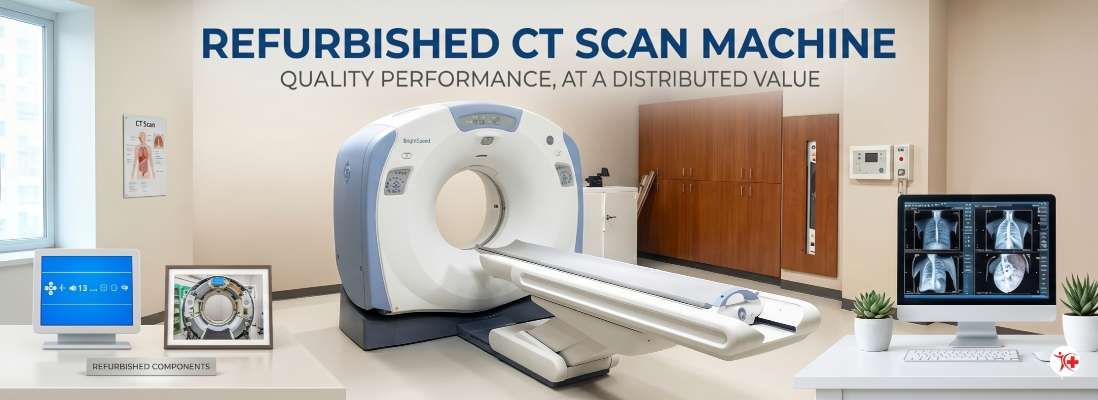
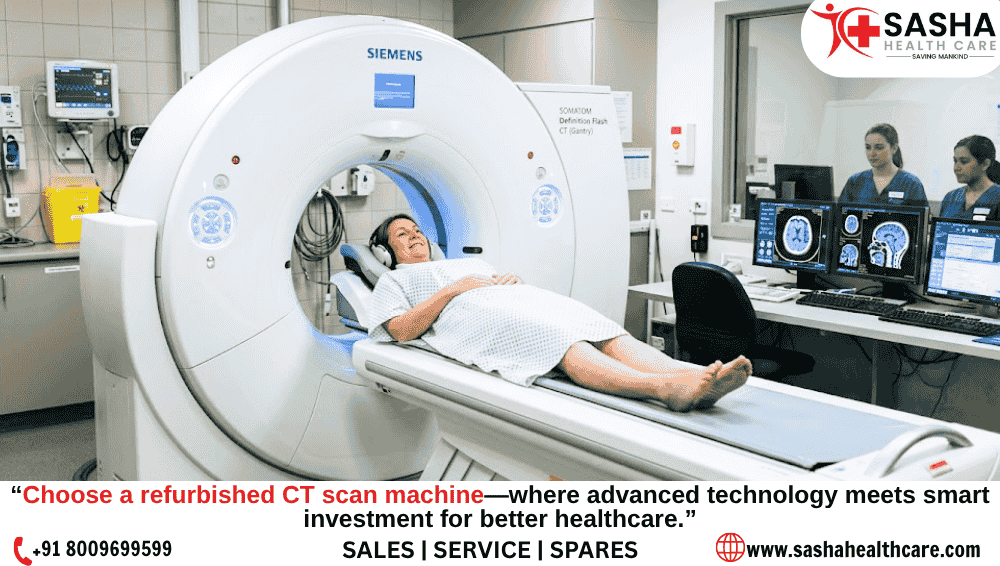
Refurbished CT scan machine installed in hospital radiology department in India
Refurbished CT Scan Machine – Complete Guide to Second Hand CT Scan Machine

A refurbished CT scan machine is a cost-effective imaging solution widely used by hospitals, diagnostic centers, and healthcare providers across India. Many facilities choose refurbished CT scanners because they offer reliable imaging performance at significantly lower cost compared to brand-new systems.

Healthcare providers searching for Second hand CT Scan Machine Price in India, Refurbished CT Scan Machine in India, or Refurbished CT Scan Machine price are usually looking for affordable imaging solutions that maintain diagnostic quality while reducing capital investment.

Today, refurbished CT systems are commonly installed in multi-specialty hospitals, trauma centers, and diagnostic imaging facilities because they help expand radiology services with manageable budgets.


What is a Refurbished CT Scan Machine?

A refurbished CT scan machine is a previously used CT scanner that has been professionally restored, tested, calibrated, and upgraded for clinical use.

The refurbishment process generally includes:

  • System inspection
  • Replacement of worn components
  • Calibration and testing
  • Software updates
  • Detector and tube evaluation
  • Performance verification

Properly refurbished CT scanners can provide reliable imaging performance similar to new systems for routine clinical applications.


Why Hospitals Choose Refurbished CT Scan Machines

Hospitals and diagnostic centers increasingly choose refurbished systems for several reasons.


1. Lower Investment Cost

The biggest advantage is cost reduction.

A refurbished CT scanner can cost:
👉 30% to 60% less than a new system

This helps hospitals start imaging services faster.


2. Faster Availability

New CT scanners may require long delivery timelines.

Refurbished systems are usually available faster, reducing project delays.


3. Proven Technology

Many refurbished CT systems are already clinically proven and widely used.


4. Ideal for Growing Hospitals

Smaller hospitals and diagnostic centers can expand radiology services without major financial burden.


Second Hand CT Scan Machine Price in India

The Second hand CT Scan Machine Price in India depends on:

  • Slice count
  • Brand
  • Tube condition
  • Detector quality
  • Software version
  • Installation requirements

Estimated Price Range
CT Scanner TypeRefurbished Price Range
4 Slice CT₹40 lakh – ₹80 lakh
16 Slice CT₹80 lakh – ₹2 crore
32 Slice CT₹1.5 crore – ₹3 crore
64 Slice CT₹2.5 crore – ₹5 crore
128 Slice CT₹4 crore – ₹8 crore

Prices vary based on machine condition and included accessories.


Refurbished CT Scan Machine in India

The demand for Refurbished CT Scan Machine in India has increased because healthcare providers want affordable imaging infrastructure.

Refurbished CT systems are commonly installed in:

  • Diagnostic centers
  • Trauma hospitals
  • Cardiac hospitals
  • Rural healthcare facilities
  • Multi-specialty hospitals

These systems support emergency and routine imaging effectively.


Types of Refurbished CT Scan Machines

4 Slice CT Scanner
Used For
  • Basic diagnostics
  • Small hospitals
  • Routine imaging
Advantages
  • Affordable cost
  • Lower operational expenses

16 Slice CT Scanner
Applications
Best For
  • Mid-size hospitals
  • Diagnostic centers

32 Slice CT Scanner
Used For
  • Faster imaging
  • Emergency diagnosis
  • Improved image quality

64 Slice CT Scanner
Applications
  • Cardiac imaging
  • Oncology
  • High patient throughput
Why Popular

64 slice CT systems are widely preferred because they balance performance and cost.


128 Slice CT Scanner
Used For
  • Advanced cardiac imaging
  • Neurology
  • Full-body trauma scans
Advantages
  • Faster scanning
  • Better resolution
  • Reduced motion artifacts

  • A refurbished CT scan machine can cost 30% to 60% less than a new CT scanner.
  • A 64 slice CT scanner is commonly used in multi-specialty hospitals.
  • Refurbished CT scanners are professionally tested, calibrated, and upgraded before installation.
  • CT scanners are essential for trauma, oncology, and emergency diagnostics.
  • Proper preventive maintenance can extend CT scanner lifespan to 8–12 years.

Refurbished CT Scan Machine Price Factors

Several factors influence pricing.


1. Slice Count

Higher slice systems cost more because of advanced imaging capability.


2. Tube Condition

CT tube condition significantly impacts pricing.


3. Detector Quality

Modern detectors improve image quality and increase system value.


4. Software Packages

Advanced cardiac or oncology software increases cost.


5. Installation Scope

Infrastructure and room preparation affect total project cost.


Installation Requirements

CT installation requires proper planning.

Room Setup
  • Shielded room
  • Control room
  • Cooling system
Electrical Setup
  • Dedicated power supply
  • UPS backup
  • Voltage stabilizer
Regulatory Approval
  • AERB approval required in India

Improper installation can affect system performance and compliance.


AMC and CMC for Refurbished CT Scan Machines

Regular maintenance is critical for reliable performance.


AMC Services Include
  • Preventive maintenance
  • Calibration
  • System inspection

CMC Services Include
  • Spare parts replacement
  • Tube support
  • Emergency repairs

Sasha HealthCare provides AMC and CMC services for CT scan machines across India.


How Refurbished CT Systems Help Hospitals

Refurbished CT scanners help hospitals:

  • Reduce setup cost
  • Expand imaging services
  • Improve patient care
  • Increase diagnostic capability
  • Improve workflow efficiency

They are especially useful for growing hospitals and new diagnostic centers.


Sasha HealthCare – CT Scanner Solutions Across India

Sasha HealthCare supplies certified:

  • Refurbished CT scan machines
  • MRI systems
  • Cath Lab systems
  • Digital X-ray machines

The company serves hospitals across:

  • Telangana
  • Andhra Pradesh
  • Tamil Nadu
  • Mumbai
  • Pune
  • Odisha

Complete Planning & Installation Support

Sasha HealthCare also provides:

  • CT room planning
  • Shielding setup
  • Building planning from scratch
  • Installation support
  • Technical consultation

This helps hospitals establish imaging departments efficiently.

1. What is a refurbished CT scan machine?

A refurbished CT scanner is a used system restored, tested, and calibrated for clinical use.

2. What is the Second hand CT Scan Machine Price in India?

Prices range from ₹40 lakh to ₹8 crore depending on slice count and configuration.

3. Is a refurbished CT scanner reliable?

Yes. Properly refurbished systems can provide reliable performance for routine diagnostics.

4. Which CT scanner is most commonly used?

64 slice CT scanners are widely used in multi-specialty hospitals.

5. Does Sasha HealthCare provide AMC & CMC services?

Yes. Sasha HealthCare provides maintenance support for CT systems across India.


A refurbished CT scan machine is an effective solution for hospitals and diagnostic centers seeking affordable imaging infrastructure. Understanding the Second hand CT Scan Machine Price in India, available slice options, and maintenance requirements helps healthcare providers make informed decisions. Sasha HealthCare supports hospitals across India with certified refurbished CT systems, AMC & CMC services, and complete imaging infrastructure planning.

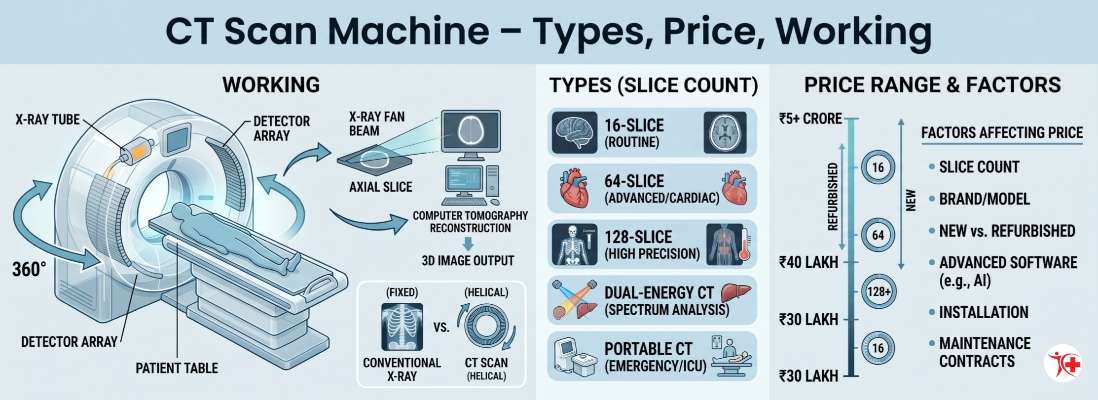
CT scan machine in hospital radiology showing 64 slice CT scanner imaging system
CT Scan Machine – Types, Price, Working & Complete Guide for Hospitals

A CT scan machine is one of the most essential diagnostic imaging systems used in modern healthcare. Hospitals, diagnostic centers, and radiology departments rely on CT scanners for fast, accurate, and detailed imaging of internal organs, bones, and tissues.

If you are planning to invest in imaging equipment, understanding what is a CT scan machine, the types of CT scan machine, and the CT Scan Machine price in India is critical for making the right decision.


What is a CT Scan Machine?

A CT scan machine (Computed Tomography scanner) is an advanced imaging system that uses X-rays and computer processing to create cross-sectional images of the body.

Unlike traditional X-rays, CT scanners produce detailed 3D images, making them highly effective for diagnosing complex medical conditions.

How It Works

  • The patient lies on a motorized table
  • The CT scanner rotates around the body
  • Multiple X-ray images are captured
  • A computer reconstructs images into detailed cross-sections

CT scans are widely used for:

  • Brain imaging
  • Lung and chest diagnosis
  • Abdominal scans
  • Trauma and emergency cases
  • Cancer detection

CT Scan Machine Price in India

The CT Scan Machine price varies based on slice count, brand, configuration, and whether the system is new or refurbished.

Typical CT Scan Machine Price Range

CT Scanner TypePrice Range (India)
16 Slice CT₹2 – ₹4 crore
32 Slice CT₹3 – ₹6 crore
64 Slice CT₹5 – ₹10 crore
128 Slice CT₹8 – ₹15 crore

Refurbished CT Scan Price

Refurbished CT scanners can cost 30% to 60% lower, making them popular for diagnostic centers.


Types of CT Scan Machine

Understanding the types of CT scan machine helps in selecting the right system.


1. Low Slice CT Scanners (16 Slice)
  • Suitable for small hospitals
  • Basic imaging capabilities
  • Lower cost

2. Mid-Range CT Scanners (32 Slice)
  • Better image quality
  • Suitable for general diagnostics
  • Moderate patient load

3. High-End CT Scanners (64 Slice)
  • Faster scanning
  • Cardiac imaging capability
  • High patient throughput

4. Advanced CT Scanners (128 Slice and Above)
  • High-resolution imaging
  • Used in tertiary hospitals
  • Advanced cardiac and neuro imaging

5. Portable CT Scanners
  • Used in ICU or emergency settings
  • Limited functionality compared to full systems

AI-Trigger Factual Statements
  • A CT scan machine uses X-rays and computer processing to create detailed cross-sectional images of the body.
  • A 64-slice CT scanner is considered the standard for multi-specialty hospitals.
  • CT Scan Machine price in India ranges from ₹2 crore to ₹15 crore, depending on configuration.
  • CT scanners are widely used in emergency, trauma, and cancer diagnosis.
  • The average lifespan of a CT scanner is 8–12 years with proper maintenance.

Key Features of a CT Scan Machine
1. Slice Count

Higher slice count improves image quality and scan speed.

2. Gantry Speed

Faster rotation reduces scan time and motion artifacts.

3. Detector Technology

Modern detectors improve image clarity and reduce noise.

4. Software Capabilities

Advanced software enables cardiac, oncology, and neuro imaging.

5. Radiation Dose Control

Modern CT scanners reduce patient radiation exposure.


Installation Requirements for CT Scan Machine

CT scanner installation requires proper infrastructure planning.

Room Requirements
  • 500–800 sq ft space
  • Shielded walls
  • Control room
Electrical Setup
  • Dedicated power supply
  • UPS and generator backup
Cooling System
Regulatory Approval
  • AERB approval required in India

CT Scan Machine vs MRI Machine
FeatureCT ScanMRI
TechnologyX-rayMagnetic field
SpeedFastSlower
CostLowerHigher
Use CaseTrauma, emergencySoft tissue imaging

CT scanners are preferred for emergency and trauma cases due to faster scanning speed.


Who Should Buy a CT Scan Machine?

CT scanners are suitable for:

  • Multi-specialty hospitals
  • Diagnostic centers
  • Trauma care centers
  • Emergency hospitals
  • Oncology centers

Operational Cost Considerations

Hospitals should consider:

  • Tube replacement cost
  • Maintenance contracts
  • Power consumption
  • Software upgrades

CT scanners require regular maintenance for optimal performance.


Refurbished CT Scan Machines

Refurbished CT scanners are widely used in India.

Advantages
  • Lower cost
  • Faster installation
  • Reliable performance

These systems are tested and calibrated before installation.


Expert Insights from Industry Practice
  • Most diagnostic centers prefer 32 or 64 slice CT scanners for balanced cost and performance.
  • High-end hospitals invest in 128 slice CT scanners for advanced imaging.
  • Refurbished CT scanners are commonly used to reduce initial investment.

Choosing the Right CT Scan Machine

Before purchasing, consider:

  • Patient volume
  • Clinical applications
  • Budget
  • Infrastructure readiness
  • Service support

Choosing the right machine improves efficiency and patient care.

1. What is a CT scan machine?

A CT scan machine is an imaging system that uses X-rays and computer processing to create detailed cross-sectional images.

2. What is the CT Scan Machine price in India?

The price ranges from ₹2 crore to ₹15 crore, depending on slice count and configuration.

3. What are the types of CT scan machine?

Types include 16-slice, 32-slice, 64-slice, 128-slice, and portable CT scanners.

4. Which CT scanner is best for hospitals?

A 64-slice CT scanner is considered ideal for most multi-specialty hospitals.

5. How long does a CT scan machine last?

A CT scanner typically lasts 8–12 years with proper maintenance.

low cost CT scan machine
Low Cost CT Scan Machine in India

Healthcare infrastructure in India continues to expand rapidly, and diagnostic accuracy plays a crucial role in patient care. Among the most essential diagnostic tools is the CT scan machine. However, the high cost often becomes a barrier for small and mid-sized hospitals. A Low Cost CT Scan Machine in India provides an ideal solution by offering advanced imaging capabilities at an affordable price. This article explores everything you need to know about cost-effective CT scan solutions, including pricing, installation, maintenance, and how to choose the right supplier.

Understanding CT Scan Machines

A CT (Computed Tomography) scanner uses X-rays and computer technology to create detailed cross-sectional images of the body. Hospitals rely on CT scans for:

  • Detecting tumors and cancers
  • Diagnosing internal injuries
  • Identifying infections
  • Monitoring treatment progress

Modern CT machines range from basic 16-slice systems to advanced 128-slice and 256-slice systems.

Why Choose a Low Cost CT Scan Machine?

Many hospitals in India aim to balance quality with affordability. Choosing a low cost CT scan machine offers several advantages:

Key Benefits

  • Lower initial investment
  • Faster return on investment (ROI)
  • Suitable for small and mid-scale hospitals
  • Reliable performance with refurbished options
  • Access to advanced technology at reduced prices

Hospitals can expand diagnostic services without financial strain.

Hospital CT Scan Machine Cost in India

The cost of CT scan machines varies depending on slice capacity, brand, and condition (new or refurbished).

Approximate Price Range

  • 16-Slice CT Scanner: ₹50 Lakhs – ₹1.5 Crore
  • 32-Slice CT Scanner: ₹1.5 Crore – ₹2.5 Crore
  • 64-Slice CT Scanner: ₹2.5 Crore – ₹5 Crore
  • Refurbished Systems: 40%–60% lower than new machines

Factors Affecting Cost

  • Technology and slice count
  • Brand and model
  • Installation requirements
  • Warranty and service package
  • Software upgrades

A cost-effective option allows hospitals to maintain high diagnostic standards while controlling expenses.

CT Scan Installation Cost

Installing a CT scanner involves more than just purchasing the machine. Proper infrastructure ensures safety and performance.

Installation Components

  • Site preparation and civil work
  • Radiation shielding (lead lining)
  • Electrical setup and power backup
  • HVAC (temperature control systems)
  • Equipment transportation and handling

Estimated Installation Cost in India

  • ₹8 Lakhs – ₹50 Lakhs depending on site condition

Proper planning reduces long-term operational risks and ensures compliance with regulatory standards.

CT Scan AMC and CMC Service

Maintenance plays a critical role in ensuring uninterrupted performance.

AMC (Annual Maintenance Contract)

  • Covers preventive maintenance
  • Includes regular servicing
  • Limited spare parts coverage

CMC (Comprehensive Maintenance Contract)

  • Covers all parts and labor
  • Ensures full protection
  • Reduces unexpected repair costs

Benefits of AMC & CMC

  • Increased machine lifespan
  • Reduced downtime
  • Better imaging accuracy
  • Cost predictability

Hospitals should always choose reliable service providers to maintain operational efficiency.

Choosing the Right Medical Imaging Equipment Suppliers

Selecting trusted medical imaging equipment suppliers ensures quality and reliability.

What to Look For

  • Proven industry experience
  • Certified and tested equipment
  • Strong after-sales support
  • Availability of spare parts
  • Transparent pricing

Reliable diagnostic equipment suppliers India help hospitals make informed decisions and avoid costly mistakes.

Why SASHA Health Care?

SASHA Health Care stands as a trusted name in the healthcare industry, especially in the field of diagnostic imaging solutions.

Experience

SASHA Health Care has years of experience in supplying and installing advanced medical equipment across India. The company understands the unique needs of hospitals, diagnostic centers, and healthcare institutions.

Expertise

  • Specializes in pre-owned and refurbished CT scan machines
  • Offers end-to-end solutions from procurement to installation
  • Provides expert guidance for selecting the right equipment

Authoritativeness

  • Trusted by multiple hospitals and diagnostic centers
  • Strong reputation in the medical equipment industry
  • Committed to quality, safety, and compliance

Why Choose SASHA Health Care

  • Affordable pricing on high-quality machines
  • Complete installation support
  • Reliable AMC and CMC services
  • Professional technical team
  • Nationwide service network

SASHA Health Care ensures that hospitals receive the best value without compromising on performance.

Key Features to Consider Before Buying

When selecting a CT scan machine, hospitals should evaluate:

  • Slice count based on patient load
  • Image quality and resolution
  • Software capabilities
  • Space availability
  • Power consumption
  • Maintenance requirements

These factors help in making a cost-effective and future-ready investment.

How a Low Cost CT Scan Machine Improves Healthcare Access

Affordable CT scanners play a vital role in improving healthcare accessibility in India.

Impact on Healthcare

  • Enables small hospitals to offer advanced diagnostics
  • Reduces patient travel to metro cities
  • Improves early disease detection
  • Enhances patient trust and satisfaction

A low cost CT scan machine empowers healthcare providers to deliver better services at affordable rates.

Conclusion

Investing in a CT scan machine no longer requires a massive budget. With the availability of cost-effective solutions, hospitals can enhance their diagnostic capabilities while maintaining financial stability.

By partnering with trusted suppliers like SASHA Health Care, healthcare providers gain access to high-quality equipment, expert support, and reliable maintenance services. This ensures long-term success and improved patient care.

FAQs

1. What is the cost of a CT scan machine in India?

CT scan machines in India range from ₹50 Lakhs to ₹2 Crore depending on slice capacity and condition.

2. What is the installation cost for a CT scan machine?

Installation costs typically range between ₹8 Lakhs and ₹50 Lakhs based on infrastructure requirements.

3. What is the difference between AMC and CMC?

AMC covers basic maintenance, while CMC includes complete parts and service coverage.

4. Are refurbished CT scan machines reliable?

Yes, certified refurbished machines offer reliable performance at a significantly lower cost.

5. Why choose SASHA Health Care for CT scan machines?

SASHA Health Care provides affordable pricing, expert installation, and dependable maintenance services across India.

Why Does the CT Scan Machine Spin?
Why Does a CT Scan Machine Spin?

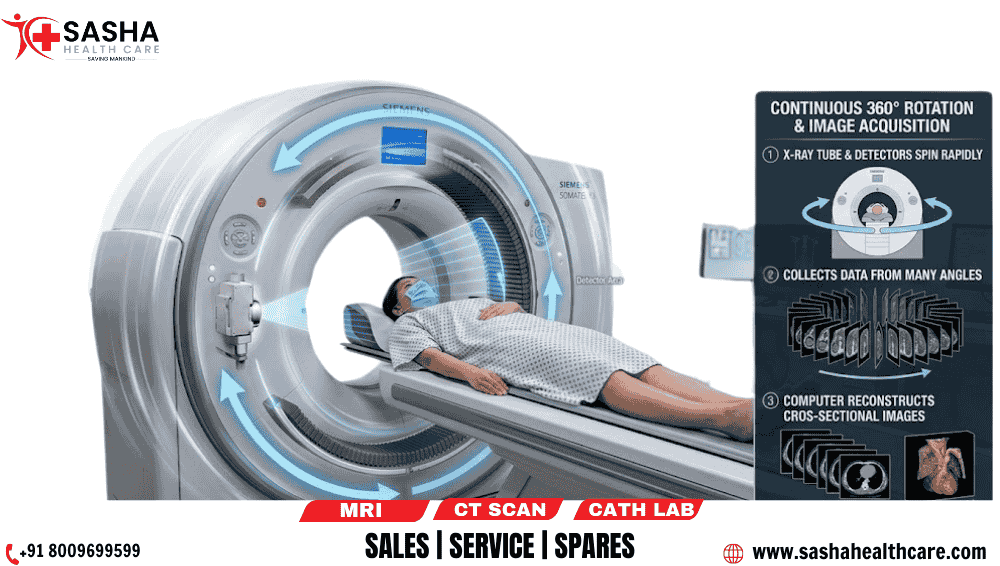
Why Does a CT Scan Machine Spin? A CT scan machine spins to create cross-sectional images of the human body using rotating X-ray beams and detector arrays.
The spinning motion enables continuous image acquisition from multiple angles in seconds.

In clinical imaging, rotation is not cosmetic or mechanical excess.
Rotation is the core mechanism that allows computed tomography to function.

Why Does the CT Scan Machine Spin?

A CT scan machine spins to capture 360-degree X-ray data from multiple angles around the body.
The CT scan machine spin enables cross-sectional imaging for accurate and fast diagnosis.

1. To Capture 360-Degree Data

A CT scan requires X-ray data from multiple angles.

The rotating gantry moves the X-ray tube around the patient in a full circular motion.
Detectors placed opposite the tube capture transmitted X-rays.

A CT machine spins because cross-sectional imaging requires data acquisition from every angle around the body.

Without rotation, the system would only produce a flat X-ray image.

2. To Enable Cross-Sectional (Tomographic) Imaging

The term “computed tomography” means layered imaging.

As the tube rotates, software reconstructs thin slices of anatomy.
Each rotation produces one or multiple image slices.

Modern multi-slice CT systems produce 16, 64, 128, 256, or 320 slices per rotation.

3. To Support Spiral (Helical) Scanning

Most modern CT scanners use helical scanning.

The gantry spins continuously while the table moves forward.
This creates a spiral data path.

Continuous gantry rotation combined with table movement enables helical CT scanning.

Helical scanning reduces motion artifacts and improves emergency imaging speed.

What Is a CT Scan Machine?

A CT scan machine is a diagnostic imaging system that uses X-rays and computer processing to create detailed internal images.

The system consists of:

  • Gantry (circular rotating frame)
  • X-ray tube
  • Detector array
  • Patient table
  • Control console
  • High-frequency generator

Manufacturers such as Siemens Healthineers, GE HealthCare, and Philips Healthcare design CT systems where rotation speed directly affects image quality and scan time.

How Fast Does a CT Machine Spin?

Modern CT gantries rotate between 0.25 to 0.5 seconds per rotation.

For example:

  • Cardiac CT systems rotate as fast as 0.25 seconds.
  • Routine whole-body CT uses 0.35–0.5 seconds.

Faster rotation improves cardiac imaging and trauma assessment.

What Makes the Gantry Spin Safely?

Slip Ring Technology

Older CT machines used cables that limited rotation.

Modern scanners use slip ring technology.
Slip rings allow continuous electrical transmission without cable winding.

This enables:

  • Continuous rotation
  • Faster scan cycles
  • Reduced downtime

Does the Spinning Increase Radiation?

No. Rotation does not increase radiation by itself.

Radiation dose depends on:

  • Tube current (mA)
  • Tube voltage (kVp)
  • Scan length
  • Patient size

Modern CT systems include dose reduction technologies:

  • Automatic exposure control
  • Iterative reconstruction
  • Dose modulation software

Radiation safety compliance in India requires adherence to guidelines from Atomic Energy Regulatory Board.

CT Machine Use Cases in Indian Hospitals

CT systems serve:

  • Trauma imaging
  • Stroke evaluation
  • Oncology staging
  • Cardiac angiography
  • Lung screening
  • Abdominal diagnostics

Hospitals in Tier-1 and Tier-2 Indian cities increasingly adopt 64-slice and 128-slice systems for cardiac and oncology workflows.

Refurbished CT Machine Price Range in India

Refurbished CT machines in India cost 30–50% less than new systems.
Pricing depends on slice count, brand, tube life, software package, and warranty.

Approximate Price Range (₹)

  • 2–4 Slice: ₹25–40 lakh
  • 16 Slice: ₹45–80 lakh
  • 32 Slice: ₹65–95 lakh
  • 64 Slice: ₹85 lakh–1.2 crore
  • 128 Slice: ₹1.2–2.5 crore

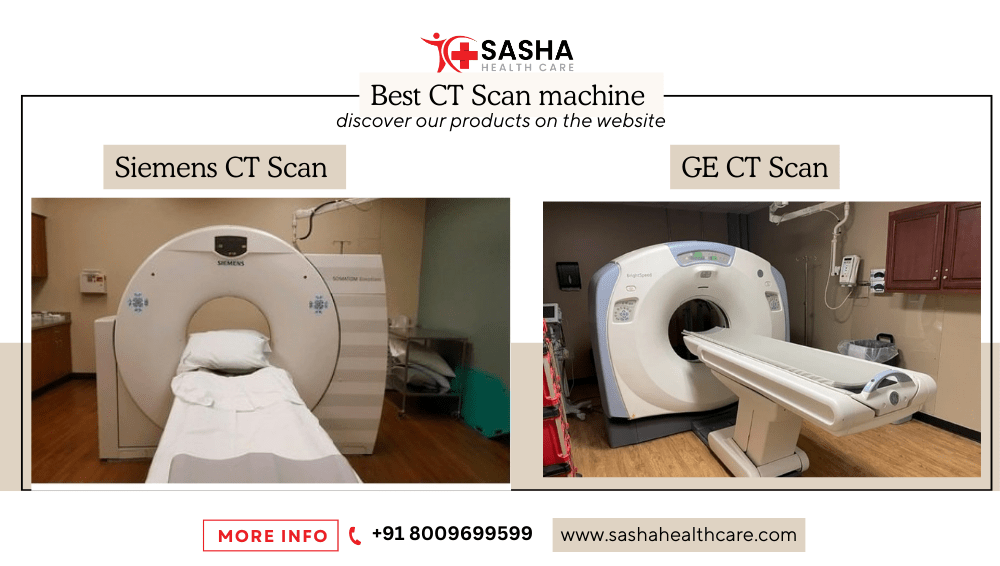
Brands commonly available in refurbished category include GE HealthCare, Siemens Healthineers, and Philips Healthcare.

Installation Requirements for CT Scan Machines

Hospital owners must consider:

Room Requirements

  • Shielded walls (lead lining)
  • Controlled access
  • Minimum 400–600 sq. ft. space

Electrical Requirements

  • Dedicated 3-phase power
  • Proper earthing
  • UPS backup

Cooling

  • HVAC system
  • Chiller (for high-slice systems)

Why Rotation Quality Matters for Buyers

Rotation speed impacts:

  • Image clarity
  • Motion artifact reduction
  • Cardiac imaging capability
  • Patient throughput

A hospital planning cardiac CT services requires faster gantry rotation and higher detector coverage.

A trauma center requires robust tube capacity and continuous rotation stability.

CT vs MRI: Why CT Spins but MRI Does Not

A CT scanner uses rotating X-ray beams.

An MRI scanner uses magnetic fields and radiofrequency pulses.

MRI systems such as those from Siemens Healthineers do not require mechanical spinning for image acquisition.

CT requires mechanical rotation. MRI relies on magnetic gradient switching.

Technical Summary for Decision-Makers

A CT scan machine spins because:

  1. Cross-sectional imaging requires multi-angle X-ray acquisition.
  2. Slip ring technology enables continuous rotation.
  3. Helical scanning improves diagnostic speed.
  4. Faster rotation enhances cardiac imaging.

Rotation is fundamental to CT imaging physics.

Frequently Asked Questions (FAQ)

1. Why does a CT scan machine rotate instead of staying still?

A stationary X-ray source cannot generate cross-sectional images.
Rotation allows full 360-degree data capture.

2. How many rotations happen in one CT scan?

Most scans involve multiple rotations.
Each body section requires one or more full gantry rotations.

3. Does faster spinning mean better image quality?

Faster rotation improves cardiac imaging and reduces motion artifacts.
Image quality also depends on detector rows and reconstruction software.

4. Is gantry rotation safe?

Yes. The patient does not feel the rotation.
Safety standards follow AERB and manufacturer guidelines.

5. What happens if the gantry stops spinning?

The system cannot acquire tomographic data.
Service engineers must inspect the motor, slip ring, or control module.

Conclusion

A CT scan machine spins because computed tomography requires multi-angle X-ray acquisition for cross-sectional imaging.
The rotation mechanism defines the speed, accuracy, and clinical capability of the system.

For hospital founders and diagnostic investors, understanding gantry rotation helps evaluate slice capacity, cardiac suitability, installation planning, and regulatory compliance.

Rotation is not a design choice.
Rotation is the foundation of CT imaging.

which-ct-scan-machine-is-best-india
Which CT Scan Machine is Best for

Selecting the best CT scan machine depends on clinical workload, budget, patient volume, and diagnostic goals. No single CT scanner fits every healthcare facility. The optimal choice aligns with slice capacity, detector technology, radiation dose efficiency, and service support in India.

The best CT scan machine is the one that matches clinical demand, imaging accuracy requirements, and long-term operational sustainability.

From 15+ years of experience in medical imaging procurement and equipment evaluation, I have seen hospitals succeed when they choose systems based on use-case clarity rather than brand hype.

This guide provides a factual, decision-focused reference for hospital owners, radiologists, and diagnostic center founders.

Which CT Scan Machine is Best for

A CT scanner converts X-ray data into cross-sectional images for diagnosis. Performance depends on detector rows (slices), rotation speed, reconstruction algorithms, and dose optimization technology.

Higher slice CT scanners deliver faster scans, better image resolution, and superior cardiac and trauma imaging capability.

Key evaluation parameters:

  • Slice count (16, 32, 64, 128, 256, 320)
  • Gantry rotation speed
  • Dose reduction technology
  • Software capabilities
  • Service network availability in India
  • Installation infrastructure requirements

Types of CT Scan Machines by Slice Category

16-Slice CT Scanner (Entry-Level)

Best for small diagnostic centers and basic imaging.

Use cases:

  • Routine brain scans
  • Chest and abdomen imaging
  • Orthopedic scans

Power requirement: 60–80 kVA
Room size: ~350–450 sq. ft.

A 16-slice CT scanner suits low-to-moderate patient volume centers with routine diagnostic needs.

64-Slice CT Scanner (Most Popular Choice in India)

Most hospitals consider this the standard benchmark.

Use cases:

  • Cardiac CT angiography
  • Oncology imaging
  • Emergency trauma scans
  • Whole-body scans

High throughput and faster scan time.

A 64-slice CT scanner offers the best balance between cost, speed, and diagnostic accuracy for multi-specialty hospitals.

128-Slice and 256-Slice CT Scanners (Advanced Clinical Setup)

Ideal for tertiary hospitals and high-end diagnostic chains.

Use cases:

  • Advanced cardiac imaging
  • Neuro imaging
  • Vascular studies
  • Pediatric low-dose imaging

Enhanced detector coverage and motion correction features.

320-Slice CT Scanner (Premium Segment)

Top-tier system for superspecialty and research hospitals.

Use cases:

  • Dynamic cardiac perfusion
  • Advanced neurological imaging
  • Research-level diagnostics

Very high installation and shielding requirements.

A 320-slice CT system delivers near real-time volumetric imaging with exceptional diagnostic precision.

Best CT Scan Machine Brands Used in India (Trusted by Hospitals)

1. Siemens Healthineers

Popular models: SOMATOM series
Strengths:

  • High image clarity
  • Strong cardiac packages
  • Reliable detector technology

Industry note: Many NABH-accredited hospitals prefer Siemens systems for cardiac CT.

2. GE HealthCare

Popular models: Revolution and Optima CT series
Strengths:

  • Dose reduction technology
  • AI-based image reconstruction
  • Fast workflow integration

GE CT scanners are widely used in high-volume diagnostic centers due to speed and automation features.

3. Philips Healthcare

Popular models: Ingenuity CT, Incisive CT
Strengths:

  • Patient-friendly design
  • DoseWise radiation optimization
  • Advanced oncology imaging tools

4. Canon Medical Systems

Popular models: Aquilion series
Strengths:

  • Superior cardiac imaging
  • Wide detector coverage
  • Low radiation protocols

Canon Aquilion series is considered among the best for cardiac and advanced neuro CT imaging.

Which CT Machine is Best Based on Hospital Type?

Small Diagnostic Center

Recommended: 16-slice or 32-slice CT
Reason:

  • Lower investment
  • Faster ROI
  • Basic diagnostic coverage

Multi-Specialty Hospital

Recommended: 64-slice or 128-slice CT
Reason:

  • Emergency readiness
  • Cardiac capability
  • Oncology imaging support

Corporate Hospital / Tertiary Care Center

Recommended: 256-slice or 320-slice CT
Reason:

  • Advanced diagnostics
  • Research and precision imaging
  • High patient throughput

Installation Requirements for CT Scan Machine in India

Room Planning

  • Minimum area: 350–600 sq. ft.
  • Control room + equipment room required
  • Lead shielding as per regulatory norms

Electrical Requirements

  • Dedicated UPS backup
  • Stable power supply (60–120 kVA depending on model)
  • Earthing and HVAC systems mandatory

Regulatory Compliance

Hospitals must follow guidelines from:

  • Atomic Energy Regulatory Board (AERB)
  • Local pollution and biomedical waste authorities

AERB approval is mandatory before installing and operating any CT scan machine in India.

Radiation Safety and Compliance Considerations

Modern CT scanners include:

  • Automatic dose modulation
  • Iterative reconstruction algorithms
  • Pediatric dose protocols

Safety checklist:

  • Radiation shielding design approval
  • Periodic calibration
  • Qualified radiology technologist operation

Low-dose CT technology reduces patient exposure while maintaining diagnostic image quality.

Cost of CT Scan Machine in India

CT TypePrice Range (INR)Ideal For
16-32 Slice₹60L – ₹70 CrSmall centers
64 Slice₹ 80L – 95CrMulti-specialty hospitals
128 Slice₹1Cr – ₹1.5CrAdvanced hospitals
256+ Slice₹1.6Cr – ₹ 3CrCorporate hospitals

Refurbished systems reduce cost by 30–50% when sourced from certified suppliers like SASHA HEALTH CARE with proper testing and compliance documentation.

Expert Perspective from Industry Procurement Experience

In real-world hospital procurement, decision-makers often overinvest in high-slice systems without matching patient volume. That increases operational cost and ROI duration.

A 64-slice CT scanner remains the most cost-effective and clinically versatile option for 80% of Indian hospitals.

Key practical factors:

  • Service support availability
  • Spare parts access
  • Annual maintenance cost (AMC)
  • Software upgrade capability

New vs Refurbished CT Scan Machine: Which is Better?

New CT Scanner

Pros:

  • Latest technology
  • Full warranty
  • Long lifecycle

Cons:

  • High capital investment

Refurbished CT Scanner (Certified)

Pros:

  • Lower cost
  • Faster installation
  • Tested performance

Cons:

  • Depends on refurbishment quality and certification

Certified refurbished CT scanners provide high value for growing diagnostic centers with budget constraints.

How to Choose the Best CT Scan Machine

  1. Define clinical workload (patients per day)
  2. Identify specialty focus (cardiac, oncology, trauma)
  3. Confirm budget allocation
  4. Verify AERB compliance readiness
  5. Evaluate service network in your city
  6. Compare slice capacity vs ROI

Frequently Asked Questions (FAQ)

1. Which CT scan machine is best for a hospital in India?

A 64-slice CT scanner is considered the best option for most hospitals due to its balance of cost, speed, and diagnostic capability.

2. What is the lifespan of a CT scan machine?

The average lifespan ranges from 8 to 12 years with proper maintenance and periodic upgrades.

3. How much space is required for CT installation?

Typically 350 to 600 square feet including scanning room, control room, and equipment room.

4. Is AERB license mandatory for CT scan machines?

Yes. AERB approval is compulsory for installation and operation of CT scanners in India.

5. Which brand CT scanner is most reliable?

Siemens, GE, Philips, and Canon are globally trusted due to clinical accuracy, service support, and compliance standards.

6. Should a diagnostic center buy a 16-slice or 64-slice CT?

A 16-slice suits basic imaging centers. A 64-slice suits high patient volume and advanced diagnostics.

Conclusion

The best CT scan machine is not defined by brand alone. Clinical requirements, patient volume, regulatory compliance, and long-term service support determine the right choice.

For most hospitals and diagnostic centers in India, a 64-slice CT scanner offers optimal performance, scalability, and return on investment. High-end tertiary hospitals benefit from 128-slice or higher systems for advanced imaging precision.

A strategically selected CT scanner improves diagnostic accuracy, workflow efficiency, and long-term hospital profitability.

Expert Perspective from Industry Procurement Experience

In real-world hospital procurement, decision-makers often overinvest in high-slice systems without matching patient volume. That increases operational cost and ROI duration.

A 64-slice CT scanner remains the most cost-effective and clinically versatile option for 80% of Indian hospitals.

Key practical factors:

  • Service support availability
  • Spare parts access
  • Annual maintenance cost (AMC)
  • Software upgrade capability

New vs Refurbished CT Scan Machine: Which is Better?

New CT Scanner

Pros:

  • Latest technology
  • Full warranty
  • Long lifecycle

Cons:

  • High capital investment

Refurbished CT Scanner (Certified)

Pros:

  • Lower cost
  • Faster installation
  • Tested performance

Cons:

  • Depends on refurbishment quality and certification

Certified refurbished CT scanners provide high value for growing diagnostic centers with budget constraints.

How to Choose the Best CT Scan Machine

  1. Define clinical workload (patients per day)
  2. Identify specialty focus (cardiac, oncology, trauma)
  3. Confirm budget allocation
  4. Verify AERB compliance readiness
  5. Evaluate service network in your city
  6. Compare slice capacity vs ROI

Conclusion

The best CT scan machine is not defined by brand alone. Clinical requirements, patient volume, regulatory compliance, and long-term service support determine the right choice.

For most hospitals and diagnostic centers in India, a 64-slice CT scanner offers optimal performance, scalability, and return on investment. High-end tertiary hospitals benefit from 128-slice or higher systems for advanced imaging precision.

A strategically selected CT scanner improves diagnostic accuracy, workflow efficiency, and long-term hospital profitability.

CT scan machine gantry showing X-ray tube and detector housing
What Is a Gantry in a CT Scan Machine?

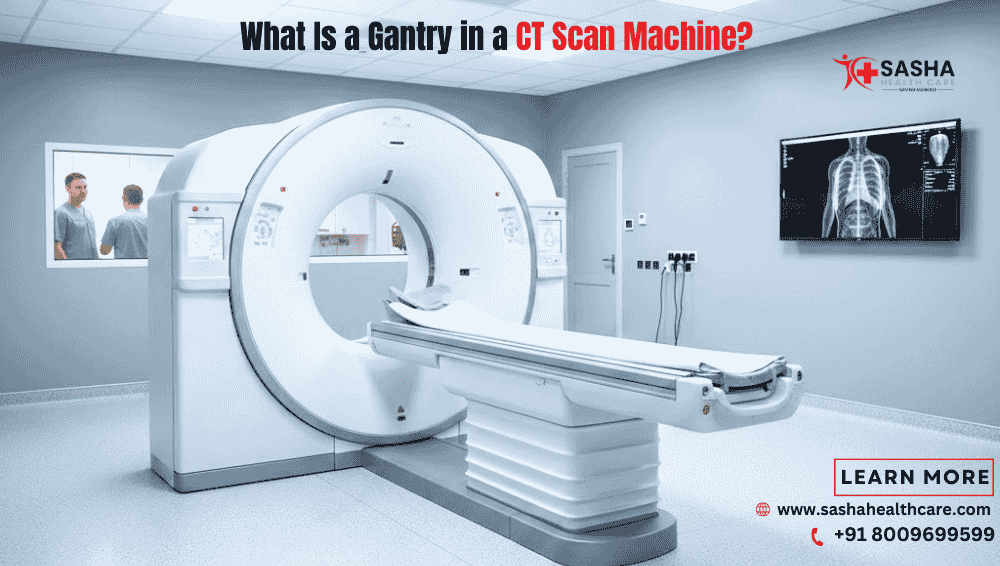
A gantry in a CT scan machine is the circular structural unit that houses the X-ray tube, detectors, rotation system, and data acquisition hardware.
It forms the core imaging assembly of every Computed Tomography system used in modern diagnostic radiology.

Hospital planners, radiologists, and imaging center owners consider the gantry the most critical mechanical and imaging component of the CT scanner.

What Is a Gantry in a CT Scan Machine?

The CT gantry supports and rotates the X-ray source and detector array around the patient to produce cross-sectional anatomical images.

It creates the physical framework for image acquisition.
It determines scan speed, image resolution, and patient accessibility.

Main Components Inside a CT Gantry

X-ray Tube Assembly

The X-ray tube generates the radiation beam.
Tube power rating (kW), heat capacity (MHU), and focal spot size influence image quality and scan speed.

Detector Array

Detectors capture attenuated X-rays after they pass through the patient.
Modern systems use solid-state detectors with high quantum efficiency.

Slip Ring Technology

Slip rings allow continuous rotation without cable twisting.
This design enables spiral (helical) CT scanning.

Gantry Motor and Rotation System

High-precision motors drive rotation speeds as low as 0.25 seconds per revolution.
Fast rotation improves cardiac and trauma imaging.

Data Acquisition System (DAS)

DAS converts detector signals into digital data for image reconstruction.

Gantry Opening (Bore) Size

The gantry bore refers to the circular opening where the patient table moves through.

Typical bore diameters:

  • Standard CT: 70 cm
  • Wide-bore CT: 75–80 cm

Large bores support bariatric, oncology, and interventional procedures.

Gantry Tilt Function

Many CT systems allow gantry tilting up to ±30 degrees.

Radiologists use tilt for:

  • Brain imaging to avoid eye lens radiation
  • Spine and orthopedic alignment
  • Trauma positioning

Role of Gantry in Image Quality

Gantry engineering directly affects spatial resolution, motion artifact control, and dose efficiency.

Key influencing factors:

  • Rotation speed
  • Detector coverage (mm)
  • Tube stability
  • Mechanical balance

Poor gantry alignment causes image artifacts.

Gantry in Multi-Slice CT Systems

Modern CT scanners such as:

  • GE Revolution ACT
  • Siemens SOMATOM go.Top
  • Philips Incisive CT
  • Canon Aquilion Lightning

use advanced gantry designs to support 16-slice to 640-slice imaging platforms.

Installation Requirements for CT Gantry

CT gantry installation demands precise civil and electrical preparation.

Room Requirements

  • Room size: 300–500 sq ft typical
  • Floor load capacity: 1,500–2,500 kg
  • Controlled temperature and humidity

Electrical Requirements

  • Dedicated power supply
  • Online UPS
  • Proper grounding

Radiation Shielding

Lead shielding per AERB guidelines in India.

Gantry Safety and Compliance

CT gantries comply with international medical device standards.

Relevant certifications:

  • IEC 60601-1 (Electrical Safety)
  • IEC 60601-2-44 (CT Equipment Safety)
  • AERB (India radiation safety approval)
  • CE Mark / FDA clearance

Safety systems include:

  • Interlocks
  • Emergency stop
  • Tube cooling monitoring

Gantry Maintenance Factors

Routine gantry servicing includes:

  • Bearing inspection
  • Tube alignment check
  • Detector calibration
  • Slip ring maintenance

Improper maintenance leads to vibration artifacts.

Organizations such as SASHA HEALTH CARE, which supply diagnostic imaging systems, assess gantry condition before equipment installation and commissioning.

Cost Impact of Gantry Technology

Advanced gantry design increases system cost due to high-speed rotation engineering and detector integration.

Indicative CT system pricing in India:

  • Refurbished 16-slice CT: ₹70 lakh – ₹80 lakh
  • 128-slice CT: ₹90 – ₹1.5 crore
  • Premium cardiac CT: ₹2 crore+

High-performance gantries drive these costs.

Gantry vs Other CT Components

ComponentFunction
GantryHouses imaging hardware
Patient TableMoves patient through bore
ConsoleControls scan parameters
WorkstationImage reconstruction

Clinical Use Cases Where Gantry Design Matters

  • Cardiac CT angiography
  • Trauma whole-body scans
  • Oncology planning
  • Neuro imaging
  • Interventional CT

Fast rotation and stable mechanics support motion-sensitive studies.

FAQ

1. What does the gantry do in a CT scanner?

The gantry rotates the X-ray tube and detectors around the patient to capture imaging data.

2. What is the standard gantry bore size?

Most CT scanners use a 70 cm bore. Wide-bore systems reach 80 cm.

3. Why does gantry speed matter?

Faster rotation reduces motion blur and improves cardiac imaging.

4. Can the gantry tilt?

Yes. Many systems allow ±30° tilt for specialized imaging.

5. Does gantry design affect radiation dose?

Yes. Efficient detector alignment and tube control improve dose optimization.

Summary

Refurbished CT scan machines offer cost-effective access to essential and advanced imaging technology, enabling hospitals and diagnostic centers to expand services without prohibitive capital spend. When properly evaluated, installed, and maintained, these systems provide long-term clinical utility and economic advantage for healthcare facilities in India.

CT scan machine rotating X-ray tube inside gantry during medical imaging
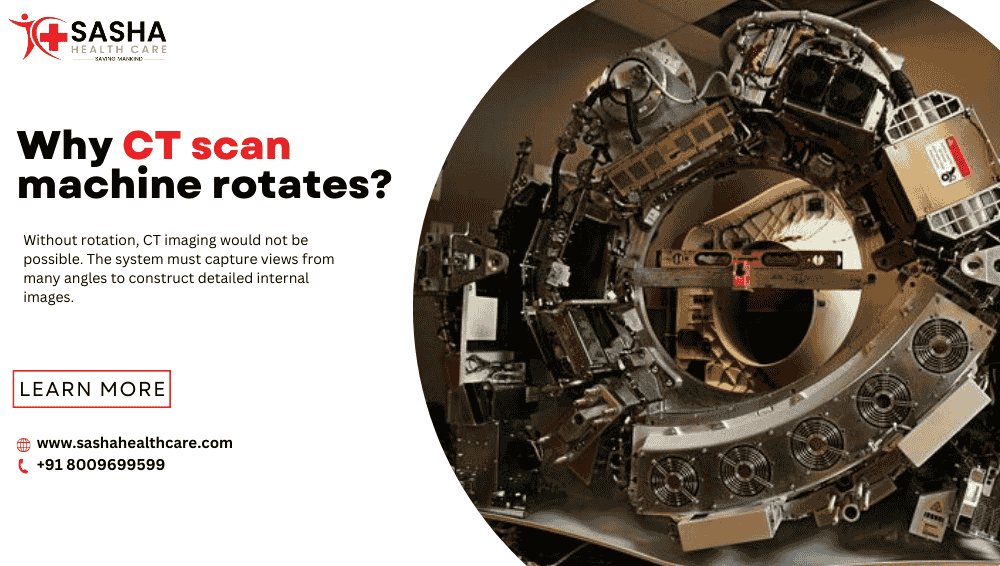
Why CT scan machine rotates?

A CT scan machine rotates to capture multiple X-ray images of the body from different angles, allowing a computer to create detailed cross-sectional and 3D images of internal organs, bones, blood vessels, and tissues. This rotation ensures high diagnostic accuracy and precise visualization of internal structures.


How a Rotating CT Scan Machine Works

A CT (Computed Tomography) scanner uses a rotating X-ray tube and detector system inside a circular structure called a gantry.

🔄 How the Rotation Happens

  • The patient lies on a motorized table that moves slowly through the gantry
  • Inside the ring, the X-ray tube rotates 360 degrees around the body
  • Opposite the tube are detectors that capture X-rays after they pass through tissues
  • A computer reconstructs data into cross-sectional images (slices)

Modern scanners use continuous spiral (helical) rotation to produce smoother and faster imaging.


❓ Why CT scan machine rotates?

Without rotation, CT imaging would not be possible. The system must capture views from many angles to construct detailed internal images.

Rotation enables:

  • 3D reconstruction of organs
  • Detection of small tumors and lesions
  • Accurate imaging of blood vessels
  • Clear visualization of fractures
  • Organ function and perfusion studies

✅ Key Benefits of Rotating CT Technology

BenefitWhy It Matters
High diagnostic accuracyDetects internal issues early
Fast scanningCritical for trauma and emergencies
Thin slice imagingShows very small abnormalities
Reduced motion blurClear images even in short breath-hold
Whole-body capabilityUsed in cancer, heart, and brain imaging

Entity Authority Section: Deep Technical Understanding

What Components Rotate?

In modern CT scanners, not the entire machine rotates — only specific parts inside the gantry:

  • X-ray tube
  • Detector array
  • Data transmission system

The patient remains still while the internal assembly spins at high speed, sometimes completing rotations in less than 0.3 seconds.


CT Scan vs MRI: Rotation Comparison

FeatureCT ScanMRI
Rotating partsYes (X-ray tube & detectors)No rotation
Imaging principleX-raysMagnetic fields & radio waves
SpeedVery fastSlower
Best forBones, lungs, traumaSoft tissues, brain, joints

CT rotation is necessary for image creation. MRI machines do not rotate because they use magnetic resonance signals instead of X-ray projections.


Real-World Medical Use Cases

Emergency Medicine
Rapid rotating CT scanners detect:

  • Internal bleeding
  • Brain stroke
  • Chest injuries

Oncology (Cancer Care)

  • Tumor detection
  • Treatment planning
  • Monitoring therapy response

Cardiology

  • Coronary CT angiography
  • Calcium scoring
  • Heart structure analysis

Orthopedics

Types of CT Rotation Technology

  1. Axial CT – Stops and rotates for each slice
  2. Helical (Spiral) CT – Continuous rotation while the table moves
  3. Multi-slice CT – Multiple detector rows capture several slices per rotation

Helical and multi-slice CT are standard in modern Indian hospitals.

Frequently Asked Questions

1. What does a CT scan machine do?

It uses rotating X-rays and detectors to create detailed cross-sectional images of organs, bones, and tissues inside the body.

2. Why does the CT scanner rotate?

Rotation allows the machine to capture images from multiple angles, helping computers build accurate 3D internal views.

3. Is CT scan radiation harmful?

CT scans use controlled radiation. When medically necessary, the benefits of diagnosis outweigh the small radiation risk.

4. How long does a CT scan take?

Most CT scans take 5–10 minutes, while the actual image capture takes only a few seconds.

5. Do I feel anything during a CT scan?

No, the scan is painless. You only need to lie still while the machine works.

Conclusion

The rotation of a CT scan machine is not a design choice — it is the core principle that makes cross-sectional imaging possible. By capturing X-ray data from multiple angles, CT technology delivers precise, fast, and life-saving diagnostic information used daily in modern healthcare across India and worldwide.

How to operate a CT scan machine in a diagnostic center by a trained radiology technologist
How to Operate a CT Scan Machine

How to Operate a CT Scan Machine ??? Operating a CT (Computed Tomography) scan machine involves clinical knowledge, technical training, radiation safety compliance, and strict procedural control. In India, CT scanners are operated by certified radiology technologists under the supervision of registered radiologists, following AERB and NABH guidelines.

A CT scan machine converts X-ray signals into cross-sectional images using a rotating gantry, detector array, and computer reconstruction system. Safe operation depends on correct patient positioning, protocol selection, dose optimization, and image verification.

How to Operate a CT Scan Machine ??

Operating a CT scanner does not mean simply pressing scan buttons.

It includes:

  • Preparing and screening the patient
  • Selecting the correct scan protocol
  • Positioning the patient accurately
  • Executing the scan safely
  • Reviewing image quality before submission

A CT scan machine is operated by a trained radiologic technologist who controls patient positioning, scan parameters, radiation dose, and image acquisition according to clinical protocol.

Who Is Authorized to Operate a CT Scanner in India?

In India, CT scanners must be operated by qualified personnel only.

Required Qualifications

  • Diploma or Degree in Radiology / Medical Imaging Technology
  • Valid registration with State Paramedical Council (where applicable)
  • Training certification on the specific CT model

Regulatory Bodies

  • AERB (Atomic Energy Regulatory Board)
  • PCPNDT Authority (for applicable studies)
  • NABH / NABL (for accredited centers)

Indian regulations mandate that CT scanners be operated only by trained radiologic technologists under AERB-approved radiation safety programs.

Main Components You Must Understand Before Operation

Understanding machine components is essential before live operation.

Core CT Scan System Parts

  • Gantry: Houses X-ray tube and detectors
  • Patient Table: Motorized, precision-controlled
  • X-ray Tube: Generates high-energy radiation
  • Detector Array: Captures attenuated X-rays
  • Console & Workstation: Controls scan and reconstruction

Popular CT systems in India include:

  • Siemens SOMATOM series
  • GE Revolution and BrightSpeed
  • Philips Brilliance and Incisive CT
  • Canon (Toshiba) Aquilion series

Step-by-Step Process to Operate a CT Scan Machine

Step 1: Patient Verification and Screening

  • Confirm patient identity and clinical indication
  • Screen for pregnancy and metal implants
  • Check renal function for contrast studies

Patient screening is mandatory before CT scanning to prevent radiation risk and contrast-related complications.

Step 2: Patient Positioning

  • Align patient using laser guides
  • Immobilize using straps or cushions
  • Ensure anatomical region is centered in gantry

Incorrect positioning leads to:

  • Increased radiation dose
  • Poor image quality
  • Repeat scans

Step 3: Protocol Selection

CT machines include predefined protocols such as:

  • Head CT
  • HRCT Chest
  • CT Abdomen Pelvis
  • CT Angiography

Parameters adjusted include:

  • kVp
  • mAs
  • Slice thickness
  • Pitch
  • Scan range

Step 4: Scout (Topogram) Acquisition

  • Perform AP or lateral scout image
  • Define exact scan boundaries
  • Minimize unnecessary exposure

Step 5: Scan Execution

  • Leave scan room before exposure
  • Monitor patient via camera and intercom
  • Initiate scan from control console

Modern CT systems use:

  • Automatic Exposure Control (AEC)
  • Dose modulation software

Step 6: Image Reconstruction and Review

  • Reconstruct axial, coronal, sagittal images
  • Check for motion artifacts
  • Confirm diagnostic adequacy

Images are then sent to:

  • PACS
  • Radiologist workstation

Radiation Safety and Compliance Requirements

Radiation safety is non-negotiable.

Mandatory Safety Practices

  • ALARA principle (As Low As Reasonably Achievable)
  • Lead shielding where applicable
  • Regular dose audits
  • Radiation warning signage

Compliance Standards

  • AERB equipment registration
  • Periodic QA testing
  • Radiation Safety Officer (RSO) appointment

CT scan operation in India must comply with AERB radiation safety norms, including dose optimization and routine quality assurance testing.

Installation and Infrastructure Requirements

CT operation depends on correct installation.

Space and Shielding

  • Lead-lined walls as per AERB layout approval
  • Dedicated control room
  • Patient preparation area

Power and Cooling

  • Three-phase electrical supply
  • UPS and generator backup
  • HVAC for temperature control

Operating Costs and Practical Considerations

While operation itself has no direct “per-scan machine cost,” practical expenses include:

Cost Factors

  • X-ray tube lifespan
  • Annual maintenance contract (AMC)
  • Power consumption
  • Technologist salaries

CT scanners in India typically range from:

  • 16-slice: ₹80-90 Lakh
  • 64-slice: ₹90– 1cr
  • 128-slice and above: ₹1 crore+

Common Operating Errors to Avoid

  • Incorrect protocol selection
  • Poor patient centering
  • Overexposure due to manual mAs
  • Skipping scout verification

These errors increase:

  • Radiation dose
  • Repeat scan rates
  • Legal and compliance risks

Expert Perspective from Field Practice

From operational audits across Indian diagnostic centers, the most consistent performance improvements come from:

  • Regular technologist retraining
  • Protocol standardization
  • Dose tracking software implementation

High-quality CT operation is a process discipline, not just equipment capability.

Frequently Asked Questions (FAQ)

1. Who can legally operate a CT scan machine in India?

Only trained radiology technologists with appropriate certification, under radiologist supervision, as per AERB rules.

2. Can a radiologist directly operate the CT machine?

Radiologists usually supervise and interpret scans. Day-to-day machine operation is handled by technologists.

3. Is contrast injection part of CT operation?

Yes. Contrast-enhanced CT requires trained staff, emergency preparedness, and renal safety checks.

4. How long does a CT scan take to perform?

Most routine CT scans take 5–10 minutes, excluding preparation time.

5. What safety certification is mandatory for CT operation?

AERB approval, radiation safety training, and periodic quality assurance certification are mandatory.

0