Mri Machines Archives - SashaHealthCare
Search for:
MRI Machine Price in India - Refurbished MRI Machines, Latest MRI Scan Machine Prices, Manufacturers and Suppliers by Sasha HealthCare
MRI Scan Machine Latest Price, Manufacturers & Suppliers in India (2026 Buying Guide)

Magnetic Resonance Imaging (MRI) has become one of the most essential diagnostic technologies in modern healthcare. Hospitals, multi-specialty clinics, and diagnostic centers across India rely on MRI machines to produce high-resolution images of internal organs, soft tissues, joints, the brain, and the spine without using ionizing radiation. As healthcare infrastructure continues to expand, the demand for MRI systems is increasing, making MRI machine price in India one of the most searched topics among healthcare investors and medical equipment buyers.

Whether you are establishing a new diagnostic center, upgrading an existing radiology department, or expanding hospital imaging services, selecting the right MRI scanner involves much more than comparing prices. Factors such as magnetic field strength, imaging technology, installation requirements, maintenance costs, manufacturer reputation, and after-sales support all play a crucial role in determining the total investment.

One of the biggest decisions buyers face is whether to invest in a brand-new MRI system or choose a professionally refurbished MRI machine. While new MRI scanners offer the latest technology, certified refurbished MRI machines provide outstanding performance at a significantly lower cost, making them an attractive option for many healthcare providers.

At Sasha HealthCare, we specialize in supplying high-quality refurbished MRI machines from leading global brands, including Siemens, GE HealthCare, Philips, Canon Medical, and Hitachi. Along with equipment supply, we provide complete installation, de-installation, transportation, preventive maintenance, AMC/CMC services, helium filling, and technical support across India.

This comprehensive guide explains the latest MRI machine prices in India, compares leading manufacturers, discusses pricing factors, and helps you choose the right MRI system for your healthcare facility.


Table of Contents
  • What Is an MRI Scan Machine?
  • Latest MRI Machine Price in India
  • MRI Machine Price by Tesla Strength
  • MRI Machine Price by Manufacturer
  • Top MRI Machine Manufacturers
  • Refurbished MRI Machine Price in India
  • Factors Affecting MRI Machine Prices
  • MRI Installation & Additional Costs
  • How to Choose the Right MRI Machine
  • Why Buy a Refurbished MRI Machine?
  • Why Choose Sasha HealthCare?
  • Frequently Asked Questions

What Is an MRI Scan Machine?

An MRI (Magnetic Resonance Imaging) machine is an advanced diagnostic imaging system that uses a powerful magnetic field, radiofrequency pulses, and computer processing to generate detailed cross-sectional images of the human body. Unlike CT scanners or X-ray systems, MRI does not use ionizing radiation, making it a preferred imaging method for many neurological, orthopedic, cardiac, and soft tissue examinations.

MRI technology is widely used to diagnose conditions affecting the:

  • Brain
  • Spine
  • Joints
  • Muscles
  • Heart
  • Liver
  • Kidneys
  • Blood vessels
  • Pelvic organs
  • Ligaments and tendons

Modern MRI systems can produce highly detailed images that help physicians detect tumors, strokes, ligament injuries, spinal disorders, and numerous other medical conditions at an early stage.

Main Components of an MRI Machine

A standard MRI scanner consists of several key components:

  • Superconducting magnet
  • Gradient coil system
  • RF (Radio Frequency) coils
  • Patient table
  • Cooling system
  • Helium cryogenic system
  • Computer workstation
  • MRI software platform

Each of these components contributes to image quality, scanning speed, and diagnostic accuracy.


Types of MRI Machines

MRI systems are available in different configurations depending on magnetic field strength and clinical requirements.

Open MRI

Open MRI machines are designed for patient comfort, making them suitable for claustrophobic, pediatric, elderly, or obese patients. However, they generally provide lower magnetic field strength and reduced image resolution compared to closed MRI systems.

Closed MRI

Closed MRI scanners are the most commonly installed systems in hospitals and diagnostic centers. These machines offer superior image quality, faster examinations, and a broader range of clinical applications.


MRI Machine Price in India (2026)

The MRI machine price in India depends on several factors, including magnetic field strength, manufacturer, model year, software version, condition (new or refurbished), installation requirements, and optional accessories.

Professionally refurbished MRI machines have become increasingly popular because they deliver reliable clinical performance while reducing capital expenditure. Healthcare providers can often save a substantial amount compared with purchasing a new system, making refurbished equipment an attractive choice for expanding diagnostic services.

The following table provides indicative price ranges. Actual prices may vary based on the equipment configuration, refurbishment standards, warranty, and site-specific requirements.

MRI TypeField StrengthApprox. New PriceApprox. Refurbished PriceBest For
Open MRI0.3T–0.5THigher investmentLower investmentOrthopedic clinics, patient comfort
Low-Field MRI0.2T–0.5TModerateBudget-friendlySmall diagnostic centers
Standard MRI1.5 TeslaPremiumSignificant savingsMost hospitals and imaging centers
Advanced MRI3 TeslaHighest investmentLower than new systemsAdvanced neurology, oncology, research

Note: Prices vary depending on the manufacturer, model, software upgrades, installation requirements, and warranty coverage. Contact a trusted supplier such as Sasha HealthCare for a customized quotation.


Why Do MRI Machine Prices Vary?

Many buyers wonder why one MRI machine costs considerably more than another, even when both have the same magnetic field strength. The answer lies in several technical and operational factors.

The most significant factor is the magnetic field strength. A 3 Tesla MRI system generally costs more than a 1.5 Tesla system because it provides higher image resolution and faster scanning capabilities.

Other factors include:

  • Brand reputation
  • Model generation
  • Gradient performance
  • RF coil technology
  • AI-assisted imaging software
  • Clinical applications
  • Installation complexity
  • Warranty period
  • Helium efficiency
  • Equipment condition (new or refurbished)

Hospitals with specialized imaging requirements may also choose premium models that include advanced cardiac imaging, whole-body diffusion imaging, functional MRI (fMRI), or spectroscopy, which further influence the overall investment.


Benefits of Buying a Refurbished MRI Machine

For many healthcare providers, refurbished MRI machines offer an excellent balance between performance and affordability. When sourced from a reputable supplier, these systems undergo thorough inspection, component replacement where necessary, software updates, calibration, and rigorous quality testing before installation.

Key advantages include:

  • Lower initial investment
  • Proven clinical performance
  • Faster return on investment
  • Warranty support
  • Reduced downtime
  • Availability of premium brands at a more accessible cost
  • Sustainable and environmentally responsible equipment reuse

Choosing a trusted supplier ensures that the refurbished MRI system meets high quality standards and delivers reliable performance for years to come.

MRI Machine Price by Tesla Strength

The magnetic field strength of an MRI machine is measured in Tesla (T). The Tesla rating significantly influences image quality, scan speed, diagnostic capabilities, and overall cost. Selecting the appropriate field strength depends on your patient volume, clinical applications, and budget.

Below is a comparison of the most common MRI systems available in India.

Tesla StrengthTypical ApplicationsSuitable ForPrice Category
0.2T–0.35TBasic orthopedic and musculoskeletal imagingSmall clinicsBudget
0.5TGeneral diagnostic imagingSmall diagnostic centersModerate
1.5TRoutine clinical imagingMost hospitals and diagnostic centersMid to Premium
3TAdvanced neurological, cardiac, and oncology imagingMulti-specialty hospitals and research institutionsPremium

0.2 Tesla MRI Machine

Low-field MRI systems are designed for healthcare facilities with basic imaging requirements. They consume less power, require simpler site preparation, and offer a lower initial investment.

Advantages
  • Lower operating cost
  • Easier installation
  • Comfortable for patients
  • Suitable for routine examinations
Limitations
  • Longer scan times
  • Lower image resolution
  • Limited advanced clinical applications

These systems are generally suitable for small healthcare facilities where patient volume is relatively low.


0.35 Tesla MRI Machine

A 0.35 Tesla MRI offers improved imaging performance compared to lower-field systems while remaining an economical option for many diagnostic centers.

It is commonly used for:

  • Orthopedic imaging
  • Spine examinations
  • Joint assessments
  • Basic neurological scans

Healthcare providers with moderate patient volume often choose refurbished 0.35T MRI systems to minimize capital investment while maintaining diagnostic capabilities.


0.5 Tesla MRI Machine

The 0.5 Tesla MRI remains a practical solution for hospitals seeking dependable imaging without investing in higher-field systems.

Typical applications include:

  • Brain imaging
  • Spine imaging
  • Knee MRI
  • Shoulder MRI
  • Pelvic imaging

Many refurbished 0.5 Tesla systems continue to deliver reliable clinical performance when properly maintained.


1.5 Tesla MRI Machine

The 1.5 Tesla MRI is the most widely installed MRI system worldwide and is considered the industry standard.

It offers an excellent balance of image quality, examination speed, and affordability.

Ideal For
  • Multi-specialty hospitals
  • Diagnostic imaging centers
  • Medical colleges
  • Trauma centers
Clinical Applications
  • Neurology
  • Orthopedics
  • Oncology
  • Cardiology
  • Whole-body MRI
  • Pediatric imaging

Because of its versatility, a refurbished 1.5 Tesla MRI machine is often the preferred choice for hospitals seeking high-quality imaging with a lower investment than a new system.


3 Tesla MRI Machine

A 3 Tesla MRI delivers twice the magnetic field strength of a 1.5T system, resulting in higher-resolution images and faster scan times.

It is recommended for:

  • Neurosurgery centers
  • Advanced oncology hospitals
  • Research institutions
  • Cardiac imaging
  • Functional MRI (fMRI)
Benefits
  • Superior image clarity
  • Faster examinations
  • Better visualization of small anatomical structures
  • Advanced clinical applications

Although a 3T MRI requires a higher investment, refurbished models can make advanced imaging more accessible.


1.5 Tesla vs 3 Tesla MRI

Feature1.5 Tesla MRI3 Tesla MRI
Image QualityExcellentOutstanding
Scan SpeedFastFaster
Clinical ApplicationsMost routine examinationsAdvanced diagnostics
CostModerateHigher
Power ConsumptionModerateHigher
Installation RequirementsStandardMore demanding
Recommended ForMost hospitalsLarge hospitals & research centers

Expert Tip: For the majority of diagnostic centers in India, a refurbished 1.5 Tesla MRI offers the best balance between cost, performance, and return on investment.


MRI Machine Price by Brand

The manufacturer plays a significant role in determining an MRI system’s technology, software, service support, and resale value. Below are the leading brands available in India.


Siemens MRI Machine Price

Siemens Healthineers is one of the world’s leading MRI manufacturers, recognized for innovation, image quality, and advanced software solutions.

Popular models include:

  • MAGNETOM Avanto
  • MAGNETOM Essenza
  • MAGNETOM Sempra
  • MAGNETOM Aera
  • MAGNETOM Skyra

Advantages

  • Excellent image quality
  • AI-assisted workflow
  • Energy-efficient operation
  • Strong service network
  • High resale value

Siemens refurbished MRI machines are particularly popular among hospitals and diagnostic centers because they combine dependable performance with long-term reliability.


GE HealthCare MRI Machine Price

GE HealthCare offers MRI systems known for patient comfort, fast imaging, and user-friendly workflows.

Popular models include:

  • Signa Creator
  • Signa Explorer
  • Signa HDxt
  • Signa Voyager
  • Signa Pioneer

Benefits

  • Wide bore options
  • Fast examination protocols
  • AI-powered imaging tools
  • Comfortable patient experience
  • High-quality musculoskeletal imaging

GE MRI systems are widely used in both public and private healthcare institutions.


Philips MRI Machine Price

Philips Healthcare is recognized for advanced digital imaging, innovative coil technology, and efficient clinical workflows.

Popular models include:

  • Ingenia
  • Achieva
  • Intera
  • Multiva

Key Features

  • Digital broadband architecture
  • Excellent soft tissue contrast
  • Reduced scan times
  • Patient-friendly design
  • Advanced cardiac imaging

Philips MRI scanners are commonly selected by hospitals requiring comprehensive imaging capabilities.


Canon Medical MRI Machine Price

Canon Medical Systems (formerly Toshiba Medical) produces MRI scanners known for quiet operation and advanced imaging technologies.

Popular models include:

  • Vantage Elan
  • Vantage Titan
  • Vantage Orian

Advantages

  • Comfortable patient experience
  • Quiet scan technology
  • Excellent orthopedic imaging
  • Efficient workflow

Canon MRI systems are increasingly popular among diagnostic centers focused on patient comfort.


Hitachi MRI Machine Price

Hitachi MRI systems are particularly recognized for open MRI technology and patient accessibility.

Popular models include:

  • Airis Elite
  • Aperto Lucent
  • Oasis

Benefits

  • Open MRI design
  • Reduced patient anxiety
  • Suitable for obese patients
  • Comfortable examinations

These systems are often chosen by orthopedic hospitals and specialty imaging centers.


Brand Comparison
BrandBest Known ForSuitable For
SiemensAdvanced technology and image qualityLarge hospitals and diagnostic centers
GE HealthCareWorkflow efficiency and patient comfortMulti-specialty hospitals
PhilipsDigital imaging and cardiac applicationsAdvanced diagnostic centers
Canon MedicalQuiet MRI technologyGeneral hospitals
HitachiOpen MRI systemsOrthopedic and specialty clinics

Which MRI Brand Should You Choose?

There is no single “best” MRI brand for every healthcare facility. The ideal choice depends on your clinical needs, budget, available space, and expected patient volume.

When comparing MRI systems, evaluate:

  • Clinical applications
  • Image quality
  • Software features
  • Availability of spare parts
  • Service network
  • Upgrade options
  • Warranty
  • Operating costs
  • Installation requirements
  • Long-term maintenance support

Working with an experienced supplier can help you identify the right MRI system based on your facility’s specific requirements and future growth plans.

Top MRI Machine Manufacturers

Choosing a reputable MRI manufacturer is just as important as selecting the right field strength. Leading manufacturers invest heavily in research, artificial intelligence, imaging software, and energy-efficient technologies to deliver high-quality diagnostic performance.

The following companies dominate the global MRI market and have a strong presence in India.


Siemens Healthineers

Siemens Healthineers is one of the world’s most trusted MRI manufacturers. The company offers a wide range of MRI systems suitable for small diagnostic centers as well as large tertiary-care hospitals.

Popular MRI Models
  • MAGNETOM Essenza (1.5T)
  • MAGNETOM Avanto (1.5T)
  • MAGNETOM Aera (1.5T)
  • MAGNETOM Sola (1.5T)
  • MAGNETOM Skyra (3T)
  • MAGNETOM Vida (3T)
Key Advantages
  • Excellent image quality
  • AI-assisted workflow
  • Faster scan times
  • Lower helium consumption in newer models
  • Wide availability of spare parts
  • Strong service support across India

Best suited for: Hospitals, diagnostic centers, neurology, oncology, and orthopedic imaging.


GE HealthCare

GE HealthCare is another leading MRI manufacturer known for innovative imaging technology and patient-focused design.

Popular Models
  • Signa HDxt
  • Signa Explorer
  • Signa Voyager
  • Signa Pioneer
  • Signa Architect
Key Features
  • Wide-bore patient-friendly design
  • AI-assisted imaging
  • Advanced cardiac applications
  • Excellent musculoskeletal imaging
  • Reliable workflow automation

Best suited for: Multi-specialty hospitals and high-volume diagnostic centers.


Philips Healthcare

Philips MRI systems are recognized for delivering high-quality images while improving patient comfort and workflow efficiency.

Popular Models
  • Ingenia
  • Achieva
  • Multiva
  • Intera
Key Benefits
  • Digital broadband architecture
  • Advanced coil technology
  • Excellent soft tissue imaging
  • Reduced scan times
  • Easy software upgrades

Best suited for: Cardiac imaging, oncology, neurology, and advanced diagnostic applications.


Canon Medical Systems

Canon Medical (formerly Toshiba Medical) manufactures MRI scanners that emphasize patient comfort without compromising image quality.

Popular Models
  • Vantage Titan
  • Vantage Elan
  • Vantage Orian
Advantages
  • Quiet scan technology
  • Comfortable patient experience
  • Reliable orthopedic imaging
  • Lower acoustic noise
  • Efficient workflow

Hitachi

Hitachi is widely known for developing open MRI systems, making MRI examinations easier for claustrophobic, pediatric, and bariatric patients.

Popular Models
  • Aperto Lucent
  • Airis Elite
  • Oasis
Advantages
  • Open MRI design
  • Improved patient comfort
  • Lower anxiety during scans
  • Suitable for orthopedic imaging

Top MRI Machine Suppliers in India

Selecting the right supplier is just as important as selecting the right manufacturer. A reliable supplier provides more than equipment—they offer complete lifecycle support.

Look for suppliers that provide:

  • Certified refurbished MRI systems
  • Professional installation
  • Site planning assistance
  • De-installation services
  • Transportation
  • MRI room planning
  • RF shielding guidance
  • Helium filling services
  • Preventive maintenance
  • AMC & CMC support
  • Genuine spare parts
  • Technical support

A trusted supplier can reduce downtime, improve equipment life, and ensure compliance with installation requirements.


Refurbished MRI Machine Price in India

The demand for refurbished MRI machines has grown significantly in India due to increasing healthcare investments and the need for cost-effective imaging solutions.

A professionally refurbished MRI scanner undergoes a structured refurbishment process that typically includes:

  • Complete inspection
  • Component testing
  • Replacement of worn parts
  • Magnet performance evaluation
  • Software upgrades (where applicable)
  • Cosmetic restoration
  • Safety testing
  • Quality assurance checks
  • Calibration before installation

Purchasing from an experienced supplier ensures the equipment is tested and supported with installation and after-sales service.


Why Hospitals Prefer Refurbished MRI Machines

Many hospitals choose refurbished MRI systems because they offer an excellent balance between affordability and performance.

Benefits

✔ Lower capital investment

✔ Faster return on investment (ROI)

✔ Proven clinical performance

✔ Access to premium brands

✔ Warranty options

✔ Readily available spare parts

✔ Lower depreciation

✔ Faster delivery compared to some new systems


New vs Refurbished MRI Machine
FeatureNew MRI MachineRefurbished MRI Machine
Initial InvestmentHigherLower
TechnologyLatest generationProven, reliable generation
WarrantyManufacturer warrantySupplier warranty (varies)
Delivery TimeMay be longerOften faster
Return on InvestmentLonger paybackFaster payback
Clinical PerformanceExcellentExcellent when professionally refurbished
Best ForPremium hospitalsMost hospitals and diagnostic centres

For many diagnostic centers, a certified refurbished MRI machine provides the imaging capabilities needed while keeping capital costs under control.


How Refurbished MRI Machines Are Restored

A high-quality refurbishment process generally includes the following stages:

1. Equipment Inspection

Engineers inspect the magnet, gradient system, RF coils, cooling unit, patient table, electronics, and software.

2. Component Replacement

Faulty or worn components are replaced with compatible, high-quality parts.

3. Software Updates

Where supported, software is updated to improve workflow and imaging performance.

4. Cosmetic Restoration

Exterior panels, covers, and accessories are cleaned, repaired, or refinished to present a professional appearance.

5. Performance Testing

The MRI system undergoes imaging and operational tests to verify reliable performance.

6. Installation & Calibration

Experienced engineers install, calibrate, and commission the system at the customer’s site.


Is Buying a Refurbished MRI Machine Safe?

Yes—provided you purchase from a reputable supplier with technical expertise and quality assurance processes.

Before making a purchase, verify:

  • Equipment history
  • Magnet condition
  • Software version
  • Warranty terms
  • Availability of spare parts
  • Service support
  • Installation experience
  • Preventive maintenance plans
  • Customer references

A professionally refurbished MRI machine can deliver dependable diagnostic performance for many years when maintained correctly.


Expert Buying Tips

Before purchasing an MRI system, ask your supplier the following questions:

  • What is the manufacturing year of the system?
  • Has the MRI been fully refurbished?
  • What warranty is included?
  • Are installation services provided?
  • Is helium filling included if required?
  • Are spare parts readily available?
  • Do you offer AMC and CMC contracts?
  • What is the expected delivery timeline?
  • Can software upgrades be supported?
  • Do you provide operator or technical training?

These questions can help you compare suppliers beyond price alone.


Why Buy from Sasha HealthCare?

Sasha HealthCare is a trusted supplier of refurbished MRI machines in India, offering comprehensive support from equipment selection to installation and ongoing maintenance.

Our services include:

  • Certified refurbished MRI machines
  • Siemens, GE, Philips, Canon, and Hitachi systems
  • MRI installation and commissioning
  • MRI de-installation and relocation
  • Safe transportation
  • Preventive maintenance
  • AMC & CMC services
  • MRI helium filling
  • Genuine spare parts
  • Technical support by experienced engineers

We work closely with hospitals, diagnostic centers, and healthcare investors to recommend MRI solutions that match their clinical needs and budget.

Factors Affecting MRI Machine Price in India

The MRI machine price in India is influenced by much more than the manufacturer’s brand. Several technical, operational, and installation-related factors determine the total investment required. Understanding these factors helps hospitals and diagnostic centers choose a system that aligns with their clinical requirements and budget.


1. Magnetic Field Strength (Tesla)

The magnetic field strength is one of the biggest factors affecting the price of an MRI machine.

  • 0.2T–0.5T: Suitable for basic imaging with lower investment.
  • 1.5T: The most popular choice, offering an excellent balance of image quality and affordability.
  • 3T: Designed for advanced clinical applications with higher image resolution and faster scanning.

Higher Tesla machines generally require greater investment due to their advanced capabilities and more complex installation requirements.


2. Brand and Model

Well-established manufacturers invest heavily in research and development, imaging software, and service infrastructure. As a result, premium brands often command higher prices but also offer excellent reliability and long-term value.

Popular manufacturers include:

  • Siemens Healthineers
  • GE HealthCare
  • Philips Healthcare
  • Canon Medical
  • Hitachi

3. New vs. Refurbished MRI Machine

One of the most important purchasing decisions is whether to buy a new or refurbished MRI system.

New MRI

Advantages

  • Latest technology
  • Manufacturer warranty
  • Advanced AI features
  • Longer product lifecycle

Considerations

  • Higher initial investment
  • Longer return on investment
Refurbished MRI

Advantages

  • Lower capital investment
  • Reliable performance when professionally refurbished
  • Faster deployment
  • Excellent value for hospitals and diagnostic centers

Many healthcare providers choose refurbished MRI machines because they can access premium brands while managing costs effectively.


4. Software and Imaging Features

Modern MRI scanners include advanced software that improves image quality and workflow.

Examples include:

  • AI-assisted image reconstruction
  • Motion correction
  • Faster scan protocols
  • Cardiac imaging packages
  • Oncology applications
  • Neuro imaging software
  • Whole-body imaging
  • Functional MRI (fMRI)

Systems equipped with advanced software generally cost more but can improve productivity and diagnostic confidence.


5. Gradient Performance

Gradient strength affects scan speed and image clarity.

Higher-performance gradient systems provide:

  • Faster scanning
  • Better image resolution
  • Improved neurological imaging
  • Enhanced orthopedic studies
  • Superior cardiac imaging

These advanced features typically increase the equipment cost.


6. RF Coil Configuration

MRI coils play a vital role in image quality.

Common coil options include:

  • Head coil
  • Spine coil
  • Knee coil
  • Shoulder coil
  • Cardiac coil
  • Body coil
  • Breast coil

The number and type of coils included with the MRI system can significantly impact the overall price.


7. Installation Requirements

Installing an MRI machine involves much more than simply delivering the equipment.

The site must be prepared with appropriate infrastructure, including:

  • RF shielding
  • Magnetic shielding (where required)
  • HVAC systems
  • Electrical upgrades
  • UPS systems
  • Earthing
  • Fire safety measures
  • Controlled access

The complexity of the installation influences the total project cost.


MRI Installation Cost

An MRI installation project generally includes:

  • Site inspection
  • Equipment transportation
  • Unloading and positioning
  • Magnet placement
  • Assembly
  • Calibration
  • Acceptance testing
  • Staff orientation
  • Clinical commissioning

Experienced installation teams help minimize downtime and ensure the system operates according to manufacturer recommendations.


MRI Room Requirements

Before purchasing an MRI scanner, hospitals should assess whether their facility is suitable for installation.

Typical requirements include:

  • Adequate room dimensions
  • Structural load capacity
  • Stable power supply
  • Air conditioning and ventilation
  • RF shielding
  • Patient preparation area
  • Equipment control room
  • Emergency access
  • Compliance with applicable regulations

Proper site planning can help avoid delays and additional expenses during installation.


Additional Costs to Consider

When budgeting for an MRI project, buyers should consider costs beyond the equipment itself.

These may include:

ExpensePurpose
Site preparationCivil and electrical modifications
RF shieldingReduces external signal interference
HVACMaintains proper operating temperature
UPS systemProtects against power interruptions
Chiller (if required)Supports equipment cooling
TransportationSafe delivery to the installation site
Crane servicesRequired for difficult installations
CommissioningSystem testing and calibration
Operator trainingFamiliarizes staff with the equipment

Planning for these expenses provides a more accurate understanding of the total project investment.


MRI Helium Filling

Most superconducting MRI systems use liquid helium to keep the magnet at extremely low temperatures.

Over time, helium levels may need to be monitored and replenished, depending on the system design.

Professional helium services help:

  • Maintain magnet performance
  • Reduce downtime
  • Prevent unexpected interruptions
  • Extend equipment life

Hospitals should choose suppliers with experience in MRI helium handling and maintenance.


AMC and CMC Services

Routine maintenance is essential for ensuring consistent MRI performance and minimizing downtime.

Annual Maintenance Contract (AMC)

An AMC generally includes:

  • Preventive maintenance visits
  • Equipment inspection
  • Cleaning and calibration
  • Technical support
  • Performance checks
Comprehensive Maintenance Contract (CMC)

A CMC often includes:

  • Preventive maintenance
  • Breakdown support
  • Replacement of eligible parts (subject to contract terms)
  • Priority service response
  • Technical assistance

Choosing the right maintenance plan can improve equipment reliability and reduce unexpected repair costs.


How to Choose the Right MRI Machine

Selecting the right MRI system requires evaluating your clinical needs, operational goals, and future growth plans.

Consider the following factors:

Patient Volume

Estimate the number of MRI examinations your facility expects to perform each day.

High-volume centers may benefit from systems designed for faster workflow and shorter scan times.


Clinical Applications

Identify the types of examinations you plan to offer, such as:

  • Brain imaging
  • Spine imaging
  • Orthopedic studies
  • Cardiac MRI
  • Oncology imaging
  • Whole-body MRI

Choose a system that supports your intended clinical services.


Budget

Evaluate both the initial purchase cost and the long-term operating expenses.

A professionally refurbished MRI machine can be an excellent option for facilities seeking high-quality imaging while optimizing capital expenditure.


Available Space

MRI systems require carefully planned installation areas.

Ensure sufficient space for:

  • Scanner room
  • Control room
  • Equipment room (if applicable)
  • Patient waiting area
  • Safe access for installation

Service Support

Reliable after-sales support is critical.

When comparing suppliers, ask about:

  • Spare parts availability
  • Technical support
  • Preventive maintenance
  • Emergency service response
  • AMC and CMC options
  • Installation expertise

Expert Recommendation

For most hospitals and diagnostic centers in India, a refurbished 1.5 Tesla MRI machine offers the best combination of image quality, affordability, and return on investment. It supports a wide range of routine and advanced clinical applications while helping healthcare providers manage capital costs effectively.

However, facilities specializing in neurology, oncology, cardiac imaging, or research may benefit from investing in a 3 Tesla MRI system, particularly if advanced imaging capabilities are a priority.

Why Buy a Refurbished MRI Machine?

A refurbished MRI machine is an excellent investment for hospitals and diagnostic centers seeking high-quality imaging while optimizing capital expenditure. When refurbished by an experienced supplier, these systems undergo comprehensive inspection, testing, calibration, and quality assurance to ensure dependable clinical performance.

Key Benefits of Refurbished MRI Machines

1. Significant Cost Savings

One of the biggest advantages of refurbished MRI systems is affordability. Healthcare providers can acquire premium MRI technology at a substantially lower investment compared to purchasing a new machine.

2. Reliable Performance

Certified refurbished MRI machines are carefully tested, calibrated, and commissioned before installation, helping ensure consistent diagnostic imaging.

3. Faster Return on Investment (ROI)

Lower acquisition costs allow hospitals and imaging centers to recover their investment more quickly while expanding diagnostic services.

4. Access to Premium Brands

Refurbished systems make it easier to invest in globally recognized brands such as:

  • Siemens Healthineers
  • GE HealthCare
  • Philips Healthcare
  • Canon Medical
  • Hitachi
5. Faster Availability

Many refurbished MRI machines are available sooner than newly manufactured systems, helping facilities begin operations without unnecessary delays.

6. Sustainable Choice

Purchasing refurbished medical equipment supports sustainability by extending the lifecycle of high-value imaging systems and reducing electronic waste.


Why Choose Sasha HealthCare?

Sasha HealthCare is a trusted supplier of refurbished MRI machines in India, providing complete solutions for hospitals, diagnostic centers, and healthcare investors.

Our goal is not only to supply MRI equipment but also to ensure successful installation, reliable operation, and long-term technical support.

Our Services
Refurbished MRI Machines

We supply certified refurbished MRI systems from leading manufacturers, including:

  • Siemens
  • GE HealthCare
  • Philips
  • Canon Medical
  • Hitachi
MRI Installation

Our experienced engineers handle complete installation and commissioning, helping ensure that the system is configured for reliable performance.

MRI De-installation & Relocation

We provide safe dismantling, packing, transportation, and reinstallation services for hospitals relocating or upgrading MRI equipment.

MRI Transportation

Specialized handling and transportation minimize the risk of damage during equipment movement.

Preventive Maintenance

Regular preventive maintenance helps improve equipment reliability, reduce downtime, and extend service life.

AMC & CMC Services

We offer maintenance contracts tailored to support the long-term performance of MRI systems.

MRI Helium Filling

Professional helium filling and monitoring services help maintain superconducting MRI systems efficiently.

Genuine Spare Parts

We supply compatible spare parts to support reliable operation and timely maintenance.

Technical Support

Our technical team assists customers with troubleshooting, maintenance planning, and operational support.

Conclusion

Selecting the right MRI scanner is a strategic investment that directly impacts diagnostic capabilities, patient care, and long-term operational efficiency. While MRI machine price in India is an important consideration, buyers should also evaluate image quality, manufacturer reputation, installation requirements, maintenance support, and total cost of ownership.

For many hospitals and diagnostic centers, a professionally refurbished MRI machine provides an excellent balance between affordability and performance. Systems from trusted manufacturers such as Siemens, GE HealthCare, Philips, Canon Medical, and Hitachi continue to deliver reliable imaging when supplied and supported by experienced professionals.

If you are planning to purchase, upgrade, or relocate an MRI system, partnering with a trusted supplier can simplify the process and help you make an informed investment.

Sasha HealthCare offers certified refurbished MRI machines, installation, de-installation, transportation, AMC/CMC services, helium filling, and ongoing technical support to healthcare facilities across India.

Need expert guidance? Contact Sasha HealthCare today for a customized consultation and quotation tailored to your hospital or diagnostic center’s requirements.

What is the latest MRI machine price in India?

MRI machine prices in India vary depending on the brand, Tesla strength, condition (new or refurbished), software, and installation requirements. Contact a trusted supplier for a customized quotation based on your facility’s needs.

Is a refurbished MRI machine reliable?

Yes. A professionally refurbished MRI machine can provide dependable clinical performance when it has undergone proper inspection, testing, calibration, and quality assurance by an experienced supplier.

Which MRI manufacturer is the best?

Leading manufacturers include Siemens Healthineers, GE HealthCare, Philips Healthcare, Canon Medical Systems, and Hitachi. The best choice depends on your clinical requirements, budget, and service support.

What is the difference between a 1.5 Tesla and a 3 Tesla MRI?

A 3 Tesla MRI provides higher image resolution and faster scanning for advanced applications, while a 1.5 Tesla MRI is the industry standard for routine clinical imaging and is suitable for most hospitals and diagnostic centers.

How long does an MRI machine last?

With proper maintenance, periodic servicing, and timely upgrades, an MRI machine can remain operational for many years. Regular preventive maintenance and quality spare parts are essential for maximizing its lifespan.

Is helium required for every MRI machine?

Most superconducting MRI systems require liquid helium for cooling the magnet. However, helium usage varies depending on the MRI design and manufacturer.

How do I choose the right MRI machine?

Evaluate your expected patient volume, clinical applications, available space, budget, and long-term maintenance requirements. Consulting an experienced MRI supplier can help you select the most appropriate system.

Why are refurbished MRI machines popular in India?

Refurbished MRI systems allow hospitals and diagnostic centers to access advanced imaging technology at a lower investment while maintaining reliable clinical performance.
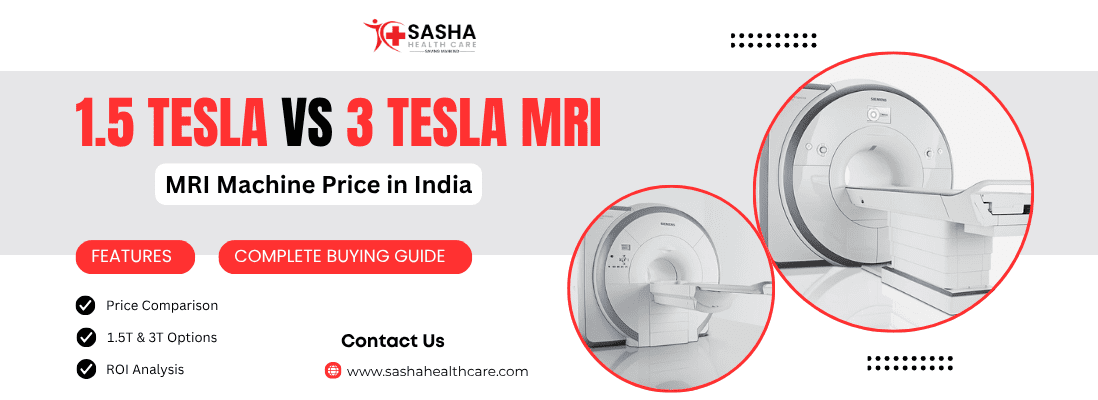
1.5 Tesla vs 3 Tesla MRI machine comparison showing features, applications, image quality, and MRI machine price in India
1.5 Tesla vs 3 Tesla MRI Machine: Which MRI Scanner is Right for Your Hospital?

Magnetic Resonance Imaging (MRI) has become one of the most important diagnostic imaging technologies in modern healthcare. Hospitals, diagnostic centers, and imaging facilities often face a critical decision when investing in MRI equipment: Should they choose a 1.5 Tesla MRI machine or a 3 Tesla MRI machine?

Understanding the differences between these MRI systems is essential for making a cost-effective and clinically beneficial investment. This guide compares 1.5 Tesla vs 3 Tesla MRI machines, covering image quality, scan speed, applications, costs, and MRI machine price in India.


What Does Tesla Mean in MRI?

Tesla (T) is the unit used to measure the strength of the magnetic field generated by an MRI scanner. The magnetic field strength directly impacts:

  • Image quality
  • Signal-to-noise ratio
  • Scan speed
  • Diagnostic accuracy

The two most commonly used MRI systems worldwide are:

MRI TypeMagnetic Strength
1.5 Tesla MRI1.5T
3 Tesla MRI3T

A 3 Tesla MRI machine has double the magnetic field strength of a 1.5 Tesla MRI system.


1.5 Tesla vs 3 Tesla MRI Machine: Quick Comparison

Feature1.5 Tesla MRI3 Tesla MRI
Magnetic Strength1.5 Tesla3 Tesla
Image ResolutionHighVery High
Scan SpeedStandardFaster
Signal-to-Noise RatioGoodExcellent
Neurological ImagingGoodSuperior
Musculoskeletal ImagingGoodExcellent
Cardiac ImagingWidely UsedAdvanced Applications
Operating CostLowerHigher
Installation RequirementsModerateHigher
Purchase PriceLowerHigher
Patient ComfortHighSlightly More Noise

Image Quality Comparison

One of the biggest advantages of a 3 Tesla MRI machine is its improved image resolution.

1.5 Tesla MRI
  • Produces excellent diagnostic images
  • Suitable for routine clinical examinations
  • Ideal for most hospitals and imaging centers
3 Tesla MRI
  • Higher signal strength
  • Sharper anatomical detail
  • Better visualization of small lesions
  • Enhanced neurological and vascular imaging

Image Quality Table

Parameter1.5 Tesla MRI3 Tesla MRI
Signal StrengthStandardDouble
Image DetailExcellentSuperior
Small Lesion DetectionGoodBetter
Functional MRILimitedAdvanced
Brain ImagingGoodExcellent

Clinical Applications

Applications of 1.5 Tesla MRI

A 1.5T MRI scanner is widely accepted as the clinical standard worldwide.

Common applications include:

  • Brain imaging
  • Spine examinations
  • Orthopedic imaging
  • Abdominal MRI
  • Pelvic MRI
  • Cardiac MRI
  • Oncology imaging
Best Suited For
  • Multi-specialty hospitals
  • Diagnostic centers
  • Medium-volume imaging facilities

Applications of 3 Tesla MRI

A 3T MRI scanner provides advanced diagnostic capabilities.

Common applications include:

  • Neuroimaging
  • Functional MRI (fMRI)
  • MR Spectroscopy
  • Epilepsy evaluation
  • Stroke assessment
  • Advanced musculoskeletal imaging
  • Research institutions
Best Suited For
  • Tertiary care hospitals
  • Neuroscience centers
  • Academic institutions
  • High-volume diagnostic centers

Scan Time Comparison

Examination1.5 Tesla MRI3 Tesla MRI
Brain MRI20-30 Minutes15-25 Minutes
Spine MRI20-35 Minutes15-30 Minutes
Knee MRI25-35 Minutes20-30 Minutes
AngiographyStandardFaster

Faster scans improve patient throughput and increase revenue potential.


MRI Machine Price in India

The cost of an MRI machine varies significantly depending on:

  • Brand
  • Magnet strength
  • New or refurbished condition
  • Software packages
  • Coil configurations
  • Installation requirements

New MRI Machine Price in India

MRI TypeEstimated Price Range
1.5 Tesla MRI₹4 Crore – ₹8 Crore
3 Tesla MRI₹8 Crore – ₹18 Crore+

Prices vary by manufacturer and configuration.


Refurbished MRI Machines Price in India

Many hospitals choose Refurbished MRI Machines to reduce capital investment while maintaining high diagnostic performance.

Refurbished MRI TypeEstimated Price Range
Refurbished 1.5 Tesla MRI₹1.5 Crore – ₹4 Crore
Refurbished 3 Tesla MRI₹3 Crore – ₹8 Crore

Benefits of Refurbished MRI Machines

  • Lower investment cost
  • Faster ROI
  • Manufacturer-certified refurbishment
  • Reliable performance
  • Service support availability
  • Reduced depreciation risk

Popular MRI Brands Available in India
ManufacturerPopular Models
Siemens HealthineersMagnetom Avanto, Aera, Skyra
GE HealthcareSigna HDxt, Explorer, Artist
Philips HealthcareAchieva, Ingenia
Canon MedicalVantage Series

These systems are available as both new and refurbished MRI machines through trusted suppliers.


Which MRI Machine Should You Choose?
Choose a 1.5 Tesla MRI If:
  • You want lower investment costs
  • You operate a diagnostic center
  • You need routine imaging applications
  • You prefer lower maintenance expenses
  • You want faster ROI

Choose a 3 Tesla MRI If:
  • You require advanced neurological imaging
  • You operate a high-volume imaging facility
  • You offer specialized diagnostic services
  • You need research-grade imaging
  • You want premium diagnostic capabilities

ROI Comparison
Factor1.5 Tesla MRI3 Tesla MRI
Initial InvestmentLowerHigher
Maintenance CostLowerHigher
Patient ThroughputGoodExcellent
Advanced ProceduresLimitedExtensive
ROI TimelineFasterMedium-Term

For many diagnostic centers in India, a refurbished 1.5 Tesla MRI machine offers the best balance between affordability and performance.


Why Consider Refurbished MRI Machines?

The demand for refurbished MRI machines is increasing rapidly in India because healthcare providers seek cost-effective solutions without compromising diagnostic quality.

Key Advantages
  • Up to 60% lower cost compared to new systems
  • Proven technology
  • Reduced setup investment
  • Quick installation
  • Service and maintenance support
  • Ideal for hospitals expanding imaging services

Conclusion

When comparing 1.5 Tesla vs 3 Tesla MRI machines, there is no universal winner. The right choice depends on your patient volume, clinical requirements, budget, and business goals.

For most hospitals and diagnostic centers, a 1.5 Tesla MRI machine provides excellent imaging quality and strong ROI. However, facilities specializing in neurology, research, and advanced diagnostics may benefit significantly from a 3 Tesla MRI system.

If budget is a concern, refurbished MRI machines offer a practical solution, providing advanced imaging capabilities at a substantially lower cost than new systems.

What is the difference between a 1.5 Tesla and 3 Tesla MRI machine?

A 3 Tesla MRI machine has double the magnetic field strength of a 1.5 Tesla MRI, resulting in higher image resolution, faster scans, and improved visualization of small anatomical structures.

Are refurbished MRI machines reliable?

Yes. Professionally refurbished MRI machines undergo testing, upgrades, and quality checks to ensure reliable performance and diagnostic accuracy.

How much does a refurbished MRI machine cost in India?

Refurbished 1.5 Tesla MRI machines generally cost between ₹1.5 crore and ₹4 crore, while refurbished 3 Tesla MRI machines range from ₹3 crore to ₹8 crore depending on brand and condition.

What is the MRI machine price in India?

The price of a new 1.5 Tesla MRI machine typically ranges from ₹4 crore to ₹8 crore, while a 3 Tesla MRI machine can cost between ₹8 crore and ₹18 crore or more depending on configuration.

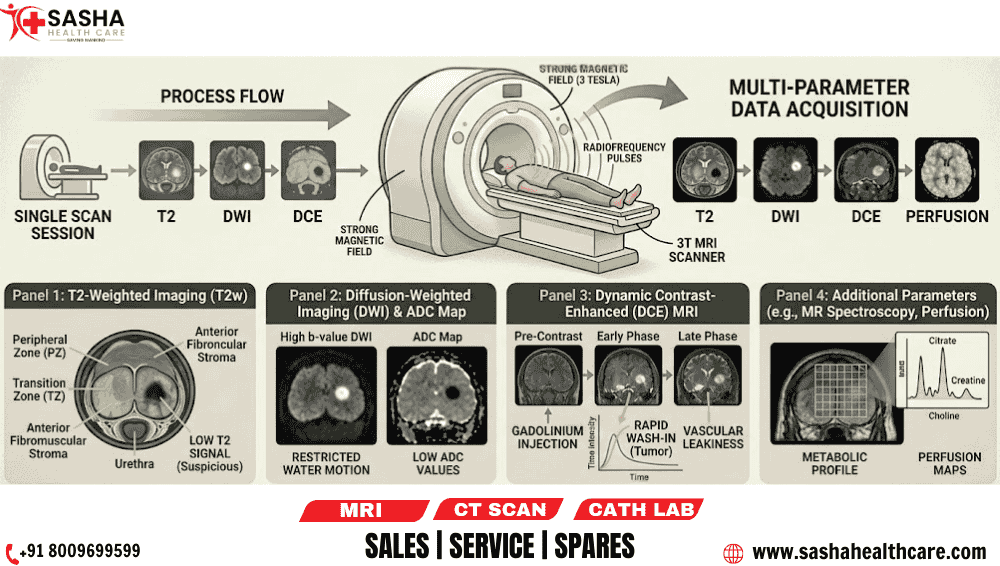
3 Tesla MRI machine configured for multiparametric prostate MRI imaging
What MRI Machine Gives Multiparametric MRI?

What MRI Machine Gives Multiparametric MRI? Multiparametric MRI (mpMRI) requires more than a standard MRI scanner. It depends on magnet strength, gradient performance, dedicated coils, and advanced imaging software working together in a structured protocol.

A 1.5 Tesla or 3 Tesla MRI machine equipped with diffusion-weighted imaging (DWI), apparent diffusion coefficient (ADC) mapping, and dynamic contrast-enhanced (DCE) software gives multiparametric MRI.

Hospitals in India most commonly use 3T systems for prostate mpMRI because higher field strength improves lesion detection and PI-RADS accuracy. Many diagnostic centers also deliver clinically reliable mpMRI using optimized 1.5T systems with proper software activation.

Multiparametric MRI integrates anatomical and functional imaging into a single diagnostic study. Radiologists use it primarily for prostate cancer detection, staging, biopsy guidance, and treatment monitoring.

The capability does not depend on brand alone. Systems such as MAGNETOM Skyra, Ingenia 3.0T, and SIGNA Architect support mpMRI when configured with the required gradient strength and software modules.


What MRI Machine Gives Multiparametric MRI?

Multiparametric MRI combines:

  • High-resolution T2-weighted imaging
  • Diffusion-weighted imaging (DWI)
  • Apparent diffusion coefficient (ADC) mapping
  • Dynamic contrast-enhanced imaging (DCE)

Radiologists primarily use mpMRI for:

  • Prostate cancer detection
  • Tumor staging
  • Treatment planning
  • Post-treatment follow-up

Multiparametric MRI is an advanced MRI protocol that integrates anatomical and functional sequences to improve lesion detection and characterization.


Minimum MRI Strength Required for mpMRI

1. 1.5 Tesla MRI

Examples:

  • MAGNETOM Aera
  • Ingenia 1.5T
  • SIGNA Creator

A 1.5T MRI can perform mpMRI when equipped with:

  • Advanced gradients (minimum 33 mT/m recommended)
  • Dedicated prostate or body coil
  • DWI and DCE software packages

Many district-level hospitals in India use 1.5T systems for mpMRI due to lower capital cost.

Typical India cost (new): ₹5.5 – ₹8 crore
Refurbished systems: ₹3 – ₹4.5 crore


2. 3 Tesla MRI (Preferred for Prostate mpMRI)

Examples:

  • MAGNETOM Skyra
  • Ingenia 3.0T
  • SIGNA Architect

3T MRI offers:

  • Higher signal-to-noise ratio
  • Better small lesion detection
  • Improved PI-RADS scoring accuracy

Most tertiary cancer centers prefer 3T MRI for prostate mpMRI.

Typical India cost (new): ₹9 – ₹15 crore
Refurbished systems: ₹5 – ₹8 crore

A 3 Tesla MRI provides superior image resolution for multiparametric prostate imaging compared to 1.5 Tesla systems.


Software Requirements for Multiparametric MRI

An MRI machine alone does not perform mpMRI. Software configuration determines capability.

Required modules include:

  • Diffusion-weighted imaging (DWI)
  • ADC mapping
  • Dynamic contrast enhancement (DCE)
  • Perfusion analysis tools
  • Post-processing workstation
  • PI-RADS reporting templates

Vendors provide prostate packages under different names. Radiology teams must verify software activation before purchase.


Gradient Specifications Required

For high-quality mpMRI:

  • Gradient strength: 33–45 mT/m minimum
  • Slew rate: 100–200 T/m/s recommended
  • Multi-channel coil support

Higher gradient performance improves diffusion imaging quality.


Clinical Use Cases in India

Multiparametric MRI supports:

Prostate Cancer

Primary indication.
Used before biopsy.
Helps reduce unnecessary biopsies.

Oncology

  • Liver lesions
  • Brain tumors
  • Gynecological malignancies

Treatment Monitoring

  • Post-radiotherapy evaluation
  • Recurrence detection

Installation Requirements

MRI infrastructure determines operational success.

Minimum requirements:

  • RF shielded room (Faraday cage)
  • 400–600 sq. ft. scan room
  • 3-phase power supply
  • Online UPS
  • Ground chiller (for most 3T systems)
  • AERB site approval in India

Hospitals must secure radiation and safety clearance from the Atomic Energy Regulatory Board before installation.


Safety and Compliance

All MRI systems used for mpMRI in India must comply with:

  • AERB safety norms
  • CDSCO registration (if imported)
  • Manufacturer calibration protocols
  • Annual QA testing

Strong magnetic field safety zoning (Zone I–IV) must be implemented.


1.5T vs 3T for Multiparametric MRI

Parameter1.5T MRI3T MRI
CostLowerHigher
Image resolutionModerateHigh
Prostate mpMRI accuracyGoodSuperior
Infrastructure costModerateHigher
Power consumptionLowerHigher

Expert insight:
Many mid-sized diagnostic centers in India achieve strong clinical outcomes with optimized 1.5T systems. Large oncology institutions benefit from 3T precision.


Buyer Checklist for Hospital Owners

Before purchasing an MRI for mpMRI:

  1. Confirm gradient strength and slew rate
  2. Verify prostate mpMRI software package
  3. Confirm coil compatibility
  4. Check service contract availability
  5. Calculate 5-year maintenance cost
  6. Verify AERB compliance readiness

Cost of Offering mpMRI in India

Average patient pricing:

  • 1.5T mpMRI: ₹12,000 – ₹18,000
  • 3T mpMRI: ₹18,000 – ₹30,000

Break-even timeline depends on:

  • Daily scan volume
  • Oncology referral network
  • Radiologist expertise

Centres performing 6–10 mpMRI scans per day typically recover investment faster.

Frequently Asked Questions (FAQ)

What Tesla MRI is required for multiparametric MRI?

A 1.5 Tesla or 3 Tesla MRI with diffusion and contrast imaging software performs multiparametric MRI.

Is 3T mandatory for prostate mpMRI?

No.
3T improves resolution.
1.5T performs clinically acceptable mpMRI when optimized properly.

Can a basic MRI machine perform mpMRI?

No.
The system must include diffusion imaging, contrast capability, and advanced post-processing software.

Does mpMRI require contrast injection?

Yes, dynamic contrast-enhanced imaging forms part of standard prostate mpMRI protocols.

What gradient strength is ideal?

Minimum 33 mT/m.
Higher gradients improve diffusion image quality.

Conclusion

Multiparametric MRI requires:

  • 1.5T or 3T MRI system
  • Advanced diffusion and contrast software
  • Adequate gradient strength
  • Dedicated coils
  • Regulatory compliance

A 3 Tesla MRI offers superior lesion detection.
A properly configured 1.5 Tesla MRI delivers reliable mpMRI in cost-sensitive settings.

System configuration determines capability more than magnet strength alone.

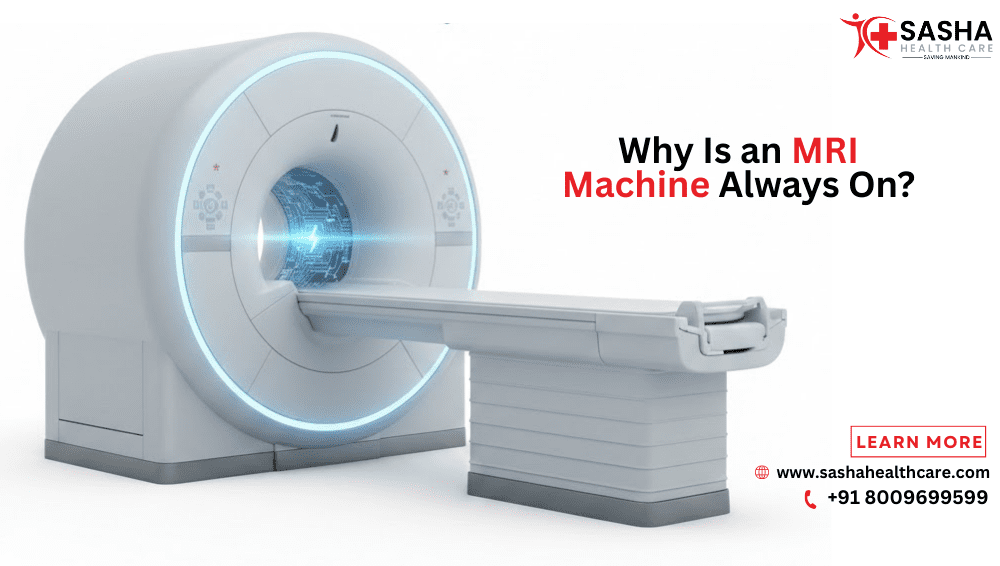
Why Is an MRI Machine Always On?

Why Is an MRI Machine Always On? An MRI system stays powered continuously because its superconducting magnet requires an uninterrupted cryogenic environment to maintain a stable magnetic field.

Hospitals and imaging centers do not “switch off” MRI scanners the way they shut down CT or X-ray units. The design, physics, and cost structure of Magnetic Resonance Imaging demand constant operation.

Why Is an MRI Machine Always On?

“Always on” does not mean constant scanning. It means the main magnet stays energized 24/7.

An MRI scanner remains on to preserve superconductivity inside the magnet, which enables a stable magnetic field without continuous electrical power.

Manufacturers such as Siemens Healthineers (MAGNETOM series), GE HealthCare (SIGNA series), and Philips Healthcare (Ingenia series) design systems around this principle.

The Core Reason: Superconducting Magnet Physics

Superconductivity Explained

MRI machines use superconducting electromagnets made from niobium-titanium coils.

These coils conduct electricity with zero resistance when cooled near –269°C (4 Kelvin) using liquid helium.

If the magnet temperature rises above the superconducting threshold, the system loses its magnetic field and requires a costly re-cool and recalibration process.

Magnetic Field Stability

Clinical MRI scanners operate at:

Field StrengthCommon Use
1.5 TeslaStandard hospital imaging
3 TeslaNeuro, oncology, advanced musculoskeletal
7 TeslaResearch institutions

Field stability directly affects image quality, diagnostic accuracy, and patient throughput.What Happens If You Turn an MRI Off?

MRI systems do not support routine shutdown.

A shutdown triggers a quench, which releases helium gas and collapses the magnetic field.

A magnet quench can cost ₹20–60 lakh in helium refilling, engineering service, and downtime.

Quenching also creates operational risks:

  • Cryogen loss
  • Room ventilation requirements
  • Equipment recalibration
  • Weeks of non-operation

Hospital administrators treat quench events as emergencies.

Why the MRI Uses Less Power Than People Think

The magnet itself does not draw high electricity continuously.

Power supports:

  • Cryocooler compressors
  • Gradient amplifiers (during scans)
  • RF systems
  • Computer consoles

The superconducting magnet maintains its field without ongoing electrical power; cooling systems maintain temperature.

Installation Requirements That Support “Always On” Operation

MRI facilities in India follow AERB and manufacturer guidelines.

Infrastructure Needs

  • RF Shielded Room (Faraday Cage)
  • Magnetic Shielding
  • Helium Vent Pipe
  • Chiller or Cryocooler
  • Dedicated Electrical Supply
  • 5 Gauss Safety Zone Marking

Space Requirements

ComponentTypical Area
Scan Room400–600 sq ft
Control Room150–250 sq ft
Equipment Room150–200 sq ft

Operating Cost Implications

Hospitals consider lifecycle cost, not just purchase price.

Cost FactorApproximate Range (India)
1.5T MRI System₹4–7 crore
3T MRI System₹7–12 crore
Annual Maintenance Contract8–12% of system cost
Helium Top-up₹8–20 lakh per fill

Organizations like SASHA HEALTH CARE guide buyers on installation readiness and service planning for refurbished and advanced imaging systems.

Safety Considerations of Continuous Magnet Operation

The magnetic field never disappears, even at night.

Key Safety Rules

  • No ferromagnetic objects in Zone IV
  • Pacemaker and implant screening
  • Trained MRI technologist presence
  • Emergency quench protocol

The MRI magnet remains active even when no scan runs; projectile risks exist at all times.

Why CT Machines Can Shut Down but MRI Cannot

FeatureMRICT
Core TechnologySuperconducting MagnetX-ray Tube
Can Power Off?NoYes
Warm-Up TimeNot applicableMinutes
Risk If Shut DownMagnet quenchNone

Clinical Use Cases That Justify Continuous Readiness

MRI supports time-sensitive diagnostics:

  • Stroke imaging
  • Spinal cord compression
  • Tumor staging
  • Ligament injuries
  • Pediatric neuro imaging

Continuous magnet readiness ensures rapid scheduling.

Expert Perspective from Imaging Operations

Radiology departments with 15+ years of operational experience report:

  • Zero benefit in shutting down magnet
  • Major financial loss from quenches
  • Higher uptime improves ROI
  • Proper HVAC maintenance reduces helium loss

Frequently Asked Questions

1. Can an MRI machine ever be turned off safely?

Engineers can ramp down the magnet during decommissioning or relocation. Routine shutdown does not occur.

2. Does “always on” mean high electricity bills?

No. Cooling systems consume power; the magnet itself does not draw active electrical load.

3. How often does helium refilling occur?

Modern zero-boil-off systems require refilling every 3–10 years, depending on maintenance.

4. Is it dangerous that the magnet stays on?

Risk remains controlled through zoning, training, and screening protocols.

5. What happens during a power cut?

Backup UPS and cryocoolers maintain system stability. The magnetic field remains intact.

Conclusion

An MRI system runs continuously to preserve superconductivity and magnetic field stability. The magnet forms the core of image quality, diagnostic precision, and system reliability.

Shutdown attempts trigger quench risk, helium loss, financial damage, and operational disruption. Healthcare facilities treat magnet uptime as a clinical and financial priority.

Hospitals, radiology centers, and imaging investors plan infrastructure, power backup, cryogenic support, and safety zoning around this requirement. Proper planning protects equipment life and return on investment.

Organizations such as SASHA HEALTH CARE support decision-makers with technical guidance, installation readiness, and lifecycle planning for advanced MRI systems in India.

MRI Machine Price in Rupees
MRI Machine Price in Rupees for Hospitals and Diagnostic Centers

Magnetic Resonance Imaging plays a critical role in modern diagnostics. Hospitals, diagnostic centers, and specialty clinics across India invest in MRI systems to deliver accurate and non-invasive imaging. Understanding the MRI Machine Price in Rupees helps decision-makers plan budgets, evaluate technology, and select the right supplier.

This guide explains pricing, influencing factors, brand comparisons, and why Sasha Healthcare stands as a trusted medical equipment partner in India.

What Determines MRI Machine Pricing in India

MRI pricing varies widely across India due to technical specifications, installation requirements, and service support. Buyers should evaluate the complete ownership cost instead of focusing only on the base unit price.

Key factors that influence pricing include:

  • Magnet strength (Tesla rating)
  • System type (open or closed MRI)
  • Gradient performance and software packages
  • Shielding and room preparation requirements
  • Brand reputation and after-sales service

Hospitals in metro cities often invest in higher-end systems due to patient volume and advanced clinical demand, while smaller centers choose mid-range models for cost efficiency.

MRI Machine Price in Rupees: Indicative Range

The MRI Machine Price in Rupees depends on whether the system is new, refurbished, or imported. In India, pricing generally falls within these ranges:

  • Low-field MRI systems: ₹2.5 crore to ₹4 crore
  • 1.5 Tesla MRI systems: ₹5 crore to ₹9 crore
  • 3 Tesla MRI systems: ₹12 crore to ₹22 crore

These prices usually exclude civil work, shielding, HVAC upgrades, and power stabilization systems. Buyers must add these costs during project planning.

MRI Scan Machine Cost by System Type

Understanding MRI scan machine cost helps buyers match clinical needs with financial planning.

Low-Field MRI Systems

Low-field MRI systems operate below 1 Tesla. They suit orthopedic imaging, basic neurological studies, and small clinics.

  • Lower acquisition cost
  • Reduced power consumption
  • Limited advanced imaging capabilities

1.5 Tesla MRI Systems

The 1.5T category remains the most popular in India.

  • Balanced image quality and cost
  • Suitable for neuro, cardiac, and MSK imaging
  • Widely accepted by radiologists

3 Tesla MRI Systems

3T MRI systems support advanced diagnostics.

  • Higher resolution imaging
  • Faster scan times
  • Ideal for oncology, neurology, and research

The MRI scan machine cost increases significantly with higher Tesla strength due to advanced hardware and software requirements.

Best MRI Machine Brand Options in India

Selecting the best MRI machine brand ensures reliability, consistent image quality, and long-term service support.

Top global brands available in India include:

  • Siemens Healthineers
  • GE Healthcare
  • Philips Healthcare
  • Canon Medical Systems

Each brand offers multiple models across 1.5T and 3T segments. Siemens systems stand out for gradient performance and software stability, while GE emphasizes workflow efficiency. Philips focuses on patient comfort and noise reduction.

The best MRI machine brand depends on clinical focus, budget, and service availability in your region.

New vs Refurbished MRI Machines

Hospitals often compare new and refurbished MRI systems to control capital expenditure.

New MRI Machines

  • Latest software and imaging protocols
  • Manufacturer warranty
  • Higher upfront investment

Refurbished MRI Machines

  • Lower purchase cost
  • Suitable for secondary diagnostic centers
  • Requires trusted supplier and quality certification

Refurbished systems reduce MRI scan machine cost but demand careful evaluation of magnet life and service history.

Installation and Hidden Costs to Consider

Many buyers underestimate the non-machine costs involved in MRI installation.

Important additional expenses include:

  • RF shielding and Faraday cage
  • Chiller and HVAC systems
  • Electrical load upgrades
  • Site planning and safety zoning
  • Staff training and commissioning

Planning these elements early prevents budget overruns and project delays.

Why Choose Sasha Healthcare

Sasha Healthcare stands as a trusted name in India’s medical imaging equipment market. The company supports hospitals, diagnostic centers, and imaging chains across multiple states.

Experience

Sasha Healthcare brings years of hands-on experience in supplying MRI, CT, PET-CT, and advanced imaging systems. The team understands Indian hospital infrastructure, regulatory norms, and operational challenges.

Expertise

The organization offers technical evaluation, site planning guidance, and system selection support. Clients receive assistance in choosing the right MRI configuration based on patient load and clinical demand.

Authoritativeness

Sasha Healthcare works with reputed global manufacturers and follows transparent sourcing practices. The company maintains a strong track record in installation coordination and post-sales support.

Healthcare providers trust Sasha Healthcare for ethical business practices and long-term partnership approach.

Finding a Medical Equipment Shop Near Me

Buyers often search for a medical equipment shop near me to ensure faster support and local service availability.

A reliable supplier should offer:

  • Local service engineers
  • Genuine spare parts
  • Installation and commissioning support
  • Preventive maintenance contracts

Sasha Healthcare supports clients across India with coordinated logistics and service networks.

Financing and Leasing Options in India

MRI systems require significant capital investment. Many Indian hospitals opt for financing models.

Popular options include:

  • Bank term loans
  • Equipment leasing
  • Pay-per-scan revenue models

These options help diagnostic centers launch services without heavy upfront burden.

Future Trends in MRI Technology

MRI technology continues to evolve with AI-assisted imaging and faster scan protocols.

Emerging trends include:

  • AI-based image reconstruction
  • Reduced scan times
  • Improved patient comfort
  • Energy-efficient magnets

These innovations may influence future MRI Machine Price in Rupees but improve long-term operational efficiency.

FAQs

1. What is the average MRI Machine Price in Rupees in India?

The average price ranges from ₹5 crore to ₹9 crore for a 1.5 Tesla system, depending on brand and configuration.

2. Which MRI scan machine cost suits a mid-size diagnostic center?

A 1.5 Tesla MRI system offers the best balance between cost and diagnostic capability for mid-size centers.

3. Which is the best MRI machine brand for Indian hospitals?

Siemens, GE, and Philips rank among the best MRI machine brand options due to service availability and image quality.

4. Can refurbished MRI machines deliver reliable performance?

Yes, certified refurbished systems perform reliably when sourced from an experienced supplier with service support.

5. How do I find a trusted medical equipment shop near me?

Choose a supplier with proven experience, transparent documentation, and nationwide service coverage.

Conclusion

Evaluating MRI systems requires a clear understanding of pricing, technology, and supplier credibility. Hospitals that analyze MRI scan machine cost carefully and choose a reliable partner gain long-term clinical and financial benefits. Sasha Healthcare continues to support Indian healthcare providers with expert guidance and trusted imaging solutions.

MRI machine showing oncology imaging used to detect and monitor tumors without radiation exposure
What MRI Machine Do

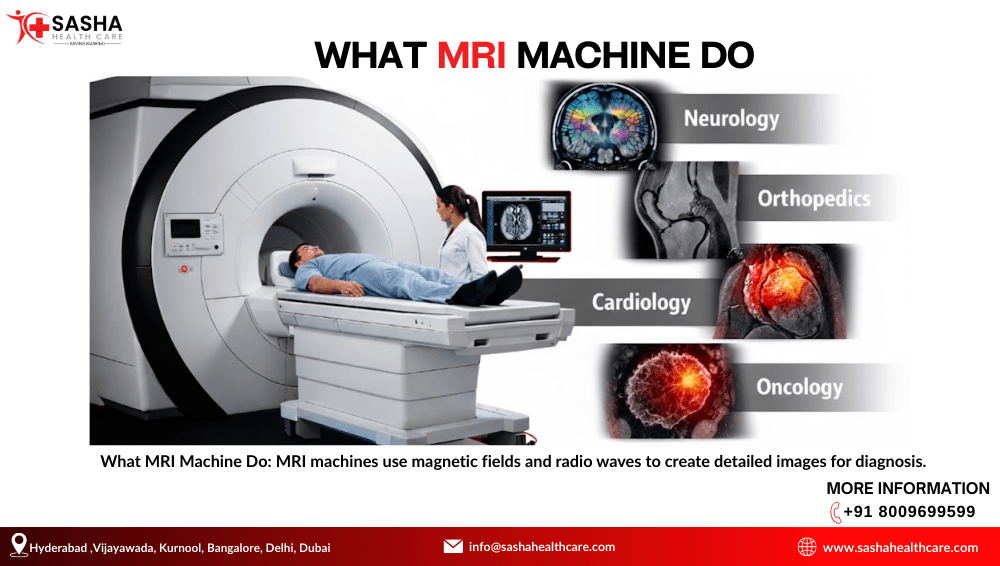
An MRI machine creates detailed images of internal organs, soft tissues, and bones using strong magnetic fields and radiofrequency signals. Hospitals and diagnostic centers use MRI systems to diagnose neurological, orthopedic, cardiac, and oncological conditions without ionizing radiation.

An MRI machine uses a powerful magnet and radio waves to produce high-resolution images of the human body without X-ray exposure.

What MRI Machine Do

An MRI system aligns hydrogen protons inside the body using a strong magnetic field.
Radiofrequency coils send pulses that disturb this alignment.
The system measures the energy released when protons realign.

A computer converts this data into cross-sectional images.
Radiologists interpret these images for clinical diagnosis.

MRI scanners rely on hydrogen proton alignment and radiofrequency signals to generate diagnostic images.

Main Components of an MRI Machine

Superconducting Magnet

The magnet creates a constant magnetic field measured in Tesla.
Common strengths include 1.5 Tesla and 3 Tesla.

Gradient Coils

Gradient coils control spatial encoding.
They allow slice-by-slice image formation.

RF Coils

RF coils transmit and receive radiofrequency signals.
Different coils exist for brain, spine, knee, and cardiac imaging.

Computer and Console

The console processes signals into images.
Radiologists control scan parameters here.

Types of MRI Machines Used in India

1.5 Tesla MRI

Hospitals use this as the clinical standard.
It balances image quality and operating cost.

Examples include Siemens Magnetom Essenza and GE Signa Explorer.

3 Tesla MRI

This system provides higher resolution images.
Neurology and research centers prefer it.

Examples include Siemens Magnetom Skyra and Philips Ingenia.

Open MRI

Open MRI improves patient comfort.
It suits claustrophobic and obese patients.

What MRI Machine Do in Clinical Practice

MRI scans detect soft tissue abnormalities with high accuracy.
Doctors use MRI for early disease detection.

Neurology

MRI identifies brain tumors, stroke, epilepsy, and multiple sclerosis.

Orthopedics

MRI visualizes ligaments, cartilage, spine, and joints.

Cardiology

Cardiac MRI evaluates heart structure and function.

Oncology

MRI helps detect, stage, and monitor tumors by providing high-contrast soft tissue images without radiation exposure.

Installation Requirements for MRI Machines

MRI installation needs a dedicated shielded room.
RF shielding prevents external signal interference.

Hospitals require stable power supply and HVAC systems.
Magnetic safety zoning follows IEC and AERB guidelines.

Typical room size ranges from 600 to 800 sq ft.
Floor load capacity must support heavy equipment.

Safety and Compliance Standards

MRI systems follow IEC 60601 safety standards.
Indian facilities comply with AERB safety norms.

Hospitals enforce magnetic safety protocols.
Staff screen patients for implants and metallic objects.

MRI Machine Cost in India

MRI machine prices vary by field strength and brand.

  • 1.5 Tesla MRI: ₹6 crore to ₹10 crore (NEW)
  • 3 Tesla MRI: ₹12 crore to ₹20 crore (NEW)
  • Refurbished MRI: ₹3 crore to ₹6 crore

Prices exclude civil work and shielding costs.

Operational and Maintenance Considerations

MRI systems require cryogen management.
Helium levels need regular monitoring.

Annual maintenance contracts cover gradients, coils, and software.
Downtime impacts diagnostic revenue.

Hospitals plan trained technologists and radiologists.
Workflow efficiency affects ROI.

Expert Perspective from Industry Experience

Diagnostic centers choose MRI based on patient load and case mix.
Urban hospitals prefer 3 Tesla systems for advanced imaging.

Tier-2 cities favor 1.5 Tesla MRI for cost efficiency.
Sasha Health Care supports hospitals with equipment sourcing and technical guidance.

Role of Sasha Health Care

Sasha Health Care works with hospitals and imaging centers across India.
The company supplies MRI systems and diagnostic imaging solutions.

Their team understands site planning, compliance, and operational needs.
Decision-makers rely on domain expertise and industry standards.

FAQs

1. What MRI machine do hospitals use most in India?

Most hospitals use 1.5 Tesla MRI systems due to cost and versatility.

2. Does MRI machine use radiation?

MRI does not use ionizing radiation.

3. How long does an MRI scan take?

Most MRI scans take 20 to 45 minutes.

4. What certifications should an MRI machine have?

MRI systems should meet IEC standards and AERB guidelines.

5. Is refurbished MRI safe for hospitals?

Certified refurbished MRI systems meet clinical safety standards when installed correctly.

Conclusion

An MRI machine plays a critical role in modern medical diagnosis by producing high-resolution images of soft tissues without radiation exposure. Hospitals and diagnostic centers rely on MRI systems for accurate evaluation of neurological, orthopedic, cardiac, and oncological conditions.

Proper selection of field strength, compliance with safety standards, and correct installation directly affect clinical outcomes and operational efficiency. With experienced suppliers like Sasha Health Care, healthcare decision-makers can align technology choice with patient demand, regulatory requirements, and long-term diagnostic goals.

Where to buy an MRI machine in India for hospitals and diagnostic centers
Where to Buy an MRI Machine in India

Buying an MRI machine is a high-value, long-term infrastructure decision for hospitals and diagnostic centers. The right source affects image quality, patient safety, regulatory compliance, uptime, and total cost of ownership—not just the purchase price. This guide explains where to buy an MRI machine in India, what types of sellers exist, how pricing works, and what technical and regulatory factors decision-makers must verify before purchase.

Where to Buy an MRI Machine in India

Certified suppliers act as intermediaries between OEMs and buyers, especially in regional markets.

Role of suppliers

  • Equipment sourcing (new or refurbished)
  • Import coordination
  • Installation supervision
  • AMC and parts support

Industry example

  • Sasha Health Care, India-based medical equipment supplier with experience in MRI, CT, and advanced imaging systems.

Authorized medical equipment suppliers bridge OEM technology with local installation, regulatory approvals, and service execution.

Understanding the MRI Machine Buying Landscape

An MRI (Magnetic Resonance Imaging) system is a complex medical imaging device governed by international safety standards, local radiation regulations, and OEM-specific service protocols.

In India, MRI machines are typically purchased through three primary channels:

  • OEM-authorized suppliers
  • Certified refurbished equipment providers
  • Government or institutional procurement frameworks

MRI machines in India are sold primarily through OEM-authorized distributors or certified refurbished equipment suppliers, not through open retail channels.

Option 1: OEM-Authorized MRI Machine Suppliers

OEM-authorized suppliers sell new MRI systems directly from manufacturers or through their certified partners.

Major MRI OEMs Active in India

  • Siemens Healthineers (MAGNETOM series)
  • GE HealthCare (SIGNA series)
  • Philips Healthcare (Ingenia series)
  • Canon Medical Systems (Vantage series)

These suppliers operate through Indian subsidiaries or licensed distributors located in major medical hubs such as Delhi NCR, Mumbai, Bengaluru, Chennai, and Hyderabad.

What You Get

  • Factory-new system
  • Manufacturer warranty
  • OEM-certified installation
  • Long-term service contracts (AMC/CMC)
  • Software upgrades and safety updates

Typical Pricing (India)

  • 1.5 Tesla MRI: ₹3.5 crore – ₹5.5 crore
  • 3 Tesla MRI: ₹5 crore – ₹ 8 crore
    (Prices vary based on gradients, coils, software packages, and site readiness.)

A new 1.5 Tesla MRI machine in India typically costs between ₹6.5 crore and ₹9.5 crore, excluding civil and shielding work.

Option 2: Certified Refurbished MRI Machine Suppliers

Refurbished MRI systems are widely used by diagnostic centers and tier-2 or tier-3 hospitals due to lower capital expenditure.

A certified refurbished MRI machine is de-installed, reconditioned, tested, and reinstalled under controlled engineering standards.

Common Refurbished Models in India

  • Siemens MAGNETOM Avanto 1.5T
  • Siemens MAGNETOM Essenza 1.5T
  • GE SIGNA HDxt 1.5T
  • Philips Achieva 1.5T

Typical Pricing (India)

  • 1.5 Tesla refurbished MRI: ₹2.2 crore – ₹4.5 crore
  • 3 Tesla refurbished MRI: ₹5.5 crore – ₹8 crore

What to Verify

  • Magnet ramp-down and ramp-up history
  • Gradient coil integrity reports
  • RF coil inventory and condition
  • OEM-trained service engineers
  • Availability of helium refill support

Certified refurbished MRI machines in India cost 40–60% less than new systems but require strict verification of magnet, gradient, and service support.

Option 3: Government and Institutional Procurement

Large public hospitals and medical colleges usually acquire MRI machines through:

  • Government tenders (GEM, state health departments)
  • PSU procurement programs
  • PPP (Public–Private Partnership) models

This route prioritizes compliance, lowest bid, and long-term service guarantees, but involves longer procurement cycles.

Installation and Site Readiness Requirements

MRI machines require specialized infrastructure before delivery.

Core Requirements

  • RF-shielded MRI room (copper shielding)
  • Quench pipe and venting system
  • Chiller and HVAC with temperature control
  • Power supply with isolation transformer
  • Magnetic safety zoning (Zone I–IV)

Space Requirements

  • 1.5T MRI: ~1,200–1,500 sq. ft.
  • 3T MRI: ~1,500–2,000 sq. ft.


MRI installation requires RF shielding, controlled HVAC, and magnetic safety zoning, making site readiness as critical as machine selection.

Regulatory and Safety Compliance in India

MRI systems are non-ionizing but still regulated.

Mandatory Compliance

  • AERB safety guidelines (India)
  • IEC 60601-2-33 standard
  • OEM safety documentation
  • Trained MRI safety officer on-site

Hospitals must maintain MRI safety protocols, ferromagnetic screening, and emergency quench procedures.

Choosing Between 1.5 Tesla and 3 Tesla MRI

Parameter1.5 Tesla3 Tesla
Clinical UseRoutine neuro, MSK, body imagingAdvanced neuro, cardiac, research
Scan TimeStandardFaster
CostLowerHigher
Operational ComplexityModerateHigh

Most Indian diagnostic centers start with 1.5 Tesla due to balanced cost, throughput, and clinical versatility.

How to Evaluate an MRI Supplier

Before finalizing where to buy:

  • Verify OEM authorization or refurbishment certification
  • Request installation and acceptance testing protocols
  • Confirm long-term service availability in your city
  • Ask for uptime guarantees and spare parts access
  • Review reference installations in India

MRI suppliers should be evaluated on service capability, parts availability, and installation experience—not only machine price.

Frequently Asked Questions (FAQ)

1. Where can hospitals buy MRI machines in India?

Hospitals can buy MRI machines from OEM-authorized distributors, certified refurbished equipment suppliers, or through government procurement channels.

2. Is it safe to buy a refurbished MRI machine?

Yes, if the system is certified, properly tested, and supported by trained service engineers with access to spare parts and helium services.

3. How long does MRI installation take?

Typical installation takes 6–10 weeks, including civil work, shielding, magnet installation, and acceptance testing.

4. What is the lifespan of an MRI machine?

With proper maintenance, an MRI machine can operate for 12–18 years, depending on magnet health and software support.

5. Do MRI machines require AERB approval?

MRI does not require radiation licensing, but facilities must follow AERB safety guidelines and international MRI safety standards.

Conclusion

Knowing where to buy an MRI machine in India involves understanding supplier types, compliance requirements, infrastructure readiness, and long-term service viability. Whether purchasing a new OEM system or a certified refurbished unit, informed evaluation ensures clinical reliability, patient safety, and sustainable operational costs.

For hospitals and diagnostic centers, the right MRI source is not the cheapest option—it is the one that delivers consistent image quality, uptime, and regulatory confidence over the machine’s full lifecycle.

Brain MRI Machine installed in a diagnostic center
Brain MRI Machine: Complete Buyer Guide, Pricing & Trusted Supplier in India

Advanced diagnostic imaging plays a crucial role in modern healthcare, especially in neurology. Hospitals and diagnostic centers across India rely on high-performance MRI systems to detect strokes, tumors, spinal disorders, trauma, and neurological diseases with accuracy. Choosing the right Brain MRI Machine requires a clear understanding of technology, pricing, operational costs, and supplier credibility.

This detailed guide helps hospital owners, radiologists, and healthcare decision-makers understand MRI systems, evaluate costs in India, and identify why Sasha Health Care stands out as a trusted medical equipment partner.

Brain MRI Machine Cost in India: What Influences Pricing

The MRI Machine Cost in India varies based on multiple technical and commercial factors. Buyers must evaluate more than just the base price.

Key cost-defining factors

  • Magnet strength (0.35T, 1.5T, 3T)
  • New vs refurbished systems
  • Brand and model generation
  • Software and clinical packages
  • Installation and shielding requirements
  • After-sales service and warranty

MRI Machine price in rupees (indicative range)

  • Low-field MRI systems: ₹3.5 crore – ₹5 crore
  • 1.5 tesla MRI Machine price: ₹5.5 crore – ₹9 crore
  • 3 Tesla MRI systems: ₹10 crore – ₹18 crore

Refurbished MRI systems offer significant savings while maintaining clinical reliability when sourced from an experienced supplier.

Understanding MRI Technology for Brain Imaging

Magnetic Resonance Imaging (MRI) uses powerful magnetic fields and radio waves to generate high-resolution images of the brain. Unlike CT scans, MRI does not use ionizing radiation, making it safer for repeated neurological evaluations.

Brain imaging through MRI supports:

  • Stroke diagnosis and follow-up
  • Brain tumor detection
  • Epilepsy evaluation
  • Multiple sclerosis assessment
  • Brain infections and inflammation studies

Modern MRI systems offer faster scan times, reduced noise, and superior soft-tissue contrast, which directly improves diagnostic confidence.

Why 1.5 Tesla MRI Remains the Industry Standard

A 1.5T MRI balances image quality, patient comfort, and operational efficiency. Diagnostic centers across India prefer this configuration due to its versatility.

Advantages of 1.5T MRI systems

  • Excellent brain tissue contrast
  • Lower artifact levels
  • Faster scan protocols
  • Broad clinical application range
  • Cost-effective maintenance

Healthcare facilities seeking dependable neurological imaging often prioritize this category.

Choosing the Right Medical Equipment Store Near Me

Searching for a Medical Equipment Store Near me goes beyond proximity. Healthcare buyers must prioritize credibility, technical expertise, and lifecycle support.

What to evaluate before finalizing a supplier

  • Proven installation history in India
  • In-house engineering support
  • OEM-certified refurbished systems
  • Transparent pricing and documentation
  • Long-term service commitment

A trusted supplier ensures uptime, compliance, and return on investment.

Why Sasha Health Care Is a Trusted Name in MRI Solutions

Sasha Health Care stands as a respected medical imaging equipment supplier in India, known for ethical business practices and deep technical knowledge.

Experience

Sasha Health Care brings years of hands-on experience in supplying MRI, CT, PET-CT, and advanced diagnostic systems across hospitals and diagnostic centers in India. The company understands Indian healthcare infrastructure, power conditions, and space challenges.

Expertise

The technical team manages:

  • Site planning and RF shielding
  • Magnet installation and calibration
  • Software configuration and testing
  • Training for radiologists and technicians

Each MRI system undergoes rigorous quality checks before delivery.

Authoritativeness

Sasha Health Care maintains strong relationships with global OEMs and provides access to premium refurbished and new MRI systems. Healthcare institutions trust the company for transparent consultations, realistic pricing, and dependable post-installation support.

Benefits of Buying MRI Systems from Sasha Health Care

  • Access to global-standard MRI technology
  • Competitive pricing tailored for Indian hospitals
  • Certified refurbished options with warranty
  • Nationwide logistics and installation support
  • Dedicated after-sales service team

The company prioritizes patient safety, imaging accuracy, and operational efficiency.

Installation & Operational Considerations

Before purchasing an MRI system, healthcare facilities must plan infrastructure requirements.

Essential requirements

  • RF-shielded MRI room
  • Stable power supply and UPS
  • HVAC and cooling systems
  • Safety zoning and signage
  • Trained technical staff

Sasha Health Care assists clients through each phase, from site readiness to final commissioning.

Future of Brain Imaging in India

The demand for neurological diagnostics continues to rise due to lifestyle disorders, aging populations, and trauma cases. Advanced MRI systems enable early diagnosis, better treatment planning, and improved patient outcomes.

Facilities that invest in reliable MRI technology today strengthen their clinical reputation and long-term sustainability.

Frequently Asked Questions (FAQs)

1. What is the average lifespan of an MRI machine?

An MRI system typically operates efficiently for 10–15 years with proper maintenance and timely upgrades.

2. Is refurbished MRI safe for clinical use?

Yes. Certified refurbished systems meet OEM standards and perform reliably when sourced from authorized suppliers.

3. How much space does an MRI installation require?

Most installations require 1,200–1,800 sq. ft., including control room and technical areas.

4. Does Sasha Health Care provide after-sales service?

Yes. Sasha Health Care offers installation support, training, and ongoing technical assistance.

5. Which MRI strength works best for brain scans?

Most hospitals prefer 1.5 Tesla systems due to consistent image quality and operational efficiency.

Conclusion

Investing in the right MRI system plays a vital role in delivering accurate neurological diagnosis and improving patient outcomes. A well-chosen Brain MRI Machine supports advanced clinical applications, ensures long-term operational efficiency, and strengthens the diagnostic capabilities of hospitals and imaging centers across India. Understanding pricing factors, infrastructure requirements, and supplier credibility helps healthcare decision-makers make confident and informed choices.

Sasha Health Care continues to support India’s healthcare sector with reliable MRI solutions, technical expertise, and transparent guidance. With a focus on quality, safety, and performance, the company empowers medical institutions to adopt advanced imaging technology that meets today’s diagnostic demands and tomorrow’s growth.

MRI vs CT Scan Machine comparison chart
MRI vs CT Scan Machine: Key Differences and Costs

When it comes to medical imaging, the debate between MRI vs CT Scan Machine is one of the most common. Both technologies play a vital role in diagnosing internal body conditions, yet they function very differently. Patients and healthcare providers often wonder which option is best suited for a specific situation, what the costs are, and which brands offer the most reliable machines.

In this detailed guide, we’ll walk you through the differences between MRI and CT scan machines, discuss MRI Machine Cost, analyze the MRI Scan Machine Price, and highlight the Best MRI Machine Brands offered by SASHA Health Care.

MRI vs CT Scan Machine: Core Differences You Must Know

Choosing between an MRI vs CT Scan Machine depends on the area of the body being examined and the type of condition suspected.

FeatureMRI MachineCT Scan Machine
Technology UsedMagnetic fields and radio wavesX-rays
Image QualityHigh-resolution for soft tissueExcellent for bones and lungs
Radiation ExposureNoneLow to moderate
Scan Time30–60 minutes5–10 minutes
Best ForBrain, spine, musclesChest, bones, trauma

MRI vs CT Scan Machine comparison highlights that MRIs are preferred for detailed soft tissue scans, while CT scans are better for bones and acute injury assessments.

What is an MRI Machine?

An MRI (Magnetic Resonance Imaging) machine uses powerful magnetic fields and radio waves to produce detailed images of the body’s internal structures. Unlike X-rays or CT scans, MRI machines do not use ionizing radiation, making them a safer option for long-term diagnostic use.

Key Features of MRI Machines

  • Uses magnetic fields and radio frequency pulses.
  • Provides high-resolution images, especially for soft tissues.
  • Commonly used for brain, spinal cord, muscles, and joint imaging.
  • Non-invasive and radiation-free imaging method.

Benefits of MRI Scanning

  • Offers exceptional detail for diagnosing neurological and musculoskeletal conditions.
  • Safe for patients who need frequent imaging.
  • Detects early stages of certain diseases like multiple sclerosis or brain tumors.

MRI technology has revolutionized modern healthcare by providing insights that were once impossible to capture without surgical procedures.

What is a CT Scan Machine?

A CT (Computed Tomography) scan machine combines X-rays and computer technology to create cross-sectional images of the body. It’s known for being fast, accurate, and extremely useful in emergency situations.

Key Features of CT Scan Machines

  • Uses ionizing radiation to capture multiple images.
  • Produces 3D cross-sectional visuals for internal organs, bones, and tissues.
  • Commonly used for detecting injuries, tumors, and internal bleeding.

Benefits of CT Scanning

  • Quick and effective diagnostic tool in emergencies.
  • Ideal for imaging lungs, bones, and chest.
  • Detects both soft and hard tissue abnormalities.

The CT Scan Machine remains an essential tool for hospitals and diagnostic centers that need immediate, detailed imaging for patient assessment.

MRI Machine Cost: What Affects the Price?

The MRI Machine Cost varies depending on several key factors such as brand, model, technology type, and imaging power (measured in Tesla). Hospitals and diagnostic centers often consider these before investing.

Factors Influencing MRI Machine Cost

  • Magnet Strength: 1.5T and 3T MRI machines have different costs.
  • Type of System: Open, closed, or extremity MRI systems.
  • Brand and Model: Premium brands offer advanced imaging features.
  • Installation and Maintenance: Infrastructure, cooling, and servicing costs.

Average MRI Machine Cost

  • Low-field MRI: $150,000 – $500,000
  • Mid-field MRI: $500,000 – $1 million
  • High-field MRI: $1 million – $3 million

When choosing an MRI system, medical facilities should balance performance, quality, and operational efficiency with cost.

MRI Scan Machine Price: Understanding Market Variations

The MRI Scan Machine Price also depends on new or refurbished options, additional features, and software capabilities. Many healthcare centers prefer refurbished machines to manage costs without compromising on image quality.

New MRI Machines

  • Feature-rich systems with cutting-edge software.
  • Cost ranges from $1 million to $3 million.
  • Ideal for hospitals with high patient volumes.

Refurbished MRI Machines

  • Budget-friendly with essential diagnostic performance.
  • Cost ranges from $300,000 to $700,000.
  • Perfect for smaller clinics and diagnostic centers.

SASHA Health Care provides both new and refurbished MRI Scan Machine Price options, ensuring high performance and reliability across all budgets.

Best MRI Machine Brands – SASHA Health Care Recommendation

SASHA Health Care proudly provides some of the Best MRI Machine Brands in the world. Known for quality, performance, and precision, these brands have proven reliability and long-term efficiency.

Top Recommended Brands

  • GE Healthcare: Renowned for its Signa series and advanced imaging software.
  • Siemens Healthineers: Offers MAGNETOM series with innovative gradient technology.
  • Philips Healthcare: Known for Ingenia and Achieva models offering patient comfort.
  • Canon Medical Systems: Delivers superior imaging with noise reduction technology.
  • Hitachi (Fujifilm): Features open MRI designs with patient-friendly architecture.

SASHA Health Care ensures every product undergoes strict quality checks and meets international medical standards.

How SASHA Health Care Ensures Quality and Affordability

SASHA Health Care stands out as a trusted supplier of diagnostic imaging equipment. They not only deliver top-tier machines but also provide installation, maintenance, and training support.

Why Choose SASHA Health Care?

  • Authorized distributor of Best MRI Machine Brands.
  • Offers cost-effective MRI and CT scan solutions.
  • Provides 24/7 after-sales service and support.
  • Transparent pricing and no hidden costs.

Their mission is to make high-end diagnostic imaging accessible to healthcare facilities of every size.

Which Machine Should You Choose – MRI or CT?

When comparing MRI vs CT Scan Machine, the choice depends on diagnostic needs.

Choose MRI When You Need:

  • Detailed imaging of soft tissues or organs.
  • Safe, radiation-free diagnostic procedures.
  • Neurological, spinal, or musculoskeletal examinations.

Choose CT When You Need:

  • Quick scan results during emergencies.
  • Imaging of lungs, chest, or skeletal structures.
  • Cost-effective diagnostic imaging with minimal waiting.

Each has unique benefits, and physicians decide based on clinical requirements.

Conclusion

In the world of diagnostic imaging, both MRI and CT scans hold immense importance. Understanding their differences helps doctors and patients choose the right option for accurate diagnosis and safety.

If you’re considering investing in imaging equipment, SASHA Health Care offers advanced options with the Best MRI Machine Brands, ensuring excellent performance, affordable MRI Machine Cost, and flexible MRI Scan Machine Price for every healthcare facility.

Whether you’re a large hospital or a diagnostic center, the right equipment ensures better patient care and operational efficiency.

FAQs

1. What is the main difference between MRI and CT scan machines?

MRI uses magnetic fields and radio waves, while CT scans use X-rays for imaging.

2. Which is safer, MRI or CT scan?

MRI is safer because it doesn’t use ionizing radiation.

3. How much does an MRI machine cost?

Prices range from $150,000 for basic models to over $3 million for high-end systems.

4. Which brand offers the best MRI machines?

GE, Siemens, Philips, Canon, and Hitachi are among the Best MRI Machine Brands available through SASHA Health Care.

5. Can refurbished MRI machines provide accurate results?

Yes, refurbished systems from trusted suppliers like SASHA Health Care maintain accuracy and reliability with lower costs.

What are medical equipment and supplies in hospitals
What Are Medical Equipment and Supplies? Complete Hospital Equipment List & Uses

In the world of healthcare, medical equipment and supplies form the backbone of every hospital, clinic, and diagnostic center. Whether it’s a simple thermometer or a complex MRI machine, these tools help doctors and nurses diagnose, treat, and monitor patients effectively.

But many people often ask — what are medical equipment and supplies? What are their common uses, and what types are essential in hospitals? Let’s explore everything you need to know about medical and hospital equipment, their applications, and a detailed list of commonly used tools.


What Are Medical Equipment and Supplies?

Medical equipment and supplies are tools, instruments, and machines used by healthcare professionals to diagnose, monitor, or treat medical conditions.

They can range from basic disposable items like syringes and gloves to advanced diagnostic systems such as MRI scanners and X-ray machines.

Medical equipment plays a critical role in:

  • Ensuring accurate diagnosis
  • Monitoring patient health
  • Supporting life-saving procedures
  • Enhancing overall healthcare efficiency

Medical supplies, on the other hand, are consumable items — typically used once or replaced regularly — to maintain hygiene and ensure safe patient care.


Types of Medical Equipment

Medical equipment can be categorized into several types based on its function in healthcare. Here are the main categories:

1. Diagnostic Equipment

Used to identify diseases or monitor organ functions.
Examples include:

  • MRI machines
  • CT scanners
  • Ultrasound machines
  • X-ray machines
  • ECG (Electrocardiogram) monitors
2. Therapeutic Equipment

Used to assist with treatment and recovery.
Examples include:

  • Infusion pumps
  • Physiotherapy devices
  • Dialysis machines
  • Ventilators
  • Laser therapy machines
3. Surgical Equipment

Used by surgeons in operating rooms for precision procedures.
Examples include:

  • Surgical lights
  • Operating tables
  • Electrosurgical units
  • Endoscopy systems
4. Life Support Equipment

Essential for sustaining vital functions during critical care.
Examples include:

  • Ventilators
  • Defibrillators
  • Anesthesia machines
  • Heart-lung machines
5. Durable Medical Equipment (DME)

These are long-term devices designed for home or clinical use.
Examples include:

  • Wheelchairs
  • Hospital beds
  • Oxygen concentrators
  • Patient lifts
6. Laboratory Equipment

Used in labs for medical testing and research.
Examples include:

  • Centrifuges
  • Microscopes
  • Blood analyzers
  • Biochemistry equipment
7. Patient Monitoring Equipment

Used to track vital signs and patient health in real-time.
Examples include:

  • ICU patient monitors
  • Pulse oximeters
  • Blood pressure monitors
  • Fetal monitors

What Are the Common Uses of Medical Equipment?

The common uses of medical equipment depend on the healthcare setting, but their purpose remains the same — to improve patient outcomes through accurate diagnosis and treatment.

Here are the key uses:

  • Diagnosis: Detect diseases and assess body functions.
  • Monitoring: Track vital signs, heart rate, and oxygen levels.
  • Treatment: Deliver medication, perform surgeries, or support recovery.
  • Rehabilitation: Help patients regain mobility and strength.
  • Prevention: Support early detection and routine health screening.

Without reliable medical equipment, healthcare professionals would struggle to provide safe, efficient, and precise care.


Comprehensive Hospital Equipment List

Below is a detailed hospital equipment list covering essential items used in different departments:

General Hospital Equipment
  • Hospital beds and stretchers
  • Examination tables
  • Wheelchairs and walkers
  • IV stands and infusion pumps
  • Suction machines
Diagnostic Imaging Equipment
  • MRI machines
  • CT scanners
  • X-ray machines
  • Ultrasound scanners
  • Mammography systems
Operating Room Equipment
  • Surgical lights and tables
  • Autoclaves and sterilizers
  • Anesthesia machines
  • Electrosurgical units
  • Patient monitors
ICU & Emergency Equipment
  • Ventilators
  • Defibrillators
  • Infusion pumps
  • Syringe pumps
  • Oxygen cylinders and concentrators
Laboratory Equipment
  • Hematology analyzers
  • Biochemistry analyzers
  • Centrifuges
  • Microscopes
  • Test kits and reagents
Rehabilitation & Physiotherapy Equipment
  • Treadmills
  • Exercise bikes
  • Ultrasound therapy machines
  • Traction units
  • Hot and cold therapy devices
Patient Care & Consumables
  • Syringes and needles
  • Gloves, masks, and gowns
  • Catheters and tubing sets
  • Bandages and wound care products
  • Thermometers and BP monitors

Hospitals regularly update their equipment inventory to meet patient needs, adhere to medical regulations, and improve service quality.


Why Medical Equipment Quality Matters

High-quality medical equipment ensures:

  • Accurate test results
  • Patient safety and comfort
  • Reduced downtime and errors
  • Long-term cost savings
  • Compliance with healthcare standards

This is why healthcare institutions partner with trusted medical equipment suppliers that provide reliable products, maintenance, and support.

Q1: What are medical equipment and supplies?

Medical equipment includes diagnostic and therapeutic machines, while medical supplies are consumable tools used in daily healthcare operations.

Q2: What are the most commonly used hospital equipment?

Some of the most used items include hospital beds, patient monitors, ventilators, and infusion pumps.

Q3: What are the common uses of medical equipment?

They’re used for diagnosis, treatment, monitoring, and rehabilitation of patients.

Q4: What equipment is found in hospital laboratories?

Centrifuges, microscopes, analyzers, and incubators are commonly found in labs.

Q5: How do hospitals choose the right equipment suppliers?

Hospitals select suppliers based on product quality, after-sales service, pricing, and certification standards.

About SASHA HEALTHCARE

SASHA HEALTHCARE is one of the leading healthcare equipment suppliers, offering a wide range of hospital, diagnostic, and laboratory equipment across the India. The company specializes in high-quality and refurbished medical systems — including MRI, CT, X-ray, and ICU equipment — helping hospitals and clinics enhance their patient care capabilities. With professional installation, maintenance, and after-sales support, SASHA ensures reliability and performance in every product delivered.

0