Mri Machines Archives - SashaHealthCare
Search for:
MRI Machine Price in Rupees
MRI Machine Price in Rupees for Hospitals and Diagnostic Centers

Magnetic Resonance Imaging plays a critical role in modern diagnostics. Hospitals, diagnostic centers, and specialty clinics across India invest in MRI systems to deliver accurate and non-invasive imaging. Understanding the MRI Machine Price in Rupees helps decision-makers plan budgets, evaluate technology, and select the right supplier.

This guide explains pricing, influencing factors, brand comparisons, and why Sasha Healthcare stands as a trusted medical equipment partner in India.

What Determines MRI Machine Pricing in India

MRI pricing varies widely across India due to technical specifications, installation requirements, and service support. Buyers should evaluate the complete ownership cost instead of focusing only on the base unit price.

Key factors that influence pricing include:

  • Magnet strength (Tesla rating)
  • System type (open or closed MRI)
  • Gradient performance and software packages
  • Shielding and room preparation requirements
  • Brand reputation and after-sales service

Hospitals in metro cities often invest in higher-end systems due to patient volume and advanced clinical demand, while smaller centers choose mid-range models for cost efficiency.

MRI Machine Price in Rupees: Indicative Range

The MRI Machine Price in Rupees depends on whether the system is new, refurbished, or imported. In India, pricing generally falls within these ranges:

  • Low-field MRI systems: ₹2.5 crore to ₹4 crore
  • 1.5 Tesla MRI systems: ₹5 crore to ₹9 crore
  • 3 Tesla MRI systems: ₹12 crore to ₹22 crore

These prices usually exclude civil work, shielding, HVAC upgrades, and power stabilization systems. Buyers must add these costs during project planning.

MRI Scan Machine Cost by System Type

Understanding MRI scan machine cost helps buyers match clinical needs with financial planning.

Low-Field MRI Systems

Low-field MRI systems operate below 1 Tesla. They suit orthopedic imaging, basic neurological studies, and small clinics.

  • Lower acquisition cost
  • Reduced power consumption
  • Limited advanced imaging capabilities

1.5 Tesla MRI Systems

The 1.5T category remains the most popular in India.

  • Balanced image quality and cost
  • Suitable for neuro, cardiac, and MSK imaging
  • Widely accepted by radiologists

3 Tesla MRI Systems

3T MRI systems support advanced diagnostics.

  • Higher resolution imaging
  • Faster scan times
  • Ideal for oncology, neurology, and research

The MRI scan machine cost increases significantly with higher Tesla strength due to advanced hardware and software requirements.

Best MRI Machine Brand Options in India

Selecting the best MRI machine brand ensures reliability, consistent image quality, and long-term service support.

Top global brands available in India include:

  • Siemens Healthineers
  • GE Healthcare
  • Philips Healthcare
  • Canon Medical Systems

Each brand offers multiple models across 1.5T and 3T segments. Siemens systems stand out for gradient performance and software stability, while GE emphasizes workflow efficiency. Philips focuses on patient comfort and noise reduction.

The best MRI machine brand depends on clinical focus, budget, and service availability in your region.

New vs Refurbished MRI Machines

Hospitals often compare new and refurbished MRI systems to control capital expenditure.

New MRI Machines

  • Latest software and imaging protocols
  • Manufacturer warranty
  • Higher upfront investment

Refurbished MRI Machines

  • Lower purchase cost
  • Suitable for secondary diagnostic centers
  • Requires trusted supplier and quality certification

Refurbished systems reduce MRI scan machine cost but demand careful evaluation of magnet life and service history.

Installation and Hidden Costs to Consider

Many buyers underestimate the non-machine costs involved in MRI installation.

Important additional expenses include:

  • RF shielding and Faraday cage
  • Chiller and HVAC systems
  • Electrical load upgrades
  • Site planning and safety zoning
  • Staff training and commissioning

Planning these elements early prevents budget overruns and project delays.

Why Choose Sasha Healthcare

Sasha Healthcare stands as a trusted name in India’s medical imaging equipment market. The company supports hospitals, diagnostic centers, and imaging chains across multiple states.

Experience

Sasha Healthcare brings years of hands-on experience in supplying MRI, CT, PET-CT, and advanced imaging systems. The team understands Indian hospital infrastructure, regulatory norms, and operational challenges.

Expertise

The organization offers technical evaluation, site planning guidance, and system selection support. Clients receive assistance in choosing the right MRI configuration based on patient load and clinical demand.

Authoritativeness

Sasha Healthcare works with reputed global manufacturers and follows transparent sourcing practices. The company maintains a strong track record in installation coordination and post-sales support.

Healthcare providers trust Sasha Healthcare for ethical business practices and long-term partnership approach.

Finding a Medical Equipment Shop Near Me

Buyers often search for a medical equipment shop near me to ensure faster support and local service availability.

A reliable supplier should offer:

  • Local service engineers
  • Genuine spare parts
  • Installation and commissioning support
  • Preventive maintenance contracts

Sasha Healthcare supports clients across India with coordinated logistics and service networks.

Financing and Leasing Options in India

MRI systems require significant capital investment. Many Indian hospitals opt for financing models.

Popular options include:

  • Bank term loans
  • Equipment leasing
  • Pay-per-scan revenue models

These options help diagnostic centers launch services without heavy upfront burden.

Future Trends in MRI Technology

MRI technology continues to evolve with AI-assisted imaging and faster scan protocols.

Emerging trends include:

  • AI-based image reconstruction
  • Reduced scan times
  • Improved patient comfort
  • Energy-efficient magnets

These innovations may influence future MRI Machine Price in Rupees but improve long-term operational efficiency.

FAQs

1. What is the average MRI Machine Price in Rupees in India?

The average price ranges from ₹5 crore to ₹9 crore for a 1.5 Tesla system, depending on brand and configuration.

2. Which MRI scan machine cost suits a mid-size diagnostic center?

A 1.5 Tesla MRI system offers the best balance between cost and diagnostic capability for mid-size centers.

3. Which is the best MRI machine brand for Indian hospitals?

Siemens, GE, and Philips rank among the best MRI machine brand options due to service availability and image quality.

4. Can refurbished MRI machines deliver reliable performance?

Yes, certified refurbished systems perform reliably when sourced from an experienced supplier with service support.

5. How do I find a trusted medical equipment shop near me?

Choose a supplier with proven experience, transparent documentation, and nationwide service coverage.

Conclusion

Evaluating MRI systems requires a clear understanding of pricing, technology, and supplier credibility. Hospitals that analyze MRI scan machine cost carefully and choose a reliable partner gain long-term clinical and financial benefits. Sasha Healthcare continues to support Indian healthcare providers with expert guidance and trusted imaging solutions.

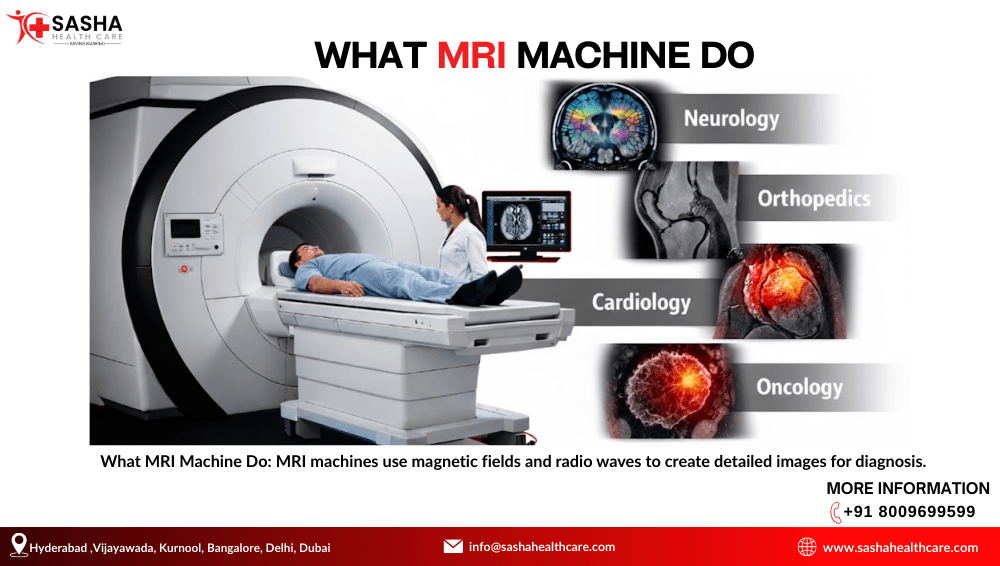
MRI machine showing oncology imaging used to detect and monitor tumors without radiation exposure
What MRI Machine Do

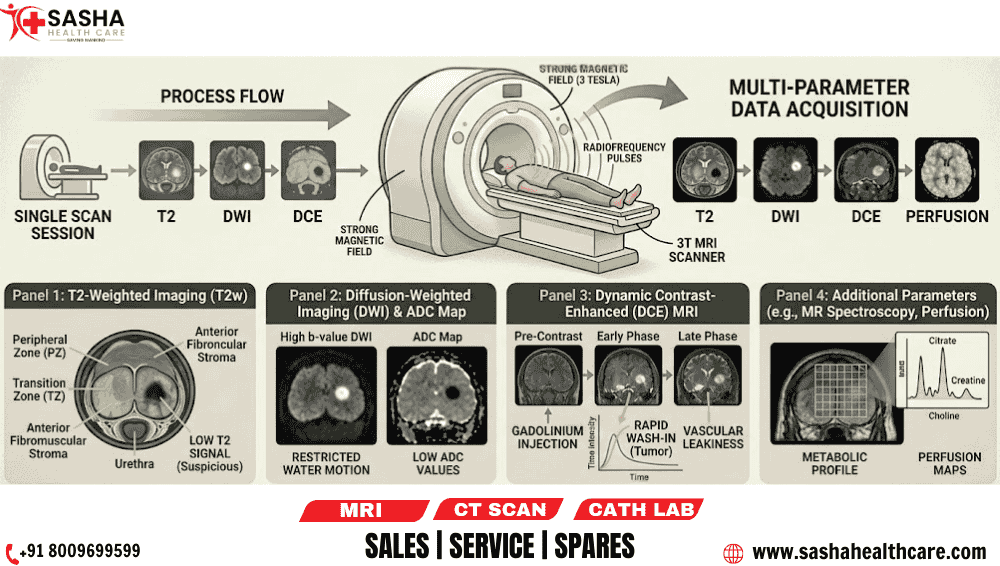
An MRI machine creates detailed images of internal organs, soft tissues, and bones using strong magnetic fields and radiofrequency signals. Hospitals and diagnostic centers use MRI systems to diagnose neurological, orthopedic, cardiac, and oncological conditions without ionizing radiation.

An MRI machine uses a powerful magnet and radio waves to produce high-resolution images of the human body without X-ray exposure.

What MRI Machine Do

An MRI system aligns hydrogen protons inside the body using a strong magnetic field.
Radiofrequency coils send pulses that disturb this alignment.
The system measures the energy released when protons realign.

A computer converts this data into cross-sectional images.
Radiologists interpret these images for clinical diagnosis.

MRI scanners rely on hydrogen proton alignment and radiofrequency signals to generate diagnostic images.

Main Components of an MRI Machine

Superconducting Magnet

The magnet creates a constant magnetic field measured in Tesla.
Common strengths include 1.5 Tesla and 3 Tesla.

Gradient Coils

Gradient coils control spatial encoding.
They allow slice-by-slice image formation.

RF Coils

RF coils transmit and receive radiofrequency signals.
Different coils exist for brain, spine, knee, and cardiac imaging.

Computer and Console

The console processes signals into images.
Radiologists control scan parameters here.

Types of MRI Machines Used in India

1.5 Tesla MRI

Hospitals use this as the clinical standard.
It balances image quality and operating cost.

Examples include Siemens Magnetom Essenza and GE Signa Explorer.

3 Tesla MRI

This system provides higher resolution images.
Neurology and research centers prefer it.

Examples include Siemens Magnetom Skyra and Philips Ingenia.

Open MRI

Open MRI improves patient comfort.
It suits claustrophobic and obese patients.

What MRI Machine Do in Clinical Practice

MRI scans detect soft tissue abnormalities with high accuracy.
Doctors use MRI for early disease detection.

Neurology

MRI identifies brain tumors, stroke, epilepsy, and multiple sclerosis.

Orthopedics

MRI visualizes ligaments, cartilage, spine, and joints.

Cardiology

Cardiac MRI evaluates heart structure and function.

Oncology

MRI helps detect, stage, and monitor tumors by providing high-contrast soft tissue images without radiation exposure.

Installation Requirements for MRI Machines

MRI installation needs a dedicated shielded room.
RF shielding prevents external signal interference.

Hospitals require stable power supply and HVAC systems.
Magnetic safety zoning follows IEC and AERB guidelines.

Typical room size ranges from 600 to 800 sq ft.
Floor load capacity must support heavy equipment.

Safety and Compliance Standards

MRI systems follow IEC 60601 safety standards.
Indian facilities comply with AERB safety norms.

Hospitals enforce magnetic safety protocols.
Staff screen patients for implants and metallic objects.

MRI Machine Cost in India

MRI machine prices vary by field strength and brand.

  • 1.5 Tesla MRI: ₹6 crore to ₹10 crore (NEW)
  • 3 Tesla MRI: ₹12 crore to ₹20 crore (NEW)
  • Refurbished MRI: ₹3 crore to ₹6 crore

Prices exclude civil work and shielding costs.

Operational and Maintenance Considerations

MRI systems require cryogen management.
Helium levels need regular monitoring.

Annual maintenance contracts cover gradients, coils, and software.
Downtime impacts diagnostic revenue.

Hospitals plan trained technologists and radiologists.
Workflow efficiency affects ROI.

Expert Perspective from Industry Experience

Diagnostic centers choose MRI based on patient load and case mix.
Urban hospitals prefer 3 Tesla systems for advanced imaging.

Tier-2 cities favor 1.5 Tesla MRI for cost efficiency.
Sasha Health Care supports hospitals with equipment sourcing and technical guidance.

Role of Sasha Health Care

Sasha Health Care works with hospitals and imaging centers across India.
The company supplies MRI systems and diagnostic imaging solutions.

Their team understands site planning, compliance, and operational needs.
Decision-makers rely on domain expertise and industry standards.

FAQs

1. What MRI machine do hospitals use most in India?

Most hospitals use 1.5 Tesla MRI systems due to cost and versatility.

2. Does MRI machine use radiation?

MRI does not use ionizing radiation.

3. How long does an MRI scan take?

Most MRI scans take 20 to 45 minutes.

4. What certifications should an MRI machine have?

MRI systems should meet IEC standards and AERB guidelines.

5. Is refurbished MRI safe for hospitals?

Certified refurbished MRI systems meet clinical safety standards when installed correctly.

Conclusion

An MRI machine plays a critical role in modern medical diagnosis by producing high-resolution images of soft tissues without radiation exposure. Hospitals and diagnostic centers rely on MRI systems for accurate evaluation of neurological, orthopedic, cardiac, and oncological conditions.

Proper selection of field strength, compliance with safety standards, and correct installation directly affect clinical outcomes and operational efficiency. With experienced suppliers like Sasha Health Care, healthcare decision-makers can align technology choice with patient demand, regulatory requirements, and long-term diagnostic goals.

Where to buy an MRI machine in India for hospitals and diagnostic centers
Where to Buy an MRI Machine in India

Buying an MRI machine is a high-value, long-term infrastructure decision for hospitals and diagnostic centers. The right source affects image quality, patient safety, regulatory compliance, uptime, and total cost of ownership—not just the purchase price. This guide explains where to buy an MRI machine in India, what types of sellers exist, how pricing works, and what technical and regulatory factors decision-makers must verify before purchase.

Where to Buy an MRI Machine in India

Certified suppliers act as intermediaries between OEMs and buyers, especially in regional markets.

Role of suppliers

  • Equipment sourcing (new or refurbished)
  • Import coordination
  • Installation supervision
  • AMC and parts support

Industry example

  • Sasha Health Care, India-based medical equipment supplier with experience in MRI, CT, and advanced imaging systems.

Authorized medical equipment suppliers bridge OEM technology with local installation, regulatory approvals, and service execution.

Understanding the MRI Machine Buying Landscape

An MRI (Magnetic Resonance Imaging) system is a complex medical imaging device governed by international safety standards, local radiation regulations, and OEM-specific service protocols.

In India, MRI machines are typically purchased through three primary channels:

  • OEM-authorized suppliers
  • Certified refurbished equipment providers
  • Government or institutional procurement frameworks

MRI machines in India are sold primarily through OEM-authorized distributors or certified refurbished equipment suppliers, not through open retail channels.

Option 1: OEM-Authorized MRI Machine Suppliers

OEM-authorized suppliers sell new MRI systems directly from manufacturers or through their certified partners.

Major MRI OEMs Active in India

  • Siemens Healthineers (MAGNETOM series)
  • GE HealthCare (SIGNA series)
  • Philips Healthcare (Ingenia series)
  • Canon Medical Systems (Vantage series)

These suppliers operate through Indian subsidiaries or licensed distributors located in major medical hubs such as Delhi NCR, Mumbai, Bengaluru, Chennai, and Hyderabad.

What You Get

  • Factory-new system
  • Manufacturer warranty
  • OEM-certified installation
  • Long-term service contracts (AMC/CMC)
  • Software upgrades and safety updates

Typical Pricing (India)

  • 1.5 Tesla MRI: ₹3.5 crore – ₹5.5 crore
  • 3 Tesla MRI: ₹5 crore – ₹ 8 crore
    (Prices vary based on gradients, coils, software packages, and site readiness.)

A new 1.5 Tesla MRI machine in India typically costs between ₹6.5 crore and ₹9.5 crore, excluding civil and shielding work.

Option 2: Certified Refurbished MRI Machine Suppliers

Refurbished MRI systems are widely used by diagnostic centers and tier-2 or tier-3 hospitals due to lower capital expenditure.

A certified refurbished MRI machine is de-installed, reconditioned, tested, and reinstalled under controlled engineering standards.

Common Refurbished Models in India

  • Siemens MAGNETOM Avanto 1.5T
  • Siemens MAGNETOM Essenza 1.5T
  • GE SIGNA HDxt 1.5T
  • Philips Achieva 1.5T

Typical Pricing (India)

  • 1.5 Tesla refurbished MRI: ₹2.2 crore – ₹4.5 crore
  • 3 Tesla refurbished MRI: ₹5.5 crore – ₹8 crore

What to Verify

  • Magnet ramp-down and ramp-up history
  • Gradient coil integrity reports
  • RF coil inventory and condition
  • OEM-trained service engineers
  • Availability of helium refill support

Certified refurbished MRI machines in India cost 40–60% less than new systems but require strict verification of magnet, gradient, and service support.

Option 3: Government and Institutional Procurement

Large public hospitals and medical colleges usually acquire MRI machines through:

  • Government tenders (GEM, state health departments)
  • PSU procurement programs
  • PPP (Public–Private Partnership) models

This route prioritizes compliance, lowest bid, and long-term service guarantees, but involves longer procurement cycles.

Installation and Site Readiness Requirements

MRI machines require specialized infrastructure before delivery.

Core Requirements

  • RF-shielded MRI room (copper shielding)
  • Quench pipe and venting system
  • Chiller and HVAC with temperature control
  • Power supply with isolation transformer
  • Magnetic safety zoning (Zone I–IV)

Space Requirements

  • 1.5T MRI: ~1,200–1,500 sq. ft.
  • 3T MRI: ~1,500–2,000 sq. ft.


MRI installation requires RF shielding, controlled HVAC, and magnetic safety zoning, making site readiness as critical as machine selection.

Regulatory and Safety Compliance in India

MRI systems are non-ionizing but still regulated.

Mandatory Compliance

  • AERB safety guidelines (India)
  • IEC 60601-2-33 standard
  • OEM safety documentation
  • Trained MRI safety officer on-site

Hospitals must maintain MRI safety protocols, ferromagnetic screening, and emergency quench procedures.

Choosing Between 1.5 Tesla and 3 Tesla MRI

Parameter1.5 Tesla3 Tesla
Clinical UseRoutine neuro, MSK, body imagingAdvanced neuro, cardiac, research
Scan TimeStandardFaster
CostLowerHigher
Operational ComplexityModerateHigh

Most Indian diagnostic centers start with 1.5 Tesla due to balanced cost, throughput, and clinical versatility.

How to Evaluate an MRI Supplier

Before finalizing where to buy:

  • Verify OEM authorization or refurbishment certification
  • Request installation and acceptance testing protocols
  • Confirm long-term service availability in your city
  • Ask for uptime guarantees and spare parts access
  • Review reference installations in India

MRI suppliers should be evaluated on service capability, parts availability, and installation experience—not only machine price.

Frequently Asked Questions (FAQ)

1. Where can hospitals buy MRI machines in India?

Hospitals can buy MRI machines from OEM-authorized distributors, certified refurbished equipment suppliers, or through government procurement channels.

2. Is it safe to buy a refurbished MRI machine?

Yes, if the system is certified, properly tested, and supported by trained service engineers with access to spare parts and helium services.

3. How long does MRI installation take?

Typical installation takes 6–10 weeks, including civil work, shielding, magnet installation, and acceptance testing.

4. What is the lifespan of an MRI machine?

With proper maintenance, an MRI machine can operate for 12–18 years, depending on magnet health and software support.

5. Do MRI machines require AERB approval?

MRI does not require radiation licensing, but facilities must follow AERB safety guidelines and international MRI safety standards.

Conclusion

Knowing where to buy an MRI machine in India involves understanding supplier types, compliance requirements, infrastructure readiness, and long-term service viability. Whether purchasing a new OEM system or a certified refurbished unit, informed evaluation ensures clinical reliability, patient safety, and sustainable operational costs.

For hospitals and diagnostic centers, the right MRI source is not the cheapest option—it is the one that delivers consistent image quality, uptime, and regulatory confidence over the machine’s full lifecycle.

Brain MRI Machine installed in a diagnostic center
Brain MRI Machine: Complete Buyer Guide, Pricing & Trusted Supplier in India

Advanced diagnostic imaging plays a crucial role in modern healthcare, especially in neurology. Hospitals and diagnostic centers across India rely on high-performance MRI systems to detect strokes, tumors, spinal disorders, trauma, and neurological diseases with accuracy. Choosing the right Brain MRI Machine requires a clear understanding of technology, pricing, operational costs, and supplier credibility.

This detailed guide helps hospital owners, radiologists, and healthcare decision-makers understand MRI systems, evaluate costs in India, and identify why Sasha Health Care stands out as a trusted medical equipment partner.

Brain MRI Machine Cost in India: What Influences Pricing

The MRI Machine Cost in India varies based on multiple technical and commercial factors. Buyers must evaluate more than just the base price.

Key cost-defining factors

  • Magnet strength (0.35T, 1.5T, 3T)
  • New vs refurbished systems
  • Brand and model generation
  • Software and clinical packages
  • Installation and shielding requirements
  • After-sales service and warranty

MRI Machine price in rupees (indicative range)

  • Low-field MRI systems: ₹3.5 crore – ₹5 crore
  • 1.5 tesla MRI Machine price: ₹5.5 crore – ₹9 crore
  • 3 Tesla MRI systems: ₹10 crore – ₹18 crore

Refurbished MRI systems offer significant savings while maintaining clinical reliability when sourced from an experienced supplier.

Understanding MRI Technology for Brain Imaging

Magnetic Resonance Imaging (MRI) uses powerful magnetic fields and radio waves to generate high-resolution images of the brain. Unlike CT scans, MRI does not use ionizing radiation, making it safer for repeated neurological evaluations.

Brain imaging through MRI supports:

  • Stroke diagnosis and follow-up
  • Brain tumor detection
  • Epilepsy evaluation
  • Multiple sclerosis assessment
  • Brain infections and inflammation studies

Modern MRI systems offer faster scan times, reduced noise, and superior soft-tissue contrast, which directly improves diagnostic confidence.

Why 1.5 Tesla MRI Remains the Industry Standard

A 1.5T MRI balances image quality, patient comfort, and operational efficiency. Diagnostic centers across India prefer this configuration due to its versatility.

Advantages of 1.5T MRI systems

  • Excellent brain tissue contrast
  • Lower artifact levels
  • Faster scan protocols
  • Broad clinical application range
  • Cost-effective maintenance

Healthcare facilities seeking dependable neurological imaging often prioritize this category.

Choosing the Right Medical Equipment Store Near Me

Searching for a Medical Equipment Store Near me goes beyond proximity. Healthcare buyers must prioritize credibility, technical expertise, and lifecycle support.

What to evaluate before finalizing a supplier

  • Proven installation history in India
  • In-house engineering support
  • OEM-certified refurbished systems
  • Transparent pricing and documentation
  • Long-term service commitment

A trusted supplier ensures uptime, compliance, and return on investment.

Why Sasha Health Care Is a Trusted Name in MRI Solutions

Sasha Health Care stands as a respected medical imaging equipment supplier in India, known for ethical business practices and deep technical knowledge.

Experience

Sasha Health Care brings years of hands-on experience in supplying MRI, CT, PET-CT, and advanced diagnostic systems across hospitals and diagnostic centers in India. The company understands Indian healthcare infrastructure, power conditions, and space challenges.

Expertise

The technical team manages:

  • Site planning and RF shielding
  • Magnet installation and calibration
  • Software configuration and testing
  • Training for radiologists and technicians

Each MRI system undergoes rigorous quality checks before delivery.

Authoritativeness

Sasha Health Care maintains strong relationships with global OEMs and provides access to premium refurbished and new MRI systems. Healthcare institutions trust the company for transparent consultations, realistic pricing, and dependable post-installation support.

Benefits of Buying MRI Systems from Sasha Health Care

  • Access to global-standard MRI technology
  • Competitive pricing tailored for Indian hospitals
  • Certified refurbished options with warranty
  • Nationwide logistics and installation support
  • Dedicated after-sales service team

The company prioritizes patient safety, imaging accuracy, and operational efficiency.

Installation & Operational Considerations

Before purchasing an MRI system, healthcare facilities must plan infrastructure requirements.

Essential requirements

  • RF-shielded MRI room
  • Stable power supply and UPS
  • HVAC and cooling systems
  • Safety zoning and signage
  • Trained technical staff

Sasha Health Care assists clients through each phase, from site readiness to final commissioning.

Future of Brain Imaging in India

The demand for neurological diagnostics continues to rise due to lifestyle disorders, aging populations, and trauma cases. Advanced MRI systems enable early diagnosis, better treatment planning, and improved patient outcomes.

Facilities that invest in reliable MRI technology today strengthen their clinical reputation and long-term sustainability.

Frequently Asked Questions (FAQs)

1. What is the average lifespan of an MRI machine?

An MRI system typically operates efficiently for 10–15 years with proper maintenance and timely upgrades.

2. Is refurbished MRI safe for clinical use?

Yes. Certified refurbished systems meet OEM standards and perform reliably when sourced from authorized suppliers.

3. How much space does an MRI installation require?

Most installations require 1,200–1,800 sq. ft., including control room and technical areas.

4. Does Sasha Health Care provide after-sales service?

Yes. Sasha Health Care offers installation support, training, and ongoing technical assistance.

5. Which MRI strength works best for brain scans?

Most hospitals prefer 1.5 Tesla systems due to consistent image quality and operational efficiency.

Conclusion

Investing in the right MRI system plays a vital role in delivering accurate neurological diagnosis and improving patient outcomes. A well-chosen Brain MRI Machine supports advanced clinical applications, ensures long-term operational efficiency, and strengthens the diagnostic capabilities of hospitals and imaging centers across India. Understanding pricing factors, infrastructure requirements, and supplier credibility helps healthcare decision-makers make confident and informed choices.

Sasha Health Care continues to support India’s healthcare sector with reliable MRI solutions, technical expertise, and transparent guidance. With a focus on quality, safety, and performance, the company empowers medical institutions to adopt advanced imaging technology that meets today’s diagnostic demands and tomorrow’s growth.

MRI vs CT Scan Machine comparison chart
MRI vs CT Scan Machine: Key Differences and Costs

When it comes to medical imaging, the debate between MRI vs CT Scan Machine is one of the most common. Both technologies play a vital role in diagnosing internal body conditions, yet they function very differently. Patients and healthcare providers often wonder which option is best suited for a specific situation, what the costs are, and which brands offer the most reliable machines.

In this detailed guide, we’ll walk you through the differences between MRI and CT scan machines, discuss MRI Machine Cost, analyze the MRI Scan Machine Price, and highlight the Best MRI Machine Brands offered by SASHA Health Care.

MRI vs CT Scan Machine: Core Differences You Must Know

Choosing between an MRI vs CT Scan Machine depends on the area of the body being examined and the type of condition suspected.

FeatureMRI MachineCT Scan Machine
Technology UsedMagnetic fields and radio wavesX-rays
Image QualityHigh-resolution for soft tissueExcellent for bones and lungs
Radiation ExposureNoneLow to moderate
Scan Time30–60 minutes5–10 minutes
Best ForBrain, spine, musclesChest, bones, trauma

MRI vs CT Scan Machine comparison highlights that MRIs are preferred for detailed soft tissue scans, while CT scans are better for bones and acute injury assessments.

What is an MRI Machine?

An MRI (Magnetic Resonance Imaging) machine uses powerful magnetic fields and radio waves to produce detailed images of the body’s internal structures. Unlike X-rays or CT scans, MRI machines do not use ionizing radiation, making them a safer option for long-term diagnostic use.

Key Features of MRI Machines

  • Uses magnetic fields and radio frequency pulses.
  • Provides high-resolution images, especially for soft tissues.
  • Commonly used for brain, spinal cord, muscles, and joint imaging.
  • Non-invasive and radiation-free imaging method.

Benefits of MRI Scanning

  • Offers exceptional detail for diagnosing neurological and musculoskeletal conditions.
  • Safe for patients who need frequent imaging.
  • Detects early stages of certain diseases like multiple sclerosis or brain tumors.

MRI technology has revolutionized modern healthcare by providing insights that were once impossible to capture without surgical procedures.

What is a CT Scan Machine?

A CT (Computed Tomography) scan machine combines X-rays and computer technology to create cross-sectional images of the body. It’s known for being fast, accurate, and extremely useful in emergency situations.

Key Features of CT Scan Machines

  • Uses ionizing radiation to capture multiple images.
  • Produces 3D cross-sectional visuals for internal organs, bones, and tissues.
  • Commonly used for detecting injuries, tumors, and internal bleeding.

Benefits of CT Scanning

  • Quick and effective diagnostic tool in emergencies.
  • Ideal for imaging lungs, bones, and chest.
  • Detects both soft and hard tissue abnormalities.

The CT Scan Machine remains an essential tool for hospitals and diagnostic centers that need immediate, detailed imaging for patient assessment.

MRI Machine Cost: What Affects the Price?

The MRI Machine Cost varies depending on several key factors such as brand, model, technology type, and imaging power (measured in Tesla). Hospitals and diagnostic centers often consider these before investing.

Factors Influencing MRI Machine Cost

  • Magnet Strength: 1.5T and 3T MRI machines have different costs.
  • Type of System: Open, closed, or extremity MRI systems.
  • Brand and Model: Premium brands offer advanced imaging features.
  • Installation and Maintenance: Infrastructure, cooling, and servicing costs.

Average MRI Machine Cost

  • Low-field MRI: $150,000 – $500,000
  • Mid-field MRI: $500,000 – $1 million
  • High-field MRI: $1 million – $3 million

When choosing an MRI system, medical facilities should balance performance, quality, and operational efficiency with cost.

MRI Scan Machine Price: Understanding Market Variations

The MRI Scan Machine Price also depends on new or refurbished options, additional features, and software capabilities. Many healthcare centers prefer refurbished machines to manage costs without compromising on image quality.

New MRI Machines

  • Feature-rich systems with cutting-edge software.
  • Cost ranges from $1 million to $3 million.
  • Ideal for hospitals with high patient volumes.

Refurbished MRI Machines

  • Budget-friendly with essential diagnostic performance.
  • Cost ranges from $300,000 to $700,000.
  • Perfect for smaller clinics and diagnostic centers.

SASHA Health Care provides both new and refurbished MRI Scan Machine Price options, ensuring high performance and reliability across all budgets.

Best MRI Machine Brands – SASHA Health Care Recommendation

SASHA Health Care proudly provides some of the Best MRI Machine Brands in the world. Known for quality, performance, and precision, these brands have proven reliability and long-term efficiency.

Top Recommended Brands

  • GE Healthcare: Renowned for its Signa series and advanced imaging software.
  • Siemens Healthineers: Offers MAGNETOM series with innovative gradient technology.
  • Philips Healthcare: Known for Ingenia and Achieva models offering patient comfort.
  • Canon Medical Systems: Delivers superior imaging with noise reduction technology.
  • Hitachi (Fujifilm): Features open MRI designs with patient-friendly architecture.

SASHA Health Care ensures every product undergoes strict quality checks and meets international medical standards.

How SASHA Health Care Ensures Quality and Affordability

SASHA Health Care stands out as a trusted supplier of diagnostic imaging equipment. They not only deliver top-tier machines but also provide installation, maintenance, and training support.

Why Choose SASHA Health Care?

  • Authorized distributor of Best MRI Machine Brands.
  • Offers cost-effective MRI and CT scan solutions.
  • Provides 24/7 after-sales service and support.
  • Transparent pricing and no hidden costs.

Their mission is to make high-end diagnostic imaging accessible to healthcare facilities of every size.

Which Machine Should You Choose – MRI or CT?

When comparing MRI vs CT Scan Machine, the choice depends on diagnostic needs.

Choose MRI When You Need:

  • Detailed imaging of soft tissues or organs.
  • Safe, radiation-free diagnostic procedures.
  • Neurological, spinal, or musculoskeletal examinations.

Choose CT When You Need:

  • Quick scan results during emergencies.
  • Imaging of lungs, chest, or skeletal structures.
  • Cost-effective diagnostic imaging with minimal waiting.

Each has unique benefits, and physicians decide based on clinical requirements.

Conclusion

In the world of diagnostic imaging, both MRI and CT scans hold immense importance. Understanding their differences helps doctors and patients choose the right option for accurate diagnosis and safety.

If you’re considering investing in imaging equipment, SASHA Health Care offers advanced options with the Best MRI Machine Brands, ensuring excellent performance, affordable MRI Machine Cost, and flexible MRI Scan Machine Price for every healthcare facility.

Whether you’re a large hospital or a diagnostic center, the right equipment ensures better patient care and operational efficiency.

FAQs

1. What is the main difference between MRI and CT scan machines?

MRI uses magnetic fields and radio waves, while CT scans use X-rays for imaging.

2. Which is safer, MRI or CT scan?

MRI is safer because it doesn’t use ionizing radiation.

3. How much does an MRI machine cost?

Prices range from $150,000 for basic models to over $3 million for high-end systems.

4. Which brand offers the best MRI machines?

GE, Siemens, Philips, Canon, and Hitachi are among the Best MRI Machine Brands available through SASHA Health Care.

5. Can refurbished MRI machines provide accurate results?

Yes, refurbished systems from trusted suppliers like SASHA Health Care maintain accuracy and reliability with lower costs.

What are medical equipment and supplies in hospitals
What Are Medical Equipment and Supplies? Complete Hospital Equipment List & Uses

In the world of healthcare, medical equipment and supplies form the backbone of every hospital, clinic, and diagnostic center. Whether it’s a simple thermometer or a complex MRI machine, these tools help doctors and nurses diagnose, treat, and monitor patients effectively.

But many people often ask — what are medical equipment and supplies? What are their common uses, and what types are essential in hospitals? Let’s explore everything you need to know about medical and hospital equipment, their applications, and a detailed list of commonly used tools.


What Are Medical Equipment and Supplies?

Medical equipment and supplies are tools, instruments, and machines used by healthcare professionals to diagnose, monitor, or treat medical conditions.

They can range from basic disposable items like syringes and gloves to advanced diagnostic systems such as MRI scanners and X-ray machines.

Medical equipment plays a critical role in:

  • Ensuring accurate diagnosis
  • Monitoring patient health
  • Supporting life-saving procedures
  • Enhancing overall healthcare efficiency

Medical supplies, on the other hand, are consumable items — typically used once or replaced regularly — to maintain hygiene and ensure safe patient care.


Types of Medical Equipment

Medical equipment can be categorized into several types based on its function in healthcare. Here are the main categories:

1. Diagnostic Equipment

Used to identify diseases or monitor organ functions.
Examples include:

  • MRI machines
  • CT scanners
  • Ultrasound machines
  • X-ray machines
  • ECG (Electrocardiogram) monitors
2. Therapeutic Equipment

Used to assist with treatment and recovery.
Examples include:

  • Infusion pumps
  • Physiotherapy devices
  • Dialysis machines
  • Ventilators
  • Laser therapy machines
3. Surgical Equipment

Used by surgeons in operating rooms for precision procedures.
Examples include:

  • Surgical lights
  • Operating tables
  • Electrosurgical units
  • Endoscopy systems
4. Life Support Equipment

Essential for sustaining vital functions during critical care.
Examples include:

  • Ventilators
  • Defibrillators
  • Anesthesia machines
  • Heart-lung machines
5. Durable Medical Equipment (DME)

These are long-term devices designed for home or clinical use.
Examples include:

  • Wheelchairs
  • Hospital beds
  • Oxygen concentrators
  • Patient lifts
6. Laboratory Equipment

Used in labs for medical testing and research.
Examples include:

  • Centrifuges
  • Microscopes
  • Blood analyzers
  • Biochemistry equipment
7. Patient Monitoring Equipment

Used to track vital signs and patient health in real-time.
Examples include:

  • ICU patient monitors
  • Pulse oximeters
  • Blood pressure monitors
  • Fetal monitors

What Are the Common Uses of Medical Equipment?

The common uses of medical equipment depend on the healthcare setting, but their purpose remains the same — to improve patient outcomes through accurate diagnosis and treatment.

Here are the key uses:

  • Diagnosis: Detect diseases and assess body functions.
  • Monitoring: Track vital signs, heart rate, and oxygen levels.
  • Treatment: Deliver medication, perform surgeries, or support recovery.
  • Rehabilitation: Help patients regain mobility and strength.
  • Prevention: Support early detection and routine health screening.

Without reliable medical equipment, healthcare professionals would struggle to provide safe, efficient, and precise care.


Comprehensive Hospital Equipment List

Below is a detailed hospital equipment list covering essential items used in different departments:

General Hospital Equipment
  • Hospital beds and stretchers
  • Examination tables
  • Wheelchairs and walkers
  • IV stands and infusion pumps
  • Suction machines
Diagnostic Imaging Equipment
  • MRI machines
  • CT scanners
  • X-ray machines
  • Ultrasound scanners
  • Mammography systems
Operating Room Equipment
  • Surgical lights and tables
  • Autoclaves and sterilizers
  • Anesthesia machines
  • Electrosurgical units
  • Patient monitors
ICU & Emergency Equipment
  • Ventilators
  • Defibrillators
  • Infusion pumps
  • Syringe pumps
  • Oxygen cylinders and concentrators
Laboratory Equipment
  • Hematology analyzers
  • Biochemistry analyzers
  • Centrifuges
  • Microscopes
  • Test kits and reagents
Rehabilitation & Physiotherapy Equipment
  • Treadmills
  • Exercise bikes
  • Ultrasound therapy machines
  • Traction units
  • Hot and cold therapy devices
Patient Care & Consumables
  • Syringes and needles
  • Gloves, masks, and gowns
  • Catheters and tubing sets
  • Bandages and wound care products
  • Thermometers and BP monitors

Hospitals regularly update their equipment inventory to meet patient needs, adhere to medical regulations, and improve service quality.


Why Medical Equipment Quality Matters

High-quality medical equipment ensures:

  • Accurate test results
  • Patient safety and comfort
  • Reduced downtime and errors
  • Long-term cost savings
  • Compliance with healthcare standards

This is why healthcare institutions partner with trusted medical equipment suppliers that provide reliable products, maintenance, and support.

Q1: What are medical equipment and supplies?

Medical equipment includes diagnostic and therapeutic machines, while medical supplies are consumable tools used in daily healthcare operations.

Q2: What are the most commonly used hospital equipment?

Some of the most used items include hospital beds, patient monitors, ventilators, and infusion pumps.

Q3: What are the common uses of medical equipment?

They’re used for diagnosis, treatment, monitoring, and rehabilitation of patients.

Q4: What equipment is found in hospital laboratories?

Centrifuges, microscopes, analyzers, and incubators are commonly found in labs.

Q5: How do hospitals choose the right equipment suppliers?

Hospitals select suppliers based on product quality, after-sales service, pricing, and certification standards.

About SASHA HEALTHCARE

SASHA HEALTHCARE is one of the leading healthcare equipment suppliers, offering a wide range of hospital, diagnostic, and laboratory equipment across the India. The company specializes in high-quality and refurbished medical systems — including MRI, CT, X-ray, and ICU equipment — helping hospitals and clinics enhance their patient care capabilities. With professional installation, maintenance, and after-sales support, SASHA ensures reliability and performance in every product delivered.

Second-Hand MRI Machine Price in India
Second-Hand MRI Machine Price in India | Sasha Health Care Certified Provider

In the evolving landscape of medical diagnostics in India, acquiring state-of-the-art equipment often comes with significant capital costs. Many healthcare providers, hospitals, and diagnostic centres are exploring affordable options such as refurbished or second-hand MRI machines. In this article, we discuss the second-hand MRI machine price in India, delve into second-hand MRI machine price in India and evaluate refurbished MRI machine cost in India. We also highlight Sasha Health Care, a certified company in India that provides the best MRI machines and other medical equipment, ensuring value, reliability, and support.


Second-Hand MRI Machine Price

When trying to estimate a second-hand MRI machine price in India, multiple variables influence the final cost:

1.1 Magnet Strength (Tesla)

Higher Tesla machines (e.g. 3.0T) command higher prices. A 1.5T refurbished MRI may cost significantly less.

1.2 Manufacturer and Brand

Reputed brands (GE, Siemens, Philips, Toshiba, etc.) tend to maintain better resale value, support, and spare parts availability.

1.3 Age and Usage History

Machines with fewer service hours, better maintenance history, and more recent manufacture dates will be priced higher.

1.4 Condition and Refurbishment Quality

Extent of refurbishment—replacing coils, electronics, software upgrades, preventive maintenance—plays a big role.

1.5 Warranty, Service & Support

Inclusion of warranty or annual maintenance contracts (AMC) from a certified provider increases the price.

1.6 Import Duties, Taxes & Installation Costs

Import or local regulatory charges, transportation, civil works, installation, shielding, and site readiness all add to the final cost.

2 Why Hospitals Consider Second-Hand or Refurbished MRI Machines

2.1 Budget Constraints and Capital Outlay

Opening or scaling a diagnostic centre requires heavy investments. A brand new MRI machine can cost several crores (tens to hundreds of lakhs), making it unmanageable for many smaller or mid-sized centres. A second-hand or refurbished MRI machine becomes a financially attractive alternative.

2.2 Faster Deployment & Short Lead Times

New medical equipment often has long lead times for manufacture, shipping, import clearances, and installation. In contrast, a refurbished or second-hand MRI machine can often be procured and installed more quickly, helping the facility begin operations earlier.

2.3 Adequate Performance with Reliable Support

Refurbished machines, when sourced from dependable providers, can deliver excellent performance with warranty, servicing, and parts support. The cost savings do not necessarily mean a trade-off in quality if you deal with certified companies like Sasha Health Care.

2.4 Sustainability and Environmental Benefits

By reusing high-value equipment, medical providers reduce waste and maximize resource utilization. It also aligns with “green” initiatives because refurbishing reduces the carbon footprint compared to manufacturing anew.


3. Typical Price Ranges in India

Here are ballpark figures (approximate) for various scenarios (figures illustrative, depending on brand, region, and condition):

Type / TeslaApproximate Price Range (INR Lakhs)Notes
0.5T / open MRI (refurbished)₹25 – ₹75 lakhsLower cost, lower throughput
1.0T refurbished MRI₹60 – ₹1,50 lakhsModerate performance, cost-effective
1.5T refurbished MRI₹1.2 crore – ₹3.5 crorePopular choice, good performance
3.0T refurbished MRI₹2.5 crore – ₹6.0+ croreHigh-end usage in premium centres

These ranges reflect current market trends, but actual refurbished MRI machine cost in India can vary. Setting aside site preparation, installation, and regulatory expenses, your baseline cost for the hardware lies within this bracket.


4. The Difference: Price of MRI Scan Machine in India (New vs Refurbished)

4.1 New Machines

The price of MRI scan machine in India for brand new models often exceeds ₹8–20+ crores depending on the specifications. The cost includes the latest software, warranties, and support, but demands huge capital investment.

4.2 Refurbished or Second-Hand Machines

When compared to new ones, refurbished MRI machines may cost 40–70% less, depending upon the condition and features. That makes refurbished MRI machine cost an attractive option without compromising significantly on diagnostic quality—provided you choose a trusted supplier.

4.3 Total Cost of Ownership (TCO)

While upfront cost is lower with refurbished options, you should also assess:

  • Operational costs (power, cooling, helium, maintenance)
  • Spare parts availability
  • Reliability and downtime
  • Service contracts

A high-quality refurbished MRI may yield a favorable TCO compared to new machines for many years.


5. Why Choose Sasha Health Care for MRI Equipment in India

When investing in a high-value medical imaging machine, choosing a certified and trusted supplier is vital. Here’s why Sasha Health Care stands out:

5.1 Certified and Reputed

Sasha Health Care is a certified company in India, authorized to procure, refurbish, and supply medical imaging modalities, including MRI machines. They follow rigorous quality assurance and compliance standards to maintain high performance and safety.

5.2 Best MRI Machines & Equipment

They provide the best MRI machines and a portfolio of medical equipment, including CT scanners, ultrasound, X-ray, and surgical devices. Their specialization in imaging ensures deep technical expertise.

5.3 Refurbishment, Warranty & Support

With Sasha Health Care, you don’t just buy a machine—you gain peace of mind. They offer refurbishment services, warranty, preventive maintenance, spare parts, technical support, and installation services.

5.4 Transparent Pricing

Their pricing aligns with market norms and includes clarity around additional costs (installation, site readiness). They help clients understand second-hand MRI machine price in India and refurbished MRI machine cost in India without hidden clauses.

5.5 Nationwide Reach & Reputation

Operating across India, Sasha Health Care has delivered and supported MRI projects in cities like Delhi, Mumbai, Chennai, Hyderabad, Bangalore, and many more. They have built trust in both metro and tier-2 regions.


6. How to Choose the Right Refurbished MRI Machine

Selecting an appropriate unit is crucial. Here are key criteria:

6.1 Match Clinical Use & Throughput

Understand whether your center handles general scans, neurology, orthopedics, cardiology, etc. If demand is high, aim for a higher Tesla or throughput model.

6.2 Inspect Service History

Ask for logs, preventive maintenance records, coil performance, magnet health (quench history), etc.

6.3 Evaluate Refurbishment Scope

Ensure critical components like gradient system, RF chains, coils, software version, cooling systems are overhauled.

6.4 Confirm Warranty & AMC

At least 6–12 months warranty, with renewable AMC options for parts and labor.

6.5 Spare Parts & Upgradability

Check ease of sourcing parts, backward/forward compatibility, and possibility to upgrade software/hardware.

6.6 Site Readiness & Infrastructure

MRI rooms need shielding, HVAC, power, vibration control, helipad (for helium), floor strength. Assess total cost beyond machine price.

6.7 Vendor Reputation

Dealing with a certified company in India ensures legal compliance, dependable support, and accountability. Sasha Health Care exemplifies this.


7. Steps to Procurement & Installation

7.1 Needs Assessment

Define volume of scans, types of exams, patient demographics, workflow projections.

7.2 Budgeting & Financing

Include hardware cost, refurbishment, shipping, installation, site works, training, and contingency.

7.3 Vendor Shortlisting

Check vendors for certification, track record, audited accounts, references.

7.4 Inspection & Technical Audit

Do pre-purchase inspection. Check coil performance, magnet stability, software license, spare inventory.

7.5 Installation & Commissioning

Coordinate civil, electrical, HVAC, shielding, magnet positioning, calibration.

7.6 Staff Training & Validation

Radiologists, technicians must be trained. Perform phantom tests, quality assurance, regulatory approvals.

7.7 Ongoing Maintenance & Quality Control

Preventive maintenance, servicing, software updates, regular QA checks, and keeping spare parts ready.


8. Benefits of Investing in a Refurbished MRI Machine via Sasha Health Care

  • Cost Efficiency: Lower upfront capital while acquiring high-quality equipment
  • Faster ROI: Quicker deployment helps generate revenue sooner
  • Reliable Support: Certified servicing and warranty with trusted backup
  • Upgraded Features: Many refurbished units come with modern software updates
  • Local Accountability: In-country service, parts, compliance

FAQs

1. What is the typical second-hand MRI machine price in India?

A – The range varies by Tesla, condition, brand, and support — from ₹25 lakhs for lower strength units to several crores for high-end refurbished machines.

2. Is the performance of a refurbished MRI lower than new ones?

A – Not necessarily — when refurbished properly, performance can be very close to new, provided service history, parts, and quality are well managed.

3. Does Sasha Health Care offer warranties and maintenance?

A – Yes — as a certified company, they provide warranty, preventive maintenance, spare parts, and full technical support.

4. What hidden costs should I consider?

A – Site preparation (shielding walls, HVAC, electrical), magnetic quench safety, installation, transportation, licensing, and quality assurance.

5. Can a refurbished MRI machine be upgraded in future?

A – Often yes — software and hardware upgrades are possible depending on the system, brand, and modular compatibility.

Conclusion

Purchasing an MRI machine is a critical decision for any healthcare provider. By exploring the second-hand MRI machine price in India, comparing with new models, and assessing refurbished MRI machine cost in India, you can make a cost-effective yet high-quality choice. Always engage certified vendors like Sasha Health Care, who ensure transparency, support, and long-term value. With careful planning, you can position your facility competitively, offering advanced diagnostic services without crippling capital expenditure.

MRI machine Siemens model with modern diagnostic features
MRI Machine Rate in India: Siemens MRI and Equipment Price Guide

Magnetic Resonance Imaging (MRI) has become a critical diagnostic tool for hospitals and diagnostic centers across India. Choosing the right MRI machine rate is not just about affordability—it’s also about efficiency, accuracy, and long-term value. For healthcare institutions, understanding different price ranges, equipment specifications, and trusted brands like MRI machine Siemens is essential.

In this article, we will provide a detailed guide on MRI costs, factors that influence pricing, Siemens MRI advantages, and the overall MRI equipment price range for hospitals and clinics.


Why Understanding MRI Machine Rate Matters

Healthcare leaders know that investing in medical imaging equipment directly impacts patient care, diagnosis accuracy, and hospital reputation. An MRI system is not just a purchase; it’s a long-term investment.

Key factors that make MRI pricing important:

  • MRI machines require high installation and maintenance costs.
  • The right model reduces diagnostic errors and improves patient outcomes.
  • Competitive pricing helps hospitals remain profitable while providing affordable services.
  • Government regulations and certifications influence machine rates.

Factors Affecting MRI Machine Rate

When comparing MRI machine rate in India, you need to evaluate several key factors:

  • Brand Reputation: Siemens, GE, Philips, and Canon dominate the market. Siemens offers reliable imaging quality with advanced features.
  • Technology Type: 1.5 Tesla and 3 Tesla MRI machines differ in resolution, scan time, and price.
  • New vs. Refurbished: Refurbished MRI machines reduce upfront cost but require careful vendor selection.
  • Installation Requirements: Shielding, room design, and cooling systems affect the final cost.
  • After-Sales Support: Warranty, maintenance contracts, and service network availability.

Siemens MRI Machine – A Trusted Choice

When discussing MRI pricing, MRI machine Siemens is a benchmark in the healthcare industry. Siemens has been a pioneer in diagnostic imaging with machines that balance technology, comfort, and affordability.

Benefits of Siemens MRI Machines:

  • Fast and high-resolution imaging.
  • Reduced noise for patient comfort.
  • Advanced software for neuro, cardiac, and musculoskeletal imaging.
  • Efficient use of power and energy-saving design.
  • Long-term reliability with excellent service support.

Hospitals and imaging centers that invest in Siemens MRI systems benefit from consistent performance, high patient throughput, and trust in global brand recognition.


MRI Equipment Price Range in India

The MRI equipment price in India varies widely depending on features, capacity, and vendor. Below is an approximate price range:

  • Low-Cost Refurbished MRI Machines: ₹1.5 Crore – ₹2.5 Crore
  • Standard 1.5 Tesla Machines: ₹3 Crore – ₹5 Crore
  • High-End 3 Tesla Machines: ₹6 Crore – ₹9 Crore
  • Premium Siemens & Advanced Models: ₹10 Crore+

Note: Prices depend on import duties, vendor packages, and installation site conditions. Always confirm with authorized suppliers before finalizing.


How Hospitals Can Save on MRI Machine Costs

If you are planning to invest, here are strategies to reduce the overall MRI machine rate without compromising quality:

  • Choose refurbished models from certified vendors.
  • Compare Siemens MRI with other brands for features-to-price ratio.
  • Opt for long-term service contracts instead of pay-per-service.
  • Negotiate installation and training as part of purchase agreements.
  • Apply for government subsidies and healthcare equipment financing.

Checklist Before Buying an MRI Machine

Before finalizing your purchase, ensure you:

  • Assess patient volume and expected scan types.
  • Calculate ROI and break-even analysis.
  • Verify service availability in your city.
  • Ensure your hospital has space, power, and shielding requirements.
  • Compare warranty terms and upgrade options.

FAQ

Q1. What is the average MRI machine rate in India?

The average rate ranges from ₹3 Crore to ₹9 Crore depending on the model and Tesla strength.

Q2. Why is Siemens considered a leading MRI brand?

MRI machine Siemens models are trusted due to high-quality imaging, patient comfort, and strong after-sales support.

Q3. Can refurbished MRI machines be a good option?

Yes, certified refurbished MRI systems reduce MRI equipment price significantly while maintaining performance.

Q4. What Tesla strength is ideal for hospitals?

1.5 Tesla suits most hospitals, while 3 Tesla is preferred for advanced neuro and cardiac imaging.

Q5. What additional costs should be considered beyond machine price?

Installation, shielding, power setup, maintenance, and staff training must be included in total cost.

Conclusion

The decision to invest in an MRI machine is not only financial—it is a commitment to patient care and long-term hospital growth. Understanding the MRI machine rate, comparing leading brands like MRI machine Siemens, and reviewing the latest MRI equipment price ranges helps healthcare providers make the right choice.

With the right equipment and vendor partnership, hospitals can deliver accurate diagnostics while ensuring affordability and sustainability.

Advanced medical imaging equipment used for brain MRI scans
The Ultimate Guide to Medical Imaging Equipment and Brain MRI Machine Price

Medical imaging equipment plays a crucial role in modern healthcare, aiding early diagnosis, treatment planning, and monitoring of various health conditions. Among these, MRI machines are a cornerstone in neuroimaging, especially for brain scans. As demand increases, both hospitals and diagnostic centers are looking for reliable information about the equipment and associated costs. This guide explores everything you need to know about acquiring top-tier machines and understanding the brain MRI machine price in today’s competitive healthcare market.

Why Medical Imaging Equipment Matters

Timely and accurate diagnosis leads to better patient outcomes. The backbone of diagnostic precision lies in the use of advanced medical imaging equipment. These machines allow clinicians to view the internal structures of the human body with exceptional clarity. Their applications range from detecting tumors and neurological disorders to evaluating soft tissues and internal bleeding.

Key benefits of high-quality imaging equipment:

  • Improved diagnostic accuracy
  • Reduced need for exploratory surgeries
  • Enhanced treatment monitoring
  • Lower radiation doses with advanced technology
  • Streamlined patient workflows and faster imaging times

Types of Medical Imaging Equipment

Healthcare facilities use a variety of machines to detect and monitor diseases. Here’s a breakdown of essential categories:

1. MRI (Magnetic Resonance Imaging)

  • Uses strong magnetic fields and radio waves
  • No ionizing radiation
  • Ideal for brain, spinal cord, joints, and soft tissue imaging

2. CT (Computed Tomography) Scanners

  • Provides detailed cross-sectional images
  • Suitable for trauma, lung diseases, and cancers

3. Ultrasound Machines

  • Real-time imaging using sound waves
  • Popular in obstetrics, cardiology, and abdominal exams

4. X-Ray Systems

  • Quick imaging for bones and chest conditions
  • Digital versions offer faster results and easier sharing

5. PET-CT Scanners

  • Combines metabolic and anatomical imaging
  • Vital for oncology, cardiology, and neurology

Understanding Brain MRI Machine Price

The brain MRI machine price depends on multiple variables, making it important to consider your needs, budget, and service capabilities. Factors affecting the cost include:

  • Magnet strength: 1.5T is standard; 3T provides higher resolution but costs more
  • Brand and model: Siemens, GE, Philips, Canon offer different features
  • New or refurbished: Refurbished machines can reduce costs by 30–50%
  • Software options: Advanced neuroimaging packages add to pricing
  • Warranty and after-sales support: Impacts long-term operational expenses

Average cost ranges:

TypePrice Range (INR)
1.5T Refurbished MRI₹1.2 Cr – ₹2 Cr
1.5T New MRI₹3 Cr – ₹5 Cr
3T Refurbished MRI₹2.5 Cr – ₹4 Cr
3T New MRI₹5 Cr – ₹7 Cr

Before purchasing, always evaluate imaging volume, infrastructure requirements, and technical support availability. Engage with certified suppliers who can offer maintenance contracts and installation support.

Features to Look for in a Brain MRI Machine

Investing in the right equipment requires attention to technology and usability. Brain scans demand precision. Ensure your system has:

  • High-resolution imaging capabilities for detecting micro-lesions
  • Advanced neuroimaging sequences like DTI, fMRI, MRS
  • Fast scan times to reduce patient movement and improve clarity
  • Automated patient positioning for consistent results
  • Noise reduction technology to ensure patient comfort
  • Cloud integration for remote access and consultation

Tips for Choosing a Medical Imaging Equipment Supplier

The right partner can save you time, money, and operational downtime. Evaluate a supplier based on:

  • Experience in healthcare imaging
  • Availability of certified refurbished equipment
  • Access to OEM parts and upgrades
  • On-site service support across India
  • Training programs for staff
  • Transparent pricing with no hidden costs

Cost-Efficient Imaging Without Compromising Quality

In today’s healthcare economy, balancing affordability and quality is essential. Refurbished machines can help lower capital investment without sacrificing clinical performance. When considering the brain MRI machine price, always calculate the total cost of ownership, including:

  • Power consumption
  • Helium refill needs
  • Service contracts
  • Spare part availability
  • Training and software licensing fees

Government & Accreditation Compliance

Ensure that the equipment complies with:

  • Atomic Energy Regulatory Board (AERB) guidelines
  • Bureau of Indian Standards (BIS)
  • CE and FDA certifications for international equipment
  • Local fire, radiation safety, and building compliance

Failure to meet these requirements can delay licensing and disrupt your imaging services.

FAQ

Q1. What is the lifespan of a brain MRI machine?

A high-quality MRI machine typically lasts 8–12 years. Regular maintenance extends the lifespan beyond 15 years, especially for refurbished systems.

Q2. Can refurbished machines perform as well as new ones?

Yes. If refurbished by certified vendors using OEM parts, they deliver diagnostic results similar to new systems at a much lower cost.

Q3. Does the brain MRI machine price include installation?

Not always. Some suppliers bundle installation, training, and warranty, while others charge separately. Always request a full quotation.

Q4. What certifications should I check before purchase?

Always check for CE, ISO, and FDA approvals along with AERB compliance for machines used in India.

Q5. How do I reduce MRI scan costs for patients?

Investing in efficient equipment with lower maintenance and power costs allows you to offer affordable scan rates without compromising quality.

Open MRI Machine in India

In the rapidly evolving field of diagnostic imaging, the open MRI machine in India has gained remarkable attention. Unlike traditional closed MRI systems, an open MRI offers a more comfortable scanning experience, especially for claustrophobic and pediatric patients. With advancements in technology, these machines have become an essential part of medical facilities across the country. If you are looking to invest in this innovative solution, Sasha Health Care provides the most reliable and cost-effective options

Why Choose an Open MRI Machine?

When comparing imaging solutions, many hospitals and diagnostic centers now prefer the open MRI machine in India for its numerous benefits. Notably, patients who experience anxiety in enclosed spaces find open MRI machines significantly more tolerable.

Furthermore, open MRI machines provide:

  • Patient Comfort: The open design reduces stress and discomfort.
  • Accessibility: Easier to scan obese, elderly, or physically challenged patients.
  • Enhanced Communication: Doctors and technicians can maintain visual and verbal contact with patients throughout the procedure.
  • Reduced Sedation Requirement: Since patient anxiety is minimized, the need for sedation is greatly reduced.

By offering these features, open MRI machines ensure higher patient satisfaction and operational efficiency.

Understanding the Open MRI Machine Price in India

When considering the open MRI machine price, multiple factors influence the cost. These may include the machine’s brand, magnet strength, imaging resolution, installation requirements, and after-sales services. Sasha Health Care helps clients understand these aspects clearly, providing transparent pricing with no hidden charges.

Here are the key factors affecting the open MRI machine price in India:

  • Brand and Manufacturer
  • Magnet Strength (typically 0.3T to 0.5T)
  • New vs. Refurbished Machines
  • Installation and Maintenance Packages
  • Software and Imaging Features

It is essential to compare options carefully before making a purchase. Sasha Health Care provides expert guidance to ensure the best value for your investment.

How Much Does an Open MRI Machine Cost?

One of the most common queries is, “How much does an open MRI machine cost in India?” Typically, the price range varies based on several parameters:

  • New Open MRI Machines: ₹1.5 crore to ₹3 crore
  • Refurbished Open MRI Machines: ₹75 lakh to ₹1.5 crore

The final price depends on whether you opt for a new or pre-owned model, the included accessories, and the level of post-installation support. Sasha Health Care offers both new and high-quality refurbished machines at competitive rates.

Advantages of Buying from Sasha Health Care

At Sasha Health Care, we prioritize quality, customer satisfaction, and affordability. Here’s why partnering with us makes a significant difference:

  • Wide Range of Open MRI Machines in India
  • Affordable Pricing and Customizable Packages
  • Dedicated Installation and Technical Support
  • Trusted Supplier for Refurbished Medical Equipment
  • Fast Delivery and Reliable After-Sales Service

Our experienced team ensures seamless procurement and supports you through the entire machine lifecycle.

Key Features of Open MRI Machines Offered by Sasha Health Care

  • ✅ Advanced Imaging Quality
  • ✅ Spacious Open Bore Design
  • ✅ Low Noise Operation
  • ✅ Suitable for Pediatric and Claustrophobic Patients
  • ✅ Cost-Effective Maintenance

Conclusion

Investing in an open MRI machine in India can significantly improve patient experience while enhancing your diagnostic capabilities. Whether you are looking for affordable prices, reliable machines, or trusted technical support, Sasha Health Care stands as your perfect partner. With transparent pricing, tailored solutions, and a customer-centric approach, we ensure your medical facility is equipped with the best open MRI technology available.

For expert consultation and a detailed quote, reach out to Sasha Health Care today.

FAQ

What is an open MRI machine in India?

An open MRI machine in India is a medical imaging device with an open, less confining structure, offering more comfort compared to traditional MRI systems. It is widely used for scanning patients who are claustrophobic, obese, or have special medical needs.

How much does an open MRI machine cost in India?

The open MRI machine price in India typically ranges from ₹75 lakh to ₹3 crore. Factors such as brand, condition (new or refurbished), and additional features influence the final cost.

Why should I buy an open MRI machine from Sasha Health Care?

Sasha Health Care offers affordable, high-quality open MRI machines with professional installation, dedicated technical support, and competitive pricing, ensuring a smooth buying experience.

Are refurbished open MRI machines reliable?

Yes, refurbished open MRI machines offered by Sasha Health Care undergo rigorous quality checks and are fully functional, providing excellent imaging at a lower cost compared to new machines.

What services does Sasha Health Care provide with the purchase of an open MRI machine?

Sasha Health Care provides end-to-end services including installation, calibration, operator training, and post-sales maintenance to ensure maximum uptime and performance of your open MRI machine.