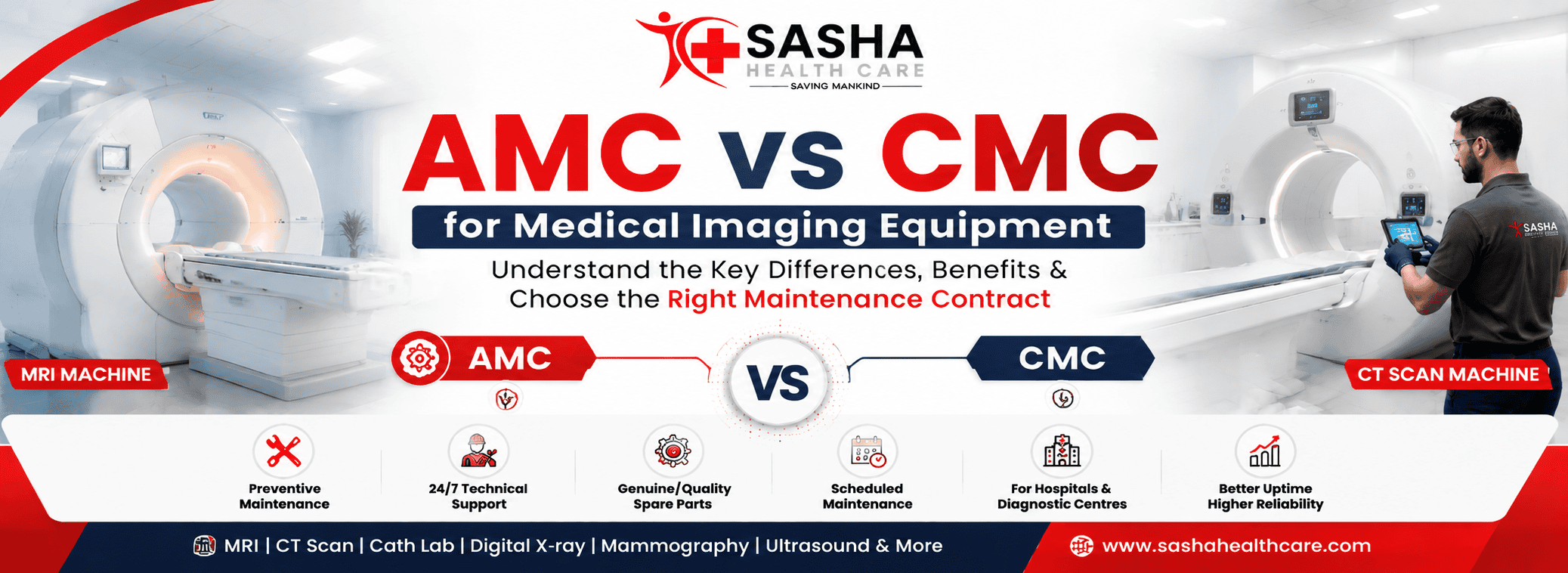
Medical imaging equipment such as MRI machines, CT scanners, Cath Labs, Digital X-ray systems, Mammography units, and Ultrasound machines represent significant investments for hospitals and diagnostic centres. These systems require regular maintenance to ensure accurate diagnoses, minimize downtime, and extend equipment lifespan.
Two of the most common maintenance options available are the Annual Maintenance Contract (AMC) and the Comprehensive Maintenance Contract (CMC). While both help keep equipment operational, they differ in terms of service coverage, spare parts, repair costs, and overall maintenance responsibilities.
In simple terms:
AMC (Annual Maintenance Contract) covers preventive maintenance and labour charges, while spare parts are generally billed separately.
CMC (Comprehensive Maintenance Contract) includes preventive maintenance, labour, repairs, and most spare parts under a fixed annual cost.
For hospitals with high patient volumes or mission-critical imaging systems, choosing the right maintenance contract can significantly reduce equipment downtime and unexpected repair expenses.
This guide explains the differences between AMC and CMC, their advantages, costs, and how to determine the best option for your MRI, CT scanner, or other medical imaging equipment.
Why Maintenance Contracts Are Essential for Medical Imaging Equipment
Medical imaging systems operate in demanding clinical environments where reliability is essential. Even a few hours of downtime can delay patient care, disrupt hospital operations, and result in financial losses.
Ensure compliance with quality and safety standards
Whether your facility uses a refurbished MRI machine or a brand-new CT scanner, investing in a suitable maintenance contract is critical for maximizing return on investment.
What is an Annual Maintenance Contract (AMC)?
An Annual Maintenance Contract (AMC) is a service agreement between the equipment owner and the service provider for routine maintenance of medical equipment over a fixed period, usually one year.
Under an AMC, the service provider performs scheduled preventive maintenance, inspections, calibration, cleaning, and labour for repairs. However, replacement parts and consumables are usually charged separately.
Typical AMC Services Include
Preventive maintenance visits
Equipment inspection
Cleaning and calibration
Performance testing
Software checks (where applicable)
Labour charges for repairs
Technical support
Maintenance reports
Basic troubleshooting
Equipment health assessment
What Is Usually Not Covered?
Most AMC agreements do not include:
Replacement spare parts
X-ray tubes
MRI coils
CT detector components
Helium refilling
Cryogenic repairs
Major electronic boards
High-value consumables
These components are billed separately whenever replacement is required.
Advantages of AMC
Many hospitals choose AMC because it offers a cost-effective way to maintain imaging equipment while retaining flexibility over replacement parts.
Lower Annual Cost
AMC contracts generally cost less than CMC agreements since they exclude expensive spare parts.
Preventive Maintenance
Regular inspections help identify potential problems before they become major failures.
Improved Equipment Performance
Routine servicing keeps imaging systems operating efficiently, reducing the likelihood of performance issues.
Flexible Repair Costs
Hospitals only pay for parts when replacements are actually required, which can be economical for newer equipment with low failure rates.
Better Equipment Lifespan
Scheduled maintenance reduces wear and tear, helping extend the service life of MRI and CT systems.
Limitations of AMC
Although AMC offers several benefits, it also has limitations that hospitals should consider.
Spare Parts Are Extra
If expensive components fail, repair costs can become substantial.
Budget Uncertainty
Unexpected failures may lead to higher maintenance expenses than originally planned.
Longer Approval Process
Hospitals often need administrative approval before purchasing replacement parts, which may delay repairs.
Higher Financial Risk
Facilities operating older imaging systems may experience frequent failures, increasing annual maintenance costs beyond expectations.
Who Should Choose an AMC?
An Annual Maintenance Contract is often suitable for:
Newly installed MRI machines
New CT scanners
Hospitals with limited maintenance budgets
Diagnostic centres with low patient volume
Facilities where equipment failures are infrequent
Organizations with separate budgets for spare parts
If the equipment is relatively new and major component failures are unlikely, AMC can provide excellent value.
What is a Comprehensive Maintenance Contract (CMC)?
A Comprehensive Maintenance Contract (CMC) is a complete maintenance solution that covers preventive maintenance, labour, repairs, and most replacement spare parts under a fixed annual fee.
Unlike AMC, CMC minimizes unexpected maintenance expenses by including many of the high-cost components that are commonly excluded from standard maintenance contracts.
This makes CMC particularly valuable for hospitals that rely heavily on imaging equipment for daily patient care.
Typical Services Included in a CMC
A Comprehensive Maintenance Contract generally includes:
Scheduled preventive maintenance
Unlimited breakdown visits
Labour charges
Replacement of covered spare parts
System calibration
Performance verification
Emergency service support
Software updates
Technical inspections
Equipment optimization
Priority response
Service documentation
Depending on the agreement, some high-value items (such as MRI helium refills or X-ray tubes) may still have exclusions, so hospitals should always review contract terms carefully.
Advantages of CMC
Hospitals often prefer CMC because it provides predictable maintenance costs and reduces operational risk.
Fixed Annual Budget
Maintenance expenses remain predictable throughout the contract period.
Reduced Downtime
Since spare parts are covered, repairs can usually begin immediately without waiting for purchase approvals.
Better Equipment Availability
Critical imaging equipment remains operational for longer periods, improving patient scheduling and service quality.
Lower Long-Term Risk
Unexpected component failures have less financial impact because covered parts are included in the contract.
Priority Technical Support
Many CMC providers offer faster response times and priority service for contract customers.
AMC vs CMC: Side-by-Side Comparison
Choosing between an Annual Maintenance Contract (AMC) and a Comprehensive Maintenance Contract (CMC) depends on your equipment’s age, usage, maintenance budget, and the level of operational risk your healthcare facility can accept.
The following comparison highlights the key differences.
Feature
AMC (Annual Maintenance Contract)
CMC (Comprehensive Maintenance Contract)
Preventive Maintenance
✔ Included
✔ Included
Breakdown Service
✔ Included
✔ Included
Labour Charges
✔ Included
✔ Included
Spare Parts
✘ Usually Extra
✔ Usually Included
Software Updates
Sometimes
Usually Included
Emergency Support
Limited
Priority Support
Annual Cost
Lower
Higher
Budget Predictability
Medium
High
Equipment Downtime
Moderate
Low
Best For
New Equipment
Older & High-Usage Equipment
Key Differences Between AMC and CMC
Although both contracts aim to keep medical imaging equipment in optimal working condition, their scope of coverage differs significantly.
1. Spare Parts Coverage
This is the biggest difference.
With an AMC, if a major component such as an MRI power supply, CT detector board, or electronic module fails, the hospital bears the replacement cost.
With a CMC, these components are generally covered under the agreement (subject to contract terms), reducing unexpected expenses.
2. Maintenance Cost
AMC has a lower annual fee because it excludes expensive spare parts.
CMC costs more initially but helps avoid large, unplanned repair bills during the contract period.
3. Equipment Downtime
When equipment breaks down under an AMC, hospitals may need to approve quotations before replacement parts are ordered.
This approval process can delay repairs.
Under a CMC, replacement parts are typically supplied immediately, allowing engineers to restore equipment faster and reduce downtime.
4. Financial Planning
Hospitals often prefer CMC because maintenance costs remain predictable throughout the year.
With AMC, annual expenses may fluctuate depending on equipment failures.
5. Risk Management
AMC transfers only part of the maintenance responsibility to the service provider.
CMC transfers most maintenance risks, making it a more comprehensive solution for mission-critical imaging systems.
Which Is Better for MRI Machines?
MRI systems are among the most sophisticated and expensive diagnostic imaging devices in healthcare. They contain complex electronic assemblies, cooling systems, gradient amplifiers, RF components, and precision hardware that require expert maintenance.
For new MRI machines with low operating hours, an AMC can be a cost-effective option because the likelihood of major component failure is relatively low.
However, for refurbished MRI machines or systems that have been in service for several years, a CMC is generally the better choice. It provides broader protection against unexpected failures, reduces downtime, and helps hospitals manage maintenance costs more effectively.
Recommendation:
0–5 years old: AMC may be sufficient if equipment is in excellent condition.
5+ years old or refurbished: CMC is recommended for greater reliability and financial predictability.
Which Is Better for CT Scan Machines?
CT scanners operate under high workloads, especially in busy hospitals and diagnostic centres. Components such as X-ray tubes, detectors, and cooling systems experience significant wear over time.
For facilities with low daily scan volumes, an AMC may provide adequate maintenance support while keeping annual costs lower.
For high-volume diagnostic centresperforming dozens of scans each day, a CMC is often the smarter investment. Comprehensive coverage helps minimize downtime, ensuring uninterrupted patient services and avoiding costly emergency repairs.
Recommendation:
Low patient volume: AMC
High patient volume: CMC
Factors That Influence Maintenance Costs
The cost of an AMC or CMC depends on several factors.
Factor
Impact on Cost
Equipment Age
Older equipment usually costs more to maintain.
Brand
Premium brands may have higher service costs.
Daily Usage
Higher usage increases wear and maintenance needs.
Availability of Spare Parts
Rare or imported parts can increase costs.
Equipment Condition
Poorly maintained systems require more servicing.
Installation Location
Remote locations may involve higher travel costs.
Service Response Time
Faster response commitments can increase contract pricing.
Rather than choosing solely based on price, hospitals should evaluate the total cost of ownership over the equipment’s lifecycle.
When Should You Choose an AMC?
An Annual Maintenance Contract is generally the better option when:
Your equipment is relatively new.
Major components are still under warranty.
Equipment usage is moderate.
You have a limited maintenance budget.
Your biomedical engineering team can manage minor repairs.
Spare part failures are expected to be infrequent.
AMC offers a practical balance between preventive maintenance and cost savings for facilities with lower operational risk.
When Should You Choose a CMC?
A Comprehensive Maintenance Contract is often the preferred choice when:
Equipment is older or refurbished.
Daily patient volume is high.
Downtime would significantly impact hospital operations.
Predictable annual maintenance costs are important.
Rapid service response is required.
The hospital wants to reduce the financial risk of unexpected component failures.
For critical imaging systems that support emergency departments, trauma centres, and high-volume diagnostic facilities, a CMC provides greater operational security.
Common Mistakes When Choosing a Maintenance Contract
Selecting the wrong maintenance agreement can lead to unnecessary costs and increased equipment downtime. Avoid these common mistakes:
Choosing Based Only on Price
A lower annual fee may seem attractive, but expensive spare part replacements under an AMC can quickly outweigh the initial savings.
Ignoring Equipment Age
Older imaging systems are more likely to experience component failures. Choosing an AMC for aging equipment may result in higher overall expenses.
Not Reviewing Contract Exclusions
Always read the agreement carefully to understand which parts and services are included—and which are excluded.
Overlooking Service Response Time
Fast response is critical for hospitals where every hour of downtime affects patient care and revenue.
Selecting an Inexperienced Service Provider
Medical imaging equipment requires specialized expertise. Work with providers that have trained engineers, access to genuine or high-quality compatible spare parts, and experience across multiple imaging modalities.
Expert Recommendation
There is no one-size-fits-all answer when choosing between AMC and CMC. The right decision depends on your equipment profile and operational priorities.
Choose AMC if your equipment is new, usage is moderate, and you can budget separately for spare parts.
Choose CMC if your equipment is older, heavily used, or critical to daily patient care, and you want predictable costs with minimal downtime.
For hospitals managing multiple imaging systems, it may even be beneficial to use a combination of AMC and CMC based on the age, condition, and utilization of each machine.
Why Choose Sasha Healthcare for AMC & CMC Services?
At Sasha Healthcare, we understand that reliable medical imaging equipment is essential for delivering uninterrupted patient care. Our experienced service engineers provide maintenance solutions for a wide range of diagnostic imaging systems, including MRI machines, CT scanners, Cath Labs, Digital X-ray systems, Mammography units, Ultrasound machines, and other medical equipment.
Our Services Include:
Annual Maintenance Contracts (AMC)
Comprehensive Maintenance Contracts (CMC)
Preventive Maintenance Programs
Equipment Installation & Commissioning
Equipment Relocation Services
Breakdown Maintenance
Calibration & Performance Checks
Spare Parts Support
Technical Consultation
Equipment Lifecycle Management
Our focus is on maximizing equipment uptime, extending system lifespan, and helping hospitals and diagnostic centres maintain high operational efficiency through dependable maintenance services.
Conclusion
Medical imaging equipment is a significant investment, and protecting that investment requires a well-planned maintenance strategy. Both Annual Maintenance Contracts (AMC) and Comprehensive Maintenance Contracts (CMC) offer valuable benefits, but the right choice depends on your equipment’s age, usage patterns, operational requirements, and budget.
For healthcare facilities seeking lower upfront maintenance costs, AMC may be the right option. For those prioritizing predictable expenses, faster repairs, and minimal downtime, CMC provides greater long-term value.
By partnering with an experienced service provider, hospitals and diagnostic centres can ensure reliable equipment performance, improve patient care, and maximize the return on their imaging technology investments.
Contact Sasha Healthcare
Looking for reliable AMC or CMC services for your medical imaging equipment?
Whether you operate an MRI machine, CT scanner, Cath Lab, Digital X-ray, Mammography, or Ultrasound system, Sasha Healthcare offers tailored maintenance solutions designed to keep your equipment running at peak performance.
Contact our team today to discuss your maintenance requirements and discover how our expert service engineers can help reduce downtime, extend equipment life, and support uninterrupted patient care.
What is an Annual Maintenance Contract (AMC)?
An Annual Maintenance Contract (AMC) is a service agreement that covers routine preventive maintenance, inspections, calibration, and labour charges for medical equipment. However, replacement spare parts are generally billed separately, making AMC suitable for newer equipment with a lower risk of major component failures.
What is a Comprehensive Maintenance Contract (CMC)?
A Comprehensive Maintenance Contract (CMC) includes preventive maintenance, labour, repairs, and most replacement spare parts under a fixed annual fee. It helps hospitals control maintenance costs and reduce unexpected equipment downtime.
What is the main difference between AMC and CMC?
The primary difference is spare parts coverage. AMC covers maintenance services and labour, while CMC generally includes both labour and replacement parts (subject to contract terms). This makes CMC a more comprehensive maintenance solution.
Which is better for MRI machines—AMC or CMC?
For newer MRI systems, an AMC may be sufficient if the equipment is in excellent condition. However, for older or refurbished MRI machines, a CMC is often the better choice because it minimizes repair costs and reduces downtime.
Can refurbished medical imaging equipment be covered under AMC or CMC?
Yes. Many refurbished MRI, CT, and other imaging systems can be covered under AMC or CMC agreements, depending on their condition and service provider policies.
How do I choose the right maintenance contract?
Professional maintenance ensures reliable equipment performance, minimizes downtime, supports regulatory compliance, enhances patient care, and extends the operational life of valuable medical imaging systems.
Magnetic Resonance Imaging (MRI) has become one of the most essential diagnostic technologies in modern healthcare. Hospitals, multi-specialty clinics, and diagnostic centers across India rely on MRI machines to produce high-resolution images of internal organs, soft tissues, joints, the brain, and the spine without using ionizing radiation. As healthcare infrastructure continues to expand, the demand for MRI systems is increasing, making MRI machine price in India one of the most searched topics among healthcare investors and medical equipment buyers.
Whether you are establishing a new diagnostic center, upgrading an existing radiology department, or expanding hospital imaging services, selecting the right MRI scanner involves much more than comparing prices. Factors such as magnetic field strength, imaging technology, installation requirements, maintenance costs, manufacturer reputation, and after-sales support all play a crucial role in determining the total investment.
One of the biggest decisions buyers face is whether to invest in a brand-new MRI system or choose a professionally refurbished MRI machine. While new MRI scanners offer the latest technology, certified refurbished MRI machines provide outstanding performance at a significantly lower cost, making them an attractive option for many healthcare providers.
At Sasha HealthCare, we specialize in supplying high-quality refurbished MRI machines from leading global brands, including Siemens, GE HealthCare, Philips, Canon Medical, and Hitachi. Along with equipment supply, we provide complete installation, de-installation, transportation, preventive maintenance, AMC/CMC services, helium filling, and technical support across India.
This comprehensive guide explains the latest MRI machine prices in India, compares leading manufacturers, discusses pricing factors, and helps you choose the right MRI system for your healthcare facility.
Table of Contents
What Is an MRI Scan Machine?
Latest MRI Machine Price in India
MRI Machine Price by Tesla Strength
MRI Machine Price by Manufacturer
Top MRI Machine Manufacturers
Refurbished MRI Machine Price in India
Factors Affecting MRI Machine Prices
MRI Installation & Additional Costs
How to Choose the Right MRI Machine
Why Buy a Refurbished MRI Machine?
Why Choose Sasha HealthCare?
Frequently Asked Questions
What Is an MRI Scan Machine?
An MRI (Magnetic Resonance Imaging) machine is an advanced diagnostic imaging system that uses a powerful magnetic field, radiofrequency pulses, and computer processing to generate detailed cross-sectional images of the human body. Unlike CT scanners or X-ray systems, MRI does not use ionizing radiation, making it a preferred imaging method for many neurological, orthopedic, cardiac, and soft tissue examinations.
MRI technology is widely used to diagnose conditions affecting the:
Brain
Spine
Joints
Muscles
Heart
Liver
Kidneys
Blood vessels
Pelvic organs
Ligaments and tendons
Modern MRI systems can produce highly detailed images that help physicians detect tumors, strokes, ligament injuries, spinal disorders, and numerous other medical conditions at an early stage.
Main Components of an MRI Machine
A standard MRI scanner consists of several key components:
Superconducting magnet
Gradient coil system
RF (Radio Frequency) coils
Patient table
Cooling system
Helium cryogenic system
Computer workstation
MRI software platform
Each of these components contributes to image quality, scanning speed, and diagnostic accuracy.
Types of MRI Machines
MRI systems are available in different configurations depending on magnetic field strength and clinical requirements.
Open MRI
Open MRI machines are designed for patient comfort, making them suitable for claustrophobic, pediatric, elderly, or obese patients. However, they generally provide lower magnetic field strength and reduced image resolution compared to closed MRI systems.
Closed MRI
Closed MRI scanners are the most commonly installed systems in hospitals and diagnostic centers. These machines offer superior image quality, faster examinations, and a broader range of clinical applications.
MRI Machine Price in India (2026)
The MRI machine price in India depends on several factors, including magnetic field strength, manufacturer, model year, software version, condition (new or refurbished), installation requirements, and optional accessories.
Professionally refurbished MRI machines have become increasingly popular because they deliver reliable clinical performance while reducing capital expenditure. Healthcare providers can often save a substantial amount compared with purchasing a new system, making refurbished equipment an attractive choice for expanding diagnostic services.
The following table provides indicative price ranges. Actual prices may vary based on the equipment configuration, refurbishment standards, warranty, and site-specific requirements.
MRI Type
Field Strength
Approx. New Price
Approx. Refurbished Price
Best For
Open MRI
0.3T–0.5T
Higher investment
Lower investment
Orthopedic clinics, patient comfort
Low-Field MRI
0.2T–0.5T
Moderate
Budget-friendly
Small diagnostic centers
Standard MRI
1.5 Tesla
Premium
Significant savings
Most hospitals and imaging centers
Advanced MRI
3 Tesla
Highest investment
Lower than new systems
Advanced neurology, oncology, research
Note: Prices vary depending on the manufacturer, model, software upgrades, installation requirements, and warranty coverage. Contact a trusted supplier such as Sasha HealthCare for a customized quotation.
Why Do MRI Machine Prices Vary?
Many buyers wonder why one MRI machine costs considerably more than another, even when both have the same magnetic field strength. The answer lies in several technical and operational factors.
The most significant factor is the magnetic field strength. A 3 Tesla MRI system generally costs more than a 1.5 Tesla system because it provides higher image resolution and faster scanning capabilities.
Other factors include:
Brand reputation
Model generation
Gradient performance
RF coil technology
AI-assisted imaging software
Clinical applications
Installation complexity
Warranty period
Helium efficiency
Equipment condition (new or refurbished)
Hospitals with specialized imaging requirements may also choose premium models that include advanced cardiac imaging, whole-body diffusion imaging, functional MRI (fMRI), or spectroscopy, which further influence the overall investment.
Benefits of Buying a Refurbished MRI Machine
For many healthcare providers, refurbished MRI machines offer an excellent balance between performance and affordability. When sourced from a reputable supplier, these systems undergo thorough inspection, component replacement where necessary, software updates, calibration, and rigorous quality testing before installation.
Key advantages include:
Lower initial investment
Proven clinical performance
Faster return on investment
Warranty support
Reduced downtime
Availability of premium brands at a more accessible cost
Sustainable and environmentally responsible equipment reuse
Choosing a trusted supplier ensures that the refurbished MRI system meets high quality standards and delivers reliable performance for years to come.
MRI Machine Price by Tesla Strength
The magnetic field strength of an MRI machine is measured in Tesla (T). The Tesla rating significantly influences image quality, scan speed, diagnostic capabilities, and overall cost. Selecting the appropriate field strength depends on your patient volume, clinical applications, and budget.
Below is a comparison of the most common MRI systems available in India.
Tesla Strength
Typical Applications
Suitable For
Price Category
0.2T–0.35T
Basic orthopedic and musculoskeletal imaging
Small clinics
Budget
0.5T
General diagnostic imaging
Small diagnostic centers
Moderate
1.5T
Routine clinical imaging
Most hospitals and diagnostic centers
Mid to Premium
3T
Advanced neurological, cardiac, and oncology imaging
Multi-specialty hospitals and research institutions
Premium
0.2 Tesla MRI Machine
Low-field MRI systems are designed for healthcare facilities with basic imaging requirements. They consume less power, require simpler site preparation, and offer a lower initial investment.
Advantages
Lower operating cost
Easier installation
Comfortable for patients
Suitable for routine examinations
Limitations
Longer scan times
Lower image resolution
Limited advanced clinical applications
These systems are generally suitable for small healthcare facilities where patient volume is relatively low.
0.35 Tesla MRI Machine
A 0.35 Tesla MRI offers improved imaging performance compared to lower-field systems while remaining an economical option for many diagnostic centers.
It is commonly used for:
Orthopedic imaging
Spine examinations
Joint assessments
Basic neurological scans
Healthcare providers with moderate patient volume often choose refurbished 0.35T MRI systems to minimize capital investment while maintaining diagnostic capabilities.
0.5 Tesla MRI Machine
The 0.5 Tesla MRI remains a practical solution for hospitals seeking dependable imaging without investing in higher-field systems.
Typical applications include:
Brain imaging
Spine imaging
Knee MRI
Shoulder MRI
Pelvic imaging
Many refurbished 0.5 Tesla systems continue to deliver reliable clinical performance when properly maintained.
1.5 Tesla MRI Machine
The 1.5 Tesla MRI is the most widely installed MRI system worldwide and is considered the industry standard.
It offers an excellent balance of image quality, examination speed, and affordability.
Ideal For
Multi-specialty hospitals
Diagnostic imaging centers
Medical colleges
Trauma centers
Clinical Applications
Neurology
Orthopedics
Oncology
Cardiology
Whole-body MRI
Pediatric imaging
Because of its versatility, a refurbished 1.5 Tesla MRI machine is often the preferred choice for hospitals seeking high-quality imaging with a lower investment than a new system.
3 Tesla MRI Machine
A 3 Tesla MRI delivers twice the magnetic field strength of a 1.5T system, resulting in higher-resolution images and faster scan times.
It is recommended for:
Neurosurgery centers
Advanced oncology hospitals
Research institutions
Cardiac imaging
Functional MRI (fMRI)
Benefits
Superior image clarity
Faster examinations
Better visualization of small anatomical structures
Advanced clinical applications
Although a 3T MRI requires a higher investment, refurbished models can make advanced imaging more accessible.
1.5 Tesla vs 3 Tesla MRI
Feature
1.5 Tesla MRI
3 Tesla MRI
Image Quality
Excellent
Outstanding
Scan Speed
Fast
Faster
Clinical Applications
Most routine examinations
Advanced diagnostics
Cost
Moderate
Higher
Power Consumption
Moderate
Higher
Installation Requirements
Standard
More demanding
Recommended For
Most hospitals
Large hospitals & research centers
Expert Tip: For the majority of diagnostic centers in India, a refurbished 1.5 Tesla MRI offers the best balance between cost, performance, and return on investment.
MRI Machine Price by Brand
The manufacturer plays a significant role in determining an MRI system’s technology, software, service support, and resale value. Below are the leading brands available in India.
Siemens MRI Machine Price
Siemens Healthineers is one of the world’s leading MRI manufacturers, recognized for innovation, image quality, and advanced software solutions.
Popular models include:
MAGNETOM Avanto
MAGNETOM Essenza
MAGNETOM Sempra
MAGNETOM Aera
MAGNETOM Skyra
Advantages
Excellent image quality
AI-assisted workflow
Energy-efficient operation
Strong service network
High resale value
Siemens refurbished MRI machines are particularly popular among hospitals and diagnostic centers because they combine dependable performance with long-term reliability.
GE HealthCare MRI Machine Price
GE HealthCare offers MRI systems known for patient comfort, fast imaging, and user-friendly workflows.
Popular models include:
Signa Creator
Signa Explorer
Signa HDxt
Signa Voyager
Signa Pioneer
Benefits
Wide bore options
Fast examination protocols
AI-powered imaging tools
Comfortable patient experience
High-quality musculoskeletal imaging
GE MRI systems are widely used in both public and private healthcare institutions.
Philips MRI Machine Price
Philips Healthcare is recognized for advanced digital imaging, innovative coil technology, and efficient clinical workflows.
Popular models include:
Ingenia
Achieva
Intera
Multiva
Key Features
Digital broadband architecture
Excellent soft tissue contrast
Reduced scan times
Patient-friendly design
Advanced cardiac imaging
Philips MRI scanners are commonly selected by hospitals requiring comprehensive imaging capabilities.
Canon Medical MRI Machine Price
Canon Medical Systems (formerly Toshiba Medical) produces MRI scanners known for quiet operation and advanced imaging technologies.
Popular models include:
Vantage Elan
Vantage Titan
Vantage Orian
Advantages
Comfortable patient experience
Quiet scan technology
Excellent orthopedic imaging
Efficient workflow
Canon MRI systems are increasingly popular among diagnostic centers focused on patient comfort.
Hitachi MRI Machine Price
Hitachi MRI systems are particularly recognized for open MRI technology and patient accessibility.
Popular models include:
Airis Elite
Aperto Lucent
Oasis
Benefits
Open MRI design
Reduced patient anxiety
Suitable for obese patients
Comfortable examinations
These systems are often chosen by orthopedic hospitals and specialty imaging centers.
Brand Comparison
Brand
Best Known For
Suitable For
Siemens
Advanced technology and image quality
Large hospitals and diagnostic centers
GE HealthCare
Workflow efficiency and patient comfort
Multi-specialty hospitals
Philips
Digital imaging and cardiac applications
Advanced diagnostic centers
Canon Medical
Quiet MRI technology
General hospitals
Hitachi
Open MRI systems
Orthopedic and specialty clinics
Which MRI Brand Should You Choose?
There is no single “best” MRI brand for every healthcare facility. The ideal choice depends on your clinical needs, budget, available space, and expected patient volume.
When comparing MRI systems, evaluate:
Clinical applications
Image quality
Software features
Availability of spare parts
Service network
Upgrade options
Warranty
Operating costs
Installation requirements
Long-term maintenance support
Working with an experienced supplier can help you identify the right MRI system based on your facility’s specific requirements and future growth plans.
Top MRI Machine Manufacturers
Choosing a reputable MRI manufacturer is just as important as selecting the right field strength. Leading manufacturers invest heavily in research, artificial intelligence, imaging software, and energy-efficient technologies to deliver high-quality diagnostic performance.
The following companies dominate the global MRI market and have a strong presence in India.
Siemens Healthineers
Siemens Healthineers is one of the world’s most trusted MRI manufacturers. The company offers a wide range of MRI systems suitable for small diagnostic centers as well as large tertiary-care hospitals.
Popular MRI Models
MAGNETOM Essenza (1.5T)
MAGNETOM Avanto (1.5T)
MAGNETOM Aera (1.5T)
MAGNETOM Sola (1.5T)
MAGNETOM Skyra (3T)
MAGNETOM Vida (3T)
Key Advantages
Excellent image quality
AI-assisted workflow
Faster scan times
Lower helium consumption in newer models
Wide availability of spare parts
Strong service support across India
Best suited for: Hospitals, diagnostic centers, neurology, oncology, and orthopedic imaging.
GE HealthCare
GE HealthCare is another leading MRI manufacturer known for innovative imaging technology and patient-focused design.
Best suited for: Multi-specialty hospitals and high-volume diagnostic centers.
Philips Healthcare
Philips MRI systems are recognized for delivering high-quality images while improving patient comfort and workflow efficiency.
Popular Models
Ingenia
Achieva
Multiva
Intera
Key Benefits
Digital broadband architecture
Advanced coil technology
Excellent soft tissue imaging
Reduced scan times
Easy software upgrades
Best suited for: Cardiac imaging, oncology, neurology, and advanced diagnostic applications.
Canon Medical Systems
Canon Medical (formerly Toshiba Medical) manufactures MRI scanners that emphasize patient comfort without compromising image quality.
Popular Models
Vantage Titan
Vantage Elan
Vantage Orian
Advantages
Quiet scan technology
Comfortable patient experience
Reliable orthopedic imaging
Lower acoustic noise
Efficient workflow
Hitachi
Hitachi is widely known for developing open MRI systems, making MRI examinations easier for claustrophobic, pediatric, and bariatric patients.
Popular Models
Aperto Lucent
Airis Elite
Oasis
Advantages
Open MRI design
Improved patient comfort
Lower anxiety during scans
Suitable for orthopedic imaging
Top MRI Machine Suppliers in India
Selecting the right supplier is just as important as selecting the right manufacturer. A reliable supplier provides more than equipment—they offer complete lifecycle support.
Look for suppliers that provide:
Certified refurbished MRI systems
Professional installation
Site planning assistance
De-installation services
Transportation
MRI room planning
RF shielding guidance
Helium filling services
Preventive maintenance
AMC & CMC support
Genuine spare parts
Technical support
A trusted supplier can reduce downtime, improve equipment life, and ensure compliance with installation requirements.
Refurbished MRI Machine Price in India
The demand for refurbished MRI machines has grown significantly in India due to increasing healthcare investments and the need for cost-effective imaging solutions.
A professionally refurbished MRI scanner undergoes a structured refurbishment process that typically includes:
Complete inspection
Component testing
Replacement of worn parts
Magnet performance evaluation
Software upgrades (where applicable)
Cosmetic restoration
Safety testing
Quality assurance checks
Calibration before installation
Purchasing from an experienced supplier ensures the equipment is tested and supported with installation and after-sales service.
Why Hospitals Prefer Refurbished MRI Machines
Many hospitals choose refurbished MRI systems because they offer an excellent balance between affordability and performance.
Benefits
✔ Lower capital investment
✔ Faster return on investment (ROI)
✔ Proven clinical performance
✔ Access to premium brands
✔ Warranty options
✔ Readily available spare parts
✔ Lower depreciation
✔ Faster delivery compared to some new systems
New vs Refurbished MRI Machine
Feature
New MRI Machine
Refurbished MRI Machine
Initial Investment
Higher
Lower
Technology
Latest generation
Proven, reliable generation
Warranty
Manufacturer warranty
Supplier warranty (varies)
Delivery Time
May be longer
Often faster
Return on Investment
Longer payback
Faster payback
Clinical Performance
Excellent
Excellent when professionally refurbished
Best For
Premium hospitals
Most hospitals and diagnostic centres
For many diagnostic centers, a certified refurbished MRI machine provides the imaging capabilities needed while keeping capital costs under control.
How Refurbished MRI Machines Are Restored
A high-quality refurbishment process generally includes the following stages:
1. Equipment Inspection
Engineers inspect the magnet, gradient system, RF coils, cooling unit, patient table, electronics, and software.
2. Component Replacement
Faulty or worn components are replaced with compatible, high-quality parts.
3. Software Updates
Where supported, software is updated to improve workflow and imaging performance.
4. Cosmetic Restoration
Exterior panels, covers, and accessories are cleaned, repaired, or refinished to present a professional appearance.
5. Performance Testing
The MRI system undergoes imaging and operational tests to verify reliable performance.
6. Installation & Calibration
Experienced engineers install, calibrate, and commission the system at the customer’s site.
Is Buying a Refurbished MRI Machine Safe?
Yes—provided you purchase from a reputable supplier with technical expertise and quality assurance processes.
Before making a purchase, verify:
Equipment history
Magnet condition
Software version
Warranty terms
Availability of spare parts
Service support
Installation experience
Preventive maintenance plans
Customer references
A professionally refurbished MRI machine can deliver dependable diagnostic performance for many years when maintained correctly.
Expert Buying Tips
Before purchasing an MRI system, ask your supplier the following questions:
What is the manufacturing year of the system?
Has the MRI been fully refurbished?
What warranty is included?
Are installation services provided?
Is helium filling included if required?
Are spare parts readily available?
Do you offer AMC and CMC contracts?
What is the expected delivery timeline?
Can software upgrades be supported?
Do you provide operator or technical training?
These questions can help you compare suppliers beyond price alone.
Why Buy from Sasha HealthCare?
Sasha HealthCare is a trusted supplier of refurbished MRI machines in India, offering comprehensive support from equipment selection to installation and ongoing maintenance.
Our services include:
Certified refurbished MRI machines
Siemens, GE, Philips, Canon, and Hitachi systems
MRI installation and commissioning
MRI de-installation and relocation
Safe transportation
Preventive maintenance
AMC & CMC services
MRI helium filling
Genuine spare parts
Technical support by experienced engineers
We work closely with hospitals, diagnostic centers, and healthcare investors to recommend MRI solutions that match their clinical needs and budget.
Factors Affecting MRI Machine Price in India
The MRI machine price in India is influenced by much more than the manufacturer’s brand. Several technical, operational, and installation-related factors determine the total investment required. Understanding these factors helps hospitals and diagnostic centers choose a system that aligns with their clinical requirements and budget.
1. Magnetic Field Strength (Tesla)
The magnetic field strength is one of the biggest factors affecting the price of an MRI machine.
0.2T–0.5T: Suitable for basic imaging with lower investment.
1.5T: The most popular choice, offering an excellent balance of image quality and affordability.
3T: Designed for advanced clinical applications with higher image resolution and faster scanning.
Higher Tesla machines generally require greater investment due to their advanced capabilities and more complex installation requirements.
2. Brand and Model
Well-established manufacturers invest heavily in research and development, imaging software, and service infrastructure. As a result, premium brands often command higher prices but also offer excellent reliability and long-term value.
Popular manufacturers include:
Siemens Healthineers
GE HealthCare
Philips Healthcare
Canon Medical
Hitachi
3. New vs. Refurbished MRI Machine
One of the most important purchasing decisions is whether to buy a new or refurbished MRI system.
New MRI
Advantages
Latest technology
Manufacturer warranty
Advanced AI features
Longer product lifecycle
Considerations
Higher initial investment
Longer return on investment
Refurbished MRI
Advantages
Lower capital investment
Reliable performance when professionally refurbished
Faster deployment
Excellent value for hospitals and diagnostic centers
Many healthcare providers choose refurbished MRI machines because they can access premium brands while managing costs effectively.
4. Software and Imaging Features
Modern MRI scanners include advanced software that improves image quality and workflow.
Examples include:
AI-assisted image reconstruction
Motion correction
Faster scan protocols
Cardiac imaging packages
Oncology applications
Neuro imaging software
Whole-body imaging
Functional MRI (fMRI)
Systems equipped with advanced software generally cost more but can improve productivity and diagnostic confidence.
5. Gradient Performance
Gradient strength affects scan speed and image clarity.
Higher-performance gradient systems provide:
Faster scanning
Better image resolution
Improved neurological imaging
Enhanced orthopedic studies
Superior cardiac imaging
These advanced features typically increase the equipment cost.
6. RF Coil Configuration
MRI coils play a vital role in image quality.
Common coil options include:
Head coil
Spine coil
Knee coil
Shoulder coil
Cardiac coil
Body coil
Breast coil
The number and type of coils included with the MRI system can significantly impact the overall price.
7. Installation Requirements
Installing an MRI machine involves much more than simply delivering the equipment.
The site must be prepared with appropriate infrastructure, including:
RF shielding
Magnetic shielding (where required)
HVAC systems
Electrical upgrades
UPS systems
Earthing
Fire safety measures
Controlled access
The complexity of the installation influences the total project cost.
MRI Installation Cost
An MRI installation project generally includes:
Site inspection
Equipment transportation
Unloading and positioning
Magnet placement
Assembly
Calibration
Acceptance testing
Staff orientation
Clinical commissioning
Experienced installation teams help minimize downtime and ensure the system operates according to manufacturer recommendations.
MRI Room Requirements
Before purchasing an MRI scanner, hospitals should assess whether their facility is suitable for installation.
Typical requirements include:
Adequate room dimensions
Structural load capacity
Stable power supply
Air conditioning and ventilation
RF shielding
Patient preparation area
Equipment control room
Emergency access
Compliance with applicable regulations
Proper site planning can help avoid delays and additional expenses during installation.
Additional Costs to Consider
When budgeting for an MRI project, buyers should consider costs beyond the equipment itself.
These may include:
Expense
Purpose
Site preparation
Civil and electrical modifications
RF shielding
Reduces external signal interference
HVAC
Maintains proper operating temperature
UPS system
Protects against power interruptions
Chiller (if required)
Supports equipment cooling
Transportation
Safe delivery to the installation site
Crane services
Required for difficult installations
Commissioning
System testing and calibration
Operator training
Familiarizes staff with the equipment
Planning for these expenses provides a more accurate understanding of the total project investment.
MRI Helium Filling
Most superconducting MRI systems use liquid helium to keep the magnet at extremely low temperatures.
Over time, helium levels may need to be monitored and replenished, depending on the system design.
Professional helium services help:
Maintain magnet performance
Reduce downtime
Prevent unexpected interruptions
Extend equipment life
Hospitals should choose suppliers with experience in MRI helium handling and maintenance.
AMC and CMC Services
Routine maintenance is essential for ensuring consistent MRI performance and minimizing downtime.
Annual Maintenance Contract (AMC)
An AMC generally includes:
Preventive maintenance visits
Equipment inspection
Cleaning and calibration
Technical support
Performance checks
Comprehensive Maintenance Contract (CMC)
A CMC often includes:
Preventive maintenance
Breakdown support
Replacement of eligible parts (subject to contract terms)
Priority service response
Technical assistance
Choosing the right maintenance plan can improve equipment reliability and reduce unexpected repair costs.
How to Choose the Right MRI Machine
Selecting the right MRI system requires evaluating your clinical needs, operational goals, and future growth plans.
Consider the following factors:
Patient Volume
Estimate the number of MRI examinations your facility expects to perform each day.
High-volume centers may benefit from systems designed for faster workflow and shorter scan times.
Clinical Applications
Identify the types of examinations you plan to offer, such as:
Brain imaging
Spine imaging
Orthopedic studies
Cardiac MRI
Oncology imaging
Whole-body MRI
Choose a system that supports your intended clinical services.
Budget
Evaluate both the initial purchase cost and the long-term operating expenses.
A professionally refurbished MRI machine can be an excellent option for facilities seeking high-quality imaging while optimizing capital expenditure.
Available Space
MRI systems require carefully planned installation areas.
Ensure sufficient space for:
Scanner room
Control room
Equipment room (if applicable)
Patient waiting area
Safe access for installation
Service Support
Reliable after-sales support is critical.
When comparing suppliers, ask about:
Spare parts availability
Technical support
Preventive maintenance
Emergency service response
AMC and CMC options
Installation expertise
Expert Recommendation
For most hospitals and diagnostic centers in India, a refurbished 1.5 Tesla MRI machine offers the best combination of image quality, affordability, and return on investment. It supports a wide range of routine and advanced clinical applications while helping healthcare providers manage capital costs effectively.
However, facilities specializing in neurology, oncology, cardiac imaging, or research may benefit from investing in a 3 Tesla MRI system, particularly if advanced imaging capabilities are a priority.
Why Buy a Refurbished MRI Machine?
A refurbished MRI machine is an excellent investment for hospitals and diagnostic centers seeking high-quality imaging while optimizing capital expenditure. When refurbished by an experienced supplier, these systems undergo comprehensive inspection, testing, calibration, and quality assurance to ensure dependable clinical performance.
Key Benefits of Refurbished MRI Machines
1. Significant Cost Savings
One of the biggest advantages of refurbished MRI systems is affordability. Healthcare providers can acquire premium MRI technology at a substantially lower investment compared to purchasing a new machine.
2. Reliable Performance
Certified refurbished MRI machines are carefully tested, calibrated, and commissioned before installation, helping ensure consistent diagnostic imaging.
3. Faster Return on Investment (ROI)
Lower acquisition costs allow hospitals and imaging centers to recover their investment more quickly while expanding diagnostic services.
4. Access to Premium Brands
Refurbished systems make it easier to invest in globally recognized brands such as:
Siemens Healthineers
GE HealthCare
Philips Healthcare
Canon Medical
Hitachi
5. Faster Availability
Many refurbished MRI machines are available sooner than newly manufactured systems, helping facilities begin operations without unnecessary delays.
6. Sustainable Choice
Purchasing refurbished medical equipment supports sustainability by extending the lifecycle of high-value imaging systems and reducing electronic waste.
Why Choose Sasha HealthCare?
Sasha HealthCare is a trusted supplier of refurbished MRI machines in India, providing complete solutions for hospitals, diagnostic centers, and healthcare investors.
Our goal is not only to supply MRI equipment but also to ensure successful installation, reliable operation, and long-term technical support.
Our Services
Refurbished MRI Machines
We supply certified refurbished MRI systems from leading manufacturers, including:
Siemens
GE HealthCare
Philips
Canon Medical
Hitachi
MRI Installation
Our experienced engineers handle complete installation and commissioning, helping ensure that the system is configured for reliable performance.
MRI De-installation & Relocation
We provide safe dismantling, packing, transportation, and reinstallation services for hospitals relocating or upgrading MRI equipment.
MRI Transportation
Specialized handling and transportation minimize the risk of damage during equipment movement.
Preventive Maintenance
Regular preventive maintenance helps improve equipment reliability, reduce downtime, and extend service life.
AMC & CMC Services
We offer maintenance contracts tailored to support the long-term performance of MRI systems.
MRI Helium Filling
Professional helium filling and monitoring services help maintain superconducting MRI systems efficiently.
Genuine Spare Parts
We supply compatible spare parts to support reliable operation and timely maintenance.
Technical Support
Our technical team assists customers with troubleshooting, maintenance planning, and operational support.
Conclusion
Selecting the right MRI scanner is a strategic investment that directly impacts diagnostic capabilities, patient care, and long-term operational efficiency. While MRI machine price in India is an important consideration, buyers should also evaluate image quality, manufacturer reputation, installation requirements, maintenance support, and total cost of ownership.
For many hospitals and diagnostic centers, a professionally refurbished MRI machine provides an excellent balance between affordability and performance. Systems from trusted manufacturers such as Siemens, GE HealthCare, Philips, Canon Medical, and Hitachi continue to deliver reliable imaging when supplied and supported by experienced professionals.
If you are planning to purchase, upgrade, or relocate an MRI system, partnering with a trusted supplier can simplify the process and help you make an informed investment.
Sasha HealthCare offers certified refurbished MRI machines, installation, de-installation, transportation, AMC/CMC services, helium filling, and ongoing technical support to healthcare facilities across India.
Need expert guidance? Contact Sasha HealthCare today for a customized consultation and quotation tailored to your hospital or diagnostic center’s requirements.
What is the latest MRI machine price in India?
MRI machine prices in India vary depending on the brand, Tesla strength, condition (new or refurbished), software, and installation requirements. Contact a trusted supplier for a customized quotation based on your facility’s needs.
Is a refurbished MRI machine reliable?
Yes. A professionally refurbished MRI machine can provide dependable clinical performance when it has undergone proper inspection, testing, calibration, and quality assurance by an experienced supplier.
Which MRI manufacturer is the best?
Leading manufacturers include Siemens Healthineers, GE HealthCare, Philips Healthcare, Canon Medical Systems, and Hitachi. The best choice depends on your clinical requirements, budget, and service support.
What is the difference between a 1.5 Tesla and a 3 Tesla MRI?
A 3 Tesla MRI provides higher image resolution and faster scanning for advanced applications, while a 1.5 Tesla MRI is the industry standard for routine clinical imaging and is suitable for most hospitals and diagnostic centers.
How long does an MRI machine last?
With proper maintenance, periodic servicing, and timely upgrades, an MRI machine can remain operational for many years. Regular preventive maintenance and quality spare parts are essential for maximizing its lifespan.
Is helium required for every MRI machine?
Most superconducting MRI systems require liquid helium for cooling the magnet. However, helium usage varies depending on the MRI design and manufacturer.
How do I choose the right MRI machine?
Evaluate your expected patient volume, clinical applications, available space, budget, and long-term maintenance requirements. Consulting an experienced MRI supplier can help you select the most appropriate system.
Why are refurbished MRI machines popular in India?
Refurbished MRI systems allow hospitals and diagnostic centers to access advanced imaging technology at a lower investment while maintaining reliable clinical performance.
Choosing the best MRI machine for hospitals is a critical investment that directly impacts diagnostic accuracy, patient satisfaction, and operational efficiency. Hospitals require MRI systems that deliver high-quality imaging, faster scan times, advanced clinical applications, and long-term reliability.
With multiple MRI manufacturers such as Siemens, GE Healthcare, Philips, Canon, and Hitachi offering different models, selecting the right MRI machine depends on factors such as hospital size, patient volume, clinical requirements, and budget.
This guide will help hospitals understand the best MRI systems available and the factors to consider before making a purchase.
What Makes the Best MRI Machine for Hospitals?
The ideal MRI system should provide:
High-resolution imaging
Faster scan times
Patient-friendly design
Advanced software applications
Lower operating costs
Easy maintenance and service support
Long-term return on investment
Hospitals performing neurology, cardiology, oncology, orthopedic, and pediatric imaging often require advanced MRI technology capable of handling diverse clinical applications.
Types of MRI Machines for Hospitals
1. 1.5 Tesla MRI Machine
A 1.5T MRI is considered the industry standard and is suitable for most hospitals.
Advantages:
Excellent image quality
Lower operational cost
Reduced susceptibility artifacts
Suitable for routine clinical imaging
Popular Models:
Siemens Magnetom Avanto
GE Signa HDxt 1.5T
Philips Achieva 1.5T
2. 3 Tesla MRI Machine
A 3T MRI system offers higher magnetic field strength and superior image resolution.
Advantages:
Enhanced diagnostic accuracy
Faster imaging
Better neurological and vascular studies
Advanced research capabilities
Popular Models:
Siemens Magnetom Skyra 3T
GE Discovery MR750 3T
Philips Ingenia 3T
3. Open MRI Systems
Open MRI scanners are designed for claustrophobic, pediatric, and bariatric patients.
Advantages:
Improved patient comfort
Reduced anxiety
Better accessibility
Popular Models:
Hitachi Airis Elite
Fujifilm Oasis MRI
Best MRI Machine Brands for Hospitals
Siemens Healthineers
Siemens is one of the most trusted MRI manufacturers globally.
Top Features:
Excellent image quality
Advanced AI-powered workflows
Strong service support
Wide range of MRI systems
Best Models:
Magnetom Avanto
Magnetom Aera
Magnetom Skyra
GE Healthcare
GE MRI systems are known for reliability and advanced imaging capabilities.
Top Features:
Fast imaging protocols
AI-assisted reconstruction
Strong clinical applications
Best Models:
Signa HDxt
Signa Explorer
Discovery MR750
Philips Healthcare
Philips MRI systems focus on patient comfort and workflow efficiency.
Top Features:
Ambient patient experience
Advanced imaging technology
Energy-efficient operations
Best Models:
Achieva 1.5T
Ingenia 1.5T
Ingenia 3T
Canon Medical Systems
Canon MRI scanners offer exceptional image clarity and patient-friendly designs.
Best Models:
Vantage Elan
Vantage Titan
Vantage Orian
MRI Machine Price in India
The MRI Machine Price varies depending on field strength, brand, software package, and installation requirements.
New MRI Machine Price
MRI Type
Approximate Price
1.5 Tesla MRI
₹4 Crore – ₹8 Crore
3 Tesla MRI
₹8 Crore – ₹15 Crore+
Open MRI
₹2 Crore – ₹6 Crore
Prices may vary based on configuration and optional clinical applications.
Refurbished MRI Machine Cost in India
Many hospitals choose refurbished MRI systems to reduce capital expenditure without compromising diagnostic performance.
Refurbished MRI Machine Cost
MRI Type
Approximate Cost
Refurbished 1.5T MRI
₹1.2 Crore – ₹3.5 Crore
Refurbished 3T MRI
₹3 Crore – ₹8 Crore
Refurbished Open MRI
₹80 Lakh – ₹2.5 Crore
A quality refurbished MRI machine should include:
Complete system refurbishment
Installation and commissioning
Warranty coverage
Preventive maintenance support
Application training
Factors Hospitals Should Consider Before Buying an MRI Machine
Patient Volume
High-volume hospitals should invest in systems with faster scan speeds and workflow automation.
Clinical Applications
Evaluate whether your hospital requires:
Neurology imaging
Cardiac MRI
Oncology imaging
Musculoskeletal studies
Pediatric imaging
Available Space
MRI systems require dedicated infrastructure, including:
RF shielding
Cooling systems
Power backup
Safety zones
Service Support
Reliable after-sales support is essential for minimizing downtime and maximizing equipment lifespan.
Why Refurbished MRI Machines Are Popular Among Hospitals
Refurbished MRI systems provide a cost-effective solution for hospitals looking to expand diagnostic services while maintaining budget control.
Benefits include:
Lower acquisition costs
Faster return on investment
Proven technology
Reduced depreciation
Availability of premium models at affordable prices
When sourced from reputable suppliers, refurbished MRI systems can deliver performance comparable to new machines.
Conclusion
The best MRI machine for hospitals depends on clinical requirements, patient volume, available infrastructure, and budget. For most hospitals, a 1.5 Tesla MRI offers the ideal balance of performance and affordability, while larger hospitals and specialty centers may benefit from advanced 3 Tesla systems.
Hospitals seeking cost-effective solutions should also consider refurbished MRI machine cost options, which can significantly reduce investment while maintaining excellent diagnostic capabilities. Comparing MRI Machine Price, service support, and long-term operational costs will help hospitals make an informed purchasing decision.
Which MRI brands are most popular in hospitals?
Leading MRI brands include Siemens Healthineers, GE Healthcare, Philips Healthcare, Canon Medical Systems, and Hitachi.
What is the difference between 1.5T and 3T MRI?
A 3T MRI provides higher image resolution and faster scans, while a 1.5T MRI offers lower operational costs and excellent performance for routine clinical imaging.
Is a refurbished MRI machine a good investment?
Yes. A professionally refurbished MRI machine can provide excellent imaging performance, lower acquisition costs, and faster return on investment for hospitals and diagnostic centers.
What is the MRI machine price in India?
The MRI machine price in India ranges from ₹4 Crore to ₹15 Crore or more for new systems, depending on the brand, field strength, and configuration.
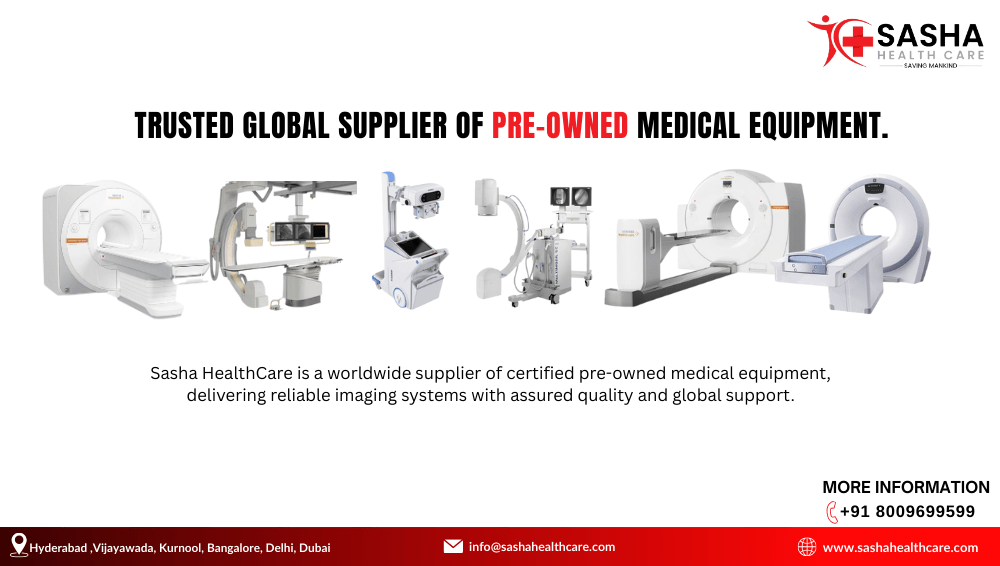
Buying an MRI machine is a high-value, long-term infrastructure decision for hospitals and diagnostic centers. The right source affects image quality, patient safety, regulatory compliance, uptime, and total cost of ownership—not just the purchase price. This guide explains where to buy an MRI machine in India, what types of sellers exist, how pricing works, and what technical and regulatory factors decision-makers must verify before purchase.
Where to Buy an MRI Machine in India
Certified suppliers act as intermediaries between OEMs and buyers, especially in regional markets.
Role of suppliers
Equipment sourcing (new or refurbished)
Import coordination
Installation supervision
AMC and parts support
Industry example
Sasha Health Care, India-based medical equipment supplier with experience in MRI, CT, and advanced imaging systems.
Authorized medical equipment suppliers bridge OEM technology with local installation, regulatory approvals, and service execution.
Understanding the MRI Machine Buying Landscape
An MRI (Magnetic Resonance Imaging) system is a complex medical imaging device governed by international safety standards, local radiation regulations, and OEM-specific service protocols.
In India, MRI machines are typically purchased through three primary channels:
OEM-authorized suppliers
Certified refurbished equipment providers
Government or institutional procurement frameworks
MRI machines in India are sold primarily through OEM-authorized distributors or certified refurbished equipment suppliers, not through open retail channels.
Option 1: OEM-Authorized MRI Machine Suppliers
OEM-authorized suppliers sell new MRI systemsdirectly from manufacturers or through their certified partners.
Major MRI OEMs Active in India
Siemens Healthineers (MAGNETOM series)
GE HealthCare (SIGNA series)
Philips Healthcare (Ingenia series)
Canon Medical Systems (Vantage series)
These suppliers operate through Indian subsidiaries or licensed distributors located in major medical hubs such as Delhi NCR, Mumbai, Bengaluru, Chennai, and Hyderabad.
Certified refurbished MRI machines in India cost 40–60% less than new systems but require strict verification of magnet, gradient, and service support.
Option 3: Government and Institutional Procurement
Large public hospitals and medical colleges usually acquire MRI machines through:
Government tenders (GEM, state health departments)
PSU procurement programs
PPP (Public–Private Partnership) models
This route prioritizes compliance, lowest bid, and long-term service guarantees, but involves longer procurement cycles.
Installation and Site Readiness Requirements
MRI machines require specialized infrastructure before delivery.
Core Requirements
RF-shielded MRI room (copper shielding)
Quench pipe and venting system
Chiller and HVAC with temperature control
Power supply with isolation transformer
Magnetic safety zoning (Zone I–IV)
Space Requirements
1.5T MRI: ~1,200–1,500 sq. ft.
3T MRI: ~1,500–2,000 sq. ft.
MRI installation requires RF shielding, controlled HVAC, and magnetic safety zoning, making site readiness as critical as machine selection.
Regulatory and Safety Compliance in India
MRI systems are non-ionizing but still regulated.
Mandatory Compliance
AERB safety guidelines (India)
IEC 60601-2-33 standard
OEM safety documentation
Trained MRI safety officer on-site
Hospitals must maintain MRI safety protocols, ferromagnetic screening, and emergency quench procedures.
Choosing Between 1.5 Tesla and 3 Tesla MRI
Parameter
1.5 Tesla
3 Tesla
Clinical Use
Routine neuro, MSK, body imaging
Advanced neuro, cardiac, research
Scan Time
Standard
Faster
Cost
Lower
Higher
Operational Complexity
Moderate
High
Most Indian diagnostic centers start with 1.5 Tesla due to balanced cost, throughput, and clinical versatility.
How to Evaluate an MRI Supplier
Before finalizing where to buy:
Verify OEM authorization or refurbishment certification
Request installation and acceptance testing protocols
Confirm long-term service availability in your city
Ask for uptime guarantees and spare parts access
Review reference installations in India
MRI suppliers should be evaluated on service capability, parts availability, and installation experience—not only machine price.
Frequently Asked Questions (FAQ)
1. Where can hospitals buy MRI machines in India?
Hospitals can buy MRI machines from OEM-authorized distributors, certified refurbished equipment suppliers, or through government procurement channels.
2. Is it safe to buy a refurbished MRI machine?
Yes, if the system is certified, properly tested, and supported by trained service engineers with access to spare parts and helium services.
3. How long does MRI installation take?
Typical installation takes 6–10 weeks, including civil work, shielding, magnet installation, and acceptance testing.
4. What is the lifespan of an MRI machine?
With proper maintenance, an MRI machine can operate for 12–18 years, depending on magnet health and software support.
5. Do MRI machines require AERB approval?
MRI does not require radiation licensing, but facilities must follow AERB safety guidelines and international MRI safety standards.
Conclusion
Knowing where to buy an MRI machine in India involves understanding supplier types, compliance requirements, infrastructure readiness, and long-term service viability. Whether purchasing a new OEM system or a certified refurbished unit, informed evaluation ensures clinical reliability, patient safety, and sustainable operational costs.
For hospitals and diagnostic centers, the right MRI source is not the cheapest option—it is the one that delivers consistent image quality, uptime, and regulatory confidence over the machine’s full lifecycle.