
Anesthesia Machine Cost in India : A Complete Buyer’s Guide by SASHA
When it comes to medical technology, few devices are as essential as the anesthesia machine. These machines are vital in hospitals, surgical centers, and clinics worldwide, ensuring patient safety during operations. But one of the most frequently asked questions by healthcare professionals and procurement managers is — what exactly determines the anesthesia machine cost ? This comprehensive guide by SASHA Health Care breaks down everything you need to know about Anesthesia Machine Cost in India, including factors that affect pricing, how to choose the right supplier, and tips for making cost-effective purchases.
Anesthesia Machine Cost in India – What Determines the Price?
The Anesthesia Machine Cost in India can vary widely, depending on several critical factors. Whether you’re equipping a new facility or upgrading an existing one, understanding these factors helps you make an informed decision.
1. Type of Anesthesia Machine
- Basic Models: Ideal for small clinics or mobile medical setups, offering essential features for minor surgeries.
- Advanced Models: Designed for major hospitals, equipped with ventilators, monitoring systems, and data integration tools.
Naturally, the more advanced the model, the higher the Anesthesia Machine Cost in India.
2. Brand and Manufacturer
Reputable brands like SASHA Health Care provide high-quality, durable machines built for long-term reliability. Established brands may cost more upfront but offer better after-sales support, warranty, and spare part availability.
3. Technological Features
Modern anesthesia machines integrate smart monitoring systems, touchscreen controls, gas-saving features, and automated safety checks. While these features enhance performance and safety, they also raise the anesthesia machine price.
4. Market Region and Supply Chain
Local taxes, import duties, and regional distribution networks significantly influence final pricing. Working with trusted anesthesia machine suppliers like SASHA Health Care ensures transparent pricing and smooth delivery.
5. After-Sales Service and Maintenance
Maintenance packages, software updates, and technician support play a vital role in long-term costs. Investing in a slightly higher-priced unit with robust after-sales support often saves more in the long run.
Understanding the Importance of an Anesthesia Machine
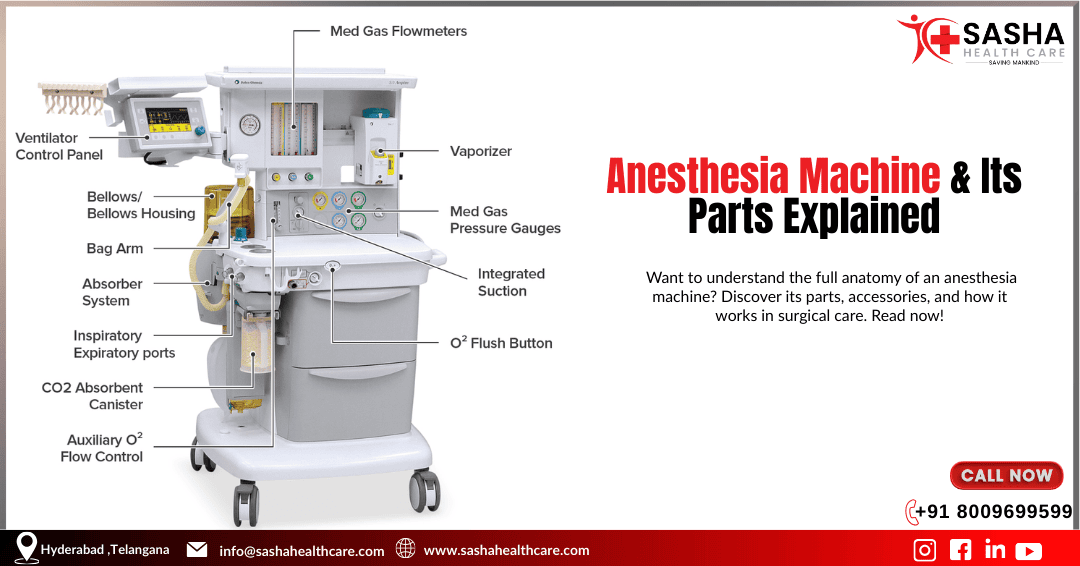
An anesthesia machine is a sophisticated medical device designed to deliver a precise mix of gases and vapors to induce and maintain anesthesia in patients during surgery. Its role is crucial — it ensures the patient remains unconscious, pain-free, and stable throughout the procedure.
At SASHA Health Care, we understand that investing in an anesthesia machine is not just about cost; it’s about patient safety, reliability, and performance. The right anesthesia machine ensures consistent delivery, minimal downtime, and ease of maintenance — all of which contribute to improved healthcare outcomes.
Why Choose SASHA Health Care for Your Anesthesia Machine Needs
At SASHA Health Care, we go beyond selling equipment — we build partnerships. Our mission is to provide medical institutions with the latest anesthesia solutions at competitive prices without compromising on quality or safety.
What Makes Us Stand Out:
- Decades of experience in medical equipment supply
- Certified and reliable anesthesia machine suppliers
- Transparent anesthesia machine cost breakdowns
- Expert installation, training, and after-sales support
- Warranty coverage and 24/7 customer assistance
Our focus is not just on selling products but on ensuring your facility operates with maximum efficiency and patient safety.
Different Types of Anesthesia Machines and Their Price Ranges
Understanding the various models available helps you align your budget and operational needs effectively.
| Type | Typical Use | Average Price Range (USD) |
|---|---|---|
| Portable Anesthesia Machines | Field operations, small clinics | $3,000 – $8,000 |
| Standard Hospital Models | Routine surgical procedures | $8,000 – $20,000 |
| Advanced ICU Models | Complex surgical operations | $20,000 – $50,000 |
| Integrated Smart Systems | Research hospitals, multi-specialty centers | $50,000 – $100,000+ |
The anesthesia machine price depends on how sophisticated the system is and what features it offers. SASHA Health Care provides all categories to meet diverse medical needs.
How to Choose the Right Anesthesia Machine Suppliers
Selecting trustworthy anesthesia machine suppliers is as important as choosing the right model. Here’s what to look for:
- Proven track record and certifications
- Transparent quotations without hidden fees
- Prompt customer service and spare parts availability
- Warranty and maintenance coverage
- Comprehensive user training
At SASHA Health Care, our team ensures every client receives end-to-end support — from consultation to installation and maintenance.
Tips to Get the Best Anesthesia Machine Cost in India
Want to make sure you get the most value for your investment? Follow these expert tips:
- Compare Multiple Quotes: Never settle for the first offer. Request detailed cost breakdowns from different suppliers.
- Consider Refurbished Options: Certified refurbished anesthesia machines can be up to 40% cheaper while maintaining reliability.
- Buy in Bulk: Hospitals purchasing multiple units can negotiate better rates.
- Look for Financing Options: SASHA Health Care offers flexible payment plans for eligible buyers.
- Evaluate Maintenance Costs: Sometimes, lower upfront cost means higher long-term service expenses.
Anesthesia Machine Price Trends in 2025
The anesthesia machine price landscape is evolving with advancements in AI-driven control systems, compact designs, and eco-friendly gas delivery mechanisms.
Recent market reports show:
- Growing demand in emerging markets like Asia and Africa.
- Increasing shift towards automated and smart anesthesia systems.
- Price stabilization due to improved manufacturing efficiency.
At SASHA Health Care, we continuously monitor these trends to provide our clients with the latest technology at the best prices.
Key Benefits of Investing in a Quality Anesthesia Machine
Buying a high-quality anesthesia machine from a trusted supplier ensures:
- Enhanced patient safety and comfort
- Reduced gas consumption, saving operational costs
- Real-time monitoring and data recording
- Longer equipment lifespan with minimal maintenance
With SASHA Health Care, you not only get cutting-edge technology but also peace of mind knowing your equipment is backed by professionals.
Common Mistakes to Avoid When Buying an Anesthesia Machine
Before making your purchase, be aware of common pitfalls:
- Ignoring maintenance costs
- Overlooking supplier reputation
- Not verifying warranty terms
- Focusing only on low prices instead of total value
At SASHA Health Care, we guide buyers through every stage to avoid these mistakes and make confident decisions.
Why Anesthesia Machine Cost in India Varies Across Brands
The variance in Anesthesia Machine Cost in India often depends on proprietary technologies, manufacturing locations, and certification standards. Premium models from leading manufacturers come with high-precision components, better gas flow controls, and advanced monitoring systems.
At SASHA Health Care, our partnerships with top-tier brands allow us to offer competitive pricing and genuine equipment across all categories.
Conclusion
Choosing the right anesthesia machine is an investment in safety, reliability, and long-term performance. Understanding the Anesthesia Machine Cost in India, features, and supplier credibility helps medical facilities make better financial and operational decisions.
At SASHA Health Care, we are committed to offering the best anesthesia machines that combine innovation, precision, and affordability. Whether you are a small clinic or a large hospital, we ensure your equipment supports your mission to deliver excellent patient care.
FAQs
Key factors include machine type, brand, technological features, and after-sales service options.
Yes, we offer certified refurbished machines that meet quality and safety standards.
Regular servicing, calibration, and cleaning are essential for optimal performance.
Absolutely. SASHA Health Care provides tailored configurations for various medical specialties.
Depending on features, hospital-grade models range between $8,000 and $50,000.