
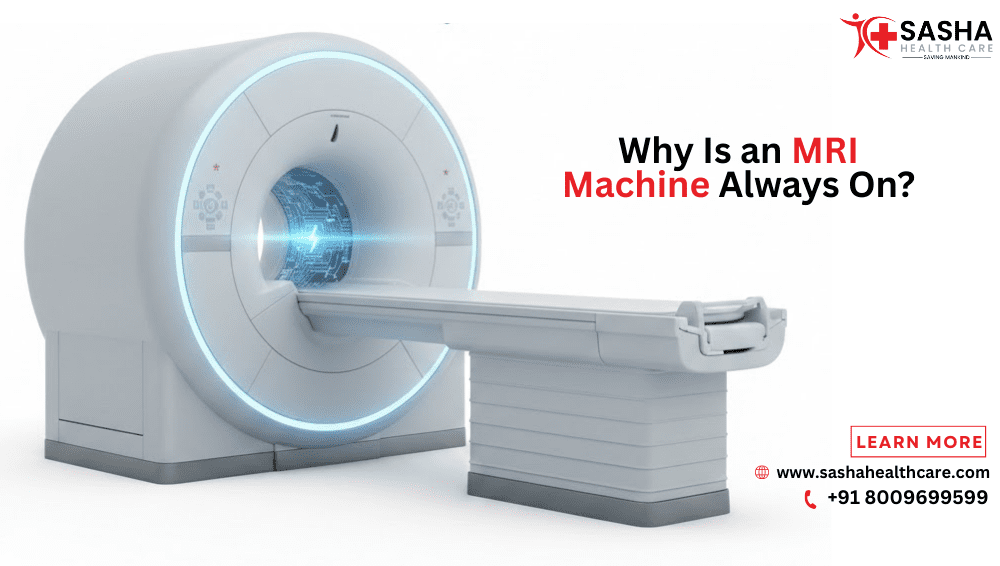
Why Is an MRI Machine Always On?
Why Is an MRI Machine Always On? An MRI system stays powered continuously because its superconducting magnet requires an uninterrupted cryogenic environment to maintain a stable magnetic field.
Hospitals and imaging centers do not “switch off” MRI scanners the way they shut down CT or X-ray units. The design, physics, and cost structure of Magnetic Resonance Imaging demand constant operation.
Why Is an MRI Machine Always On?
“Always on” does not mean constant scanning. It means the main magnet stays energized 24/7.
An MRI scanner remains on to preserve superconductivity inside the magnet, which enables a stable magnetic field without continuous electrical power.
Manufacturers such as Siemens Healthineers (MAGNETOM series), GE HealthCare (SIGNA series), and Philips Healthcare (Ingenia series) design systems around this principle.
The Core Reason: Superconducting Magnet Physics
Superconductivity Explained
MRI machines use superconducting electromagnets made from niobium-titanium coils.
These coils conduct electricity with zero resistance when cooled near –269°C (4 Kelvin) using liquid helium.
If the magnet temperature rises above the superconducting threshold, the system loses its magnetic field and requires a costly re-cool and recalibration process.
Magnetic Field Stability
Clinical MRI scanners operate at:
| Field Strength | Common Use |
|---|---|
| 1.5 Tesla | Standard hospital imaging |
| 3 Tesla | Neuro, oncology, advanced musculoskeletal |
| 7 Tesla | Research institutions |
Field stability directly affects image quality, diagnostic accuracy, and patient throughput.What Happens If You Turn an MRI Off?
MRI systems do not support routine shutdown.
A shutdown triggers a quench, which releases helium gas and collapses the magnetic field.
A magnet quench can cost ₹20–60 lakh in helium refilling, engineering service, and downtime.
Quenching also creates operational risks:
- Cryogen loss
- Room ventilation requirements
- Equipment recalibration
- Weeks of non-operation
Hospital administrators treat quench events as emergencies.
Why the MRI Uses Less Power Than People Think
The magnet itself does not draw high electricity continuously.
Power supports:
- Cryocooler compressors
- Gradient amplifiers (during scans)
- RF systems
- Computer consoles
The superconducting magnet maintains its field without ongoing electrical power; cooling systems maintain temperature.
Installation Requirements That Support “Always On” Operation
MRI facilities in India follow AERB and manufacturer guidelines.
Infrastructure Needs
- RF Shielded Room (Faraday Cage)
- Magnetic Shielding
- Helium Vent Pipe
- Chiller or Cryocooler
- Dedicated Electrical Supply
- 5 Gauss Safety Zone Marking
Space Requirements
| Component | Typical Area |
|---|---|
| Scan Room | 400–600 sq ft |
| Control Room | 150–250 sq ft |
| Equipment Room | 150–200 sq ft |
Operating Cost Implications
Hospitals consider lifecycle cost, not just purchase price.
| Cost Factor | Approximate Range (India) |
|---|---|
| 1.5T MRI System | ₹4–7 crore |
| 3T MRI System | ₹7–12 crore |
| Annual Maintenance Contract | 8–12% of system cost |
| Helium Top-up | ₹8–20 lakh per fill |
Organizations like SASHA HEALTH CARE guide buyers on installation readiness and service planning for refurbished and advanced imaging systems.
Safety Considerations of Continuous Magnet Operation
The magnetic field never disappears, even at night.
Key Safety Rules
- No ferromagnetic objects in Zone IV
- Pacemaker and implant screening
- Trained MRI technologist presence
- Emergency quench protocol
The MRI magnet remains active even when no scan runs; projectile risks exist at all times.
Why CT Machines Can Shut Down but MRI Cannot
| Feature | MRI | CT |
|---|---|---|
| Core Technology | Superconducting Magnet | X-ray Tube |
| Can Power Off? | No | Yes |
| Warm-Up Time | Not applicable | Minutes |
| Risk If Shut Down | Magnet quench | None |
Clinical Use Cases That Justify Continuous Readiness
MRI supports time-sensitive diagnostics:
- Stroke imaging
- Spinal cord compression
- Tumor staging
- Ligament injuries
- Pediatric neuro imaging
Continuous magnet readiness ensures rapid scheduling.
Expert Perspective from Imaging Operations
Radiology departments with 15+ years of operational experience report:
- Zero benefit in shutting down magnet
- Major financial loss from quenches
- Higher uptime improves ROI
- Proper HVAC maintenance reduces helium loss
Frequently Asked Questions
Engineers can ramp down the magnet during decommissioning or relocation. Routine shutdown does not occur.
No. Cooling systems consume power; the magnet itself does not draw active electrical load.
Modern zero-boil-off systems require refilling every 3–10 years, depending on maintenance.
Risk remains controlled through zoning, training, and screening protocols.
Backup UPS and cryocoolers maintain system stability. The magnetic field remains intact.
Conclusion
An MRI system runs continuously to preserve superconductivity and magnetic field stability. The magnet forms the core of image quality, diagnostic precision, and system reliability.
Shutdown attempts trigger quench risk, helium loss, financial damage, and operational disruption. Healthcare facilities treat magnet uptime as a clinical and financial priority.
Hospitals, radiology centers, and imaging investors plan infrastructure, power backup, cryogenic support, and safety zoning around this requirement. Proper planning protects equipment life and return on investment.
Organizations such as SASHA HEALTH CARE support decision-makers with technical guidance, installation readiness, and lifecycle planning for advanced MRI systems in India.