

What Is Biomedical Engineering? A Complete Guide to Career, Scope, and Importance
In today’s world, technology and healthcare are inseparable — and the bridge that connects them is biomedical engineering. If you’ve ever wondered what is biomedical engineering, think of it as the science of developing life-saving innovations — from MRI scanners and artificial organs to advanced prosthetics and hospital monitoring systems.
Biomedical engineers play a vital role in improving medical care and patient outcomes. In this article, we’ll explore what biomedical engineers do, their roles in hospitals and healthcare companies, how to become one, and why studying biomedical engineering can be a smart career choice.
What Is Biomedical Engineering?

Biomedical engineering (BME) is a specialized field that combines engineering principles with medical and biological sciences to design and develop healthcare technologies. It focuses on creating tools, equipment, and systems that help doctors diagnose, treat, and monitor patients more effectively.
From designing CT and MRI machines to developing biomedical implants, artificial hearts, and diagnostic software, biomedical engineering plays a crucial role in modern medicine.
In simple terms, biomedical engineers are the people who turn medical challenges into technological solutions — making healthcare safer, faster, and more precise.
What Does a Biomedical Engineer Do?

So, what does a biomedical engineer do on a daily basis? Their work involves a mix of technical design, testing, and problem-solving. Some of their key responsibilities include:
- Designing and developing medical devices such as pacemakers, ventilators, and prosthetic limbs.
- Collaborating with doctors and healthcare professionals to improve hospital equipment.
- Conducting research to enhance diagnostic accuracy and treatment outcomes.
- Testing medical instruments for safety and compliance with health standards.
- Providing technical support for medical machinery used in hospitals and clinics.
Biomedical engineers don’t just work behind computers — they actively participate in solving real-world healthcare problems that save lives.
What Do Biomedical Engineers Do in India?
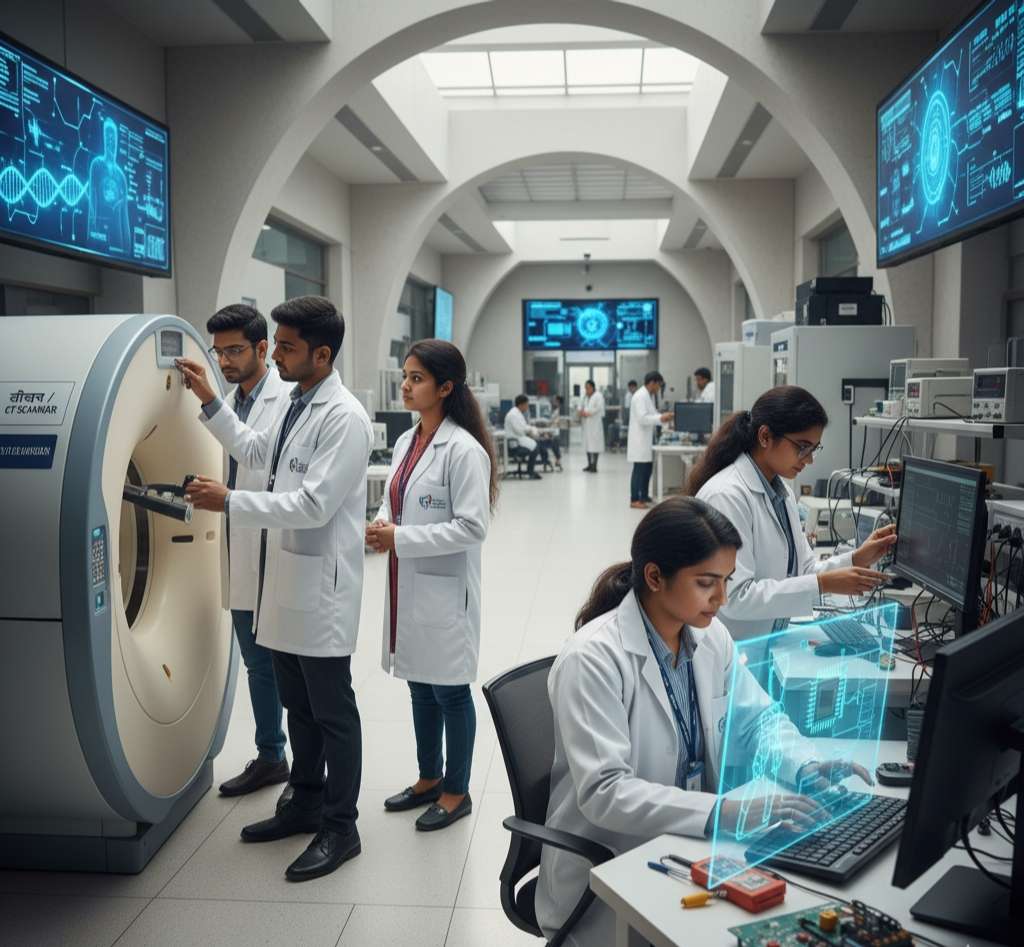
The scope of biomedical engineering in India is growing rapidly as healthcare technology advances and hospitals adopt modern diagnostic systems.
In India, biomedical engineers are employed in:
- Hospitals and diagnostic centers for equipment installation, maintenance, and calibration.
- Medical equipment companies such as Sasha HealthCare, focusing on CT, MRI, and X-ray machines.
- Research organizations developing next-generation medical devices.
- Regulatory agencies ensuring compliance with safety and quality standards.
The demand for skilled biomedical engineers has risen sharply in cities like Hyderabad, Bangalore, Chennai, and Delhi, driven by the expansion of hospital infrastructure and diagnostic imaging centers.
What Do Biomedical Engineers Do in Hospitals?

Inside hospitals, biomedical engineers are the technical backbone of medical operations. They ensure every machine — from patient monitors to MRI scanners — works flawlessly.
Their main tasks include:
- Installing and configuring new medical equipment.
- Performing preventive maintenance to avoid equipment breakdowns.
- Training hospital staff on proper equipment usage.
- Troubleshooting and repairing systems when technical issues arise.
- Maintaining safety and performance records for compliance audits.
In hospitals, biomedical engineers play a direct role in patient safety — because even a small equipment failure can impact treatment quality.
At Sasha HealthCare, we collaborate with biomedical engineers across India to maintain high-end imaging systems like CT, MRI, and Cath Lab machines, ensuring consistent performance and reliability.
How to Become a Biomedical Engineer

If you’re passionate about healthcare and technology, becoming a biomedical engineer could be a rewarding career path. Here’s how you can get started:
- Educational Qualification:
- Complete Class 12 with Physics, Chemistry, and Biology/Mathematics.
- Pursue a Bachelor’s degree (B.Tech/B.E.) in Biomedical Engineering or related fields such as Biotechnology, Electrical Engineering, or Mechanical Engineering.
- Specialization Areas:
- Medical Imaging
- Biomedical Instrumentation
- Biomaterials and Tissue Engineering
- Clinical Engineering
- Rehabilitation Engineering
- Higher Studies (Optional):
- Go for M.Tech or Ph.D. in Biomedical Engineering to specialize further in research or academia.
- Gaining Experience:
- Work in hospitals, research labs, or medical equipment companies to gain hands-on experience with healthcare devices.
Biomedical engineering isn’t just a career — it’s an opportunity to make a real difference in people’s lives through innovation and technology.
Why Study Biomedical Engineering?
Wondering why study biomedical engineering when there are so many other technical fields? Here are strong reasons why this discipline stands out:
- High Social Impact: You directly contribute to improving patient care and saving lives.
- Growing Career Opportunities: India’s healthcare sector is expanding, increasing demand for biomedical professionals.
- Cutting-Edge Technology Exposure: Work with AI, robotics, and nanotechnology in medicine.
- Global Career Options: Biomedical engineers are in demand worldwide.
- Diverse Roles: From research and design to hospital management and regulatory affairs.
As healthcare becomes more technology-driven, the importance of biomedical engineers will only continue to grow.
Career Opportunities in Biomedical Engineering
Biomedical engineers can explore careers in:
- Hospitals and Diagnostic Centers – Equipment management and maintenance.
- Medical Equipment Companies – Design, production, and servicing.
- Research Labs and Universities – Innovation and testing of new technologies.
- Government Organizations – Medical device regulation and policy development.
Top recruiters in India include Sasha HealthCare, Siemens Healthineers, GE Healthcare, Philips, and Medtronic — companies that shape the future of healthcare technology.
Future of Biomedical Engineering in India

India’s growing healthcare infrastructure and focus on digital health create immense opportunities in biomedical engineering. With the introduction of AI-assisted diagnostics, wearable devices, and smart hospital systems, the need for engineers who understand both technology and medicine has never been greater.
Biomedical engineers will play a critical role in building affordable and sustainable healthcare solutions for both rural and urban populations.
Sasha HealthCare’s Contribution to Biomedical Innovation
At Sasha HealthCare, we work closely with biomedical engineers and hospitals across India to deliver advanced medical imaging systems — including CT scanners, MRI machines, and Cath Labs. Our goal is to make high-quality diagnostic equipment accessible and affordable while providing full technical support, installation, and maintenance services.
We take pride in empowering biomedical engineers with reliable tools and technology that help them transform healthcare outcomes for millions of patients.
Biomedical engineering combines engineering principles with medicine to design medical devices, diagnostic tools, and healthcare technologies.
Biomedical engineers design and maintain medical equipment, work with doctors to improve devices, and ensure hospital technology functions safely.
They work in hospitals, equipment companies, and research labs, focusing on innovation, maintenance, and development of medical technologies.
They handle installation, maintenance, and troubleshooting of medical devices like CT scanners, patient monitors, and ventilators.
Earn a degree in biomedical engineering, gain technical experience, and specialize in areas like imaging, instrumentation, or clinical support.
Because it’s a fast-growing field that combines technology and healthcare to improve patient care, create innovative devices, and offer global career options.