
Where Can I Buy Medical Equipment in India?
Where Can I Buy Medical Equipment in India? Buying medical equipment in India requires verification of supplier credibility, regulatory compliance, installation capability, and long-term service support. Hospital owners and diagnostic center founders must evaluate vendors based on certifications, infrastructure, and post-installation maintenance.
“Medical equipment should be purchased only from certified suppliers who provide regulatory documentation, installation support, and lifecycle service.”
This guide explains where to buy medical equipment in India, what to verify, expected price ranges, and compliance requirements.
Where Can I Buy Medical Equipment in India?
The safest and most structured buying channel is through certified medical equipment suppliers.
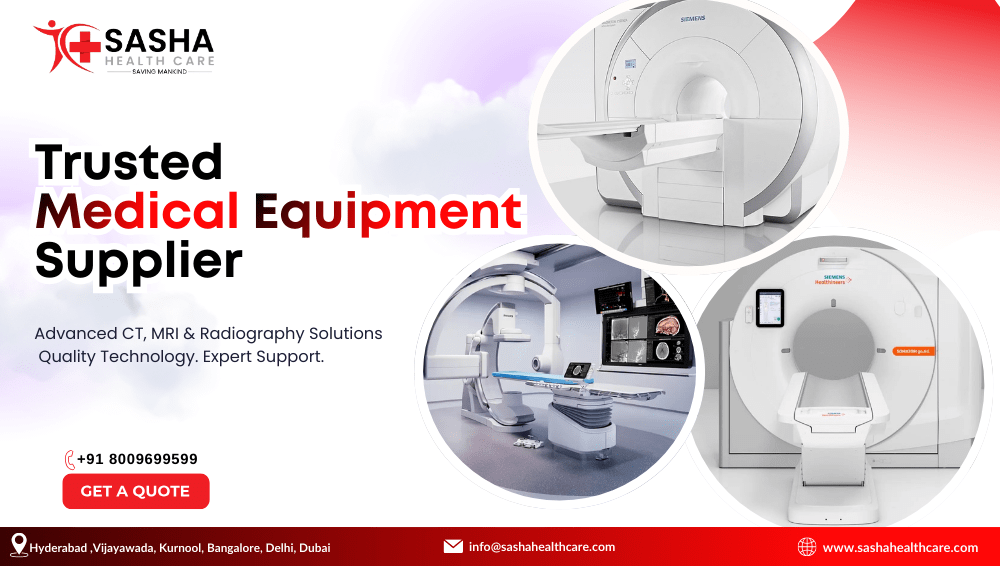
Established suppliers such as SASHA HEALTH CARE operate as diagnostic imaging equipment providers and medical device distributors across India. These suppliers deal in MRI, CT, PET-CT, Cath Lab, and radiology QA tools.
A reliable supplier must provide:
- Import documentation
- Installation support
- AERB compliance guidance
- Service engineers
- Warranty terms
- Technical training
“Indian hospitals should buy high-value imaging systems only from suppliers experienced in AERB and CDSCO compliance.”
Direct Purchase from Global Manufacturers
Large hospitals sometimes buy directly from global OEMs such as:
- Siemens Healthineers
- GE HealthCare
- Philips Healthcare
Direct OEM purchase suits corporate hospital chains and institutions with in-house biomedical teams.
Advantages:
- Latest models
- Manufacturer-backed warranty
- Direct technical training
Challenges:
- Higher pricing
- Longer delivery timelines
- Import process complexity
- AERB licensing responsibility
Government-Approved Medical Equipment Marketplaces
Public hospitals and government institutions often procure equipment through:
- Government e-Marketplace
- State medical procurement corporations
These platforms require vendor registration, compliance certificates, and bid participation.
Private hospitals rarely use this route unless funding involves public grants.
Types of Medical Equipment and Typical Price Ranges in India
Prices vary based on model, configuration, and installation requirements.
MRI Systems
Example models:
- MAGNETOM Sola
Price range:
₹4.5 crore – ₹8 crore (1.5 Tesla systems)
Installation requirements:
- RF shielded room
- 3-phase power
- Grounding
- Chiller system
- AERB site approval
CT Scan Machines
Example:
- SOMATOM go.Up
Price range:
₹1.5 crore – ₹5 crore (16 to 128 slice systems)
Installation:
- Radiation shielding
- AERB layout approval
- Lead protection
- Controlled access
PET-CT Systems
Example:
- Biograph Vision
Price range:
₹12 crore – ₹25 crore
Additional requirements:
- Radiopharmaceutical tie-ups
- BARC compliance
- Radiation safety officer
- Hot lab setup
Used / Refurbished Medical Equipment Market
Many diagnostic centers buy refurbished systems.
Common platforms:
- Medical equipment suppliers
- Refurbishment specialists
- International resellers
Refurbished systems cost 30–50% less than new equipment.
However, buyers must verify:
- Refurbishment certification
- Magnet ramp report (MRI)
- Tube life (CT)
- QA calibration reports
- Service history
“Refurbished imaging systems must include quality assurance reports and installation certification before commissioning.”
Regulatory and Compliance Requirements in India
AERB Approval
Atomic Energy Regulatory Board regulates radiology equipment installations.
Mandatory for:
- CT
- PET-CT
- Cath Lab
- X-ray systems
Site layout approval and equipment registration remain compulsory.
CDSCO Registration
Central Drugs Standard Control Organization regulates notified medical devices.
Importers must hold:
- Import license
- Device registration
- Authorized Indian agent
NABH and NABL Alignment
Hospitals aiming for accreditation from:
- National Accreditation Board for Hospitals & Healthcare Providers
- National Accreditation Board for Testing and Calibration Laboratories
must purchase calibrated and documented equipment.
Key Evaluation Checklist Before Buying
- Manufacturer credibility
- Supplier registration status
- Installation infrastructure support
- Service engineer availability in your state
- Annual Maintenance Contract terms
- Spare parts availability
- Power load assessment
- Civil work requirement
“Medical equipment purchasing decisions must include service lifecycle cost, not only capital cost.”
Logistics and Installation Timeline
- Order confirmation: 2–4 weeks
- Manufacturing or refurbishment: 6–12 weeks
- Site preparation: 4–8 weeks
- Delivery and installation: 1–3 weeks
- Licensing approval: variable (2–6 weeks)
Total planning cycle: 3–6 months for high-end imaging systems.
Where Diagnostic Center Founders Commonly Buy in India
- Certified suppliers like SASHA HEALTH CARE
- Direct OEM purchase
- Refurbished imaging specialists
- Government e-Marketplace (for public sector)
Private standalone diagnostic centers in tier-2 cities often choose certified suppliers due to regulatory assistance and turnkey execution support.
Frequently Asked Questions (FAQ)
You can buy MRI machines from authorized imaging equipment suppliers, OEM manufacturers such as Siemens Healthineers, GE HealthCare, or Philips Healthcare, or certified refurbished equipment providers.
Basic CT setup: ₹2–6 crore
MRI center: ₹6–10 crore
PET-CT center: ₹15–30 crore
Costs include equipment, civil work, electrical setup, compliance, and licensing.
AERB site approval remains mandatory before installing CT, PET-CT, and other radiation-emitting equipment in India.
New systems provide latest technology and warranty. Refurbished systems reduce capital expenditure by up to 50%. The decision depends on budget, patient load, and long-term service strategy.
Check:
GST registration
Import license
CDSCO documentation
Service engineer network
Installed base references
Conclusion
Medical equipment purchase in India requires regulatory compliance, infrastructure planning, and verified supplier credibility. High-value systems must follow approvals from the Atomic Energy Regulatory Board and device regulations under the Central Drugs Standard Control Organization.
Hospitals may buy directly from manufacturers like Siemens Healthineers or through certified suppliers such as SASHA HEALTH CARE for turnkey execution and service support.
“Buy medical equipment from certified suppliers with documented compliance and lifecycle service capability.”
Structured evaluation reduces risk and protects long-term diagnostic performance.