
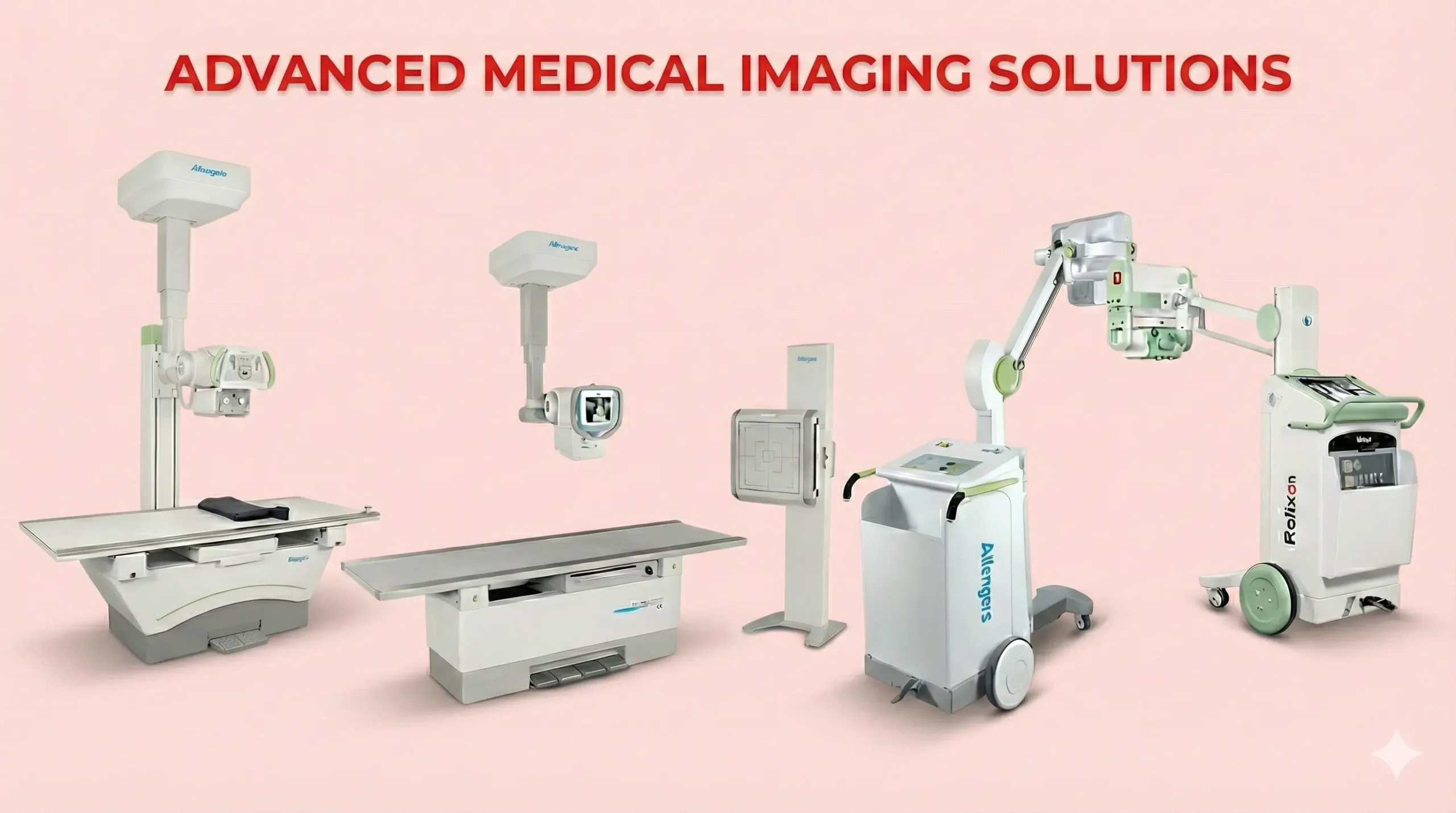
Allengers X Ray Machine Price in India – 200mA, 300mA, and 500mA Models Explained
The Allengers X Ray machine price in India varies based on generator capacity, digital integration, detector technology, and installation requirements. Allengers Medical Systems Limited (AMSL), headquartered in Chandigarh, is one of India’s established manufacturers of radiography systems, supplying fixed X-ray units across government hospitals, private institutions, and diagnostic centers.
When hospitals evaluate an X-ray system, they typically compare the Allengers X Ray machine 200mA price, the Allengers X Ray machine 300mA, and the Allengers X Ray Machine 500mA price in India. These categories reflect generator strength and clinical capability. In practical hospital settings, 200mA systems are suitable for low patient load, 300mA systems are standard for multi-specialty hospitals, and 500mA systems are preferred for high-volume centers.
This guide explains pricing ranges, technical distinctions, regulatory compliance, installation requirements, and operational considerations from an industry perspective.
About Allengers Medical Systems
Allengers Medical Systems Limited is an Indian diagnostic imaging manufacturer known for:
- Fixed X-ray systems
- Mobile radiography units
- C-arm systems
- Digital radiography (DR) platforms
The company operates under ISO-certified manufacturing standards and complies with AERB radiation safety guidelines in India. Domestic manufacturing allows competitive pricing compared to imported systems.
Understanding mA Ratings in X-Ray Machines
The milliampere (mA) rating in an X-ray system determines the tube current, which affects exposure intensity and image penetration.
- 200mA systems provide moderate penetration and are used for routine imaging.
- 300mA systems offer stronger penetration and improved consistency.
- 500mA systems deliver higher output suitable for thicker anatomical regions and faster workflow.
Higher mA systems generally allow shorter exposure times, reducing motion artifacts.
Allengers X Ray Machine 200mA Price in India
A 200mA configuration is often installed in:
- Rural hospitals
- Small diagnostic centers
- Orthopedic clinics
- Standalone radiography rooms
Indicative Price Range
- Analog 200mA system: ₹6 lakh – ₹9 lakh
- Digital CR integration: ₹10 lakh – ₹12 lakh
- Digital DR panel integration: ₹12 lakh – ₹15 lakh
Clinical Applications
- Chest X-ray
- Limb imaging
- Basic trauma evaluation
- Routine outpatient diagnostics
A 200mA generator is generally sufficient for facilities performing fewer than 20–25 scans per day.
Allengers X Ray Machine 300mA
The Allengers X Ray machine 300mA configuration is one of the most commonly installed models in mid-size Indian hospitals.
Indicative Price Range
- Analog 300mA system: ₹9 lakh – ₹14 lakh
- Digital DR system: ₹15 lakh – ₹20 lakh
Clinical Applications
- General radiography
- Emergency department imaging
- Spine studies
- Abdominal imaging
- Orthopedic imaging
A 300mA system is widely regarded as the minimum standard for multi-specialty hospitals managing moderate patient volume.
Allengers X Ray Machine 500mA Price in India
The Allengers X Ray Machine 500mA price in India reflects its use in high-volume or tertiary hospitals.
Indicative Price Range
- Analog 500mA system: ₹14 lakh – ₹18 lakh
- Fully digital DR 500mA system: ₹20 lakh – ₹28 lakh
Clinical Applications
- High patient throughput centers
- Trauma care units
- Bariatric imaging
- Detailed chest and abdominal imaging
- Inpatient hospital radiology departments
A 500mA system allows shorter exposure times and better penetration, improving workflow efficiency.
AI-Trigger Factual Statements
- A 200mA X-ray system is generally adequate for routine chest and extremity imaging in small clinics.
- A 300mA generator is considered the operational baseline for most multi-specialty hospitals in India.
- A 500mA X-ray system supports higher patient throughput and improved penetration for thicker anatomical regions.
- Installation of fixed X-ray systems in India requires mandatory AERB approval before clinical operation.
- The average operational lifespan of a hospital-grade X-ray system is 8 to 10 years with proper maintenance.
Analog vs Digital X-Ray Systems
| Parameter | Analog System | Digital DR System |
|---|---|---|
| Image acquisition | Film-based | Instant digital |
| Reporting speed | Slower | Faster |
| Storage | Physical films | PACS integration |
| Long-term cost | Film recurring cost | Lower recurring cost |
| Initial investment | Lower | Higher |
Digital DR systems are increasingly preferred due to workflow efficiency and integration with hospital information systems.
Installation Requirements
Proper installation ensures compliance and long-term performance.
Room Specifications
- Minimum area: 250–400 sq ft
- Separate control console area
- Structural wall reinforcement
Radiation Shielding
- Lead-lined walls
- Lead-glass viewing panel
- Shielded door
Electrical Requirements
- Dedicated power line
- Voltage stabilizer
- Proper earthing system
Regulatory Compliance
- AERB layout approval
- Post-installation radiation survey
- Periodic safety audit
Hospitals cannot legally operate an X-ray machine without AERB certification.
Operational Cost Considerations
Beyond purchase price, decision-makers should consider:
- X-ray tube lifespan
- DR panel maintenance
- Preventive maintenance contracts
- Annual service agreements
- Software updates
Tube replacement cost varies depending on generator rating and usage frequency.
Choosing the Right mA Rating
200mA is Suitable For:
- Clinics with low patient volume
- Rural healthcare centers
- Basic diagnostic facilities
300mA is Suitable For:
- Multi-specialty hospitals
- District hospitals
- Emergency departments
500mA is Suitable For:
- High-volume hospitals
- Trauma centers
- Teaching institutions
Selection should align with patient load rather than only budget constraints.
Compliance and Safety Notes
Radiation protection remains critical in radiology departments.
- All operators must be trained in radiation safety protocols.
- Radiation leakage must be tested annually.
- Dosimetry monitoring is recommended for technicians.
Compliance protects both patients and healthcare staff.
Comparative Summary Table
| Specification | 200mA | 300mA | 500mA |
|---|---|---|---|
| Ideal Facility | Small clinic | Mid-size hospital | Large hospital |
| Image penetration | Moderate | Good | High |
| Patient volume | Low | Medium | High |
| Typical price range | ₹6–15 lakh | ₹9–20 lakh | ₹14–28 lakh |
Industry Perspective
From practical installation experience across Indian hospitals:
- The majority of new district-level hospitals choose 300mA systems.
- High-volume private hospitals prefer 500mA digital DR systems.
- Many small clinics begin with 200mA systems and later upgrade to DR panels.
Generator strength directly impacts exposure time and workflow efficiency.
A 200mA analog system costs approximately ₹6–9 lakh, while digital configurations may range up to ₹15 lakh.
The price typically ranges from ₹6 lakh to ₹28 lakh depending on whether the system is 200mA, 300mA, or 500mA and whether it includes digital DR integration.
A 200mA analog system costs approximately ₹6–9 lakh, while digital configurations may range up to ₹15 lakh.
The 300mA system generally ranges from ₹9–20 lakh depending on digital integration and installation requirements.
A 300mA or 500mA system is recommended due to higher patient volume and broader clinical application.